





Post-tensioned concrete has gained popularity since the 1950s due to its many benefits. This technique, in particular, supports structural integrity, elasticity, and durability in ways typical reinforcing methods would not be able to. The secret construction technique fortifies some of today's most aesthetically pleasing and contemporary buildings and developments-bridges and structures-worldwide.
According to MRFR, the Post Tensioning System market was valued at 22.56 billion USD in 2023 and will reach 34.8 billion USD by 2032. Thus, there is a CAGR growth of 4.94% from 2024 to 2032. This market growth is largely due to the construction industry's demand for effective yet sustainable solutions since post-tensioning systems are the expected solution for the construction industry's future developments. Post-tensioning possesses benefits for long-term durability and strength, decreases cracks and deformations, increases flexible designing, and lessens costs for the long term. This article explores what exactly post-tensioning is, its benefits, functions, and what the future holds for us in the industry.
What is Post-Tensioning?
Post-tensioning is a fascinating construction method that offers tensile reinforcement for cement poured during commercial building efforts. In layman's terms, this means the cement is held tighter and better supports itself after the building is complete, offering a more comprehensive finished product and stabilization while the build is underway.
Post-tensioning tendons are made of stainless steel and clusters of high-strength cables. These are in plastic sheaths or casings inside the housings where casters pour concrete before the actual pouring. Once the job is finished, the cables are tensioned and anchored to either side of the concrete. Post tension functions almost as support beams would. It makes for safer, stabilized concrete structures, pillars, foundations, and columns. This concrete form is vital to the commercial building process, and effective use means the job's always the best one.
To put it simply, the whole process has three main steps:
Placing steel tendons inside the concrete
Stressing concrete using a hydraulic jack once it has reached enough strength.
Finally, grouting is done to protect from corrosion and make the bond with concrete strong.
Types of Post-Tensioning
There are two main types of post-tensioning methods in construction. Let's look at each of these types and how they are different from one another.
Bonded Post-tensioning
In this process, steel tendons are wrapped with a protective sheath before being placed in concrete. After the concrete cures, the tendons are tensioned, and the sheath is filled with grout to form a link between the tendon and the concrete. This connection transfers loads from the tendon to the concrete.
Bonded post-tensioning is widely used in more enormous constructions where strength and stability are crucial like building bridges, parking, and other structures.

It has the following various benefits:
Increased durability and strength
Improved corrosion prevention
Better load distribution.
Improved crack control
However, the drawback of bonded post-tensioning is that it requires more labor and resources than unbonded post-tensioning. This undoubtedly leads to higher costs.
Unbonded Post-tensioning
Unbonded post-tensioning means the steel tendons are not bonded to the concrete. Instead, they are covered with oil or wax to keep them from sticking to the pavement. Therefore, the tendons can move independently of the concrete, potentially reducing the danger of cracking and distortion.

It provides various benefits, including:
Less expensive and time-consuming
Decreased likelihood of rusting.
Increased design flexibility and enhanced earthquake resilience.
However, unbonded post-tensioning is not appropriate for many types of constructions and demands more maintenance over time.
Both bonded and unbonded post-tensioning systems have their benefits and drawbacks and are appropriate for various construction applications.
Key Benefits of Post-Tensioning Systems
Post-tensioning systems make a big difference in modern construction. Here's why they're changing the game:
Better Structural Performance
Post-tensioning makes concrete stronger than regular reinforcement can. This lets concrete hold more weight and span longer distances without cracking.
Tougher, Stronger Slabs
When you use post-tensioning instead of normal reinforcement, you can make slabs up to 50% tougher and stronger. Also, post-tensioning can make a slab last up to 80% longer under stress, according to studies by the Concrete Reinforcing Steel Institute.
More Design Options
Post-tensioning lets engineers and architects create open spaces thinner slabs, and longer spans. This technique makes it possible to design tall buildings open parking decks, and huge bridges that look amazing and spacious.
Saves Money and Materials
Post-tensioned concrete costs less because it uses fewer resources to get the same strength as regular concrete. Using less steel and concrete helps meet green building goals, cuts project costs, and uses fewer resources.
Less Cracking and Upkeep
Post-tensioning keeps the concrete under constant pressure, which stops or reduces cracks. In addition to extending the lifespan of structures, this lowers the need for expensive maintenance and repairs over time.
Applications of Post-Tensioning Systems

Post-tensioning has uses in many fields. Let's look at some structures that use it and their examples.
Bridges
Bridges exhibit the true benefits of post-tensioning. It helps engineers hold long spans and heavy loads very often. When you pre-stress concrete, for instance, the bridge can hold much traffic and withstand severe weather. Also, post-tensioning enables designers to make more attractive structures, which helps beautify renowned buildings across the globe.
Buildings and Skyscrapers
Post-tensioned concrete enables the construction of slender slabs with extended column-free spaces. This signifies a reduced number of support columns and an increase in the usable area of the floor. The result? Buildings with much lighter structures and more useful interior space are needed. This method provides clearance without bringing in additional structural elements, thus allowing more imagination on the designer's part.
The running of a business in commercial structures, such as skyscrapers, multi-storied houses, and office towers, is on every inch of the floor. There is one unpleasant, expensive reality of such infrastructure: it should have a very forceful bottom part yet allow as much light as possible on the extreme top.
Parking Structures
Post-tensioning in the structure helps build bigger parking bays with reduced beams and columns. This surely simplifies the design and enhances the standard of the structure.
Post-tensioning minimizes the use of pillars, thus giving reasonable space for driving and easier navigation, making it a more comfortable and safer space. Using fewer materials in designing parking buildings also means cutting costs and being eco-friendly.
Sports Arenas and Stadiums
Post-tensioning helps achieve vast, clear spaces without needing columns and other related supports. The improved seating demands fewer columns supporting the structure, which means the clarity of sight remains along with the structure's integrity. It allows for different configurations of seating arrangements and further enhances watching angles for the audience. It is employed in constructing sports amphitheaters to construct large, uninterrupted spaces without vertical obstructions. This allows the viewers a clear view of the sports being played.
Slab-On-Ground
Buildings with post-tensioned slabs posed almost no risk of structural damage due to effective resistance to ground movement. This makes them ideal building techniques applicable in expansive soils or areas with high water tables. The solution works by incorporating pre-stressed tendons that help mitigate cracks resulting from vertical soil expansion or contraction, thereby providing an effective support system.
Post-tension concrete is mostly used in slab-on-grade foundations for single homes, multifamily buildings, and light commercial buildings in places with difficult-level soils.
Nuclear power plants
Nuclear power plants also use post-tensioning to enhance the containment shell structures surrounding the nuclear reactor from external threats.
Water Reservoirs
Through post-tensioning, water tanks can increase capacity and strengthen their resistance to wind and seismic loads. It is an excellent alternative for circular constructions such as water tanks that withstand internal pressure.
The approach also assures that the tank stays waterproof throughout its service life, which is crucial for water reservoirs, wastewater treatment plants, and oil storage tanks.
Tunnels
Tunnels must be extremely strong and long-lasting to withstand ground pressure and climatic elements like dampness. Post-tensioned concrete offers a strong structural structure that can endure long-term use and the strains of tunneling.
Post-tension concrete members are necessary for pedestrian underpasses, car tunnels, and subway tunnels to be safe for the general public to use.
Future Trends in Post-Tensioning Systems
The construction industry is evolving amazingly as technologies like post-tensioning systems are gaining momentum. Here are some of the exciting future trends that we have in store for us in the coming days.
Sustainability and Green Construction
Post-tensioning significantly reduces material waste and construction's carbon footprint, as less steel and concrete are required in this process. As eco-friendly materials, like recycled steel for tendons, are being developed, we can expect post-tensioning systems to gain more traction and become even more ecologically responsible.
Advanced Materials
Better, more powerful, and long-lasting materials might be used in this industry in the future with more technological advancements. For example, tendons made of carbon-fiber-reinforced polymers (CFRP) are already in use. They are stronger and more corrosion-resistant than conventional steel.
Digitalization and Smart Monitoring
With the world advancing in technology every other day, digital tools can be incorporated into construction. For instance, sensor-based real-time monitoring systems will measure the post-tensioned structures' overall performance, stress, and strain. Engineers may rely on such data to optimize design, identify possible problems as early as possible, and forecast the related future maintenance requirements to make the structure safer and more durable.
Automation in Installation
There is no denying that the employment of automation modifies the construction industry, with post-tensioning systems being no exception. Devices and robots are being designed to speed up the installation of tendons, thereby reducing the amount of labor and increasing precision.
Wider Adoption in Emerging Markets
Developing regions need more infrastructure development, and post-tensioning systems are gaining pace rapidly in emerging markets. This is a cost-effective mode of designing stronger and sturdier structures, which is very handy in regions prone to environmental stressors such as floods or earthquakes. Therefore, post-tensioning demand will soar, pushing innovation and making these systems more accessible worldwide.
Products Used in Post-Tensioning Systems
Certain proprietary solutions for the post-tensioning process work seamlessly together to ensure efficient systems. Below are the major solutions provided by each component of post-tensioning systems
Tendons
Steel Tendons:
High-strength steel cables or wires are used for post-tensioning. Tendons are located within the concrete and stressed to give additional support. This is the typical tendon used for post-tensioning.
Carbon Fiber Reinforced Polymer (CFRP) Tendons:
An alternative to steel, CFRP tendons are used for higher corrosion resistance and lighter weight. These are especially beneficial in environments with high moisture or aggressive chemicals.
Stainless steel tendons:
These have higher corrosion resistance and are utilized in super-corrosive environments, salty air and seas, and chemical plants.
Anchorages
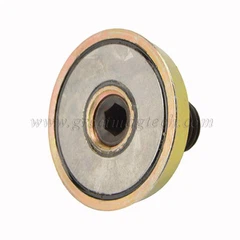
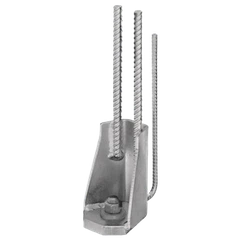
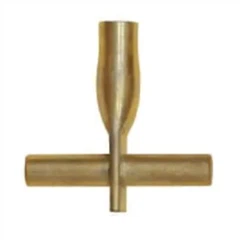
Wedge Anchors: An anchorage where the tendons are secured by a wedge-shaped mechanism, which locks the tendon in place when tension is applied.

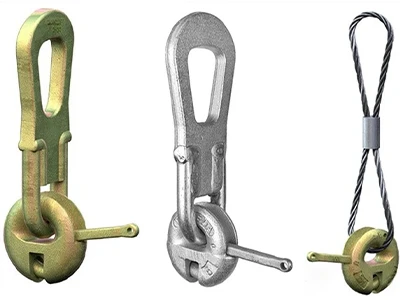
Eye Anchor: It is used primarily in thin sections, Thin panels of lightweight concrete, or shapes that must be handled at concrete compressive strengths below 2,000 psi.
20T Lifting Anchors: A simple, safe, and efficient system for lifting and transporting precast concrete elements.
Bonus: Get All These Post-Tensioning Products on Our Website!
You must find the right balance between reasonably priced and long-lasting materials when designing and maintaining commercial structures. Steel cables and tension support provide the necessary structural stability while post-tensioning concrete systems enable the use of concrete's strength and adaptability.
Maintaining post-tensioning systems to prevent collapses requires expert building management services and the best products. So, if you're looking for high-quality post-tensioning products for your next construction project, look no further! Our website offers a full range of products, as mentioned above. We provide everything you need to ensure your post-tensioning system is reliable and durable. Browse our selection and make your purchase today for fast delivery and excellent customer service!
So whether you're building or repairing a parking lot, commercial building, or something similar, we are here to provide you with the best supplies.
Common Questions For Post-Tensioning Systems
Does slab post-tensioning cost more than conventional reinforcement?
At first, post-tensioning a slab may be more costly than more conventional reinforcement techniques like employing rebar. However, over time, the longer-term cost reductions, improved strength and durability, and lower maintenance requirements may make it a more affordable choice.
What aspects should manufacturers take into account while creating a post-tensioned slab design?
Several elements must be considered when constructing a post-tensioned slab, such as the load requirements, building rules and standards, construction limits and conditions, design calculations, anchorage and bearing plate placement and sizing, and tendon placement and size.
Where can I purchase post-tensioning products?
You can purchase all the essential post-tensioning products directly from our website. We offer a wide range of high-quality materials and equipment for your post-tensioning needs, from tendons to grout.
How do I know which post-tensioning system is suitable for my project?
The right system depends on your project's requirements, including load capacity, design flexibility, and environmental conditions. Our team can help you choose the best option based on your needs.