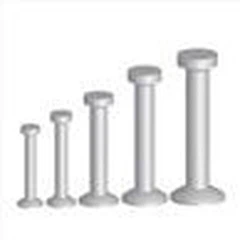


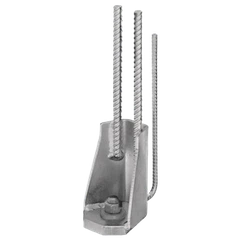




Concrete formwork is the temporary molds and structures used to shape and support concrete until it cures and hardens. As construction practices evolve, magnetic formwork systems are emerging as an innovative advancement from traditional wood formworks.
Let's talk about the concrete formwork magnets and the various types available, their specialized applications, and proper usage methodology.
What Are Concrete Formwork Magnets?
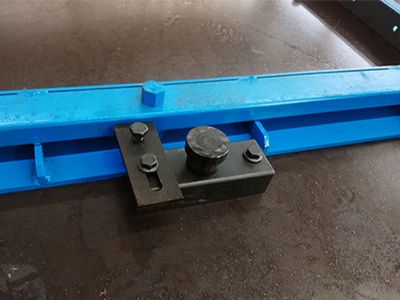
Concrete formwork magnets are a specialized type of powerful magnet designed to securely attach and accurately align concrete forms and molds to steel structural elements like columns, beams, slab tables, and casting beds during the concrete pouring and curing process.
These magnets enable concrete-forming structures to be precisely positioned and temporarily adhered without the use of mechanical fasteners like screws, clamps, or welds. The magnetic bond they create firmly holds forms in place as concrete is placed, compacted, and hardened.
In Contrast To Traditional Formwork Hardware, Magnets Offer Several Major Benefits:
Greatly increased construction efficiency and productivity
Enhanced concrete surface quality and dimensional precision
Lower long-term costs through extended magnet durability and reuse
Vastly simpler formwork installation, removal, and adjustment
Reduced need for supplementary braces and supports
With these advantages over conventional systems, concrete formwork magnets are rapidly gaining popularity as an innovative forming solution shaping modern architectural styles.
Major Types of Concrete Formwork Magnets
Several fundamental types of magnets are widely adopted for securing concrete formwork structures, each with its own capabilities and preferred applications within construction workflows.
Shuttering Magnets:
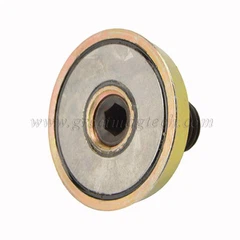
Shuttering magnets alternately referred to as magnet boxes, are among the most ubiquitous and versatile concrete formwork magnets. As the name denotes, these consist of durable metallic casings containing powerful magnetic components composed of materials like neodymium or ferrite.
Typical Applications:
Wall panel formwork mounting and alignment
Column form mold attachment
Embedded elevation/height marks
Benefits:
Extremely strong magnetic holding strength
Quick one-handed operation for attachment and detachment
Reusable on hundreds of pours for excellent cost efficiency
Modular and customizable sizing and magnet configurations
Formwork Magnets:
Formwork magnets take the formwork magnet principle a step further by directly embedding extremely strong magnets flush into the face of steel or other ferrous formwork structural frames themselves during their fabrication rather than utilizing standalone magnet boxes.
Characteristics:
Typically 2 to 4 high-power magnets are implanted per form face
Flush installation for a smooth and flat form face
Enables the fullest magnetic adhesion between forms and contact surfaces
Advantages
The tightest possible concrete mold alignment without gaps
Elimination of wiggle or lateral formwork movement risk
Streamlined integration into the formwork system design itself
Magnetic Chamfers:
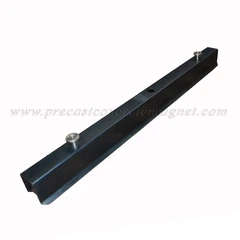
Magnetic chamfers are steel right-angle-length profiles integrated with exposed magnets along their back, designed explicitly for conveniently forming beveled edges, repetitive decorative profiles such as false joints or grooves, drip ledges, alignment guides, and other geometric effects out of a concrete surface as it cures in place with the aid of the adjacent mold.
Functions
Create standardized 45-degree chamfers on slab, wall, and column edges
Build in false seams, rustications, embedded tiles/bricks textures
Set reveals, sills, non-structural vertical chases
Traits
Fully customizable dimensions and angle geometries
Available standard variants in stainless steel, galvanized steel, and rigid plastics
Option to have magnets affixed along one or both legs on-site
Insert Magnets
Insert magnets comprise a specialized niche application that securely bond sleeves, tubes, conduits, and sleeves embedded inside concrete structural elements to adjacent steel concrete forms in order to accurately imprint voids and channels where things like post-tensioning cables, electrical lines, water pipes, and ventilation can later be positioned within the hardened concrete pieces.
Purpose
Provide internal conduits and access without extra concrete cutting/drilling.
Capabilities
Powerful magnetic pull-strength reliably immobilizing inserts against concrete pressure.
A broad range of form factors from discs to rectangles to match inserts
Heat and corrosion-resistant variants to withstand concrete curing
Can be equipped with threaded nuts enabling bolt-secured backup
In summary, magnetic formwork equipment provides adaptable solutions for virtually every concrete forming application - from high-efficiency precast plants to intricate architectural facades, to everyday foundations and slabs.
Key Applications of Concrete Formwork Magnets:
Magnetic formwork methods lend flexible and versatile solutions across the highly diverse requirements concrete construction can demand - from rapid churning precast piece requirements to aesthetically unique architectural facades.
Precast Concrete Production
In fully industrialized offsite precast concrete product manufacturing facilities where efficiency and consistency are paramount, magnets play an integral role across formworking fabrication stations.
Element Walls are capacity robotic mounting and dismounting of wall panel molds to oil, reinforcement, and cast beds. In precast concrete plants, high-capacity robots swiftly mount and dismount wall panel molds to processing stations in order to improve efficiency. Columns are Secure alignments of cylindrical or rectangular column forms to jigs to enable Rapid bolt assembly. Column forms must align precisely to mounting points on casting beds for rapid bolt assembly.
Ceilings are Adhesion of hollow-core slab and double tee molds to extrusion beds and calibration forms. Factories adhere hollow-core slab and double tee molds magnetically to processing equipment with adjustable magnetic power. Quality Control is the Repeatable positioning of leaked concrete overflow catch containers. Magnets position removable leak collection containers at slab mold segment joints before pumping concrete fills.
On-Site Concrete Works
For cast-in-place structural and architectural concrete elements taking shape gradually as a building rises, magnets likewise guide and secure form alignment as well as accessorizing specialty tools.
Foundations
Facilitating the creation of complex curved foundation walls via easily reconfigured custom forms.
Structural Framework
Precisely aligning post-tensioning duct trajectories within vertical members like cores, columns, and shear walls.
Architectural Features
Securing the fabrication of one-off ornate custom concrete facades via easily rearranged voids.
Unique Specialty Applications
Additionally, magnets enable several unique atypical form working scenarios:
Sensitive Sites
Eliminating disruptive hammering or screwing to physically install forms in noise and vibration-restrictive areas.
Custom Shapes
Allowing exotic fully free-form concrete components by modular magnetic master molds.
Complex Structures
Making intricately multi-stage poured concrete assemblies achievable via reliable interim form bonds.
In summary, magnetic formwork eases the production of prefabricated components, while readily accommodating unlimited unique architectural vision.
Proper Methodology for Using Concrete Formwork Magnets
While magnets can substantially simplify and modularize the formwork assembly process, proper procedures and principles remain vital for ensuring construction quality as well as safety on the job.

Inspection and Testing
Before fully loading forms and pouring concrete, confirm via pull testing that installed magnets exhibit adhesion forces able to reliably withstand worst-case load conditions to be encountered.
Test a statistical sampling of magnet bonds by attempting to manually pry off forms using calibrated measuring equipment. Replace any magnets falling below programmed design standards.
Surface Preparation
Meticulously clean and prime contact surfaces on forms and steel table beds using solvents, abrasives, and release agents to achieve the maximum possible magnetic adhesion strength during formwork mounting.
Check for rust, scale, concrete splatter, or residue that can significantly degrade magnetic attraction - adjusting preparation efforts accordingly.
Layout Planning and Marking
Using approved project drawings and engineering tables, precisely sketch, measure, and mark magnet placement points equidistant along forms accounting for their magnetic spans and the structural loads encountered.
Double-check the resulting overall dimensions and alignment indices before starting physical positioning.
Support and Stabilization Considerations
Depending on pour complexity and magnet capacity, provide supplementary stabilizing supports - ranging from temporary wooden braces, steel strongbacks secured by additional magnets, threaded rods, or full clamp frames - to withstand fluid concrete pressures without formwork deflection or leakage.
Safety Precautions
Following the establishment of initial magnetic formwork bonds, rigorously inspect and manually verify adequate fixation using calibrated pull equipment - checking for any lateral translation or detachment threats.
Remediate any identified deficiencies before authorizing working access near forms and certainly well prior to concrete placement to prevent collapse and injury.
In summary, by adhering to prudent magnetic formwork application best practices, crews can fully actualize improved construction productivity and creativity while maintaining job site safety.
Comparative Analysis of Magnetic and Wood Formworks
While wood boards have been the default forming solution since concrete's earliest days, heavy-duty magnetic steel formwork brings greater speed, customization, and value for repetitive precast fabrication and bold architectural designs.
Composition and Attachment Methodology
Wood is made up of nailed and screwed plywood/lumber boards. Wood formwork is constructed using wooden planks and boards that are physically assembled using nails, screws, bolts, etc. While Magnetic formed using welded light gauge steel modular panels. Magnetically adhered to assembly beds. Magnetic formwork utilizes prefabricated steel formwork panels that are attached to formwork tables using strong magnets.
Durability and Reusability
Wood: Single-use lifespan for poured concrete structures. Repeated concrete exposure degrades and warps boards. Wood formwork can typically only be used once for concrete pouring before it gets damaged and warped from the concrete, moisture, etc.
Magnetic: Reusable for decades with proper storage. Robust construction withstands high cycle fatigue. Magnetic steel formwork is very durable and can be reused countless times if properly stored between uses. The steel can withstand repeated concrete pours.
Construction Process Impacts
Wood: Slow to erect and strike from concrete elements. Generates abundant waste debris. Wood formwork assembly/disassembly is labor-intensive and time-consuming. It also generates lots of wood waste debris.
Magnetic: Swift robotic mounting/dismounting. Entirely recyclable materials. Magnetic formwork can be swiftly installed and removed using automated equipment. The steel materials are fully recyclable.
Per Batch Cost Analysis
Wood: Minimal initial purchase outlay. Extensive labor impacts. Wood formwork has a lower upfront cost but requires more labor to construct/deconstruct, which adds to project expenses.
Magnetic: Higher principal investment. Offset by personnel and lifespan savings. Magnetic formwork has higher initial purchase costs but saves labor and replacement costs long-term.
Recommended Application Areas
Wood: Smaller residential and commercial projects. Custom one-off architectural elements. Wood formwork suits smaller custom concrete pours with simple design needs.
Magnetic: Large-scale precast concrete fabrication. Standardized public works components. Unique complex geometrical facades. Magnetic formwork enables efficient repetitive precast production or unique architectural facades.
FAQs
Q1. How strong is the magnetic bond of concrete formwork magnets?
A. Concrete formwork magnets typically offer extremely powerful magnetic holding strength exceeding 500kg/1150 lbs per magnet. This allows reliable stability even on large steel concrete pouring beds.
Q2. Can you cut or weld through magnetic concrete formwork?
A. No, magnetic formwork cannot be physically cut, welded, or mechanically fastened. It relies solely on magnetic adhesion so modifications require full demounting.
Q3. What maintenance is needed for reusable magnetic formwork?
A. Magnetic formwork only requires occasional resurfacing to remove concrete residue and corrosion. The magnets and steel faces are structurally unchanged by repeated concrete exposure.
Q4. How are concrete formwork magnets powered on/off?
A. Magnetic formworks utilize permanent neodymium magnets so no external power is involved. Controlled magnetic fields enable easy mechanical activation.
Q5. Are magnetic concrete forms hazardous to nearby workers?
A. No radiological or general health risks exist around magnetized equipment. Only standard construction site precautions involving heavy suspensions are warranted.
In conclusion, magnetic formwork delivers valuable construction velocity, quality, and customization improvements over wood forming systems - cementing itself as an indispensable innovation for both productivity and creativity across the entire breadth of 21st-century concrete construction.