




Introduction
In precast concrete production, edge quality does not depend only on the concrete mix. Formwork design, chamfer placement, vibration, demolding, and handling all play an important role. This is where magnetic chamfers become useful. They help factories form clean and consistent beveled edges directly during casting, without drilling, welding, or complicated fixing work.
For precast wall panels, beams, columns, slabs, and architectural components, magnetic chamfers can make edge finishing more predictable and reduce unnecessary rework.
Magnetic chamfers improve precast panel edge quality by forming clean and consistent beveled edges during casting. They attach firmly to steel molds or casting tables through built-in magnets, helping prevent movement during concrete pouring and vibration. They can also reduce edge chipping during demolding, lifting, transport, and installation.
What Is a Magnetic Chamfer?
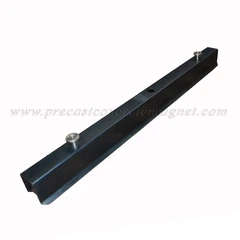
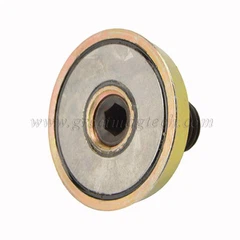
A magnetic chamfer is a chamfer strip with built-in magnets, used to create clean beveled edges on precast concrete elements. It does not require glue, screws, welding, or drilling. Instead, it attaches directly to steel formwork, steel molds, or casting tables through magnetic force.


Main Function
During casting, a magnetic chamfer forms a neat and consistent chamfer along the concrete edge. This helps reduce sharp corners, improve panel appearance, and lower the risk of edge damage during demolding, lifting, and transportation.
Common Types
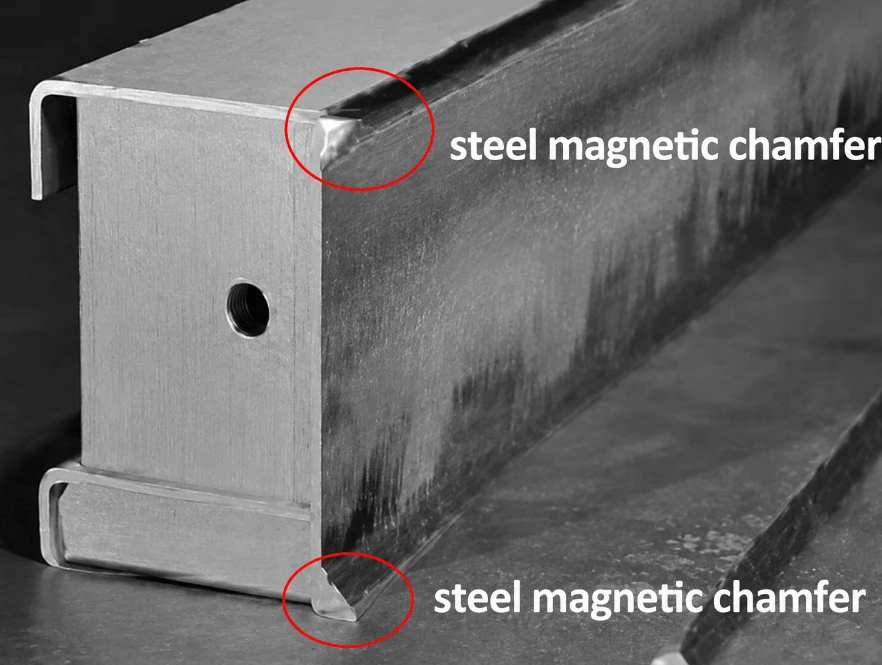
Steel magnetic chamfers are durable and suitable for repeated use in factories.
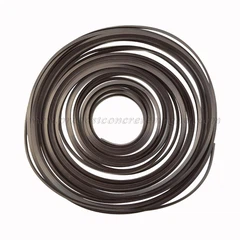
Rubber magnetic chamfers are more flexible and can meet certain mold shapes or surface requirements.
Why Edge Quality Matters in Precast Panels
Edge quality directly affects the appearance, performance, and on-site acceptance of precast concrete panels. Clean and neat edges give the panels a more professional appearance, especially when the surface remains visible after installation. For architectural precast panels, even small chips or uneven corners can affect the final visual result.
Consistent edge quality helps improve project acceptance and product reliability. When every panel has clean and uniform edges, the finished structure looks better, and installation becomes smoother.
How Magnetic Chamfers Create Clean and Consistent Beveled Edges
Magnetic chamfers help form a smooth beveled edge along the precast panel during casting. After being placed on the steel mold or casting table, the chamfer strip fixes the shape of the concrete edge, allowing the bevel to be formed directly in the mold without later grinding or repair.
Magnetic chamfers also provide better positioning control. Traditional chamfer strips may shift if they are not fixed firmly, especially during vibration or repeated production. Magnetic chamfers reduce this risk by holding the chamfer strip closer and more securely to the steel mold surface.
How Magnetic Chamfers Reduce Edge Chipping During Demolding
Sharp concrete corners are more likely to break because stress is concentrated at the edge. During demolding, lifting, turning, stacking, transport, and installation, these 90-degree corners can easily chip if the panel is exposed to pressure or slight impact.
Magnetic chamfers solve this problem by forming a beveled edge during casting. A beveled edge spreads stress more evenly across the corner instead of leaving a fragile, sharp point. This makes the panel edge stronger, safer to handle, and less likely to break during movement.
How Magnetic Chamfers Prevent Movement During Concrete Pouring
Concrete pouring and vibration can easily cause poorly fixed chamfer strips to move. Magnetic chamfers solve this problem through built-in magnets. When placed on steel formwork, steel molds, or casting tables, the magnetic force holds the chamfer firmly against the surface. This stable contact helps the chamfer stay in position during concrete pouring and vibration.
Stable chamfer positioning is essential for forming a clean and accurate beveled edge. If the chamfer remains aligned before and during pouring, the finished precast panel is more likely to achieve the required edge shape and dimensional accuracy.
Magnetic Chamfer vs Traditional Chamfer Strip
| Comparison Item | Magnetic Chamfer | Traditional Chamfer Strip |
| Fixing Method | Fixed by built-in magnets on steel formwork, steel molds, or casting tables. | Usually fixed by nails, screws, glue, welding, or manual positioning. |
| Installation Speed | Faster to install and easier to place directly on steel surfaces. | Slower because extra fixing work is often required. |
| Repositioning | Easy to move and adjust before concrete pouring. | More difficult to reposition once fixed with glue, screws, or nails. |
| Mold Protection | No drilling or welding required, helping protect the steel mold surface. | May leave holes, marks, glue residue, or welding damage on the mold. |
| Edge Consistency | Helps create more stable and consistent beveled edges in repeated production. | Edge quality depends more on worker skill and fixing accuracy. |
| Reusability | Highly reusable when cleaned and stored properly. | Reusability depends on the material; wood or plastic strips may wear faster. |
| Labor Cost | Can reduce installation time and finishing work in precast factories. | May require more labor for fixing, removing, cleaning, and edge repair. |
| Long-Term Cost | Higher initial cost, but better for repeated factory production and lower rework. | Lower initial cost, but may increase labor, mold repair, and replacement costs over time |
| Best Application | Suitable for precast factories using steel molds or steel casting tables. | Suitable for small-volume production, temporary molds, or non-steel formwork. |
| Overall Advantage | Faster, cleaner, reusable, and less damaging to molds. | Simple and low-cost for basic or occasional use. |
Common Edge Problems Magnetic Chamfers Can Help Reduce
Chipped corners after demolding.
Uneven bevel lines.
Rough panel edges.
Concrete leakage marks.
Extra grinding and repair work.
Inconsistent edge appearance between batches.
Mold damage caused by drilling or welding.
Edge defects during lifting and transport.
Poor alignment of chamfer strips.
Higher labor costs from manual finishing.

Where Magnetic Chamfers Are Commonly Used
Precast Wall Panels
Magnetic chamfers help create neat beveled edges on wall panels, reducing sharp corners and improving the final appearance.
Sandwich Wall Panels
For sandwich panels, magnetic chamfers help ensure consistent edge finishing around panel borders and openings, improving assembly quality.
Concrete Beams and Columns
Beams and columns often require strong, clean edges. Magnetic chamfers help reduce corner damage during demolding and handling.
Floor Slabs and Balcony Panels
In the production of floor slabs and balcony panels, magnetic chamfers make edge forming faster and more stable, especially in repeated casting operations.
Stair Components
Chamfered edges on stair treads, risers, and side edges can improve safety and create a cleaner appearance.
Utility and Infrastructure Precast Products
Magnetic chamfers are also used for drainage components, cable trenches, manhole components, and other infrastructure precast elements.
How to Choose the Right Magnetic Chamfer for Precast Panels
Choosing the right magnetic chamfer starts with confirming the required bevel design. The chamfer size should match the panel drawing, edge angle, and appearance requirements. If the size is too small or too large, the finished edge may not meet the design standard.
Magnetic Force Selection
During precast production, concrete pouring and vibration may cause poorly fixed magnetic strips to move. The magnetic chamfer should have enough holding force to remain stable on steel molds, steel tables, or formwork systems throughout the casting process.
Material Selection
Steel magnetic chamfers are durable and suitable for repeated factory use, while rubber magnetic chamfers are more flexible and better suited for special mold shapes or surface requirements.
Best Practices for Using Magnetic Chamfers
Clean The Mold Surface First
Before placing the magnetic chamfer, clean the steel mold, formwork, or casting table. Remove concrete residue, rust, oil, dust, and other debris from the contact surface.
Check Alignment Before Pouring
Make sure the chamfer is placed according to the drawings. It should sit flat against the mold surface without gaps, tilting, or movement.
Avoid Impact Damage
Do not hit or drop the magnetic chamfer heavily. Strong impact may damage the magnet, deform the chamfer body, or reduce its fixing performance.
Clean After Each Production Cycle
After demolding, remove fresh concrete residue from the chamfer surface. Regular cleaning keeps the chamfer reusable and helps maintain stable edge quality.
Store Properly
Store magnetic chamfers in a dry and organized area. Replace damaged, bent, or deformed chamfers in time to avoid edge quality problems in future production.
Conclusion
Magnetic chamfers play a crucial role in enhancing the quality of precast panel edges. They help form clean beveled edges, reduce corner damage, prevent movement during concrete pouring, and lower the amount of repair work after demolding.
If your production line uses steel tables or steel molds, choosing the right magnetic chamfer is a simple and effective way to improve panel appearance and production efficiency.
FAQ
Q: What is a magnetic chamfer used for in precast concrete?
A: A magnetic chamfer is used to form beveled edges on precast concrete panels and components. It helps create cleaner edges, reduce sharp corners, and improve the final appearance of concrete products.
Q: How do magnetic chamfers improve precast panel edge quality?
A: During casting, magnetic chamfers attach firmly to steel molds or casting tables. This helps form straight and consistent beveled edges while reducing edge defects such as rough edges, uneven lines, and chipping.
Q: Do magnetic chamfers need glue, screws, or welding?
A: No. Magnetic chamfers use built-in magnets to attach directly to steel formwork or steel molds. They do not require glue, screws, drilling, or welding, which also helps protect the mold surface.
Q: Why does concrete leakage happen around chamfer strips?
A: Concrete leakage usually happens when there are gaps between the chamfer strip and the mold surface. Dust, rust, oil, concrete residue, poor alignment, or the wrong chamfer size can all increase the risk of slurry leakage.
Q: Are magnetic chamfer strips reusable?
A: Yes. Magnetic chamfer strips can be reused many times if they are cleaned after each production cycle and stored properly in a dry, organized area.
Q: What materials are magnetic chamfer strips made from?
A: Common types include steel magnetic chamfer strips and rubber magnetic chamfer strips. Steel magnetic chamfers are durable and suitable for repeated factory use, while rubber magnetic chamfers are more flexible and can adapt to certain mold shapes or surface requirements.
Q: How should magnetic chamfer strips be maintained?
A: Clean the chamfer strip after each use, remove concrete residue from the magnetic contact surface, avoid strong impact, and store it in a dry place. Damaged, bent, or deformed chamfers should be replaced in time.
Q: Can magnetic chamfers be used on all molds?
A: Magnetic chamfers work best on steel molds, steel formwork, and steel casting tables. They are not suitable for non-magnetic mold surfaces unless used with additional fixing methods.