




What Is a Fixing System for Precast Concrete Units?
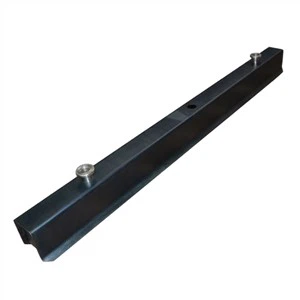
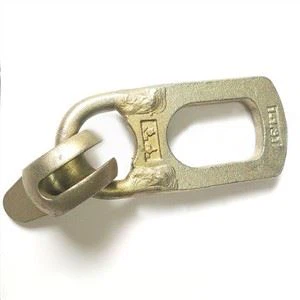
A fixing system for precast concrete units is a specialized set of components designed to secure inserts, anchors, and embedded parts in precise positions during concrete casting and later installation. In the production of precast components, once the concrete has been poured and cured, any corrections will be time-consuming and labor-intensive. It is in this context that a reliable fixing system demonstrates its value.
Key Components of a Precast Concrete Fixing System
Fixing Inserts and Threaded Sockets
Fixing inserts and threaded sockets is the core of the system. They are cast directly into the concrete to provide secure connection points for later installation. Compared with post-installed anchors, cast-in inserts offer better load transfer, a cleaner surface finish, and more predictable performance.
Anchor and Insert Holders
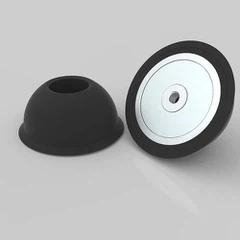
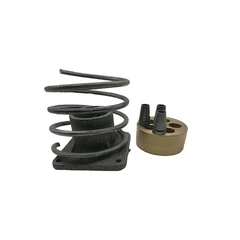
Holders are used to position and stabilize inserts or anchors during the casting process. They prevent rotation, displacement, or tilting caused by vibration, ensuring that each insert remains aligned with the design drawings.
Fixing Plates, Brackets, and Positioning Accessories
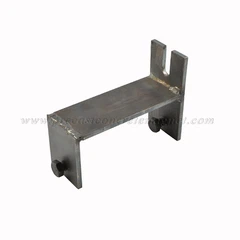
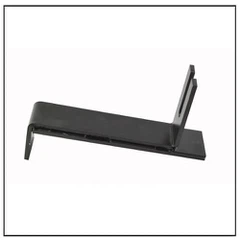
Fixing plates and brackets secure the inserts or holders to the formwork or casting table. Adjustable positioning accessories allow fine alignment in all directions, helping achieve tight tolerances that are difficult to reach with manual fixing methods.
Temporary vs. Permanent Fixing Elements
Temporary fixing elements are removed after demolding, while permanent fixing elements remain embedded in the concrete. Choosing the right type of fixing element affects reusability, surface finish, and overall production cost.
Compatibility with Formwork and Casting Tables
A well-designed fixing system integrates seamlessly with steel formwork and casting tables, improving setup speed and ensuring repeatable positioning across multiple production cycles.


Applications of Fixing Systems in Precast Concrete
Precast Wall Panels and Sandwich Panels
Wall panels often require precise positioning of inserts, sockets, and connection points. For sandwich panels, alignment is even more critical because components must span multiple layers. Fixing systems keep these elements stable during vibration, helping achieve clean edges, correct embedment depth, and reliable connection locations—without the need for on-site adjustments.
Structural Elements Such as Beams and Columns
Beams and columns carry real structural loads, so connection accuracy is essential. Fixing systems help maintain tight tolerances for anchors and embedded parts, reducing the risk of misaligned bolts, uneven joints, or installation delays during assembly.
Stairs, Balconies, Components
Fixing systems improve the positioning accuracy of lifting points and connection inserts while protecting surface finish. The result is smoother installation, fewer visible repairs, and a better overall appearance—especially important for architectural concrete elements.
Large Industrial and Commercial Precast Building Projects
Fixing systems support standardized production of panels, beams, and components, reducing rework and making quality control more predictable. For precast factories, this translates into higher output and fewer downstream issues during on-site assembly.
Type of Fixing Socket

Fixing Inserts

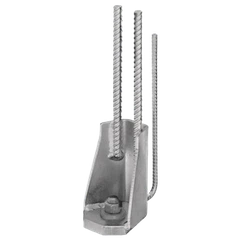
Fixing Socket With Bended End

Fixing Dowel With Crimped End

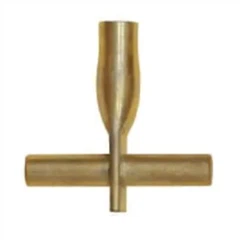
Fixing Socket With Nail Plate And Cross Pin
Fixing System vs Traditional Manual Fixing Methods
|
Comparison Item |
Fixing System |
Traditional Manual Fixing |
|
Accuracy |
Provides high positioning accuracy and repeatability. Inserts and anchors are fixed according to design drawings with minimal deviation. |
Relies heavily on manual measurement and worker experience, making positioning errors more likely. |
|
Labor & Time Requirements |
Standardized components allow fast installation and reduced setup time, improving production efficiency. |
Time-consuming and labor-intensive, requiring repeated measuring, adjustment, and correction. |
|
Safety Considerations |
Reduces manual handling and on-site adjustments, lowering the risk of accidents and operational errors. |
Higher safety risks due to frequent manual fixing, tool handling, and rework. |
|
Long-Term Production Consistency |
Ensures stable, consistent quality across batches, ideal for standardized precast production. |
Results vary between batches due to human factors and changing site conditions. |

How to Choose the Right Fixing System
Choosing the right fixing system is not just about holding components in place—it is about ensuring accuracy, safety, and long-term reliability throughout the production and installation of precast concrete units.
Select the Fixing System Based on Unit Type and Size
The first step is to consider the precast element itself. Wall panels, slabs, beams, and stairs each place different demands on a fixing system. Larger or heavier units usually require stronger fixing components and more precise positioning support to maintain stability during casting and handling.
Evaluate Load, Alignment, and Positioning Requirements
Take into account the loads applied during concrete pouring, lifting, and installation. A reliable fixing system must maintain accurate alignment under vibration and concrete pressure, ensuring that anchors and embedded inserts remain in their specified positions.
Check Compatibility with Anchors, Inserts, and Formwork
A dependable fixing system should work seamlessly with the selected anchors, threaded inserts, and formwork or casting tables. Proper compatibility helps prevent misalignment, surface defects, and installation issues.
Customization for Special Projects
Precast elements with complex geometries or non-standard designs often benefit from customized fixing solutions. Tailored systems can improve production efficiency while ensuring design accuracy and consistent quality.
FAQ
Q: Which components can be secured using this system?
A: The securing system can secure many casting parts and embedded components used in precast component production, such as fixing inserts, threaded sockets, anchor points, embedded plates, sleeves, and positioning accessories. It is designed to ensure these components remain stable during casting and vibration, thus holding them precisely in the position required by the drawings.
Q: Can the securing system be reused?
A: Yes. Most securing system components are designed for multiple casting cycles. Reusable components maintain consistent performance and help reduce long-term mold costs, provided they are properly cleaned after demolding and inspected periodically.
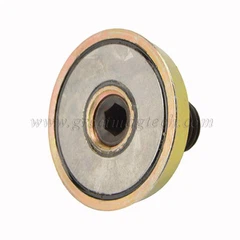
Q: Is the securing system compatible with magnetic templates?
A: In many cases, yes. The securing system can be used with magnetic template systems as long as the securing method, base plate, and layout match your casting station and template setup. If you can provide your template type and product drawings, we can recommend a compatible configuration.
Q: Does the securing system affect casting accuracy?
A: They improve casting accuracy. A well-designed fixing system improves positioning repeatability and reduces displacement during vibration, thus helping to maintain consistency in embedment depth, spacing, and alignment—especially in high-volume precast component production.
Q: Can a custom fixing system be developed?
A: Absolutely. If your precast components have special geometry, unique inserts, or stringent tolerance requirements, we can develop a custom fixing solution based on your drawings, dimensions, and production process.
-
![Fixing Inserts]() Fixing InsertsFixing Insert with Bended End Fixing Inserts with Bended End are used for the fixing of lightweight precast concrete units. They are easy to use because no reinforcement bar is required. fixing
Fixing InsertsFixing Insert with Bended End Fixing Inserts with Bended End are used for the fixing of lightweight precast concrete units. They are easy to use because no reinforcement bar is required. fixing -
![Wavy Tail Anchor(Long Type)]() Wavy Tail Anchor(Long Type)The socket of the Wavy Tail is available in high grade zinc plated carbon steel and is swaged to a waved reinforcement bar. They are available with Rd12 to Rd52 threads that have load ratings from
Wavy Tail Anchor(Long Type)The socket of the Wavy Tail is available in high grade zinc plated carbon steel and is swaged to a waved reinforcement bar. They are available with Rd12 to Rd52 threads that have load ratings from -
![Fixing Socket With Bended End]() Fixing Socket With Bended EndThe Fixing Socket with Bended End are by mean of their low height and the individual fixing possibilities suitable for fastening of pillars and props and for receiving axial forces.
Fixing Socket With Bended EndThe Fixing Socket with Bended End are by mean of their low height and the individual fixing possibilities suitable for fastening of pillars and props and for receiving axial forces. -
![Fixing Socket With Nail Plate And Cross Pin]() Fixing Socket With Nail Plate And Cross PinPrecast-produced fixing socket with cross nail plate transfer forces directly into the concrete without additional reinforcing steel. The fixing socket with a cross pin and nail plate did not need a
Fixing Socket With Nail Plate And Cross PinPrecast-produced fixing socket with cross nail plate transfer forces directly into the concrete without additional reinforcing steel. The fixing socket with a cross pin and nail plate did not need a -
![Fixing Dowel With Crimped End]() Fixing Dowel With Crimped EndPrecast produced Fixing Dowel With Crimped End transfer forces directly into the concrete without additional reinforcing steels. The fixing socket with cross pin and nail plate did not need plastic
Fixing Dowel With Crimped EndPrecast produced Fixing Dowel With Crimped End transfer forces directly into the concrete without additional reinforcing steels. The fixing socket with cross pin and nail plate did not need plastic -
![Fixing Socket With Cross Pin]() Fixing Socket With Cross PinGME Fixing Socket with cross bar transfers theforces into the concrete instead of additional reinforcement. Fixing Sockets with Cross Pin are designed for quick and easy connection of precast units
Fixing Socket With Cross PinGME Fixing Socket with cross bar transfers theforces into the concrete instead of additional reinforcement. Fixing Sockets with Cross Pin are designed for quick and easy connection of precast units -
![Fixing Socket For Fixing System]() Fixing Socket For Fixing SystemGME Fixing Socket are used for the fixing of light weight precast concrete units. A reinforcement tail must be used for the transmission of the load into the concrete. The Fixing Sockets are not
Fixing Socket For Fixing SystemGME Fixing Socket are used for the fixing of light weight precast concrete units. A reinforcement tail must be used for the transmission of the load into the concrete. The Fixing Sockets are not -
![Fixing Socket With Wavy End]() Fixing Socket With Wavy EndPrecast produced fixing socket with wavy end transfer forces directly into the concrete without additional reinforcing steels. Forces are transferred via the wavy end.
Fixing Socket With Wavy EndPrecast produced fixing socket with wavy end transfer forces directly into the concrete without additional reinforcing steels. Forces are transferred via the wavy end. -
![Fixing Socket With Wavy End With Nail Plate]() Fixing Socket With Wavy End With Nail PlatePrecast produced fixing socket with cross pin and nail plate transfer forces directly into the concrete without additional reinforcing steels.
Fixing Socket With Wavy End With Nail PlatePrecast produced fixing socket with cross pin and nail plate transfer forces directly into the concrete without additional reinforcing steels. -
![The Nailing Plate For Fixing System]() The Nailing Plate For Fixing SystemThrough the nailing plate , the socket dowels can be nailed to wooden formwork. A reinforcement bar has to be inserted through the cross hole thus a safe transmission of the static forces into the
The Nailing Plate For Fixing SystemThrough the nailing plate , the socket dowels can be nailed to wooden formwork. A reinforcement bar has to be inserted through the cross hole thus a safe transmission of the static forces into the


Great Magtech (Xiamen) Electric Co., Ltd. is one of the most professional fixing system for precast concrete unit manufacturers and suppliers in China, supplying the best wholesale service. Feel free to buy high quality fixing system for precast concrete unit from our factory.
Anchor Channel, Hot Rolled Cast in Channel, cast in channel