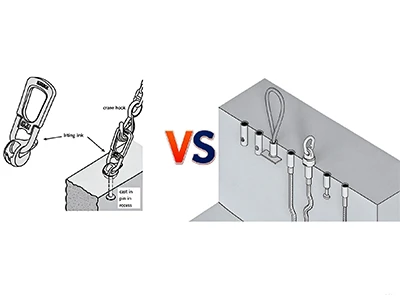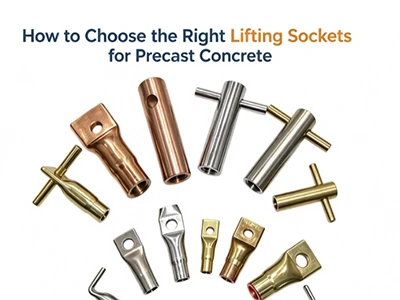





Cast the wrong insert, and your panel stays on the formwork. The lifting socket vs. lifting anchor choice decides how your crane connects: an internal thread for lifting loops and eye bolts, or a headed foot for a ring clutch. With rebar sockets, plate sockets, flat sockets, combi sockets, pin anchors, and plate anchors in carbon or stainless steel, picking one gets confusing. Know the difference and the choice becomes obvious. In this guide, you will learn how each system works, how they differ, and which one your panels need.
What Is a Lifting Socket?
A lifting socket is a steel insert you cast into wet concrete to create a lifting point. Each one is a threaded sleeve, sized from Rd12 to Rd36, with an anchorage end that locks into the pour. After curing, the thread takes a lifting loop or eye bolt and can later hold your fixings.
How a Threaded Lifting Socket Works
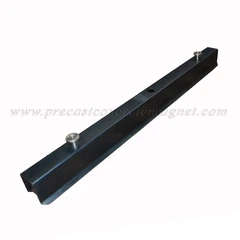
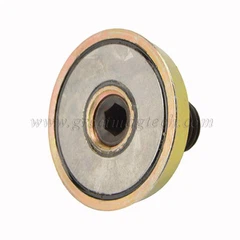
During casting, you fix the socket to the formwork or hold it on a magnetic socket bar, so its rebar tail or anchor plate sits in the pour. Once the concrete reaches lifting strength, you screw in a lifting loop or eye bolt, lift, then unscrew and reuse the hardware on the next element.
Common Types of Lifting Sockets
The versions below cover the full product range most plants order:
|
Socket Type |
Key Feature |
Best For |
|
Lifting Sockets With Bent End |
Bent anchorage end helps transfer lifting loads into the concrete. |
Precast beams, walls, and other elements with suitable reinforcement arrangements. |
|
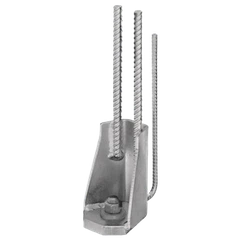
Wavy Tail Anchor |
Wavy reinforcement tail provides anchorage and helps transfer lifting forces into the concrete. |
Precast wall panels, including thin-walled elements where the specified anchor fits. |
|
|
Flat plate design provides a shallow installation profile and requires additional reinforcement. |
Thin precast slabs, large panels, and shell elements. |
|
|
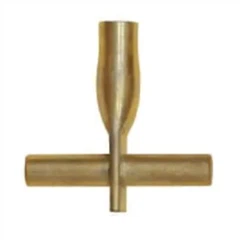
Internal threaded socket with a cross-hole for an anchorage reinforcement bar. |
Precast walls, beams, floor slabs, and other concrete elements. |


What Is a Lifting Anchor?
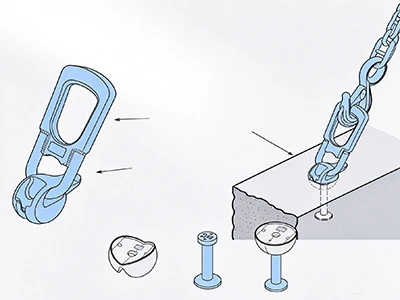
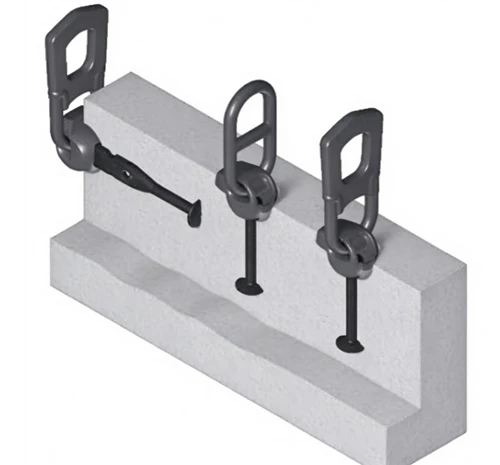
A lifting anchor is a steel insert with a shaped head, cast into concrete as the core of a clutch lifting system. It anchors through a foot, plate, or rebar end instead of a thread, leaving the head in a recess for the clutch.
How a Lifting Anchor Works with a Clutch
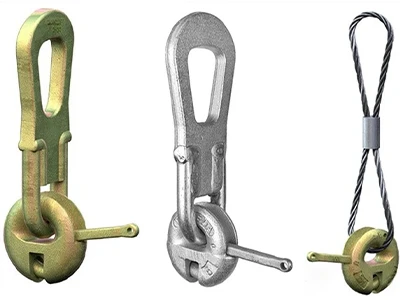
You cast the anchor under a magnetic recess former, which leaves a clean pocket in the face. Slide in a ring clutch, let the locking bolt snap over the head, lift, then release it for the next element.
Common Types of Lifting Anchors
Five families cover most plant needs:
|
Anchor Type |
Key Feature |
Best For |
|
|
Flat-bodied design allows connection with a compatible lifting hook or shackle. |
Precast slabs, concrete boxes, utility structures, and other suitable precast elements. |
|
Lifting Eye Anchors
|
Eye-shaped design allows reinforcement to pass through for load transfer into the concrete. |
Precast beams, columns, and elements requiring additional anchorage reinforcement. |
|
Spherical Head Anchor
|
Forged spherical head connects to a compatible lifting clutch for secure lifting. |
Precast wall panels, beams, columns, and other concrete elements requiring a clutch-based lifting system. |


Lifting Socket vs Lifting Anchor: 6 Key Differences
Six differences decide which system earns a place on your casting beds:
|
Difference |
Lifting Socket |
Lifting Anchor |
|
Connection |
Internal thread from Rd12 to Rd36 |
Cast-in head: pin, plate, or ball |
|
Lifting gear |
Lifting loops, eye bolts, swivel rings |
Ring clutch with locking bolt |
|
Typical loads |
Everyday panel weights; large Rd sizes go higher |
Heavier elements, up to 20 t versions |
|
Thin panel fit |
Flat sockets work in shallow cover |
Standard heads need deeper embedment |
|
After the lift |
Flush thread stays usable for fixings |
Recess pocket, usually patched |
|
Cycle speed |
Screw in, lift, unscrew each time |
Clutch snaps on and off in seconds |
How to Choose Between a Lifting Socket and a Lifting Anchor
The right pick follows your panels, your gear, and your line pace:
Choose a Lifting Socket When
- Your panels run thin. Flat and tubular sockets fit inside shallow cover where a standard head would not.
- The thread can double as a fixing point after the lift, so one insert does two jobs.
- Your crews already carry threaded loops and eye bolts, and familiar gear means fewer mistakes.
- Production is steady panel work rather than maximum tonnage, and you value hardware that lifts element after element.
-
Choose a Lifting Anchor When
- Your elements run heavy, and anchor families reach the 20 t class.
- Cycle speed counts on busy beds, because a clutch snaps on and releases in seconds.
- Panels tilt or rotate during handling, which ball and double heads are built for.
- Your plant already runs a clutch system, so matching anchors keep every lift compatible and every clutch in use.
Installation Basics for Sockets and Anchors
Both systems live or die by how you set them before the pour:
Positioning, Embedment Depth, and Edge Distance
Place every insert where your lifting plan puts it, because an insert is only as strong as the concrete cone around it. Embedment depth sets the size of that cone; edge distance keeps it intact. Too close to an edge, the cone breaks out sideways, and the element spalls instead of lifting. In thin sections, keep the anchorage inside the panel; the job flat sockets do best.

Holding Sockets and Anchors in Place During Casting
Sockets pin to the formwork through a plastic nailing plate or lock down on a magnetic steel plate, staying square during the pour. Anchors ride inside a magnetic recess former that both holds the head and shapes the pocket your clutch will enter. Magnetic versions speed up layout changes on steel beds, since you reposition by hand instead of drilling.
Common Mistakes to Avoid
Five habits cause most lifting trouble:
- Buying inserts at the bare minimum rating. Margin costs you little at purchase and pays off the day a panel comes out heavier than you planned.
- Ignoring sling angles. Shallow slings can nearly double the force at each insert, so run your slings steep and check the math.
- Trimming edge distance to squeeze in a lifting point. A spalled corner on your panel costs far more than a redrawn layout, so give the cone room.
- Mixing clutches and heads from different systems. They are matched pairs, and a near fit is not a fit.
- Lifting before the concrete reaches release strength. Inserts hold through the concrete around them, and green concrete lets go early.
Conclusion
Choosing between a lifting socket and a lifting anchor depends on your precast element's weight, thickness, lifting direction, and installation requirements. Lifting sockets use threaded connections, while headed lifting anchors typically work with compatible lifting clutches. Neither system is suitable for every application. You should check the load capacity, concrete strength, and lifting accessories before making your choice. If you're unsure which system fits your project, contact us with your precast element drawings and lifting requirements. We can help you select suitable lifting sockets or anchors for your precast concrete production.
FAQ
Q: Can a lifting socket be reused?
A: Yes, where it counts. The socket stays in the element for life, but the thread keeps working for later lifts and fixings, while your loops and eye bolts come out for the next cast.
Q: What materials are lifting sockets made of?
A: Most are carbon steel with a galvanized finish for everyday work in your plant. Stainless steel versions, such as SS 316, handle marine exposure, chemical plants, and architectural concrete where rust stains are unacceptable.
Q: Which is cheaper, a socket or an anchor?
A: Sockets usually win on price per piece, and their reusable hardware spreads your cost across every element after the first. Anchors cost more up front but pay back on fast, heavy cycles where clutch speed matters.
Q: Can I use lifting anchors in thin precast panels?
A: Not with standard heads, because the embedment and edge distance a head needs will not fit. Flat lifting sockets are the thin panel answer. If anchors are required, check the maker's minimum panel thickness before you cast.