




Introduction
The most common quality problems with precast concrete panels include chipped corners, rough edges, and uneven chamfers, and in many cases, the problem doesn't lie with the concrete itself. The real problem often starts at the formwork edges. Sharp 90° corners are fragile and easily damaged during vibration, demolding, lifting, and transportation. Magnetic chamfer strips can significantly improve this situation. By creating a controlled and consistent chamfer and securely attaching to the steel formwork, magnetic chamfer strips help reduce edge damage, prevent concrete leakage, and minimize rework.
What Are Magnetic Chamfers in Precast Concrete?
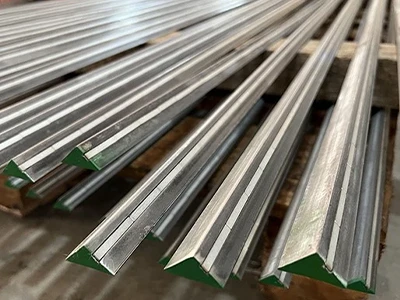
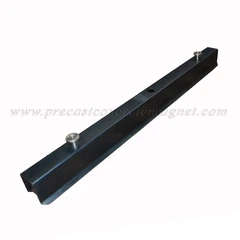
Magnetic chamfer strips consist of magnets embedded in triangular metal plates and sealed with epoxy resin to ensure protection from concrete damage, thus maximizing reusability. They allow for quick and accurate positioning of chamfer strips in steel formwork construction and significantly save labor and material costs by eliminating many of the construction finishing problems associated with using wooden products. Simply place the magnetic strip on the formwork table, and the built-in magnets will securely hold it in place.
By creating a controlled bevel, magnetic chamfer strips reduce stress concentrations at the edges and help prevent chipping during demolding and lifting. Compared to traditional wooden or rubber chamfer strips, magnetic chamfer strips typically offer faster installation, more precise positioning, and better repeatability, making them a practical upgrade for mass precast production.
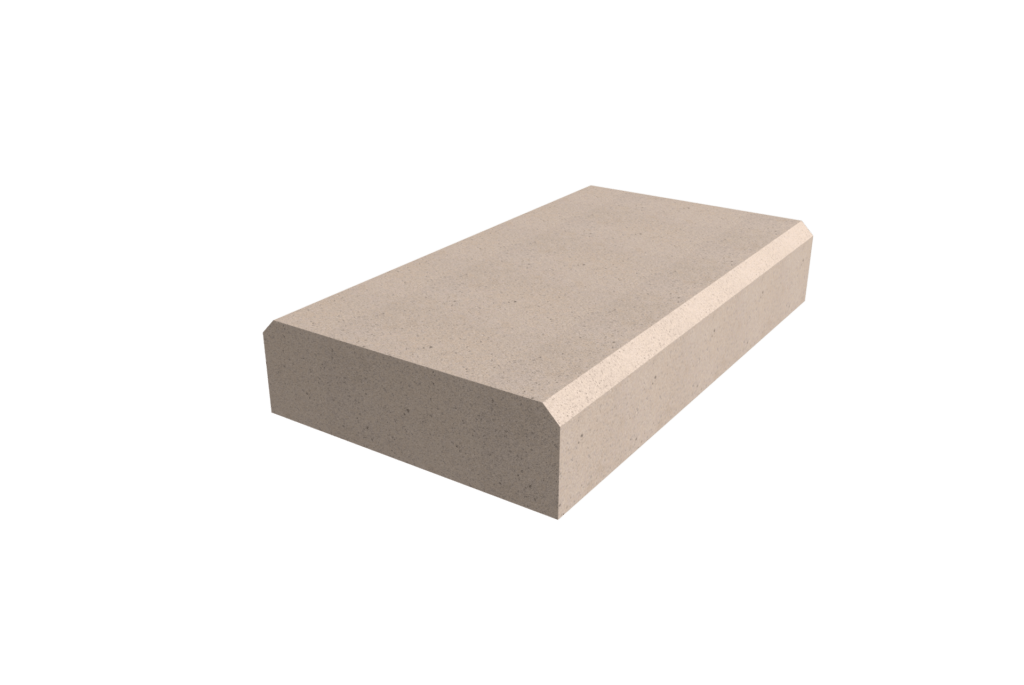
Common Types of Concrete Chamfer
Steel Chamfer
Powerful magnets are embedded in the beveled surface for maximum adhesion to any steel surface
High-quality steel and magnets ensure long life and optimal performance
Durable to ensure a solid return on the original investment
Available with one-sided or double-sided magnetization
No screws, bolts, or welding are necessary to accurately position chamfers on formworks, meaning no dents, holes, or cuts on the formwork tables.
Steel chamfers are designed to work with steel beds or steel faceplates and can be effortlessly mounted to most types of precast rail frames.
Compared with the traditional chamfering bar, the strong suction force can ensure that the chamfering bar will not move when watering.
Convenient for scale, standardization, and mass production.
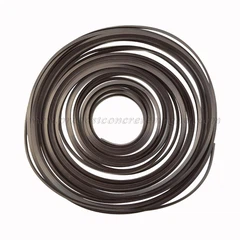
Magnetic Urethane Chamfer
Magnetic urethane chamfers combine flexible material with strong magnetic fixation.
They attach quickly to steel formwork, offering clean edges without welding or glue.
The urethane body absorbs vibration, helping reduce edge chipping and slurry leakage.
Ideal for precast plants that require fast changeovers, repeatable accuracy, and reduced setup time.
Rubber Concrete Chamfer
Rubber chamfers are lightweight and adaptable to various formwork surfaces.
While flexible, rubber chamfers may deform under vibration or wear faster in high-cycle production.
Often used for smaller projects or non-steel formwork systems.

Why Edge Quality Matters in Precast Panels
The edge quality of precast panels is often one of the first details people notice, yet it's also one of the most easily overlooked aspects of the production process. Sharp and unprotected edges are naturally prone to damage. During vibration, demolding, lifting, transportation, and on-site installation, stress tends to concentrate at the corners, making them more susceptible to chipping or cracking. Even minor edge defects can develop into significant damage after multiple handling of the panels.
From a production standpoint, poor edge quality leads to rework, repairs, and delays. From a visual perspective, uneven or damaged edges reduce the overall aesthetic quality of the panel, especially for architectural precast components where smooth lines and consistent geometry are crucial. Panels with sharp edges require more repairs than those with clean, well-defined chamfers, and still struggle to achieve the same surface quality.
How Magnetic Chamfers Improve Edge Quality
Creating Consistent and Controlled Bevels
Magnetic chamfers create precise, repeatable bevels along panel edges, replacing fragile 90° corners with a controlled angled profile. This subtle geometric change helps reduce stress concentration during vibration, lifting, and handling. Because the chamfer position is fixed and consistent from panel to panel, edge dimensions remain uniform across production batches, improving both structural reliability and visual quality.
Preventing Slurry Leakage and Edge Fins
Edge defects often begin with tiny gaps between the chamfer and the formwork. Magnetic chamfers fit tightly against steel molds, maintaining continuous contact throughout casting and vibration. This stable fixation limits slurry leakage, reduces fins and flash, and results in cleaner edges that require less grinding or patching after demolding.
Reducing Edge Damage During Demolding
Many corner defects occur during demolding rather than during casting. Magnetic chamfers provide smooth, stable edge support, allowing panels to release evenly from the mold. With fewer catch points and lower edge stress, the risk of chipping and spalling during demolding and lifting is significantly reduced.
Magnetic Chamfers vs Traditional Chamfer Fixing Methods
|
Aspect |
Magnetic Chamfers |
Traditional Chamfer Fixing Methods |
|
Fixing method |
Uses a strong magnetic force to attach directly to steel formwork, keeping the chamfer firmly in place during vibration and casting. |
Relies on nails, screws, glue, or welding, which can loosen, shift, or vary in thickness during production. |
|
Edge quality |
Produces clean, consistent bevels with minimal slurry leakage, resulting in smoother and more uniform panel edges. |
Often leads to uneven edges, fins, or rough corners due to gaps, movement, or inconsistent installation. |
|
Installation efficiency |
Quick to install, easy to reposition, and highly repeatable across multiple casting cycles. |
Slower to install and remove, with higher labor input and greater risk of alignment errors. |
|
Reusability & cost |
Reusable for many cycles, helping reduce long-term operating and maintenance costs. |
Limited reusability and higher ongoing costs due to damage, waste, and frequent replacement. |
Choosing the Right Magnetic Chamfer for Your Precast Panels

Select the appropriate chamfer strip size based on the panel size and handling method: For standard wall panels, 10×10 mm or 15×15 mm sizes are common; for larger or heavier panels, 20×20 mm or larger sizes are usually required to protect the panel corners during lifting and transportation.
Check your formwork surface: Magnetic chamfer strips work best on clean, flat steel formwork. If your mold surface has rust, paint buildup, or welds, a stronger magnetic force and better surface preparation will be needed.
Consider vibration intensity: Higher vibration intensity or faster production lines require a more stable fixing method to avoid small gaps and grout leakage.
Consider profile requirements: Straight chamfer strips create clean shadow lines; special profiles can improve the architectural finish.
Conclusion
In precast component production, edge quality is far from a minor issue; it directly affects handling safety, visual appearance, and rework costs. Magnetic chamfers help resolve many common edge problems at the formwork stage, where most defects originate. By creating a stable and consistent bevel and remaining firmly fixed during vibration and casting, magnetic chamfers deliver smoother edges and more uniform results than traditional fixing methods. For precast plants looking to improve product quality without increasing daily operational complexity, magnetic chamfers offer a practical and reliable long-term solution.
FAQ
Q: What is the function of magnetic chamfer strips in precast concrete?
A: Magnetic chamfer strips are used to create stable and uniform chamfers on the edges of precast concrete components. They reduce chipping, lower stress concentration at corners, minimize edge spalling and rough edges, and significantly improve the appearance, especially for precast panels used in architectural decoration.
Q: Are magnetic chamfer strips only suitable for steel molds?
A: Basically, yes. Magnetic chamfer strips rely on magnetic force for adhesion and are primarily suitable for steel bases, steel molds, and steel formwork. For aluminum molds, wooden molds, or composite material molds, non-magnetic chamfer strips or other fixing methods are required.
Q: Can magnetic chamfer strips reduce chipping during demolding?
A: They can significantly reduce chipping. Compared to 90° right angles, chamfered edges are less prone to cracking. At the same time, the chamfer strips provide more stable fixation, resulting in more even stress distribution at the corners during demolding, thus reducing the risk of chipping.
Q: What are the common chamfer specifications for precast wall panels?
A: Common specifications include 10×10 mm, 15×15 mm, 20×20 mm, etc. The specific choice depends on the component thickness, lifting method, transportation risks, and final appearance requirements.
Q: Will vibration cause the magnetic chamfer strips to shift?
A: If the magnetic force is sufficient and the steel surface is clean and flat, they usually will not shift. Shifting usually occurs due to debris/unevenness on the steel surface, insufficient magnetic force, or strong vibration causing changes in edge stress.
Q: Can magnetic chamfer strips be reused?
A: Yes. Under normal circumstances, they can be reused multiple times. The lifespan mainly depends on handling methods, cleaning and maintenance habits, and avoiding bumps, bending, and improper storage.
Q: What are the differences between magnetic chamfer strips and rubber chamfer strips?
A: Magnetic chamfer strips: Suitable for steel molds, fast installation, precise positioning, and high reusability.
Rubber chamfer strips: Wider range of applications, but may deform, and different fixing methods may lead to leakage or displacement.
For high-frequency production lines using steel molds, magnetic chamfer strips are usually more stable and consistent.