What Is an Insert Magnet Used for in Precast Molds?

Aug 11, 2026

Leave a message

Bella
Bella
Bella is a Senior Engineer at Xiamen Great Magtech Technology Co., Ltd. With over five years of professional experience in the precast concrete industry, she specializes in the design and R&D of formwork magnets and magnetic products. Leveraging her

In precast concrete production, you need to keep embedded parts such as threaded sockets, electrical boxes, pipes, and anchors in the correct position before and during casting.

An insert magnet holds these components securely on a steel mold or casting table while concrete is poured and vibrated.

Compared with drilling, welding, or temporary fixing, inserting magnets provides a reusable and flexible solution. They are especially useful when you need to change insert positions frequently for different precast products.


What Is an Insert Magnet?

An insert magnet is a reusable magnetic positioning device used to fix embedded parts or their locators to a steel precast concrete mold.

The most important point is that the magnet and the insert are usually two different components.

The insert is the part that may remain inside the finished precast element, such as a threaded socket, ferrule, electrical box, or connection component. The insert magnet is mainly a production tool that keeps this part in the required position while concrete is poured and vibrated.

Depending on the application, you may also see terms such as magnetic insert holder, embedded-part magnet, or magnetic fixing device.

Because precast inserts vary greatly in shape and size, insert magnets can also be designed with different threads, pins, adapters, recess formers, or customized locating structures.

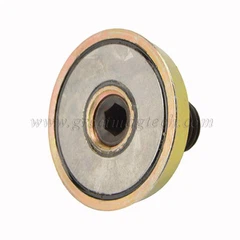
Ferrule Insert Concrete Magnet

Ferrule Insert Concrete Magnet

Get a Quote 

Embedded Magnet

Embedded Magnet
 

Electrical-Box Insert Magnet

Electrical-Box Insert Magnet

Get a Quote

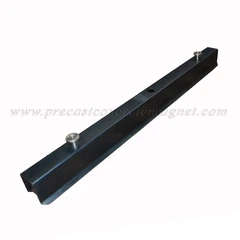
Rectangle Embedded Magnets

Rectangle Embedded Magnets

Get a Quote

Fixing Magnets

Fixing Magnets
 

Get a Quote

What Is an Insert Magnet Used For?

The main purpose of an insert magnet is to keep an embedded component accurately positioned during precast concrete production.

Instead of looking only at the magnetic force, you should first consider what component needs to be positioned and how it must appear in the finished concrete element.

Common applications include the following.

Threaded Sockets and Ferrules

Threaded sockets and ferrules are widely used in precast wall panels, slabs, and other concrete elements as future fixing or connection points.

A ferrule insert magnet helps position the threaded component at the correct location on the mold and keeps it stable while concrete is poured.

Application of Insert Magnets in Precast Concrete Production

Depending on the design, the insert may be screwed directly onto the magnetic locator or connected through an adapter.

This is particularly useful in repetitive production because you can reposition the magnet when the socket layout changes without drilling new fixing holes into the steel casting table.

The magnet also helps control the relationship between the socket and the finished concrete surface.

Pipe Sleeves and Openings

Precast elements often require openings for electrical conduits, water pipes, ventilation, or other building services.

A pipe magnet or magnetic pipe locator can help position the pipe sleeve or opening former in the required location before concrete is poured.

For repetitive production, this makes it easier to control the opening position and move the locator when a new panel design requires a different layout.

The correct solution depends on the pipe diameter, former design, and the way the component connects to the magnet.

Anchor Plates and Connection Components

Certain precast elements require anchor plates, connection plates, or other embedded connection components.

These parts may later connect the concrete element to steel structures, brackets, façade systems, or adjacent precast components.

Because their final position can affect site installation, accurate mold positioning is important.

Applications of Insert Magnets

A magnetic fixing device can be designed to hold suitable connection components against the steel mold during casting.

For larger or irregularly shaped parts, a customized magnetic fixture may be more appropriate than a standard insert magnet.

Lifting Sockets and Related Components

Magnetic positioning devices can also be used for certain lifting sockets, recess formers, and lifting-system components.

In these applications, the magnet helps keep the component at the specified position during concrete casting or helps form the required recess in the concrete surface.

However, the magnet itself does not determine the lifting capacity of the finished precast element.

Safe lifting depends on the approved lifting system, anchor specification, concrete strength, embedment, and lifting direction.

The insert magnet should therefore be treated as a production positioning tool, not as part of the structural lifting design.

Electrical Boxes

Electrical boxes and junction boxes are frequently cast into precast wall panels.

Their position needs to match the electrical layout so that cables, switches, or other electrical components can be installed correctly later.

An electrical box magnet holds the box or its former against the steel mold during casting.

Application of Magnetic Fixings for Electrical Boxes

Unlike a simple round ferrule, an electrical box may be square, rectangular, round, or specially shaped. For this reason, the magnetic holder is often designed around the actual box dimensions.

If you use several box sizes in production, different magnetic locators or adapters may be required.


How Does an Insert Magnet Work in a Precast Mold?

An insert magnet works by using magnetic force to hold an embedded part or positioning former securely against a steel precast mold during casting.

First, you mark the required position according to your production drawing. You then connect the threaded ferrule, socket, pipe former, electrical box, or other insert to the matching magnetic holder or adapter.

Next, place the complete assembly on the steel mold. The magnet holds it firmly in position while you install reinforcement and complete the pre-pour inspection.

During concrete pouring and vibration, the magnetic holder helps prevent the insert from shifting, so you can maintain the required position and recess.

After the concrete has cured and the precast element is demolded, you can remove the magnetic holder, clean it, and reuse it for the next production cycle.

For reliable positioning, always keep the magnet contact surface clean and make sure the insert is correctly connected before casting.


How Is the Insert Connected to the Magnet?

How the embedded part connects to the magnet depends mainly on its shape and design.

You should therefore not choose an insert magnet only by its diameter or advertised holding force

Threaded Inserts

Threaded Inserts

For threaded ferrules, bushings, or sockets, the connection can be straightforward.

The embedded part is connected to a magnet with a matching external thread.

For example, if you use M12, M16, or M20 threaded components, you should select the corresponding thread specification.

Besides thread size, you should also check the insert diameter and required position relative to the concrete surface.

Electrical Boxes and Pipes

Electrical boxes and pipes normally cannot be connected in the same way as a threaded ferrule.

Instead, they require a magnetic locator that matches their geometry.

The locating structure may fit around, inside, or against the component depending on the actual product design.

This is why the box dimensions or pipe diameter are important when selecting the magnet.

Special Embedded Parts

If your embedded part has a non-standard shape, the magnetic holder can be designed according to the component drawing or sample.

For this type of application, the key question is:

How should the part be positioned and supported during casting?

Once that is clear, the locating structure and magnetic force can be matched to the application.


Why Use Insert Magnets in Precast Production?

The main advantage of inserting magnets is not simply a strong magnetic force.

Their real value is that they provide a movable and reusable positioning solution for embedded parts on steel molds.

Easier Position Adjustment

When the position of an insert changes between precast designs, you can move the magnetic holder to the new location.

You do not need to rely on the same permanent fixing point for every panel.

Reduce Permanent Changes to the Casting Table

Many embedded parts can be positioned magnetically without repeatedly drilling or welding the steel casting table.

This is particularly useful when one production table is used for multiple precast designs.

Suitable for Repetitive Production

After the element is demolded, the magnetic locator can normally be reused.

For high-volume precast production, this makes magnetic positioning practical for repeated production cycles.

Improve Positioning Consistency

When the embedded part fits the magnetic locator correctly, you can maintain a more repeatable position between production cycles.

This is especially useful for threaded fixing points, electrical boxes, and pipe openings that need to match later installation requirements.


What Affects Insert Magnet Performance?

The rated magnetic force is important, but it is not the only factor that determines whether an insert stays in position.

Insert Magnet Surface Condition

The magnetic base needs good contact with the steel casting table.

Concrete residue, rust, dirt, or an uneven contact surface can reduce magnetic performance.

Insert Magnet Surface Condition

Air Gap

Even a small gap between the magnet and steel mold can affect the available holding force.

Paint, coatings, and material trapped under the magnet should therefore be considered.

Size of the Embedded Part

A small threaded ferrule and a large electrical box do not require the same positioning solution.

As the component becomes larger or taller, its shape and stability become increasingly important.

Concrete Vibration

The magnetic holder must keep the part stable while concrete is placed and vibrated.

If the component is large or exposed to significant movement during casting, you may require a stronger or differently designed fixing solution.

Fit Between the Insert and Locator

A strong magnet cannot compensate for a poorly matched locating structure.

The embedded component should fit the magnetic holder correctly so that its position and orientation remain controlled during production.


How to Choose the Right Insert Magnet

When choosing an insert magnet, start with the part you need to position.

Identify the Embedded Part

Confirm whether you need to fix a threaded bushing, electrical box, pipe, grouting tube, anchor plate, or another component.

This determines the basic magnetic holder design.

Check the Dimensions

Measure the important dimensions of the embedded part.

For threaded components, provide the thread size. For pipes and boxes, provide the diameter or outside dimensions.

Confirm the Required Position

Determine how the component needs to sit relative to the finished concrete surface.

For example, does it need to be flush, recessed, or used to form an opening?

This information can affect the locator height and structure.

Check the Mold Material

Standard insert magnets need a suitable ferromagnetic steel surface for direct magnetic fixing.

If your mold is made from another material, you may need an additional steel contact surface or another positioning method.

Consider Production Conditions

Think about the component size, concrete vibration, and how often you need to reposition the insert.

These factors help determine whether an existing standard product is suitable.


Conclusion

Insert magnets help you position threaded inserts, electrical boxes, pipes, and other embedded parts accurately in precast molds. The right solution depends on your insert shape, dimensions, thread size, and required position, not only on magnetic force. Choosing a suitable magnet can make positioning easier and support more consistent precast production. If you are unsure which insert magnet fits your application, send us your drawing, dimensions, or sample. We can recommend a standard solution first and provide a customized magnetic holder when needed.


FAQ

Q: What Is an Insert Magnet Used for in Precast Concrete?

A: An insert magnet is used to hold threaded inserts, electrical boxes, pipes, grouting tubes, anchor plates, and other embedded parts in the correct position during concrete casting.

Q: Can Insert Magnets Be Reused?

A: Yes. Insert magnets are designed for repeated production cycles. Keeping the magnetic surface clean and avoiding heavy impact can help maintain reliable performance.

Q: Can Insert Magnets Be Customized?

A: Yes. If your embedded part has a special size, shape, thread, or positioning requirement, the magnetic holder can be customized according to your drawing or sample.

Q: Will an Insert Magnet Move During Concrete Vibration?

A: A correctly selected insert magnet should keep the component stable during normal pouring and vibration. Actual performance also depends on the mold surface, air gap, component size, and fixing structure.

Q: Can One Insert Magnet Be Used for Different Inserts?

A: Sometimes. If several inserts have similar dimensions or use the same connection structure, one magnetic holder may be suitable. Different shapes or sizes may require another locator or custom design.

Contact GME Now!

Send Inquiry