




Introduction
Although small in size, plastic spacers play a crucial role in concrete structure construction. Without proper spacing, reinforcing steel bars can shift during the pouring process, leading to the bars being too close to the concrete surface and compromising the durability of the structure. This is where plastic spacers come in. They help maintain the correct concrete cover thickness, protect the reinforcing steel from corrosion, and ensure that the structure meets design and code requirements. For modern construction projects, especially precast components and large-scale buildings, plastic spacers are a simple and reliable solution that ensures the long-term performance and quality of the structure.

What Are Plastic Spacers in Concrete Construction?
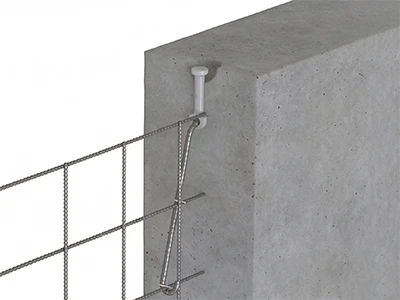
Plastic spacers are small but crucial components used in reinforced concrete structures to maintain the correct distance between the rebar and the formwork. Their primary function is to ensure the specified concrete cover thickness is achieved, thereby protecting the rebar from corrosion, fire, and long-term environmental damage. Without spacers, the rebar can easily shift during pouring or vibration, leading to uneven cover thickness and potentially causing structural problems.
By securely supporting and fixing the rebar, plastic spacers help keep the rebar precisely in the position intended by the engineer. This stable positioning improves the uniformity of the entire structure, whether on the construction site or in a precast factory.
Plastic spacers come in several common shapes to suit different applications:
Wheel-shaped spacers are typically used in vertical walls and columns.
Chair-shaped spacers are used to support rebar in slabs and foundations.
Line spacers provide continuous and uniform support along longer lengths of rebar.
These different shapes of plastic spacers collectively form a practical and efficient solution in modern concrete structures.
Improving Durability and Corrosion Resistance
Plastic spacers play a subtle yet crucial role in improving the durability of reinforced concrete structures. They securely hold the rebar in its designed position, ensuring an accurate and consistent concrete cover thickness, which is the first line of defense against corrosion. With adequate cover thickness, the rebar is better protected from oxygen, moisture, and corrosive chemicals that can cause rusting and long-term structural damage.
There is a direct relationship between concrete cover and corrosion. Insufficient cover allows water, chlorides, and carbon dioxide to penetrate more easily to the rebar surface, accelerating corrosion and shortening service life. Plastic spacers prevent the rebar from sagging or shifting during casting, ensuring that the specified cover thickness is actually achieved on the construction site, not just on the drawings.
Unlike metal supports, plastic spacers do not create corrosion pathways. They reduce the penetration of moisture and chemicals by maintaining a uniform concrete cover around the rebar and do not react with cement or steel.
Plastic Spacers vs Concrete and Steel Spacers
|
Comparison Aspect |
Plastic Spacers |
Concrete Spacers |
Steel Spacers |
|
Cover Accuracy |
Molded sizes, consistent cover |
Casting tolerance varies |
Accurate but may shift |
|
Durability |
Moisture/chemical resistant |
May crack under load |
Rust risk over time |
|
Corrosion Risk |
Non-reactive, no rust path |
Low but can hold moisture |
High, can create rust bridges |
|
Installation Speed |
Lightweight, fast install |
Heavy, slower placement |
Needs careful fixing |
|
Precast Suitability |
Great for repetitive use |
Less consistent in lines |
Often not recommended |
Installation Efficiency and Construction Productivity
Installation efficiency is one of the key reasons for the widespread use of plastic spacers in modern concrete construction. Whether on the construction site or in a precast factory, plastic spacers are lightweight and easy to clip onto rebar, allowing workers to quickly position the rebar without special tools. This convenience is especially important in fast-paced projects where speed and consistency are crucial.
Plastic spacers are fully compatible with both manual rebar tying and automated rebar placement systems. In precast production lines, they integrate seamlessly with standardized workflows, reducing interruptions and rework. Compared to concrete or steel spacers, plastic spacers are less likely to crack, shift, or cause misalignment during the pouring process.
By minimizing installation time and reducing positioning errors, plastic spacers help lower overall labor costs while improving accuracy. In large-scale projects, this ensures a more uniform concrete cover and reduces quality issues.

Common Applications of Plastic Spacers
Plastic spacers are widely used in slabs, walls, columns, and foundations to keep reinforcement at the correct height and ensure consistent concrete cover. In flat slabs and foundations, they help prevent rebar from sinking during pouring, while in vertical walls and columns, they maintain precise spacing even under vibration, reducing the risk of exposed steel or uneven cover.
In precast concrete elements, plastic spacers are especially valued for their consistency and efficiency. Precast factories rely on them to achieve repeatable results across large production runs, helping meet strict dimensional tolerances and quality control standards without slowing down assembly.
Conclusion
Although small in size, plastic spacers play a crucial role in concrete quality. They secure the reinforcing steel in the correct position, ensuring accurate concrete cover thickness, reducing the risk of corrosion, and improving the long-term durability of the structure. Choosing the right plastic spacers is not just a technical detail, but a practical decision that protects structural performance, extends service life, and helps us confidently deliver concrete projects that meet today's standards.
FAQ
Q: What are the uses of plastic spacers in concrete construction?
A: Plastic spacers are used to hold reinforcing steel in the correct position during concrete pouring. They ensure the required concrete cover thickness is maintained, thus protecting the rebar from corrosion and helping the structure meet design and code requirements.
Q: Are plastic spacers better than concrete or steel spacers?
A: In most applications, yes. Plastic spacers are lightweight, dimensionally consistent, and do not create corrosion pathways. Unlike concrete spacers, they are not prone to cracking; unlike steel spacers, they do not rust or compromise durability.
Q: Can plastic spacers be used in precast and cast-in-place concrete?
A: Yes. Plastic spacers are widely used in precast factories and on-site construction. They perform well in slabs, walls, columns, beams, and foundations.
Q: Do plastic spacers affect concrete strength?
A: No. When properly selected and installed, plastic spacers do not reduce concrete strength. They help maintain the proper cover thickness, which can actually improve the long-term performance of the structure.
Q: How do I choose the right size of plastic spacer?
A: The spacer size depends on the required concrete cover thickness specified in the design. Always choose spacers that match the cover thickness and the type of rebar being used.