




Introduction
Concrete cracking is one of the most common and costly problems in concrete structures. When it comes to reinforcement, many engineers and precast component manufacturers ask the same question: Which is better, polypropylene fibers or steel mesh? Both aim to improve concrete performance, but they address very different problems.
Polypropylene fibers focus on early crack control and surface quality, while steel mesh is used to improve structural strength and load transfer. Understanding this difference is crucial, as choosing the wrong material can lead to unnecessary costs, rework, or performance issues.

What Is Polypropylene Fiber in Concrete?
Polypropylene fibers are a synthetic reinforcing material added directly during the concrete mixing process.
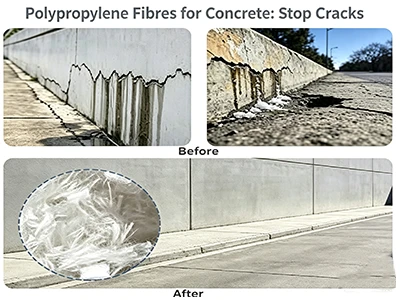
Unlike traditional steel reinforcement, they are evenly distributed throughout the concrete matrix, rather than being laid in a single layer. Their primary function is to control plastic shrinkage and early cracking, phenomena that typically occur in the first few hours after pouring. These fibers work by forming a microscopic network that holds the concrete together as moisture evaporates.
Compared to wire mesh, polypropylene fibers do not bear structural loads, but they excel at preventing surface cracking and improving surface quality. They are lightweight, non-corrosive, and chemically stable, making them suitable for corrosive or humid environments.

What Is Rebar Mesh and How Does It Reinforce Concrete?
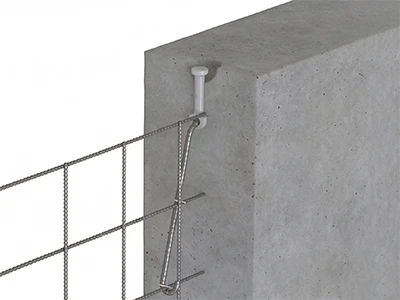
Rebar mesh is a welded steel reinforcement made from evenly spaced steel bars arranged in a grid pattern, designed to enhance concrete's tensile strength, since concrete itself is relatively weak in tension. Once embedded within the concrete, the mesh works together with the hardened concrete matrix to resist bending, stretching, and cracking caused by applied loads, temperature changes, and structural movement. Compared with placing individual rebars, rebar mesh offers more uniform spacing and faster installation, which is why it is widely used in slabs, floors, and precast concrete elements.
Rebar mesh provides measurable tensile strength that engineers can calculate and rely on in structural design. Unlike fibers that are mixed directly into concrete, rebar mesh directly contributes to load-bearing capacity and controls cracking under stress. When properly positioned with sufficient concrete cover, it forms a stable reinforcement framework that significantly improves durability and long-term structural integrity.
Polypropylene Fiber vs Rebar Mesh
|
Aspect |
Polypropylene Fiber |
Rebar Mesh |
|
Primary function |
Controls plastic shrinkage and micro-cracks throughout the concrete |
Provides tensile strength and structural reinforcement |
|
Crack control |
Excellent for early-age and surface cracks |
Limited effectiveness on early-age cracking |
|
Structural role |
Non-structural reinforcement |
Structural load-bearing reinforcement |
|
Installation method |
Mixed directly into concrete during batching |
Manually placed and fixed in formwork |
|
Labor requirement |
Low, minimal additional labor |
High, labor-intensive installation |
|
Corrosion |
Non-corrosive, chemically stable |
Risk of corrosion if poorly protected |
|
Impact on efficiency |
Improves batching speed and precast efficiency |
Slows production due to manual work |
|
Typical applications |
Precast panels, slabs for crack control, thin elements |
Beams, columns, foundations, heavy floor |
Crack Control Performance
Polypropylene fibers play a role in controlling cracking from the very beginning of concrete pouring. Because the fibers are dispersed throughout the concrete mixture, they help to hold fresh concrete in place as moisture evaporates, reducing plastic shrinkage cracks and fine surface cracks, preventing them from developing into visible defects. This is especially important for precast component production, where the surface quality of precast components is crucial; even tiny cracks can lead to repairs, scrap, or increased finishing time.
Reinforcing mesh can help limit crack width after concrete has hardened, but it is not an effective solution for early-stage cracking. The depth of the reinforcing mesh is fixed, so its surface can still crack if drying is too rapid or curing is uneven.
In effect, the fibers act as a full-area crack control network, while the reinforcing mesh acts as a structural skeleton. For many precast slabs and components, adding polypropylene fibers is a direct and effective method that can improve appearance, reduce rework, and increase production efficiency.
Can Fiber Replace Rebar Mesh?
Why Polypropylene Fibers Cannot Replace Reinforcing Mesh for Structural Strength Enhancement
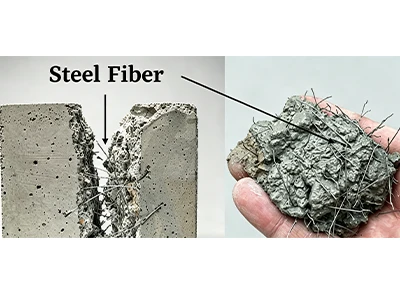
Reinforcing mesh plays a structural role in concrete, bearing tensile forces and helping members resist bending, loads, and long-term stress. It acts like an internal frame, safely transferring loads to the concrete. Polypropylene fibers function entirely differently. While polypropylene fibers dispersed in the concrete mixture can control microcracks and improve toughness, they cannot form a continuous load transfer path. For beams, columns, foundations, and any load-bearing member, reinforcing mesh remains crucial and cannot be replaced by fibers.
When Can Fibers Replace Reinforcing Mesh?
When reinforcing mesh is primarily used to control shrinkage cracks rather than enhance structural strength, polypropylene fibers can replace it. This is common in thin slabs, non-load-bearing precast slabs, cladding layers, and surface-critical components. In many precast component applications, reinforcing steel provides strength, while fibers improve crack resistance and surface quality.
Best Applications for Polypropylene Fiber

Polypropylene fiber is best suited for applications where crack control, surface quality, and production efficiency are more critical than structural load-bearing capacity.
Precast wall panels and façade elements: Especially suitable for thin sections where early-age cracking and surface defects are more common.
Floors and slabs: Helps control plastic shrinkage cracks, particularly in large pours exposed to wind or high-temperature conditions.
Thin or complex precast components: Well-suited for panels, covers, and architectural elements where rebar mesh placement is difficult or inefficient.
High-output precast factories: Fibers are mixed directly into the concrete, eliminating manual mesh placement and accelerating production cycles.
Corrosion-prone environments: Unlike steel, polypropylene fiber does not rust, making it suitable for humid or aggressive environments.
Best Applications for Rebar Mesh

Reinforcing mesh is best suited for structural concrete members with extremely high requirements for load transfer and tensile strength.
It is commonly used in beams, columns, and foundations, where the concrete must safely withstand long-term structural loads. Reinforcing mesh helps control bending stresses and improves the overall structural reliability. Although installation requires more manual labor, its measurable strength and long-term stability make it indispensable in critical applications.
Which Reinforcement Should You Choose?
Polypropylene Fiber
If the concrete element is non-structural or lightly loaded, polypropylene fiber is an effective solution for controlling plastic shrinkage cracks and improving surface quality. It is especially suitable for precast wall panels, thin sections, slabs, and applications where consistent finishes and faster production cycles are important. By eliminating manual placement, fiber also helps reduce labor time and rework.
Rebar Mesh
For load-bearing elements such as beams, columns, foundations, and heavy industrial floors, rebar mesh remains essential. It provides the tensile capacity and load transfer that fibers cannot replace. In many precast projects, combining rebar mesh with polypropylene fiber delivers the best result-structural reliability from steel, and improved crack resistance and durability from fiber.
Conclusion
Polypropylene fibers and reinforcing mesh are not contradictory, but rather a balance.
Polypropylene fibers excel in controlling early cracking, improving surface quality, and increasing production efficiency. On the other hand, reinforcing mesh remains crucial for structural strength and load-bearing capacity.
If you desire better crack control, reduced rework, and more consistent concrete quality, then polypropylene fibers deserve serious consideration and should be incorporated into your rebar reinforcement strategy.