





Introduction
Shuttering magnets are specifically designed for precast concrete production, but over time, many factories notice that they no longer hold as firmly as they once did.
In most cases, this is not because the magnetic force has been "used up." Concrete residue, steel filings, heat exposure, or minor damage to the housing can all reduce the magnet's effective holding force. Compared with traditional bolted or welded fixing methods, the performance of shuttering magnets depends entirely on clean surface contact, proper handling, and reasonable load conditions.
Understanding these factors helps you avoid unnecessary replacements, improve the stability and service life of shuttering magnets, and keep precast production running smoothly.

Understanding How Shuttering Magnets Work
How Neodymium Magnets Generate Holding Force
The "holding force" of a shuttering magnet essentially comes from the strong magnetic field generated by high-performance neodymium magnets.
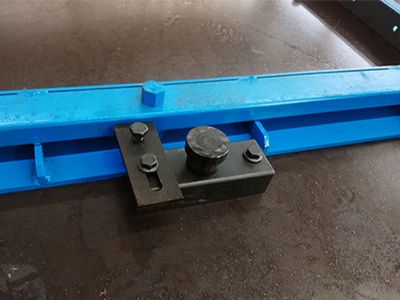
When the magnet is placed on a steel casting table or steel formwork, the magnetic flux lines close rapidly, creating a stable vertical holding force that presses the magnet firmly against the contact surface. This allows the magnet to maintain its position even during concrete pouring, vibration, and movement, reducing the risk of formwork shifting or misalignment.
The Role Of The Steel Housing In Concentrating Magnetic Flux
The steel housing is not just an outer shell. It acts as a critical component of the magnetic circuit.
By guiding and concentrating the magnetic flux toward the working surface, the housing makes the magnetic force more focused and controllable, while minimizing energy loss to the surrounding area.
The Difference Between Magnetic Strength And Holding Performance
Many users assume that "stronger magnets are always better," but on-site, rated pull force is not the same as actual holding performance.
Rated pull force is measured under ideal test conditions: flat, clean steel plates with sufficient thickness and full surface contact. In real applications, however, many factors affect holding performance:
Cement residue, steel dust, or rust on the table surface creates tiny air gaps that significantly reduce holding force
Uneven surfaces or weld seams prevent full contact and cause uneven load distribution
Steel plates that are too thin or made from incompatible materials prevent proper magnetic flux closure
Incorrect positioning or excessive lateral loads increase the risk of sliding

Normal Magnetic Aging vs Real Strength Loss
Neodymium magnets do not suddenly "become weak." Under ideal working conditions, true magnetic aging is extremely slow, with magnetic force typically declining by less than 1% over several decades. This is why some precast factories are able to use the same shuttering magnets reliably for many years, while others begin to notice an apparent loss of holding force after a much shorter period.
Natural demagnetization rate:
Modern neodymium magnets are designed and manufactured with long-term stability in mind. When used at room temperature, under proper loading, and without strong external interference, magnetic strength changes very little over time.
Why True Strength Loss Is Usually Minimal
Inside the magnet, magnetic domains are "locked" into a stable alignment during magnetization and manufacturing. These domains will only be disturbed under three typical destructive conditions:
High temperatures, close to or exceeding the magnet's rated operating limit
Severe impact or dropping, which can cause micro-cracks or internal structural stress
Strong opposing magnetic fields, which can partially cancel or disrupt the original magnetization
Surface Contamination Reduces Effective Holding Force
Shuttering magnets rely on direct, full contact with the steel formwork to work properly. When rust, dried cement slurry, or fine steel particles sit between the magnet and the steel plate, they create tiny air gaps. Even if these gaps are hard to see with the naked eye, they interrupt the magnetic circuit and weaken the holding force.
A layer of contamination thinner than a sheet of paper can significantly reduce pull strength. Build-up around edges or corners also causes uneven contact. The magnet may appear to be fully engaged, but in reality, only part of the base is providing holding force.
Mechanical Damage to the Magnet Housing
Shuttering magnets are designed to be strong and durable, but that doesn't mean they are immune to damage. When magnets are repeatedly dropped from formwork height, the internal magnet block can shift slightly. Even a small misalignment can change how magnetic force is transferred through the structure, making the holding force feel noticeably weaker.
Another common issue is bent contact plates or cracked housings. Once the bottom surface is no longer perfectly flat, the magnet cannot sit flush against the steel formwork. Even a very thin gap can significantly reduce effective holding force, yet this problem often goes unnoticed during daily operation.
More importantly, the steel housing is not just a protective shell. It also plays a key role in guiding and concentrating magnetic flux. When the housing becomes deformed, the magnetic flux path is disrupted, which reduces overall performance. In many cases, the magnet itself is still strong-but the damaged housing prevents it from delivering its full holding capacity.
How to Extend the Service Life of Shuttering Magnets
Precautions During Shuttering Magnet Use
During operation, the bottom surface of the shuttering magnet must be kept free of debris, as any foreign material will reduce the magnetic holding force between the magnet and the steel formwork table.
Our shuttering magnets are manufactured using high-performance rare-earth permanent magnets, which generate a strong magnetic force within the magnetic circuit. Under normal working conditions, the magnet's contact surface sits flush against the steel mold platform, providing secure and stable holding. However, if foreign materials such as concrete residue, oil, or plastic film are present on the bottom surface, preventing full contact with the platform, the holding force will be significantly reduced.
Cleaning Recommendations
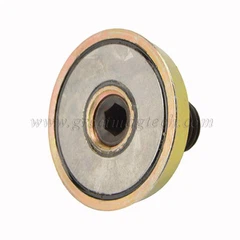
Before use, always check that both the magnet's contact surface and the steel platform are clean and flat. If debris is present on the magnet base, it can be removed using a stainless steel scraper (carbon steel tools will be attracted by the magnet and are difficult to handle). For stubborn materials such as hardened concrete, a grinding machine can be used. As shown in the illustration, install a steel wire grinding wheel on the grinder and carefully polish the magnet's contact surface.
Handle With Care to Prevent Internal Magnet Damage
The high-performance rare-earth magnets used inside the shuttering magnet are sintered materials. Their structure is similar to ceramic-hard but brittle, and therefore prone to cracking if subjected to impact.
For this reason, shuttering magnets should not be dropped, thrown, or struck during use. During demolding, magnets must not be tossed from a distance. Avoid hitting or deforming the housing with hard tools such as steel hammers, as this can damage the magnet or distort the housing.
Collection Recommendations After Use
After use, shuttering magnets should be cleaned and placed uniformly on a stainless steel trolley. This keeps the magnets clean, organized, and ready for the next production cycle. Do not store magnets on steel carts, as they may become firmly attached and difficult to remove.
Storage Recommendations
The operating and storage environment for shuttering magnets should not exceed 80°C. The surrounding area should be free from strong acids, strong alkalis, or other corrosive substances to ensure long-term performance and service life.
When Should a Shuttering Magnet Be Replaced?
Performance-based replacement criteria
If a magnet can no longer hold the formwork firmly during vibration, or needs to be repositioned just to "feel secure," it has likely passed its optimal service life. Ongoing slippage, uneven holding force, or frequent rework are all practical warning signs.
Pull-force testing vs visual inspection
Visual inspection can reveal obvious issues such as bent housings or cracked plates, but it doesn't tell the full story. Pull-force testing provides objective evidence. If the measured holding force is well below the rated value, replacement is the safer option-even if the magnet appears intact.
Safety risks of using degraded magnets
Worn magnets increase the risk of formwork movement, dimensional inaccuracies, and sudden release during casting. This is not just a quality concern, but a safety one. Replacing underperforming magnets costs far less than repairing failed pours or dealing with on-site accidents.
Shuttering magnets rarely lose strength overnight. Most performance issues are caused by dirt buildup, impact damage, or improper use rather than true magnetic decay. In many cases, a magnet that feels "weak" can regain most of its holding force after proper cleaning and inspection, which helps distinguish normal wear from avoidable surface-related problems. Routine inspections, correct loading, and careful handling not only extend service life but also improve casting accuracy, reduce formwork movement, and lower rework rates in precast production.
FAQ
Q: Do shuttering magnets permanently lose their magnetism over time?
A: In most cases, no. True magnetic decay is very slow. Apparent weakening of magnetism is usually caused by dirt, rust, or poor contact with the steel surface.
Q: Can shuttering magnets with "weak" magnetism regain their holding power?
A: Yes. Proper cleaning and inspection can usually restore most of the holding power, especially if surface contamination is the main problem.
Q: Will frequent vibrations during concrete pouring damage the magnets?
A: Normal vibrations will not damage the magnets themselves, but they can exacerbate slippage if the contact surface is dirty or uneven.
Q: Will welding near shuttering magnets affect their performance?
A: Yes. The high temperatures generated by welding can partially demagnetize neodymium magnets, so welding should be avoided nearby.
Q: How often should shuttering magnets be inspected?
A: A quick visual inspection should be performed daily, and more thorough inspections should be conducted regularly to ensure safe and reliable performance.