


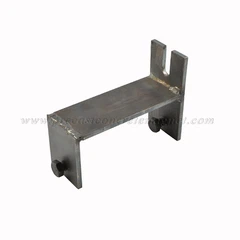
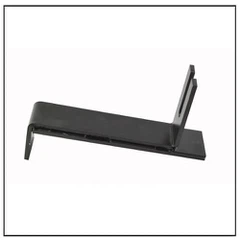


Choosing the right chamfer strip affects installation efficiency, concrete edge quality, and formwork compatibility. Magnetic steel, magnetic rubber, magnetic polyurethane, and PVC chamfer strips each offer different levels of rigidity, flexibility, durability, and ease of installation. This article compares these four materials to help precast concrete manufacturers select the most suitable option for straight or curved profiles, steel or non-magnetic formwork, and repeated or short-run production.
Quick Answer
Choosing the right chamfer strip depends on the formwork material, profile shape, flexibility, and reuse requirements. Magnetic steel chamfers are ideal for straight and rigid applications, while rubber magnetic and urethane chamfers are better for flexible or curved profiles. PVC chamfers suit non-magnetic formwork and cost-sensitive projects. By comparing these four materials carefully, you can improve installation efficiency, concrete edge quality, and overall production consistency.
What Is the Best Chamfer Strip Material?
There is no single material that is best for every precast concrete operation.
As a general rule:
- Choose a steel magnetic chamfer for straight edges, strong magnetic holding, and repeated production on steel formwork.
- Choose a rubber magnetic chamfer when low weight, flexibility, and easier handling are more important.
- Choose a magnetic polyurethane chamfer for a balance of magnetic fixation, wear resistance, and controlled flexibility.
- Choose a PVC chamfer strip for cost-sensitive work, timber forms, non-steel formwork, or projects where magnetic attachment is unavailable.
The correct choice depends on the formwork surface, production volume, profile geometry, required edge finish, and how often the strip will be reused.
|
|
|
|
|
|
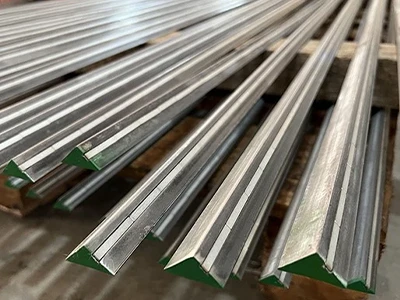
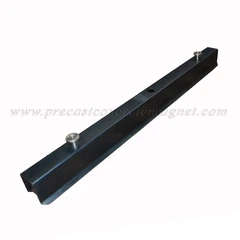
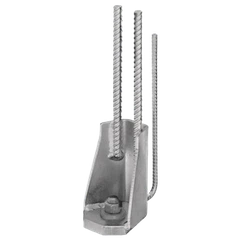
Steel Magnetic Chamfer |
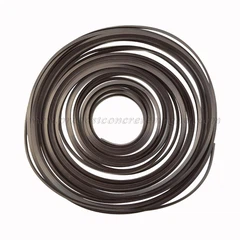
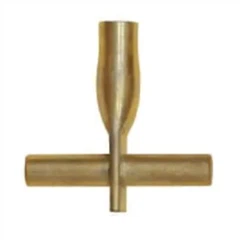
Rubber Magnetic Chamfer |
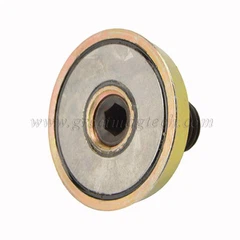
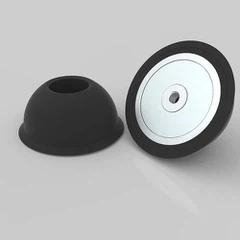
Magnetic Polyurethane Chamfer |
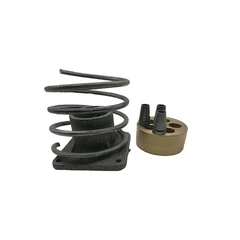
PVC Chamfer Strip |


Why Chamfer Strip Material Matters
Magnetic chamfer strip material affects how the profile is installed, how well it holds its shape, and the quality of the finished concrete edge. Steel magnetic chamfers offer the highest rigidity for straight lines, while rubber and polyurethane provide more flexibility for curved or irregular profiles. PVC is suitable for non-magnetic formwork but usually requires adhesive or mechanical fixing. These differences also influence setup time, slurry leakage, cleaning, reuse, and replacement frequency. Choosing the right material helps maintain consistent chamfer dimensions and improve production efficiency.
|
Picture |
Chamfer Material |
Installation Method |
Suitable Formwork |
Flexibility |
Reusability |
Best Suited for |
|
|
Steel magnetic chamfer |
Direct magnetic attachment |
Steel formwork and casting tables |
Low |
High |
Long straight edges and repetitive production |
|
|
Rubber magnetic chamfer |
Direct magnetic attachment |
Steel formwork and curved steel molds |
High |
Medium to high |
Curved or irregular concrete profiles |
|
|
Magnetic polyurethane chamfer |
Direct magnetic attachment |
Steel formwork and architectural molds |
Medium to high |
High |
Detailed profiles and applications requiring better sealing |
|
|
PVC chamfer strip |
Adhesive, nails, screws, or clips |
Wood, plywood, plastic, and non-magnetic molds |
Low to medium |
Low to medium |
One-off projects and non-steel formwork |


Concrete Chamfer Strip Types Compared
Concrete chamfer strips are available in different materials, but each option performs differently in terms of installation, flexibility, durability, edge quality, and formwork compatibility.
For precast concrete production, the most common choices include magnetic steel, magnetic rubber, magnetic polyurethane, and PVC chamfer strips. The right material depends mainly on whether you use steel formwork, whether the profile is straight or curved, and how many times the chamfer will be reused.
Which Chamfer Strip Works Best on Different Formwork?
The best chamfer strip largely depends on the formwork material, as magnetic options require steel contact surfaces, whereas PVC is better suited to non-magnetic molds.
Steel Casting Tables
Steel magnetic, rubber magnetic, and magnetic polyurethane chamfers can all attach directly to suitable steel casting surfaces.
Choose steel magnetic chamfer when straightness and rigidity are the priorities. Choose rubber or polyurethane when the strip must follow a curve or adapt to a less uniform surface.
Magnetic chamfers can reduce the need for drilling, welding, or adhesive and are reusable when properly handled. These are among the main reasons they are widely used in repetitive precast production. Timber and Plywood Forms
Magnetic chamfers cannot attach directly to timber or plywood unless a steel contact plate is added.
PVC is normally more practical because it can be nailed, stapled, screwed, or bonded to the form.
Aluminum Molds
Aluminum is not ferromagnetic, so standard magnetic chamfers will not attach directly.
PVC or another separately fixed profile should be considered unless the aluminum mold includes a suitable steel attachment surface.
Stainless-Steel Molds
Magnetic attraction depends on the stainless-steel grade. Some grades respond to magnets, while others provide weak or unreliable holding.
The actual mold surface should be tested before ordering a magnetic chamfer.
Which Material Produces the Straightest Edge?
For long, straight chamfers, steel magnetic profiles normally provide the greatest rigidity and dimensional stability.
Rubber is more adaptable, but that flexibility means workers must pay closer attention to alignment. It is often the better choice for a curved edge, but not necessarily for a long architectural line where any wave or deviation will be visible.
Polyurethane offers a middle position. A harder polyurethane grade can maintain a stable profile while still adapting to moderate curves or slight variations in the mold.
PVC performance depends on the cross-section, thickness, and support. A sufficiently rigid PVC profile can produce a clean edge, but it must be fixed at suitable intervals to prevent movement.
How to Choose the Right Chamfer Strip
Before requesting a quotation, provide your supplier with the following information.
Formwork Material
Confirm whether the chamfer will attach to a steel casting table, steel side form, plywood, timber or another surface.
Magnetic chamfers need a suitable ferromagnetic contact surface. For timber or non-steel forms, PVC or a separately fixed profile may be more practical.
Chamfer Size and Shape
Specify the required dimensions and cross-section. Common options include triangular, trapezoidal, rounded, drip, reveal and custom profiles.
A dimensional drawing is more reliable than a general description, especially for non-standard sections.

Magnet Position
For steel magnetic chamfers, determine whether the strip should be magnetized on one side, both sides, or from the bottom.
The correct arrangement depends on where the profile contacts the formwork. Using the wrong magnet position may result in poor attachment even when the magnet itself is strong.
Production Volume
For continuous factory production, prioritize repeatability, setup time, and cost per casting cycle.
For a short run, prototype or site project, a lower-cost PVC profile may be sufficient.
Straight or Curved Application
Use rigid steel for straight, consistent lines. Consider rubber or polyurethane for curved surfaces, large radii, or molds with slight dimensional variation.
Required Surface Finish
Architectural panels may require tighter control of profile shape, joints, and surface condition than hidden structural components.
The strip should be free from damage, dried concrete, and distortion before every pour.
Conclusion
Magnetic chamfer strips offer significant advantages for precast components. Magnetic steel, rubber magnetic, polyurethane magnetic, and PVC chamfer strips are designed for different formwork and production needs. Steel suits straight profiles, rubber and polyurethane suit flexible applications, while PVC works well with non-magnetic molds. Send us your profile drawing, formwork type, and required quantity, and we will recommend a suitable chamfer strip for your project.
FAQ
Q: What is the best chamfer strip for steel formwork?
A: For long and straight edges, magnetic steel chamfer strips usually provide the best rigidity and positioning stability. For curved steel molds, magnetic rubber or polyurethane may be more suitable.
Q: Can magnetic chamfer strips be used on aluminum molds?
A: No. Aluminum is not ferromagnetic, so a standard magnetic chamfer will not attach directly. PVC or another mechanically fixed profile may be required.
Q: Which chamfer material is best for curved concrete elements?
A: Magnetic rubber and magnetic polyurethane are better suited to curved profiles because they can bend more easily than steel.
Q: Is magnetic polyurethane more durable than magnetic rubber?
A: Polyurethane generally offers better wear and abrasion resistance, but actual service life depends on the formulation, profile design, installation method, and maintenance conditions.
Q: Are PVC chamfer strips reusable?
A: Some PVC strips can be reused, but their service life may be limited by cutting, fastening holes, deformation, or damage during demolding.
Q: Do magnetic chamfer strips require adhesive?
A: No. They attach directly to suitable steel formwork through magnetic force. Adhesive is normally unnecessary.
Q: Which chamfer strip produces the straightest concrete edge?
A: Magnetic steel chamfer strips usually provide the best straightness because their rigid structure resists bending and deformation.