




Learning more about the application of fiber in precast concrete is crucial because it can have exceptional benefits. When it comes to fiber, adding it to precast concrete can help improve various properties, from crack resistance to mechanical properties and so on. There are a multitude of precast situations where you have to focus on implementing things adequately and in a cohesive manner.
What Is Fiber-reinforced Concrete?
It's a composite material with aggregates, cement, and fibers randomly distributed within the compound. The main role of fiber here is to reinforce the precast concrete. In addition, you can prevent cracking right from a micro level. You also have a multi-directional reinforcement, not to mention that the precast concrete becomes a lot more powerful this way.
There are many reasons why you want to use fiber in precast concrete, as follows:
It can help prevent drying shrinkage and plastic cracks
With fiber, it becomes easier to boost the production speed while also lowering labor costs.
You can reduce the breakage that can appear in the case of various precast elements.
It's much easier to lower the overall material storage, and it has a positive effect on transportation costs as well.
Additionally, fiber helps improve resistance to freeze-thaw, and it also works great against chemical damage.
It can help boost the energy absorption and overall toughness of the precast concrete.
That means it's a great idea to learn the application of fiber in precast concrete since it does help more than expected. It's advantageous and very powerful, especially when it comes to delivering a very good set of solutions and outstanding value as a whole.

How Does Fiber Help Concrete Improve Its Resistance?
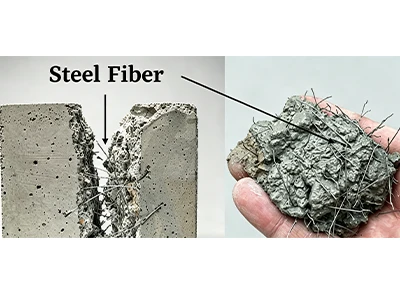
Due to its mechanical properties, the fiber starts acting as a bridge across any cracks. Yes, cracks will sometimes appear in the case of precast concrete; that's a given. With that being said, you do want to use fiber here because it holds cracks together, which can help increase the residual strength of the concrete.
And on top of that, fiber will help with the tensile stress redistribution. That's important because it can help with localized failure while boosting the overall concrete toughness. And on top of that, it will help with the ductility as well. It manages to deal with even the smallest cracks at the beginner stages, thus avoiding concrete deformation.
With fiber, you can easily boost the ductile behavior of concrete. That's a crucial aspect to think about since it can eliminate a lot of challenges while improving things as you go along. The best part is that you can do so without having to worry about constant implementations or challenges that could arise.
What Benefits Can You Expect From The Application Of Fiber In Precast Concrete?
Reducing The Need For Conventional Reinforcement
When it comes to adding fiber into precast concrete, a major benefit is that you will lower the need for regular reinforcement. As we know, the conventional methods used for reinforcement are not the best and could lead to all kinds of issues. But in this case, you rely less on things like steel, which could prove to be less effective.
Additionally, what this does is it allows you to boost the handling and safety process, not to mention it can be easier to lower fabrication time and labor time as well. All in all, not relying on the old school reinforcement methods can prove to be an advantage, and certainly something that you need to take into consideration here.
Quality consistency
It's crucial whenever you think about the application of fiber in precast concrete to focus on consistency. With fiber, you have equal distribution and that will make it easier to maintain a high level of consistency. That's a major aspect to consider, and it will certainly eliminate a lot of issues that might arise.
Improved Speed And Effectiveness
Why would you use fiber in precast concrete? For starters, it helps provide faster demolding times, and the curing periods are reduced as well. And not only that, but you can reduce the stress experienced by the formwork. There are fewer cracks that you will deal with, too, so it's a win-win situation all the time. That's going to make things better all the time without any hassle.
Much Better Durability
When you want to think about fiber application in concrete, durability always comes to mind. It can help increase the resistance against a variety of compounds. Not only does it resist freezing, but it can also protect against chlorides, sulfates, alkali-silica, and many others. That goes to show the value you can obtain and how good of an ROI you can obtain from this.

Things To Consider When Using Fiber In Precast Concrete
There's no denying that using fiber for precast concrete can be effective. It also comes with a vast range of potential issues. The mixed design compatibility means you have to be very careful about how much fiber you add to the precast concrete. If it's too much, that can be an issue, and the same thing is valid when it's too little as well.
Additionally, you need compatible production equipment, which can prove to be extremely important as well. Quality control is a necessity here, and you also have to think about the costs that might be incurred with this type of solution. What's great is that most of the time, you can lower costs and not worry too much about distribution. But it does matter to think about the pros and cons of these solutions, as it will differentiate the way precast concrete works and the value that it provides.
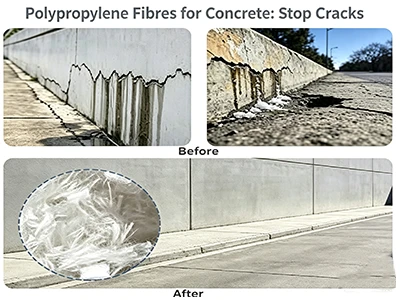
With that in mind, it's a good idea to use fiber in precast concrete, even when it comes to the overall crack prevention issue alone. Being able to eliminate that kind of concern is crucial, and you have to narrow down the different actions and improvements you can make in these situations.
When Can You Apply Fiber In Precast Concrete? Applications To Consider!
The crucial thing to note about the application of fiber in precast concrete is that it can have a multitude of use cases. You will encounter a plethora of precast concrete projects where using fiber can prove to be inherently beneficial, and that's surely something you have to take into account.

Precast Facades
Fiber can be extremely useful, especially if you try to use it for precast facades or even sandwich panels. Why is that? It boosts the structural integrity of the concrete. And on top of that, you're also getting much better thermal insulation, something that can be very beneficial in the long term. It certainly helps enhance structural integrity, and that alone can prove to be a game-changer for many precast concrete projects you are working on.
Creating Bridge Components
Bridges are under a lot of pressure, so you need to ensure there is no cracking-related issue that could arise. In this case, you want to have powerful components that are going to withstand any potential cracking damage. With that in mind, adding fiber to precast concrete here is a great idea. It can be great for girders, parapets, bridge decks, and so on. All of that will help quite a bit, since you ensure that the structural performance is ideal, not to mention you will have much better crack control as well.
Precast Pipes
Precast pipes need all the necessary endurance and crack prevention, and that's why adding fiber makes a lot of sense. That's particularly useful in the case of drainage systems and sewers, but not only that. Fiber also has the means to boost impact resistance. And since a lot of the manholes and precast pipes will have joints, you can use fiber to ensure that joint-related cracking is not an issue anymore, something you have to keep in mind.
Architectural Panels
A great application of fiber in precast concrete is to use it for architectural panels. The idea here is to use PP and GFRC fibers as those will help with decorative panels, but also architectural cladding as well. All of that is going to help much more than expected, especially since it boosts durability, lowers any cracking-related issues while improving the stability of those panels. In fact, it's great, especially in the case of complex geometries, which can be common for architectural panels, so keep that in mind.
Flooring Systems
Using precast flooring systems has become more commonplace in recent years, and integrating fiber into this type of floor can be inherently helpful. For starters, it allows you to focus more on handling heavy and dynamic loads. And not only that, bit will ensure that you can use these floors even for warehouses or industrial facilities. The versatility added by fiber in precast concrete makes it an unmatched solution for many of these.
Tunnel Segments
An important thing to take into account when it comes to fiber in precast concrete is that it could work very well in the world of tunnel segments. Steel fiber-reinforced tunnel linings are used very often in infrastructure projects. Not only will that boost the overall structural integrity, but it also helps with lowering the reinforcement congestion. That way, you have faster installation and production, something that can prove to be inherently powerful in the end.
What Type Of Fibers Can Be Used In Precast Concrete?
When we cover the application of fiber in precast concrete, we also have to think about the types of fiber that can be used in precast concrete. There are different options, depending on the use case, as follows:
Steel fibers are commonly used in the world of structural applications, mostly because they have very good stiffness and high tensile strength. They also deliver better load capacity and can be suitable for heavy-duty precast elements, such as industrial floors or tunnel segments.
Natural fibers such as jute, hemp or coir are also something to consider here. They can provide better sustainability, are economical and can help reduce the carbon footprint. Not only that, but the fact that they are biodegradable certainly makes them a go-to option.
Basalt fibers are made from volcanic rock. They are used because they provide thermal stability and good tensile strength, not to mention they have very good chemical resistance as well, something to think about here.
Glass fibers are great for thin, lighter components. They offer a very good strength-to-weight ratio, not to mention they have fire resistance and can withstand corrosion very well. Plus, they allow surface finishes and complex shapes, something that can be great.
Polypropylene fibers are synthetic, and their primary role is to ensure you have very good crack control. It's one of the best options to consider when it comes to controlling plastic shrinkage, and they are also really good against corrosion. You can use them for architectural precast panels, light components, decorative elements and many others. That adds to their versatility and incredible value.
Carbon fibers are commonly used in structural applications. That's because they have very good stiffness, high tensile strength, and a vast range of other benefits. Not only that, they have very good shear and flexural strength benefits. You can use them for the heavier-duty precast elements and can help with load capacity. These fibers are suitable for bridge deck panels, some of the precast tunnel linings, precast slabs, and piles, etc.

Comparison Between Different Types Of Fibers
| Fiber type | Pros | Cons | Where it used? |
| Steel fibers | They have great tensile strength | They can corrode without adequate protection | Great for structural applications, industrial floors, or tunnel segments. |
| Very good fire resistance | It adds more weight to the mix | ||
| Great at boosting fatigue and impact resistance | Without adequate mixing, it will clump | ||
| Polypropylene fibers | Excellent corrosion resistance | Very low elasticity | Suitable for any type of construction where you need crack and shrinkage control |
| Cost-effective and lightweight | Bad performance at high temps | ||
| The best at crack control | It doesn't offer the best bonding with concrete | ||
| Glass fibers | Glass fibers are ideal for light, thin panels | Inherent risks if it's not alkali resistant | It's widely used for architectural precast elements and decorative solutions |
| They deliver excellent corrosion resistance | Handling it can be difficult since it's fragile | ||
| Very good for complex finishes and shapes | Costlier when compared to other fibers | ||
| Natural fibers | It's an eco-friendly, renewable solution | The quality and performance can vary | You can use natural fibers in a multitude of precast applications, be it low-cost or sustainable. |
| Very lightweight and easy to use | It's a fiber type susceptible to things like biodegradation | ||
| Low costs, available in a variety of regions | Lower strength and durability | ||
| Carbon fibers | They deliver excellent stiffness and high strength | Sometimes it can be brittle | You can use carbon fibers in any situation when you need very high-performance applications |
| Suitable for structural reinforcement | Expensive when compared to other fiber types | ||
| Impressive corrosion resistance | Less common due to inherent costs | ||
| Basalt fibers | Non-corrosive and lightweight | Brittle and tough to handle due to abrasiveness | Corrosion-prone areas, façade panels, and sometimes even marine precast |
| An eco-friendly option | Bonding issues due to the smooth surface | ||
| Very high thermal stability | Costlier when compared to glass and polypropylene fibers | ||
| High modulus and tensile strength |
Conclusion
As you can see, the application of fiber in precast concrete will vary based on the use case. With that being said, fiber can be extremely effective and useful in a plethora of situations. Not only can it help eliminate a lot of potential issues, but it also improves crack resistance and the overall durability of precast concrete.
Additionally, depending on the fiber type you want to use, it can enhance the aesthetics of fiber while pushing the boundaries in a way that's effective and very comprehensive. Fiber can be great for precast concrete, both in the case of simple but also heavy-duty developments!