




Introduction:
Rebar spacers may be small parts, but they help keep reinforcement in the correct position before, during, and after concrete pouring. Wheel spacers are often used for vertical rebar, chair spacers support horizontal rebar or mesh, line spacers provide long-distance support, and side spacers are commonly used for wall panels, columns, and precast molds.
This guide explains the main types of rebar spacers and how they work, helping you choose the right spacer for slabs, walls, beams, columns, and precast concrete elements.
What Are Rebar Spacers?
Rebar spacers are small support components used to keep the correct distance between reinforcement and formwork before and during concrete pouring. This helps create the required concrete cover. Proper concrete cover helps reduce the risk of moisture damage, corrosion, and exposed rebar, while also affecting the finished surface quality.
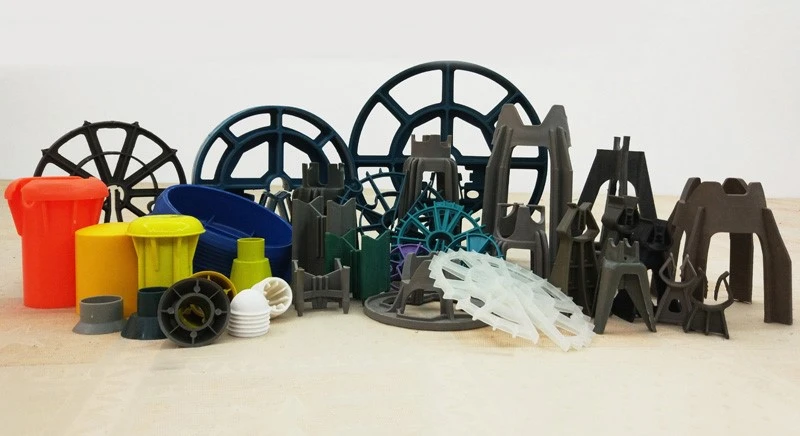
Common Types Of Rebar Spacers Include:
Wheel spacers are often used for vertical reinforcement.
Chair spacers support horizontal rebar or welded wire mesh.
Line spacers are suitable for longer rebar sections.
Side spacers help control the side cover in walls, columns, and precast molds.
Wheel Spacers for Vertical Reinforcement
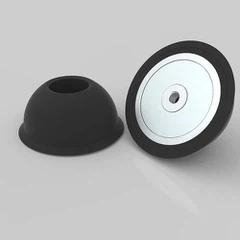
Wheel spacers are circular rebar spacers designed to clip directly onto steel bars. Their shape helps maintain a fixed distance between the reinforcement and the formwork, keeping the required side cover in place.
Once attached to the rebar, wheel spacers help keep the steel away from the mold or formwork surface during rebar installation, concrete pouring, and vibration.

Commonly Used For:
* Precast wall panels
* Columns
* Vertical reinforcement cages
* Concrete walls
* Areas with narrow side cover
When choosing wheel spacers, consider:
* Rebar diameter
* Required concrete cover
* Clip strength
* Wheel size
* Possible contact marks on the concrete surface
Chair Spacers for Horizontal Rebar Support
Chair spacers are used to support horizontal rebar and keep reinforcement or mesh at the required concrete cover height. They are commonly used in slabs, floors, beams, and welded wire mesh applications, helping keep the reinforcement above the formwork or ground surface.
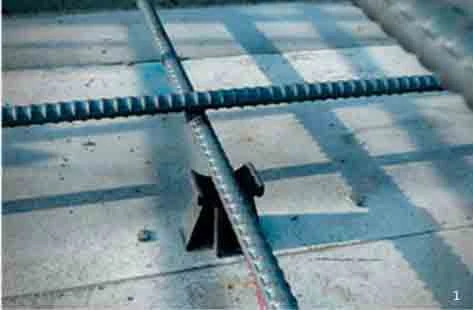
When Choosing Chair Spacers, Consider:
Spacer height
Load capacity
Rebar size
Mesh weight
Contact area with the ground or formwork
Stability during concrete pouring and vibration
For thick slabs, beams, heavy reinforcement cages, or projects with higher rebar loads, heavy-duty chair spacers are usually recommended.
Line Spacers for Long and Continuous Support
Line spacers are designed to provide long and continuous contact support for reinforcement, rather than supporting only a single point. They are commonly used in slabs, precast panels, floor elements, and welded wire mesh reinforcement.
Common Forms Include:
Plastic line spacers
Long bar spacers
Continuous support strips
Compared with individual spacers, line spacers are usually faster to install and provide more even support. When multiple rebar sections or mesh panels need to stay at the same height, they can also help reduce the risk of uneven concrete cover.
Side Spacers for Walls, Columns, and Precast Molds
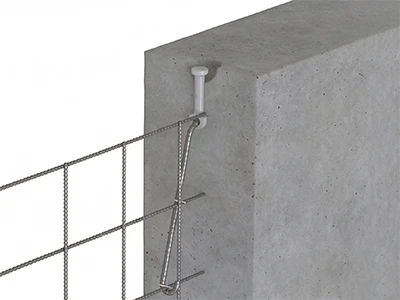
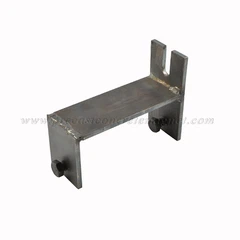
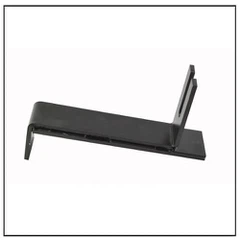
Side spacers are used to maintain the required clearance between the reinforcement and the formwork. They help keep the rebar cage away from the mold surface, reducing the risk of uneven cover, exposed rebar, or surface defects after casting.
They are commonly used in vertical molds, wall panels, columns, and narrow formwork areas where standard bottom spacers may not provide enough side support. In precast production, side spacers are particularly useful when the reinforcement cage is positioned near the mold edge.
Common Fixing Methods Include:
Clip-on fixing: quick to install on suitable rebar sizes.
Tie fixing: used when stronger positioning is required.
Press-fit design: suitable for specific mold or reinforcement cage layouts.
Side Spacers Are Commonly Used For:
Precast wall panels
Narrow edge areas
Rebar cages close to formwork
Columns and vertical elements
Special mold shapes
Comparison Table: Wheel, Chair, Line, and Side Spacers
Different rebar spacers are designed for different reinforcement directions and formwork conditions. The table below compares wheel, chair, line, and side spacers to help you choose the right type for concrete cover control.
|
Spacer Type |
Main Function |
Common Applications |
Best For |
Key Selection Points |
|
Wheel Spacers |
Maintain the side cover around the vertical rebar |
Walls, columns, precast wall panels, vertical cages |
Vertical reinforcement close to formwork |
Rebar diameter, cover size, clip strength, wheel size |
|
Chair Spacers |
Support horizontal rebar or mesh at the required height |
Slabs, floors, beams, mesh reinforcement |
Horizontal reinforcement and light to medium rebar layouts |
Spacer height, load capacity, base stability, rebar size |
|
Line Spacers |
Provide continuous support along longer reinforcement runs |
Slabs, precast panels, welded wire mesh, repeated layouts |
Large areas and regular reinforcement spacing |
Length, cover height, size |
|
Side Spacers |
Keep the side cover between the reinforcement and formwork |
Wall panels, columns, narrow mold edges, and special precast molds |
Tight formwork spaces and cages close to mold surfaces |
Cover thickness, fixing method, mold space, rebar position |
How to Choose the Right Type of Rebar Spacer
When choosing rebar spacers, first confirm the required concrete cover shown in the drawing or project specification. The spacer height should match the designed cover depth.
Next, consider the rebar diameter, layout, and reinforcement cage weight. Light spacers may work for small rebar mesh, while larger bars or heavy cages need spacers with higher load capacity. Chair spacers or line spacers are commonly used for horizontal reinforcement. Wheel spacers or side spacers are suitable for vertical reinforcement and side cover.
Formwork type and casting direction also affect spacer selection. For walls, columns, precast mold edges, or cages close to the formwork, side spacers help with positioning. For exposed concrete, sample testing is recommended to check whether the spacer leaves visible marks.
Use enough spacers to keep the reinforcement stable during concrete pouring and vibration. For special molds or non-standard cover requirements, custom spacers can provide a better fit.

Rebar Spacer Applications by Concrete Element
Slabs and floors: Chair spacers or line spacers are commonly used to support horizontal rebar or welded wire mesh.
Walls: Wheel spacers and side spacers help maintain the side cover between the vertical reinforcement and formwork, reducing rebar cage movement.
Columns: Wheel spacers are suitable for most column cages. For heavier cages or narrow formwork spaces, stronger side spacers may provide better positioning.
Beams: Chair spacers or concrete spacers can be selected according to cage weight and required cover depth.
Precast wall panels: Wheel spacers, side spacers, and custom spacers are often used together to match mold size, rebar layout, and surface requirements.
Welded wire mesh: Chair spacers or line spacers help lift the mesh to the required cover height.
Heavy reinforcement cages: Heavy-duty chair spacers or concrete spacers are usually preferred to improve support stability during concrete pouring.
Conclusion
Wheel, chair, line, and side spacers are all used to keep reinforcement in the correct position, but each type serves a different purpose. Wheel spacers are suitable for the vertical side cover. Chair spacers support horizontal reinforcement. Line spacers provide continuous support for repeated layouts. Side spacers help in walls, columns, and precast molds.
FAQ
Q: What is the most common type of rebar spacer?
A: Wheel spacers and chair spacers are common because they cover many vertical and horizontal reinforcement layouts.
Q: Which spacer is best for wall panels?
A: Wheel spacers and side spacers are usually better for wall panels because they help maintain side cover.
Q: Which spacer is best for slabs?
A: Chair spacers or line spacers are often used for slabs, depending on rebar layout and load requirements.
Q: Can line spacers replace chair spacers?
A: Sometimes, but not always. Line spacers work well for continuous support, while chair spacers are better for point support or different bar heights.
Q: How do I choose spacer height?
A: Choose spacer height according to the required concrete cover shown in the drawing or project specification.
Q: Can rebar spacers be customized?
A: Yes. Height, clip size, shape, material, color, and load capacity can be customized for precast molds or special reinforcement layouts.