




Introduction
Rebar spacers may look small, but they help keep reinforcement in the correct position. If the concrete cover is not accurate, the problem may not appear immediately, but it can affect concrete durability, surface quality, and later inspection.
This guide compares plastic spacers and concrete spacers in terms of applications, advantages, limitations, and selection points, helping you choose the right spacer for slabs, walls, beams, columns, and precast concrete elements.
Quick Answer
Plastic spacers and concrete spacers are both used to maintain the required concrete cover around rebar, but they are suited for different applications. Plastic spacers are lightweight and quick to install, making them suitable for slabs, walls, and standard precast elements. Concrete spacers provide stronger support and are better for heavy reinforcement cages, larger cover depths, foundations, and beam structures.
The right choice depends on concrete cover, rebar diameter, reinforcement layout, cage weight, casting direction, and surface finish requirements.
What Are Rebar Spacers and Why Do They Matter?
Rebar spacers are small support pieces used to keep the required distance between the reinforcement and the formwork. This distance is known as the concrete cover. Although it may seem like a small detail, it directly affects how well the steel reinforcement is protected inside the concrete.
The main functions of rebar spacers include:
Maintaining concrete cover:
Spacers help keep the correct distance between the rebar and the concrete surface.
Holding Reinforcement In Position:
They help reduce rebar movement before and during concrete pouring.
Supporting different rebar layouts:
Different types, such as wheel spacers, chair spacers, line spacers, and concrete spacers, can be used for slabs, walls, beams, columns, and precast concrete elements.
Improving construction consistency:
Compared with temporary supports made on site, factory-made spacers usually offer more accurate and stable dimensions.
What Are Plastic Spacers?
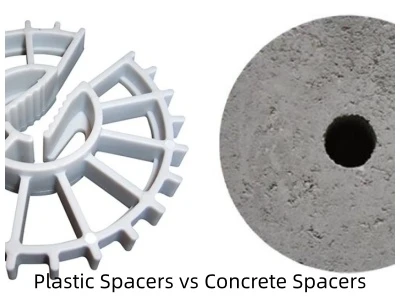
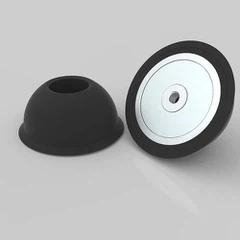
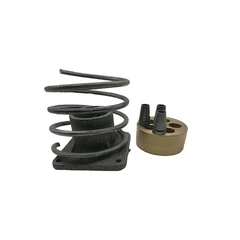
Plastic spacers are molded rebar support components used to hold, separate, or position reinforcement before concrete is poured. Their main function is to maintain the required concrete cover between the rebar and the formwork.
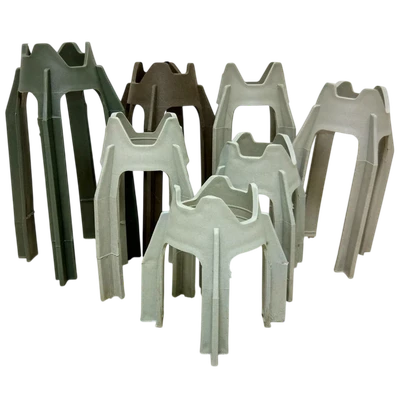
Plastic Spacers
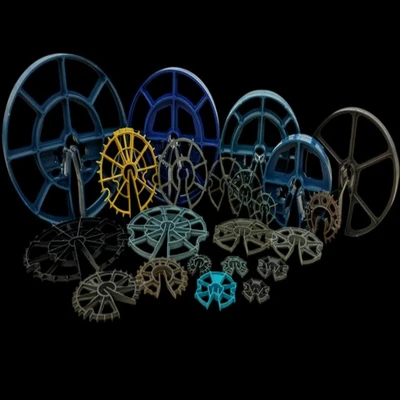
Plastic Spacers

Plastic Spacers
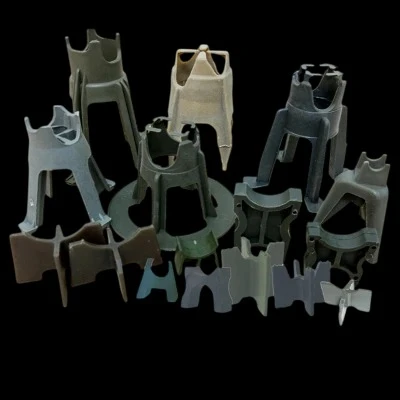
Plastic Spacers
Common Types Of Plastic Spacers:
Wheel spacers: Often used for vertical reinforcement, such as precast wall panels and columns.
Chair spacers: Used to support horizontal rebar in slabs and flat concrete elements.
Clip-on spacers: Fixed directly onto rebar for quick and stable positioning.
Line spacers: Placed under rebar mesh or bars to keep a continuous cover height.
Side spacers: Used near formwork edges to maintain the required side cover.
Plastic spacers are widely used in precast wall panels, slabs, light to medium reinforcement cages, and vertical rebar layouts. They are lightweight, easy to install, and available in consistent sizes, making them suitable for standard and repeated concrete production.
What Are Concrete Spacers?
Concrete spacers are blocks made from cement or concrete. They are used to support reinforcement before and during concrete pouring and to maintain the required concrete cover.

Common Types:
Concrete cover blocks: Used to keep the required distance between rebar and formwork.
Cement-based spacers: Made from cementitious materials and offer better compatibility with concrete.
Rebar support blocks: Designed to support a single rebar or reinforcement cages.
Wire-tied concrete spacers: Supplied with tie wire for fixing to rebar. They are often used for vertical reinforcement or heavy rebar layouts.
Concrete Spacers Are Commonly Used In:
Heavy reinforcement cages
Foundation projects
Beams and columns
Marine concrete structures or harsh exposure environments
Precast elements that require concrete-to-concrete contact
Their main advantage is compressive support. They can carry heavier reinforcement and are less likely to deform under load. For fair-faced concrete or precast products, concrete spacers can also blend better with the finished surface.
Plastic Spacers vs Concrete Spacers: Key Differences
|
Factor |
Plastic Spacers |
Concrete Spacers |
|
Material |
Made from plastic materials such as PP or PVC. |
Made from cement-based or concrete material |
|
Weight |
Lightweight and easy to carry or install |
Heavier than plastic spacers |
|
Installation |
Usually quick to place, clip, or position |
May need tying or more careful placement |
|
Load Support |
Suitable for light to medium reinforcement layouts |
Better for heavy reinforcement cages |
|
Cover Accuracy |
Molded sizes help maintain consistent concrete cover |
Good accuracy when factory-made with stable dimensions |
|
Surface Finish |
May leave small contact marks depending on the shape |
Can blend better with the surrounding concrete |
|
Common Applications |
Slabs, walls, mesh reinforcement, and precast panels |
Foundations, beams, columns, marine concrete, and heavy cages |
|
Durability |
Suitable for many standard concrete applications |
Often preferred in harsh or demanding exposure conditions |
|
Customization |
Easier to produce in different shapes, heights, and clip sizes |
Custom sizes are possible, but production is usually less flexible |
|
Best Use |
Fast installation and standard cover control. |
Heavy load support and concrete-to-concrete compatibility |
When Should You Use Plastic Spacers?
Plastic spacers are a practical choice when a project requires fast installation, repeated positioning, and standard control of concrete cover. They are lightweight, easy to handle, and can be quickly clipped or fixed onto the reinforcement.
Plastic Spacers Are Suitable For:
Precast wall panels
Reinforcement mesh
Light slabs
Vertical rebar cages
Precast elements with consistent dimensions
For vertical reinforcement, wheel spacers are commonly used because they clip around the rebar and help maintain a stable side cover between the steel bar and the formwork. They are suitable for wall panels, columns, and vertical reinforcement cages.
For horizontal reinforcement, chair spacers and line spacers are more practical. Chair spacers support rebar or mesh from below, while line spacers provide continuous support over a longer distance. Both help reduce rebar movement during concrete pouring and vibration.
When Should You Use Concrete Spacers?
Concrete spacers are commonly used when the reinforcement cage is heavy or when the project requires stronger support under load.
They Are A Good Choice For:
Foundations: Used to support large reinforcement cages before concrete pouring.
Beams and columns: Help keep rebar in position under higher weight.
Bridge components: Suitable for projects with strict requirements for durability and concrete cover accuracy.
Marine concrete structures: Used where concrete may be exposed to moisture, salt, or harsh environments.
Large precast elements: Suitable when heavy reinforcement may crush lighter spacers.
Concrete spacers can also be used when a larger concrete cover is required. In this case, the spacer must have enough height and strength to keep the reinforcement in place during concrete pouring and vibration.
Which Spacer Is Better for Precast Concrete?
There is no universal spacer that fits every precast concrete element. The right choice depends on how the element is cast, lifted, finished, and inspected.
Plastic spacers are often a good choice for fast production and repeated standard panels. For precast wall panels, slabs, and reinforcement mesh, they can reduce installation time while helping maintain a consistent concrete cover.
Concrete spacers are usually better for heavy reinforcement cages, thick elements, and projects that require cement-based support. They provide stronger support under load and blend more naturally with the surrounding concrete, especially in structural areas or exposed surfaces.
When Choosing Spacers For Precast Production, Consider The Following Factors:
Mold type and available fixing space
Required concrete cover
Rebar diameter and reinforcement cage layout
Total weight of the reinforcement cage
Casting direction
Surface finish requirements
Demolding method and handling process

How to Choose Between Plastic and Concrete Spacers
When selecting spacers, confirm the required concrete cover for the project first. The spacer height should match the designed cover depth and should not be replaced only by the nearest available size.
Next, check the rebar diameter and layout. Light plastic spacers can be used for small rebar mesh, while larger bars or complex reinforcement cages need stronger support. Chair spacers, line spacers, or concrete spacers are commonly used for horizontal reinforcement. Wheel spacers or side spacers are more suitable for vertical reinforcement.
The weight of the reinforcement cage also affects the choice. Plastic spacers are lightweight and quick to install, making them suitable for slabs, walls, and standard precast elements. Concrete spacers are better for heavy reinforcement cages, larger cover depths, or projects that require cement-based support materials.
For exposed concrete, test the spacers in advance to ensure they do not leave visible marks. During pouring and vibration, the spacers must remain stable to prevent the rebar from moving out of position.
Conclusion
Plastic spacers and concrete spacers both help maintain correct concrete cover, but they are not used for the same job. Plastic spacers suit fast installation and standard layouts. Concrete spacers suit heavier reinforcement and demanding concrete elements. The best choice depends on cover, rebar size, cage weight, casting direction, and project requirements.
FAQ
Q: Are plastic spacers allowed in structural concrete?
A: Yes, plastic spacers can be used in structural concrete when they meet the project requirements for cover depth, load support, material quality, and installation stability. Always check the project specification before use.
Q: Are concrete spacers stronger than plastic spacers?
A: In many heavy reinforcement applications, concrete spacers provide better compressive support than standard plastic spacers. However, strength depends on the spacer design, material quality, size, and curing condition.
Q: Do plastic spacers affect concrete durability?
A: Good-quality plastic spacers do not normally affect concrete durability when used correctly. Problems may occur if the spacer is too weak, poorly positioned, or unable to maintain the required concrete cover during pouring and vibration.
Q: Can concrete spacers leave marks on precast surfaces?
A: Yes, concrete spacers may leave marks if they contact visible surfaces or if their color and texture differ from the surrounding concrete. For architectural precast elements, sample testing is recommended before mass production.
Q: Which spacer is better for wall panels?
A: Plastic wheel spacers and side spacers are often used for wall panels because they are easy to fix on vertical reinforcement and help keep side cover consistent. Concrete spacers may be used when heavier reinforcement or project specifications require them.
Q: Which spacer is better for heavy reinforcement cages?
A: Concrete spacers are usually better for heavy reinforcement cages because they offer stronger support and are less likely to deform under load. Heavy-duty plastic spacers may also be used if their load capacity is suitable.
Q: Can plastic and concrete spacers be used together?
A: Yes, they can be used together in some projects, but the layout should be checked carefully. Different spacer types must still maintain the same required cover and should not create uneven support.
Q: How do I choose the correct spacer height?
A: Choose spacer height according to the required concrete cover shown in the drawing or project specification. Also check rebar diameter, reinforcement layout, formwork type, and casting direction.
Q: Should spacer height equal concrete cover?
A: In most cases, yes. Spacer height is selected to help achieve the required concrete cover. However, the final choice should also consider the spacer shape, contact position, and how it fits the reinforcement.
Q: Can spacers be customized for precast molds?
A: Yes, spacers can be customized for precast molds. Common custom options include spacer height, clip size, shape, load capacity, material, color, and design for special reinforcement layouts or limited mold space.