





Introduction
To lift precast concrete products safely and efficiently, precision, the appropriate equipment, and best practices must be taken into account. Handling these heavy and ill-proportioned items, such as beams, panels, and columns, requires the very careful handling to prevent structural damage and workplace accidents.
Improper lifting methods may weaken the concrete. This can result in very costly delays as well as expose construction personnel to serious risk.
Specialized methods and equipment can be applied to specific requirements of each precast component to realize safe and efficient lifting, such as lifting anchors, clutches, loops, and vacuum systems.
The best lifting techniques, indispensable equipment, and practical ways of reducing the handling risks when dealing with precast concrete are what this article intends to show.

Common Challenges in Lifting Precast Concrete
The process of lifting precast concrete elements can be complex, and this process has to be done with precision, appropriate equipment, and while observing safety standards. Typically, both beams, panels, and columns are heavy, bulky, and difficult to move around.
In addition, it presents problems in maintaining structural integrity. The techniques to lift are not always proper, and this can result in accidents, delays, and cause expensive damage to the concrete elements.
The following are some of lifting's most common issues.
Weight and Shape Complexity
Precast concrete products are of various shapes and sizes, each having different handling requirements. Beams can be difficult to balance, and fragile slabs can bend under a false nerve if the right points are not carried on.

Also, there are awkwardly shaped components that have to be lifted at several points to ensure even weight distribution and prevent stress fractures.
For example, lifting a long precast beam at a single point on the top center of the beam could cause that to bend under its own weight. In order to avoid such problems, the lifting equipment should be determined after considering the weight, dimensions, as well as the structural design of the precast element. Find out how to use lifting anchors, loops, or clutches correctly, and forces will be evenly distributed.
Structural Integrity Risks
Handling precast concrete elements is tricky in order to maintain their structural strength and durability. Another is the most common of all, in which points are placed incorrectly, or you are using the wrong equipment.
When lifting anchors or embedded loops are not laid out as planned in the structural design, it may cause stresses to certain areas that can lead to cracks or internal damage.
Safety Concerns for Workers and Equipment
Making precast concrete more than a meter or so in size, whether for foundations or the superstructure, represents significant safety risks to both equipment operators and to construction workers who must lift these elements.
Lifting equipment overloaded or improperly attached to the precast unit may cause the precast unit to fall or shift unexpectedly or collide with other nearby structures. That often leads to workplace accidents.
To enhance safety, it is essential to:
●We need to inspect all lifting equipment before lifting.
●Need to train the staff and workers about load-bearing limits.
●Need to use lifting accessories with certified weight capacities to avoid sudden failure.
Site Conditions and Environmental Factors
Construction sites tend to be difficult locations to operate in due to myriad challenges that can get in the way of lifting activities. Weather conditions, uneven ground, restricted space, and overhead obstructions are all factors that can make it unsafe to position and use precast elements in a controlled manner.
Instances of the increased risk include the difficulty of lifting large precast wall panels in high winds to avoid instability and swaying, which can damage or cause accidents. In a similar manner, in a confined, tight construction space, using a traditional lifting hook is not easy, and there may be requirements for specialized lifting solutions like a vacuum lifting system.
To overcome site-related challenges, project managers should do the following:
●Know the appropriate lifting approach before lifting operations to assess site conditions.
●Use lifting equipment appropriate to the working environment.
●Minimize the hazards associated with safety by planning lifts under optimal weather conditions.
Top Lifting Methods for Precast Concrete
Precast concrete needs to be lifted with the right techniques, the right equipment, and of course, as safely as possible. The use of improper lifting can result in cracked, damaged or damaged concrete, safety risks, and can add cost to the project.
To avoid these risks, construction professionals employ tested lifting systems that correspond to the weights, shape, and lifted points of each of the precast elements.
Below are the best lifting ways in the industry and the safe and effective ways to handle them.
Lifting Clutches for Heavy Precast Components
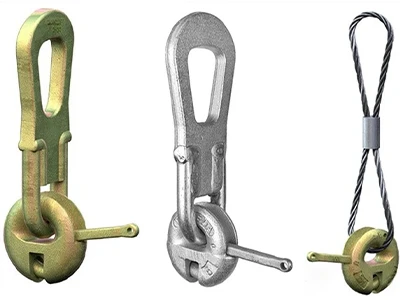
The lifting clutches are one of the most widely used lifting solutions to handle beams, walls, and large precast elements. The embedded lifting anchors are securely latched in these clutches that hang out and allow a controlled lift without damaging the concrete surface.

Lifting clutches are connected to pre-installed lifting anchors that were embedded in the precast concrete. In the clutch, an element can be hoisted without slipping or tilting because the element forms a tight mechanical lock. There are varying precast weights and therefore, clutches available in different load capacities, usually 2.5T and 5 T.
Best Practices for Using Lifting Clutches
●As a rule, match the lifting clutch with a suitable lifting anchor for secure connection.
●Use of the self-bolting nail, or DOE, should first be checked for wear, cracks, or deformation to prevent failure.
●Don't make sudden movements of the load or point of stress near the concrete.
Benefits of Lifting Clutches
●Offers a very strong and secure grip while lifting heavy precast elements.
●It prevents stress points and surface damage compared to traditional hooks or slings.
●Better balance to weight distribution.
Spherical Head Anchors for Secure Lifting Points
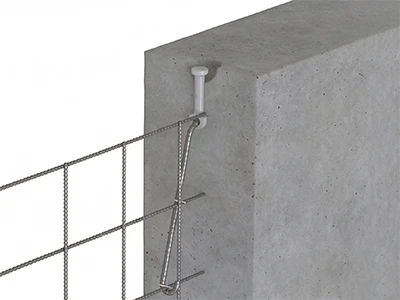
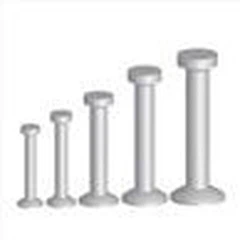
Spherical head anchors, also called lifting anchors, are integral parts of the lifting systems used for precast slabs, walls, and heavy structural elements. These anchors are embedded into the concrete during production and provide a secure place to lift as opposed to carrying the product.
A steel insert embedded in the head of the precast concrete is used to make a spherical head anchor. A lifting clutch is connected to the anchor and can provide a strong and stable lifting connection at lifts.
Best Practices for Using Spherical Head Anchors
●Ensure proper placement.
●Use the correct anchor size
●Pair with compatible lifting clutches
Benefits of Spherical Head Anchors
●Distributes weight evenly
●Works with lifting clutches
●Durable and high-load capacity
●Ideal for heavy precast elements.
Ring Clutch for Flat Lifting Systems
This lifting means that the flat precast elements as panels and slabs, can be carried over or laid on the Jet lock with a specially designed ring clutch system. It prevents the lift from being unbalanced, due to the pull from the anchors embedded in the concrete.
The ring clutch is connected to a flat lifting anchor anchored in the concrete. It is designed to reduce tilt and prevent stress concentration, thus making it a perfect tool for handling thin or wide panels safely.

Best Practices for Using Ring Clutches
●Check lifting angles
●Select the right load capacity
●Inspect for wear
Benefits of Ring Clutches
●Prevents tilting
●Evenly distributes weight,
●Reducing stress on lifting points.
●Works with flat panels
Erection Anchors for Positioning Precast Walls and Columns
Erection anchors are purpose-designed for tilting, rotating, and placing precast columns and walls during erection. On top of that, these anchors are extra stable and controllable, meaning they are ideal for stringing vertical structures with.
Erection anchoring is made by embedding erection anchors into a precast element and lifting the precast element vertically or at an angle. It is a commonly used method for placing walls, columns, or structural panels in precast building construction.
Best Practices for Using Erection Anchors
●Use reinforcement if needed
●Check load distribution
●Monitor lifting angle
Benefits of Erection Anchors
●Allows safe and controlled tilting of precast walls.
●Minimizes the risk of structural damage.
●Enhances stability during lifting.
Vacuum Lifting Systems for Surface Protection
The vacuum lifting is an innovative process for lifting precast elements without the use of precast elements without the use of precast elements with embedded lifting points. This is an ideal technique for architectural panels, slabs, and smooth-surfaced precast components.
The vacuum lifting systems use a very powerful suction cup to create an airtight seal on top of the precast concrete. After the seal, the element can be lifted by the system without being damaged.
Best Practices for Using Vacuum Lifters
●Ensure a clean surface
●Use in controlled environments
Benefits of Vacuum Lifting
●No need for embedded lifting points
●Protects concrete surfaces
●Fast and efficient
●Reducing production complexity

Choosing the Right Lifting Accessories for Precast Concrete
The lifting accessories selected need to be safe, efficient, and damage-free for the precast concrete products to be handled. Various factors determine the choice of lifting equipment: weight of the precast element, its shape, surface finish, and the position of lifting points. Incorrect accessories are used, which can result in lifting failures or structural damage, or even workplace accidents.
In this section, we shall discuss various things to consider when we select lifting accessories.
Key Factors to Consider When Selecting Lifting Accessories
The following are the key factors you need to consider when you go for selecting lifting accessories.
Load Weight and Capacity Requirements
Load capacity is one of the most important factors in choosing the lifting accessory. Lifting accessories of every type- lifting clutch, anchor, or socket- have a maximum load rating. Structural damage to the structure, weakening of the precast element,, and an accident as a result of overloading the lifting equipment are possible.
Always use lifting accessories that are rated for not less than 10-20% more of the actual precast component's weight. Furthermore, large or long precast elements are to be lifted using multiple lifting points in order to ensure even load carrying and avoid stress concentration.
Shape and Lifting Point Placement
There are a variety of forms that precast concrete components can be delivered in, from flat panels to cylindrical columns to the thicker slabs of precast material. There is a different lifting approach for each shape:
●Ring clutches or vacuum lifting systems must be used to prevent tilting of flat precast panels.
●Lifting anchors or erection anchors are also provided on the heavy beams and columns so that they can be stable.
●Lifting solutions for customized shapes may be needed to lift rounded or irregular shapes without putting weight off or causing damage.
Surface Finish Protection
However, some precast elements, such as architectural concrete panels in particular, need to be lifted without damage so as to maintain a smooth, clean finish. Anchors, hooks, or chains of traditional type may scratch, crack, or produce stress marks on sensitive surfaces.
Vacuum lifters are the best solution to avoid surface damage. The precast element is lifted using suction force, avoiding any metal lifting accessories that would come in physical contact. Lifting with rubberized grips or soft slings should be used if vacuum lifters are not available in order to minimize surface damage.
Site Conditions and Environmental Factors
Lifting on-site needs differ for each construction environment. In confined space applications, vacuum lifters or compact lifting anchors may be more suited than conventional lifting hooks. However, vacuum lifters may not be used in outdoor sites with high wind conditions, as environmental instability can weaken the suction pressure.
Sometimes reinforced lifting points or spreaders will be necessary for uneven or sloped terrain for safety.
Best Lifting Accessories for Precast Concrete Handling
The choice of the accessory depends on the lifting method of the precast concrete element.
The best lifting solutions for any precast application are shown below:
Lifting Clutches (2.5T, 5T) – Secure Handling for Heavy Elements
Reliable and efficient lifting for beams, walls, and large precast components is the type of lifting done by lifting clutches. The net falls are attached to embedded lifting anchors securely, thus providing safety and stability in lifting without damaging the concrete surface.
The precast industry uses lifting clutches, which are ideal for fast attachment and release. Thus, it is one of the most commonly used lifting accessories.
Spherical Head Anchors – Strong and Secure Load Distribution
Spherical head anchors are embedded into precast concrete during manufacturing using embedding anchors.
When paired with lifting clutches, the large and heavy precast components are provided with a strong and stable base for lifting.
These anchors guarantee even weight distribution, preventing tipping or cracking of the concrete as it is lifted.
Ring Clutch for Flat Lifting Systems – Stability for Thin Panels
Especially for lifting flat precast elements, e.g., thin panels, slabs, architectural precast components, ring clutches are designed.
They assure that the lifting forces are equally distributed so as to avoid tilting or breaking of the panel. This also makes the ring clutches suitable for elements that would need to have very precise handling due to lifting stress being minimized.
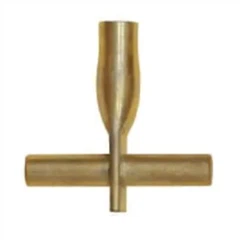
Erection Anchors – Ideal for Precast Column and Wall Installation
Erection anchors are used for tilting and positioning of precast walls and columns during construction. The anchors provide stability and also permit the safe and controlled rotation of vertical precast elements during installation. When an erection anchor is used, the lifting is smooth, and there will not be any sudden shift while mooring, so the precast columns and walls can be placed smoothly.
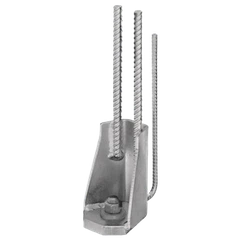
Lifting Sockets (Tubular, Flat Plate, Bended End) – Versatile Threaded Lifting Solutions
Lifting sockets have a threaded connection for lifting precast elements and also have flexibility for the attachment options. The lifting sockets are capable for adjustable lifting points and are thus versatile and reusable for different precast projects.
Different types of lifting sockets include:
●Tubular lifting sockets
●Flat Plate lifting sockets
●Lifting sockets with bent end
Selecting the Right Lifting Accessory for Different Precast Applications
The following table summarizes the best lifting accessories based on the type of precast element being lifted.
Table: Recommended Lifting Accessories for Different Precast Concrete Elements
|
Precast concrete element |
Recommended lifting accessory |
Why? |
|
Precast walls & beams |
Lifting clutches (2.5T, 5T) |
Secure grip, high load capacity |
|
Heavy slabs & bridge elements |
Spherical head anchors |
Even weight distribution, strong support |
|
Flat panels & architectural elements |
Ring clutch system |
Prevents tilting, ensures stability |
|
Precast columns & vertical structures |
Erection anchors |
Safe tilting and positioning |
|
Small precast components |
Lifting sockets (tubular, flat plate, bent end) |
Versatile and adjustable |
Step-by-Step Guide to Safe Lifting of Precast Concrete
The success of the lifting process hinges largely on proper planning and execution of the lifting process; without which the lifting process often ends in accidents, material damage, and project delays.
Every step in the process of preparing the site through positioning the precast element has to be executed with precision and caution.
Below is a structured guide to safely and effectively lifting precast concrete.
1. Prepare the work area
2. Select and attach the lifting equipment
3. Perform a Test Lift
4. Lift the precast concrete
5. Lower and position the element
6. Conduct a final inspection

Conclusion
If lifting precast concrete elements is needed, precision, proper equipment, and adherence to safety standards are required in order to do so efficiently while also maintaining structural integrity.
Best practices enable construction teams to reduce the likelihood of lifting failures and material damage to a great degree. Furthermore, loading of precast components about load weight, element shape, and site conditions would help in the selection of lifting accessories to safely and efficiently handle each precast component.
Given the increase in demand for high-quality and efficient precast construction, investing in reliable lifting solutions that aid in improving productivity and lowering costs, as well as increasing worker safety when installing precast, the right lifting techniques and equipment for finishing the precast are essential.
Contact our team for expert recommendations and choose the best lifting accessories for your project!.