




Introduction
Choosing the right shuttering magnet suction system is where a construction project's actual efficiency and quality begin. In precast concrete production, efficiency, quality, and precision depend on secure and adjustable formwork. That's where shuttering magnets come in. Unlike the time-consuming, potentially damaging traditional methods of welding, clamping, or bolting formwork in place methods that can leave you (and your molds) worse for wear shuttering magnets offer a fast, non-invasive, and reusable way to secure that formwork.
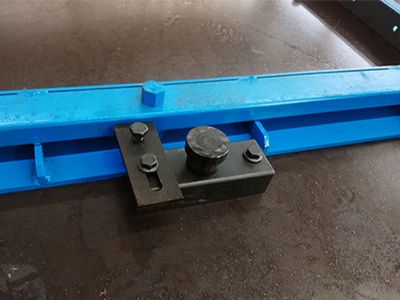
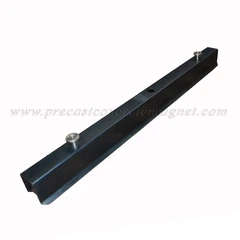
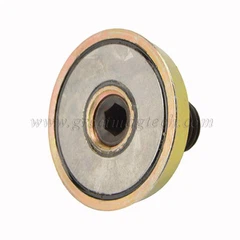
At its heart, a shuttering magnet suction system is a powerful magnet encased in a protective housing with an activation mechanism that lets you engage or disengage it from steel surfaces as needed. That stability during the casting process preventing the moulds from moving around is what shuttering magnets are all about. By choosing the right shuttering magnet suction system, you can boost efficiency and accuracy in your construction process while cutting down on labor-intensive operations.
Shuttering magnets are used in precast concrete plants, bridge construction, and modular housing projects where you need to position mold with precision. That's why you'll find them in those areas of the construction industry.
Key Factors in Choosing the Right Shuttering Magnet Magnetic Force and Holding Capacity
When you're choosing a shuttering magnet suction system for concrete formwork, it's all about achieving the right magnetic force. It helps you understand how good that magnet will be at holding the formwork when you're pouring and casting the concrete, which are the hardest stages. You want a magnet that is strong enough to keep everything in place but yet easily adjustable or removable when needed. If the magnet is not strong enough, it will not do its job properly. That can make the formwork move, and that misalignment can ruin the entire structure. And believe me, misalignment can be a complete disaster. If the magnet is too strong, it will cause issues, especially when you try to take it out. You don't need stress or complications on location because of a difficult magnet.
The strength you need depends on several things like how heavy and big the formwork is and how complex the whole construction project is. For heavy, big setups, you need stronger magnets so that things won't move around. Light and simpler work can survive on operating with magnets that are not very strong. Magnets are generally graded on their retaining force, that is, force in kilograms (kg). For small-scale work, you can get a magnet of the order of about 450 kg. Mid-scale work calls for something from 900 to 1300 kg. And if you're dealing with large-scale projects that use hefty molds, you're looking at needing magnets with 1800 kg or even more.
Also, keep in mind that the quality of holding the magnet is relative to the surface you stick it onto. When it's clean and smooth, you have a good hold. However, when the surface is rough or rusty, you cannot hold so well and you'd have to use a magnet that has greater pull. And if you get vibrations when pouring, that also decreases the magnetic grip, so you may need a larger magnet to keep it all fixed in place.
By tracking factors like the size of the formwork, the condition of the surface, and the level of vibration expected, construction experts can choose a shuttering magnet that provides the best balance of strength and safety and is easy to handle for their specific projects.

Material Compatibility
When you're choosing a shuttering magnet suction system for concrete formwork, it's very important to think about what material you're using because this will influence how well everything sticks. Shuttering magnets perform best on metal surfaces, especially steel. That's why steel is commonly used for formwork it's smooth, there are no tiny holes, and the magnets stick very well to it. This strong attachment will keep everything in position while you pour and cure the concrete.
Should you be using some other materials, like wood or aluminum, for the formwork, then you'll need to insert some extra pieces, like steel plates or adapters, so that the magnets can still function effectively. Residential buildings, for instance. Wood is often used because it's more budget-friendly, but to get those magnets to stick, you'd need to put some steel plates in place. This does mean you're adding some time and cost to your project, but it's usually worth it for the sake of stability.
For projects in which the formwork consists mainly of non-metallic materials, the fitting of such steel plates is a very common solution. This can be a lifesaver for projects that require complex shapes or when operating on a budget using wood or other less expensive materials. Just keep in mind that while this allows you to still use the magnets, it will add a bit to your cost and you'll have to pay attention to how well all of it fits together to get a good grip. So, on smaller projects with wood formwork, having those steel plates helps with sticking the magnets down as well as making them somewhat easier to slide around.
Another factor is how the magnets are turned on since this can change how effective they are and how convenient it is to utilize them. Shuttering magnets also differ in their activation methods, including a push-button, lever, or even remote control. Which of these you use will depend on the project size and which is most convenient for your use. For smaller projects or those for which you are going to be making many changes, the push-button systems are simple and get it done. For another instance, on the other hand, if you're working on something big, like a bridge or skyscraper, remote-control systems can be especially handy since you'll be able to turn the magnets on from a distance. Not only will this keep everything up and operational, but it will also keep everyone safe on the job. So when you're planning how to activate the magnets, consider how intricate your project is and how much ease you'd want in managing it all.
Durability and Material Composition
When selecting shuttering magnets for concrete formwork, one ought to consider durability. Building construction sites are subjected to harsh conditions such as moisture, dust, and elevated temperatures, which have the impact of devaluing equipment very quickly. It is due to this that good-quality shuttering magnets will most likely be constructed of corrosion-resistant materials, such as stainless steel or iron coated with some material. Stainless steel is great as it does not rust quickly, and therefore the magnets are powerful and useful for a long time. Powder or epoxy coating also protects them from damage.
Sometimes, on harsh construction sites, magnets can be given additional components so that they become stronger. For instance, the provision of lifting handles makes it easy for workers to transport the magnets, hence eliminating any damage during handling. They can also have mounting holes for attachment onto equipment or formwork for safe mounting. The magnets can also be rubber plated to prevent scratching of sensitive surfaces and for better grip, preventing slipping while pouring concrete. These personalized magnets can help minimize loss of efficiency, especially where a project requires unique requirements.
Comparison of Shuttering Magnets and Other Fixing Methods
Welding, bolting, and clamping are conventional methods of construction, but they are not without disadvantages over shuttering magnets. Welding is a permanent method and needs skilled labor, and it tends to weaken mold in the long term. Bolting and clamping can be time-consuming and can cause formwork damage if used multiple times. But shuttering magnets are reusable, inexpensive, and time-saving.
The table below provides a comparison of different shuttering magnet suction models, highlighting their vertical strength, weight, size, and applicable framework height:
| Number | GME-450 |
GME-600 |
GME-800 | GME-900 | GME-1000 | GME-1350 | GME-1800 | GME-2100 |
| Vertical Strength(kg) ≥ | 450 | 600 | 800 | 900 | 1000 | 1350 | 1800 | 2100 |
| NW(kg) | 2 | 2.15 | 2.75 | 2.7 | 3.1 | 6.3 | 7.2 | 7.8 |
| Size(cm) |
17*6*4 |
17*6*4 | 19*10*4 | 28*6*4 | 19*10*4 | 32*9*6 | 32*12*6 | 32*12*6 |
| Applicable Framework Height(mm) | 40-70 | 40-70 | 50-80 | 60-100 | 70-120 | 80-200 | 100-250 | 100-250 |
Safety and Maintenance
Shuttering magnets must be preserved because they must be preserved safely and durable. They become dusty or rusty over time and become weak. They must be wiped now and then with a dry cloth or in a mild detergent to scrape off the dust or scum deposits. In addition, check on the activating pieces so as not to experience any surprises on-site.
Safety matters as well. You could get hurt if you do not handle the powerful magnets carefully because they are strong pullers. Gloves must be worn by the workers when dealing with the heavy-duty magnets so they will not pinch their fingers. Store the magnets somewhere where it is not too humid or hot as well so they are in good shape.
Practical Applications and Examples
Shuttering magnets are employed extensively in construction, accelerating and making it more accurate. Take a large precast concrete factory that makes highway barriers. They pour these barriers into steel molds, and they need some method of quickly switching the molds and getting them precisely aligned. Welding or bolting, which are outdated methods, slow the process down and can damage the molds using shuttering magnets of high hold capacity, like the GME-1350, the factory has an active setup time per mold. That means more units are made with efficiency. Furthermore, using these magnets saves costs since it saves on labor costs and the life of the molds since they do not damage them. This means that there is a higher quality product with smooth barriers and fewer defects.
For instance, modular housing of houses, where precision counts a great deal. A builder who manufactures prefabricated houses uses GME-1800 and GME-2100 magnets to hold giant steel molds for panels and walls. The strong magnets keep everything in place so that the final product is all identical. By shunning traditional fixing methods, the builder speeds up the assembly process and makes the working environment safe by reducing the number of tools and manual labor used.
What Happens If You Choose the Wrong Magnet?
Selecting the wrong shuttering magnet creates real problems for the construction process. If you select one that will not hold securely enough, then formwork can shift while you pour concrete, and you end up with crooked or defective structures. On the other hand, if the magnet is too strong, it will be hard to adjust or take out, and that will hold up operations and increase labor costs. And apart from that, if the magnet is not working properly with the formwork material, you will get low adhesion and delayed projects.
Benefits and Challenges of Shuttering Magnets
In precast concrete production, shuttering magnet systems have some advantages over conventional fastening systems. Completion of projects is accelerated by their quick deployment and stripping functions. As these magnets can be reused, there is no fastener to be discarded, and therefore savings in the long run. Better quality precast pieces and reduced scrap are realized when more quality holding force is utilized to provide dimensional stability at casting. In addition, the non-intrusive connection method reduces maintenance costs by providing steel mold integrity. Most significant, perhaps, shuttering magnets reduce heavy machinery and manual handling needs, which improves workplace safety.
Limitations and Challenges
Shuttering magnets undoubtedly have plus points, but also minus points. They hold force only well on steel surfaces. If you're working on wood, aluminum, or some other ferrous-free material, you might find you need some extra pieces. Quality shuttering magnets can prove extremely expensive up front, which smaller building companies might not so easily manage to afford. Despite their durability, they need occasional maintenance to avert rusting, grime buildup, and losing magnetic powers over the years. Also, excessive or insufficient temperatures destroy their griping power, too cold or too hot. Mechanical components also deteriorate with time, and you might have to fix or replace them. Also, magnets if not properly mounted, distort the formwork, resulting in defects in the final product.

Conclusion
Choosing the right shuttering magnet suction system is important for getting the most out of your construction projects. You need to think about things like how long it lasts, how useful it is, its magnetic strength, and how well it works with the formwork materials. While there are some downsides to shuttering magnets, their benefits often outweigh them. They make the work more precise, safe, and efficient, which is helpful in precast concrete and modular buildings. As technology improves, we can look forward to even better designs and materials for these magnets in construction.