




Introduction
Many people mistakenly believe that adding fiber to concrete can eliminate cracking. However, in real construction projects, cracks may still appear even in fiber-reinforced concrete. In this guide, we will explain the most common causes of cracking in fiber-reinforced concrete and show how proper material selection, mix design, and construction practices can help effectively reduce cracking risks.
Key Takeaways
Concrete may still crack even after fibers are added, as cracking is often caused by multiple factors such as mix design, construction and curing practices, external stresses, and the performance limitations of the fibers themselves. The main role of fibers is to improve concrete toughness and reduce early micro-cracking, but they cannot eliminate structural or overload-related cracks. In practical applications, selecting the appropriate fiber type, optimizing the concrete mix, and following proper construction and curing procedures are essential for effectively reducing cracking risks and improving long-term durability and structural stability.
Causes of Concrete Cracking:

Limitations of Fiber Performance
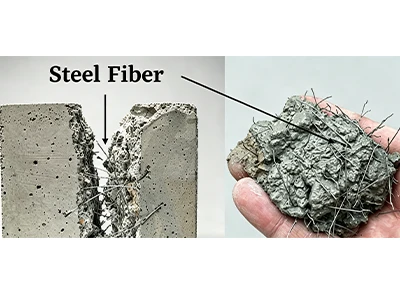
Although fibers can improve concrete toughness and help reduce early micro-cracking, their performance still has limitations. Polypropylene fibers have a much lower elastic modulus than concrete, so under tensile or thermal stress, the deformation of the fibers and the concrete matrix cannot remain fully synchronized. As a result, micro-cracks may still develop. Steel fibers offer higher strength, but they may still fracture under extreme stress conditions.
In addition, the crack-control benefits of fibers are mainly effective during the plastic stage of concrete. Fibers perform well in reducing plastic shrinkage cracks, but they have limited effectiveness against later-stage temperature cracks, settlement cracks, or overload-related structural cracks. Fibers cannot replace steel reinforcement in carrying primary structural loads.
Unreasonable Raw Material Selection and Mix Design
Excessive cementitious material can increase shrinkage stress in concrete. To meet pumping and workability requirements, some concrete mixes use higher cement content and sand ratios. However, too much cementitious material can intensify shrinkage deformation during hardening, exceeding the crack-control capacity of fibers and leading to cracking.
Improper selection of aggregates and admixtures can also affect crack resistance. High mud content, poor aggregate grading, or incorrect admixture use can reduce concrete density, create internal stress concentration points, and increase the risk of cracking.
In addition, the fiber type must match the project environment. Different fibers are suitable for different conditions, such as heavy-load structures, low-temperature environments, or humid and corrosive areas. If the wrong fiber is selected, its performance cannot be fully achieved, and the concrete may still crack.
Improper Construction Practices
Uneven fiber dispersion is a common cause of cracking. If the feeding order is wrong or the mixing time is too short, fibers may clump together, leaving some areas poorly reinforced and more likely to crack.
Improper pouring and vibration also reduce crack resistance. Excessive drop height can cause segregation, over-vibration may bring fibers to the surface, and insufficient vibration can lower concrete density. Adding extra water on site further weakens the mix and reduces fiber bonding.
Poor finishing can create surface defects. Finishing too early disturbs the concrete, while finishing too late makes it harder to close early micro-cracks. Without proper curing, rapid moisture loss may lead to drying shrinkage cracks.
Curing and External Environmental Factors
Insufficient curing is a major cause of cracking in fiber-reinforced concrete. If the surface is not covered or watered in time after pouring, especially in hot or windy conditions, surface moisture can evaporate quickly. This creates a moisture difference between the surface and the interior, leading to drying shrinkage cracks. A short curing period can also affect cement hydration and weaken the bond between fibers and the concrete matrix.
Temperature and humidity changes can also increase cracking risks. In mass concrete, hydration heat can create a large temperature difference between the interior and surface, resulting in thermal stress. Freeze-thaw cycles in winter, high temperatures in summer, and repeated wet-dry cycles can also reduce the long-term performance of both concrete and fibers.
External loads are another factor. Uneven foundation settlement, heavy vehicle loads, and vibration impacts can cause structural deformation. Fibers can improve toughness, but they cannot fully resist structural cracks caused by settlement or overloading.
How to Reduce Cracking in Fiber Reinforced Concrete
Select the Right Fiber Type
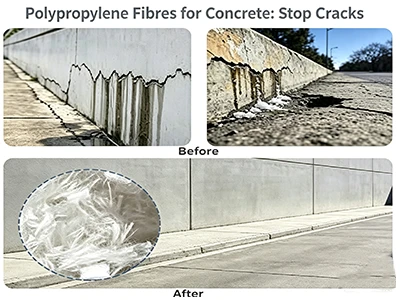
Polypropylene fiber is suitable for controlling plastic shrinkage cracks and is commonly used in floors, surface layers, and general crack-control applications. Steel fiber or macro synthetic fiber is better suited for heavy-load, impact-resistant, and high-toughness projects. In special environments, corrosion resistance and long-term stability should also be considered.
Types of Concrete Fiber Reinforcement

Polypropylene Fiber(PP Fibers)

Polyacrylonitrile Fiber (PAN Fiber)

Polyvinyl Alcohol Fiber(PVA Fiber)

Polyester Fiber (PET Fiber)

Cellulose Fibers

Basalt Fiber

Steel Fibers For Concrete

Imitation Steel Fiber

Polypropylene Twisted Fiber
Control the Proper Fiber Dosage
If the dosage is too low, an effective crack-control network cannot be formed. If the dosage is too high, workability may decrease, causing fiber clumping and increased voids. The dosage should be determined based on the concrete mix design, construction method, and project requirements, rather than simply increasing the amount blindly.
Optimize the Mix Design and Raw Material Quality
Excessive cement content, unreasonable sand ratio, poor aggregate grading, or high mud content can all increase shrinkage and cracking risks. Cementitious material content should be properly controlled, suitable admixtures should be selected, and aggregate quality should remain stable.
Strictly Control the Water-Cement Ratio
Adding water randomly on site can reduce concrete strength, increase shrinkage, and weaken the bond between fibers and the cement paste. Workability should be improved through proper mix design and admixtures, not by adding extra water.
Ensure Even Fiber Dispersion
Improper feeding sequence or insufficient mixing can easily cause fiber clumping, leaving some areas without effective crack protection. A proper mixing process should be used to ensure fibers are evenly distributed throughout the concrete.
Standardize Pouring, Vibration, and Finishing
Excessive pouring height can cause segregation. Insufficient vibration reduces compactness, while over-vibration may cause fibers to float to the surface. Finishing time should also be properly controlled, and secondary troweling may be used when necessary to reduce surface drying shrinkage cracks.
Improve Subgrade Preparation and Control Joint Design
The subgrade must be flat, stable, and well compacted to prevent settlement cracking later. Control joint spacing, depth, and cutting time should follow design requirements to guide shrinkage movement and reduce random cracking.
Strengthen Curing After Pouring
After pouring, concrete should be covered, watered, or treated with curing compounds in time to prevent rapid surface moisture loss. In hot, windy, cold, or mass concrete applications, moisture retention, insulation, and temperature difference control are especially important.

Summary
Concrete may still crack after fibers are added, usually due to a combination of fiber performance limitations, improper mix design, poor construction and curing practices, and external loads. Fibers can enhance concrete toughness and mitigate early micro-cracks, but they cannot replace proper structural design and standardized construction practices. In practical projects, selecting the right fiber type, optimizing the mix design, controlling construction quality, and strengthening curing are essential for reducing cracking risks and improving structural stability and long-term durability.
FAQ
Q: Can concrete fiber completely prevent cracking?
A: No. Concrete fiber can reduce micro-cracks and plastic shrinkage cracks, but it cannot completely prevent all types of cracking. Structural cracks, settlement cracks, temperature cracks, and overload-related cracks still require control through proper design, steel reinforcement, control joints, and adequate curing.
Q: Does adding more fiber always reduce cracking better?
A: Not necessarily. Too little fiber cannot form an effective crack-control network, while too much fiber can reduce workability, cause fiber clumping, increase voids, and even affect concrete quality. The dosage should be determined according to the mix design and project requirements.
Q: What types of cracks can concrete fiber mainly control?
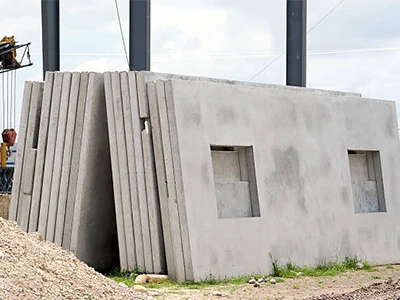
A: Concrete fiber is mainly effective in controlling plastic shrinkage cracks, early micro-cracks, and surface cracks caused by rapid moisture loss. It can also improve toughness and impact resistance, making it commonly used in floors, pavements, and precast concrete components.
Q: Can fiber replace steel reinforcement?
A: In most structural projects, no. Fiber can improve crack resistance and toughness, but it cannot fully replace steel reinforcement for carrying primary structural loads. Load-bearing structures usually still require rebar or mesh reinforcement.
Q: Why is fiber dispersion important?
A: Uneven fiber dispersion weakens crack-control performance. If fibers clump together, some areas may contain too many fibers while other areas lack protection, making those weak zones more likely to crack first.
Q: How can cracking in fiber-reinforced concrete be reduced?
A: Choose the proper fiber type and dosage, optimize the mix design, control the water-cement ratio, ensure even fiber dispersion, prepare the subgrade properly, cut control joints correctly, and strengthen curing after pouring.