





Introduction
From fixing formwork to positioning embedded parts, magnetic technology has completely revolutionized the production of precast concrete components. I have witnessed firsthand how simply switching from traditional fixing methods to magnetic solutions can cut production line setup times by nearly half.
So, how exactly do these systems function in day-to-day operations? And at which specific stages do they play a critical role? In this guide, we will take you on an in-depth exploration of how precast concrete factories utilize magnetic systems throughout their entire production workflow.
What Are Magnetic Systems in Precast Production?
Magnetic systems in precast production refer to a set of tools that use powerful permanent magnets to fix, position, and stabilize formwork and embedded parts on steel casting beds. Their working principle is based on forming a complete magnetic circuit between the magnet and the steel casting table. Once activated, the magnet generates a strong holding force, firmly clamping components in place on the surface. A clean and flat steel casting bed helps improve contact, ensuring optimal system performance.
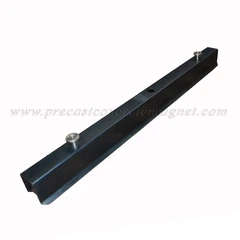
The core components mainly include shuttering magnets, insert magnets, and magnetic chamfer strips.

Formwork Setup Using Shuttering Magnets
Formwork installation is the foundation of precise precast production, and shuttering magnets significantly simplify this stage. Instead of relying on drilling or welding, operators only need to place the magnets on the casting table and activate them to quickly position the steel formwork.
Adjusting mold dimensions becomes much more flexible. When production requirements change, operators can easily reposition the shuttering magnets without causing any damage to the steel surface.

Shuttering Magnet

Shuttering Magnetic For Vertical Mould

Shuttering Magnet Of Side Rods

Precast Concrete Shuttering Magnet
Before concrete pouring, it is essential to ensure that the formwork is tightly and securely fixed. Once activated, shuttering magnets generate a strong holding force, firmly locking the formwork in place. This stability is especially critical during concrete vibration, as even slight movement can negatively affect the dimensional accuracy of the final product.
In highly repetitive production environments, consistency is just as important as speed. With magnetic fixing systems, operators can follow standardized setup patterns in every production cycle, significantly improving repeatability and reducing dimensional variation between precast elements.
Fixing Embedded Parts with Insert Magnets
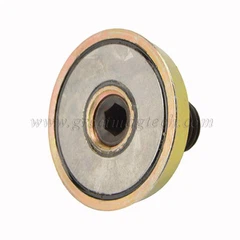
Fixing embedded parts is a key stage where precision becomes visible in the final product. Insert magnets provide a simple and reliable method to securely hold threaded inserts, sleeves, and electrical junction boxes in place on the casting table. Compared with temporary fixing methods that require additional adjustment, magnets lock these components directly, reducing variability during setup.
Insert magnets help maintain precise alignment throughout the entire concrete pouring process, ensuring that all embedded parts remain exactly in their designed positions. Even minor displacement can lead to installation issues later, so stable and accurate fixing is essential.
In continuous multi-batch production, insert magnets contribute to consistent results. Each embedded component follows the same positioning standard, reducing variation between different units and significantly improving production efficiency. In daily factory operations, this high level of repeatability is a strong competitive advantage.

Ferrule Insert Concrete Magnet

Embedded Magnet

Circular Wire Box Insert Magnet

Rectangle Embedded Magnets

Rubber Box Insert Magnet

Electrical-Box Insert Magnet

Fixing Magnets

Box Insert Magnet
Edge Control with Magnetic Chamfers
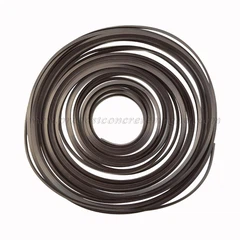
The edge quality of precast elements often determines their overall appearance and evaluation. Magnetic chamfers provide a simple and reliable way to create clean and consistent beveled edges along formwork joints. Once placed on the steel casting bed, they align precisely with the mold profile, ensuring that each precast element achieves uniform edge geometry.
During demolding, sharp corners are the most vulnerable to chipping and damage. Chamfered edges help reduce stress concentration and allow for smoother release, significantly lowering the risk of edge damage and subsequent rework. Uniform chamfer lines give wall panels and slabs a refined, finished appearance, reducing the need for repairs and shortening post-processing time.
Magnetic chamfers also ensure high dimensional consistency across different production batches. This is particularly important for projects that demand both structural durability and high surface quality, making them an effective solution for achieving reliable and visually consistent results in precast production.

Magnet Chamfer

Rubber Magnetic Chamfer

Urethane Chamfer

PVC Concrete Chamfer
Concrete Pouring and Vibration Stability
During the concrete pouring stage, even minor installation errors tend to become apparent. As vibration is applied, forces increase rapidly, and any weak point in fixation can lead to formwork displacement. Magnetic fixing systems are designed to ensure stability at this critical stage by providing a continuous and stable clamping force between the formwork and the steel casting table.
The effectiveness of this stability largely depends on the condition of the contact surface. A clean and flat steel plate allows the magnet to form a complete magnetic circuit, achieving maximum holding force. Even small amounts of debris, rust, or surface unevenness can create gaps at the contact interface, reducing fixing performance and increasing the risk of slippage under vibration.
Magnetic fixing systems help prevent the movement of both formwork and embedded parts. Once accurately positioned and activated, the system can effectively resist displacement caused by concrete flow and vibration energy.
Demolding and Reusability
Once the concrete has fully cured, demolding becomes a simple and straightforward step when magnetic systems are used. Shuttering magnets can be released quickly through a simple deactivation mechanism. This allows operators to remove the formwork without damaging the casting table or leaving marks on the concrete surface, ensuring that both the equipment and finished products remain in good condition.
One of the greatest advantages of magnetic systems is their reusability. High-quality shuttering magnets are designed for repeated use and can last for hundreds or even thousands of production cycles.
Compared with traditional fixing methods, magnetic systems significantly reduce material waste. There is no need for consumables such as welding rods, screws, or disposable fixing components. Over the long term, this not only lowers operating costs but also contributes to a cleaner and more sustainable production process.
Key Advantages in Daily Factory Operations
Fast Operation Speed
Operators can position and activate the magnets within seconds, allowing formwork alignment and fixation to be completed quickly with almost no waiting time.
Reduced Labor Intensity
Traditional methods often involve drilling, bolting, or welding, which are time-consuming and physically demanding. The use of magnetic systems simplifies these steps, making daily operations more efficient while reducing dependence on highly skilled manual labor.
Improved Positioning Accuracy
Magnets firmly hold formwork and embedded components in place, significantly reducing the risk of movement during vibration. This helps ensure consistent dimensions and minimizes defects in the final products.
Reusability
The reusable nature of magnetic systems leads to long-term cost savings. With proper maintenance, magnetic components can be used across numerous production cycles, effectively reducing material waste and lowering overall operating costs.
Why Magnetic Systems Are Becoming Standard in Precast
The transition from traditional manual operations to semi-automated production has fundamentally changed how precast concrete factories operate. Magnetic systems align perfectly with this shift, replacing time-consuming processes such as drilling and welding with faster, more precise, and easier-to-control positioning methods.
At the same time, the demand for production accuracy and repeatability continues to increase. Modern precast elements must meet stricter dimensional tolerances, especially in large-scale or modular projects. Magnetic systems provide stable and repeatable positioning support, helping factories maintain consistent product quality across multiple production cycles.
Labor costs, production downtime, and rework losses all directly impact profitability. The use of magnetic systems reduces setup time, minimizes human error, and improves the turnover efficiency of casting beds. Over time, although the initial investment may be higher, these efficiency gains translate into measurable cost savings.
Conclusion
Magnetic systems have become an indispensable part of the daily workflow in modern precast factories. By streamlining setup, enhancing precision, and minimizing manual labor, these systems enable factories to achieve consistent quality in large-scale production. From formwork positioning to the securement of embedded parts, magnetic devices play a pivotal role in every stage of the production process.
FAQ
Q: What are magnetic systems used for in precast production?
A: Magnetic systems are used to fix formwork, position embedded parts, and create consistent edges on steel casting beds. They replace traditional methods like welding and drilling, improving efficiency and accuracy.
Q: Are shuttering magnets strong enough for heavy formwork?
A: Yes, shuttering magnets are designed with a high holding force and can securely fix heavy formwork. The actual performance depends on steel plate thickness, surface condition, and correct usage.
Q: Why do magnets sometimes slip during concrete pouring?
A: Slipping usually occurs due to poor surface contact, dirt or debris on the steel table, insufficient steel thickness, or incorrect magnet selection for the load.
Q: Can magnetic systems replace welding completely?
A: In most modern precast factories, magnetic systems can replace welding for formwork and insert fixing. However, in certain special cases, welding may still be used.
Q: How long can magnetic systems be reused?
A: With proper maintenance, magnetic systems can be reused for many production cycles. Regular cleaning and inspection help maintain performance and extend lifespan.
Q: What factors affect magnet performance in production?
A: Key factors include steel plate thickness, surface cleanliness, contact area, temperature, and correct magnet selection based on load requirements.
Q: Are magnetic systems suitable for all precast projects?
A: Magnetic systems are suitable for most steel formwork applications. However, they require a steel casting surface to function properly.
Q: How do magnetic systems improve production efficiency?
A: They reduce setup time, eliminate drilling and welding, improve positioning accuracy, and allow faster turnover of casting tables.