






Introduction
In contexts such as construction, the production of precast components, heavy equipment handling, and industrial logistics, safe and stable lifting operations fundamentally depend on the proper selection and compatibility of lifting points. Lifting anchors and lifting loops are the two most commonly utilized load-bearing accessories in the industry; while both provide reliable load-bearing points for lifting, they differ fundamentally in their design principles, installation methods, applicable scenarios, and safety standards. This article will comprehensively analyze the core distinctions, respective advantages and disadvantages, and specific applications of these two product categories, helping you quickly identify the optimal lifting solution for your specific project.

What Is a Lifting Anchor in Precast Concrete?
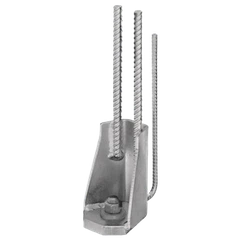
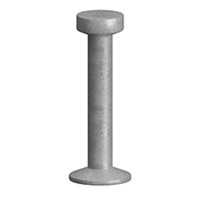
Lifting anchor is a specialized embedded component used to safely lift and transport precast concrete elements. It creates a reliable connection point between the concrete unit and the lifting equipment, ensuring that load transfer is controlled and predictable.
A typical lifting anchor system includes a steel anchor that is cast into the concrete during production. Once the concrete has reached sufficient strength, the anchor can be engaged with a compatible lifting clutch, forming a secure and stable lifting connection.
Working together with lifting clutches and rigging systems, lifting anchors provide a repeatable, efficient, and safer lifting method. Compared with traditional lifting solutions, lifting anchor systems offer more precise control, higher safety margins, and greater consistency in modern precast concrete production.


What Is a Lifting Loop?
A lifting loop is made from high-strength steel wire rope, formed into a loop, and embedded directly into the concrete element during casting. Once the concrete has cured, the exposed loop serves as a lifting point for cranes or rigging equipment. It requires no complex components or specialized accessories, making it well-suited for basic lifting applications. For small precast elements or projects with limited lifting requirements, it offers a fast and cost-effective solution.
Lifting loops are typically designed for single use or limited reuse. After being subjected to load and environmental exposure, their long-term reliability may decrease. Compared with engineered lifting anchor systems, they provide less control over lifting angles and load distribution.

Key Differences Between Lifting Anchor and Lifting Loop
|
Factor |
Lifting Anchor |
Lifting Loop |
|
Design Structure |
An engineered steel anchor embedded in concrete, used with a lifting clutch |
Steel wire rope loop embedded directly in concrete |
|
Load Capacity |
High load capacity, suitable for heavy precast elements |
Limited load capacity, suitable for light components |
|
Safety Performance |
Higher safety factor with controlled load distribution |
Lower safety control, relies on the loop condition |
|
Reusability |
Anchor embedded, lifting clutch reusable |
Typically single-use or limited reuse |
|
Lifting Control |
Precise control of lifting angle and direction |
Limited control over lifting angle |
|
Installation |
Requires planning and accurate positioning |
Simple installation during casting |
|
Durability |
Designed for long-term structural performance |
Performance may decrease after use |
|
Application Scope |
Large panels, beams, and structural elements |
Small components, temporary lifting |
Installation Method and Fixing Characteristics
Lifting Anchor
Lifting anchors are designed for permanent or semi-permanent fixing and are mainly classified into two types: cast-in (pre-embedded) and post-installed anchors. Cast-in anchors are fixed inside the formwork before concrete pouring, becoming an integral part of the structure. Post-installed anchors are secured through drilling, hole cleaning, and professional anchoring techniques, forming a rigid connection with the base material. High installation accuracy is required, and once installed, they cannot be easily removed or repositioned. They function as part of the structural load-bearing system.

Lifting Loop
Lifting loops are designed for removability and quick installation, requiring no pre-embedding or damage to the base structure. Rigid lifting loops are fixed using threaded connections, while flexible loops can be directly attached or wrapped around components. Installation is simple, requires no specialized tools, and can be completed quickly. They can be easily removed, repositioned, and reused, making them suitable for flexible and temporary lifting applications.
Load Capacity and Load Distribution
Lifting Anchor
Lifting anchors are specifically designed for heavy loads and long-term stable performance, with rated capacities ranging from several tons to over one hundred tons. They are typically manufactured in compliance with international standards (such as EN and ASTM) and are validated through pull-out and fatigue testing. Their key advantage lies in distributing loads evenly into the concrete or steel structure, minimizing stress concentration, and providing excellent resistance to pull-out and lateral forces.
Lifting Loop
Lifting loops are suitable for light to medium load applications, but the load is mainly concentrated on the loop itself and its connection point. Rigid loops perform reliably under vertical loading but have limited resistance to side loads or eccentric forces. Flexible loops provide some shock absorption and are better suited for dynamic or temporary lifting, but they are not ideal for long-term heavy-load applications.
Versatility and Application Scenarios
Lifting Anchor
Lifting anchors are specialized structural components with strict requirements for concrete strength, installation depth, and load direction. They are typically designed for specific vertical load conditions and are not suitable for cross-project or non-standard applications.
Lifting Loop
Lifting loops are general-purpose lifting accessories, suitable for various materials such as concrete and steel, and adaptable to multiple lifting angles. Flexible loops are particularly useful for irregular components and temporary lifting tasks, offering high versatility and flexibility.
Safety Standards and Usage Limitations
Lifting Anchor
Lifting anchors are critical components governed by industry standards in precast and construction lifting systems. Their selection must be specified by design engineers and installed by qualified personnel. After installation, pull-out tests can be conducted to verify load capacity. They are essential for permanent structures and high-safety-level projects.
Lifting Loop
Lifting loops must comply with general lifting safety standards and are suitable for routine lifting operations. However, they are not recommended for permanent structural use or high-risk lifting scenarios. Rigid loops should not be used under eccentric loading, and flexible loops must be protected from wear, cutting, and exposure to high temperatures. Their long-term stability under sustained load is limited.

When to Use Lifting Anchors
- Production and hoisting of precast concrete components, prefabricated buildings, and bridge segments
- Fixed hoisting points for permanent building structures and heavy-duty equipment foundations
- Vertical hoisting of ultra-heavy components or loads exceeding the limits of standard lifting rings
- Engineering scenarios involving long-term, repetitive hoisting operations with strict requirements for point stability and regulatory compliance
- Hoisting of high-precision components in applications where post-installation drilling or damage to the base structure is strictly prohibited
When to Use Lifting Loops
- Temporary handling, loading, and hoisting of standard equipment, machinery, piping, and structural profiles
- Emergency on-site hoisting in environments lacking pre-embedded fixtures or where drilling and anchoring are infeasible
- Hoisting operations involving irregular components, uniquely shaped equipment, or multi-angle lifting requirements
- Short-term projects, sporadic lifting tasks, and scenarios requiring frequent relocation of hoisting points
- Routine hoisting operations involving light-to-medium loads where no permanent fixation is required
Conclusion
While lifting anchors and lifting rings serve the same general purpose, they differ significantly in terms of performance. Lifting rings offer the advantages of a simple structure and low cost; however, they are accompanied by inherent limitations regarding safety and load-bearing capacity. In contrast, lifting anchors enable controlled lifting operations, provide a higher safety margin, and ensure long-term operational efficiency. If your primary objectives are reliability, consistency, and risk mitigation, a lifting anchor system typically represents the more prudent investment choice. It is imperative to make this decision with due diligence, for in lifting operations, safety is never an optional extra.
FAQ
Q: What are the main differences between lifting anchors and lifting wire rope slings?
A: Lifting anchors are pre-embedded systems with defined load-bearing capacity and safety factors, typically used in conjunction with lifting equipment; lifting wire rope slings are simple wire rope structures with less control.
Q: Which method is more suitable for heavy precast components?
A: Lifting anchors are more suitable for heavy components, designed to withstand large loads and provide stability; lifting slings are more suitable for light or temporary lifting.
Q: Can lifting wire rope slings be reused?
A: Generally, lifting wire rope slings cannot be reused after use in concrete, while lifting anchors can be used with reusable lifting equipment, improving production efficiency.
Q: How does the lifting angle affect performance?
A: The lifting angle directly affects the stress distribution. Lifting anchors can withstand tilted forces within their design range, while lifting slings are more prone to risks when the angle is inappropriate.
Q: Are lifting anchors more expensive than lifting slings?
A: Lifting anchors have a higher initial cost, but due to their reusability and enhanced safety, they offer better long-term cost-effectiveness.
Q: When are lifting wire rope slings still suitable?
A: Lifting wire rope slings are suitable for lightweight components or projects with low lifting frequency and low safety requirements.
Q: What are some common mistakes in using lifting systems?
A: Common mistakes include underestimating the load, neglecting the lifting angle, improper selection, and failure to conduct pre-lift inspections.
Q: How to choose the right lifting system?
A: The choice depends on load weight, safety requirements, lifting conditions, and project scale. For most modern precast applications, lifting anchors are the preferred solution.