






Introduction
In construction projects, especially in reinforced concrete structures, rebar tie wire (steel wire) and plastic ties (nylon cable ties) are two commonly used fastening materials. They differ significantly in material properties, mechanical performance, installation characteristics, and code compliance, all of which directly impact project quality, efficiency, and cost. This article provides a comprehensive comparison across key dimensions to offer a clear basis for engineering selection.
What Is Rebar Tie Wire?
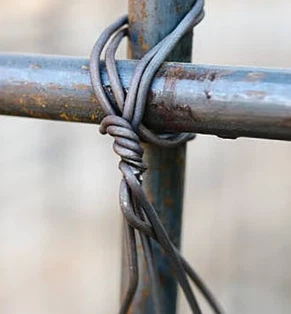
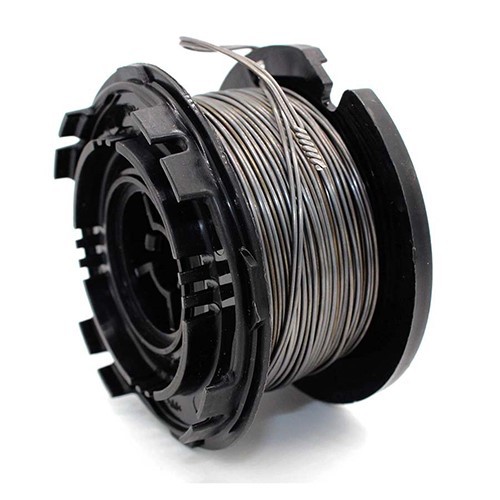
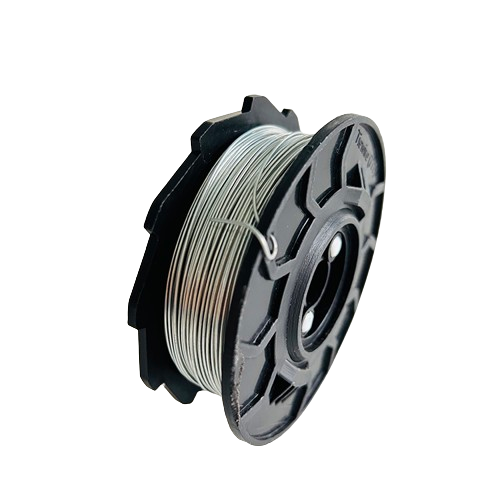
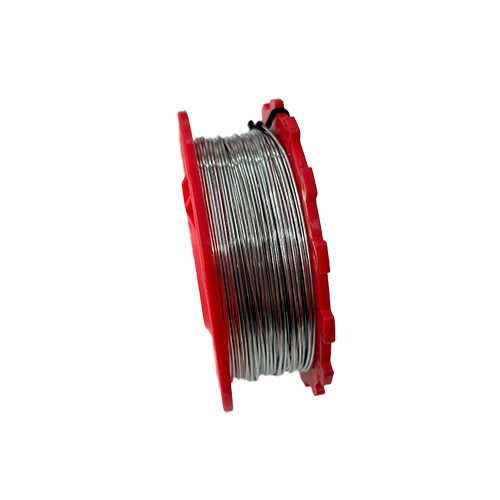
Rebar tie wire is a metal wire made from low-carbon steel (Q195/Q235) through a drawing process. In the construction industry, it is commonly known as "binding wire" or "annealed wire," and is specifically used to secure rebar intersections before concrete is poured. Although small in size, it plays a critical role in maintaining the geometry and stability of the reinforcement cage.
Low-carbon steel provides an ideal balance of strength and flexibility. The wire can be tightly twisted without breaking, while remaining easy to handle on site. The most common types are black annealed tie wire and galvanized tie wire. Black annealed wire is softer and easier to twist, making it suitable for general construction. Galvanized wire, on the other hand, offers better corrosion resistance and is more suitable for outdoor or humid environments.
Rebar tie wire is widely used in foundations, beams, slabs, columns, and precast components. While it does not carry structural loads itself, it ensures that reinforcement remains in its designed position, which is essential for achieving the intended structural performance.
What Is a Plastic Tie?
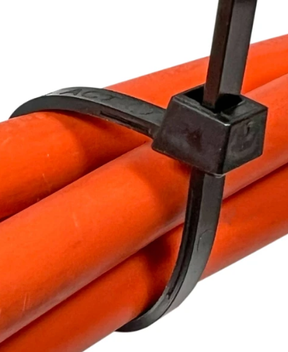
Plastic ties, commonly known as nylon cable ties, are polymer-based fastening materials widely used for quick and convenient bundling tasks. They are primarily made from durable nylon and feature a simple design that allows items to be secured without twisting or the use of additional tools. Their fast and easy application involves simply wrapping the tie around the objects and pulling it tight.
Plastic ties are typically used for light-duty or temporary fixing. While they perform well in organizing or positioning components, their mechanical strength and heat resistance are limited compared to steel tie wire. Under heavy loads or high-temperature conditions, they may deform or lose their holding capacity.
Key Differences Between Rebar Tie Wire and Plastic Tie
|
Comparison Factor |
Rebar Tie Wire |
Plastic Tie |
|
Material |
Low-carbon steel (annealed or galvanized) |
Nylon or polymer materials |
|
Strength |
High tensile strength, suitable for load-bearing fixing |
Limited strength, suitable for light-duty use |
|
Durability |
Excellent under long-term load and vibration |
May degrade or loosen over time |
|
Heat Resistance |
High temperature resistance |
Low heat resistance, may soften or deform |
|
Corrosion Resistance |
Moderate (improved if galvanized) |
Good corrosion resistance |
|
Installation Method |
Requires twisting (manual or tool-based) |
Quick pull-and-lock installation |
|
Ease of Use |
Requires skill and time |
Very easy and fast |
|
Reusability |
Limited but stable in structure |
Typically single-use |
|
Application Range |
Structural reinforcement fixing |
Temporary or non-structural fixing |
|
Performance Under Vibration |
Strong and reliable |
May loosen under vibration |
|
Cost |
Low material cost |
Slightly higher per unit |
|
Best Use Scenario |
Concrete structures, precast, heavy reinforcement |
Cable management, light fixing, and temporary binding |
Which One Is Better for Concrete Construction?
In most concrete construction scenarios, rebar tie wire remains the more reliable choice.
Rebar tie wire is preferred for structural applications because it provides a stable and consistent holding force. When properly twisted, it firmly secures reinforcement bars in place, ensuring that the designed spacing and alignment are maintained during concrete pouring. This level of stability is essential for load-bearing structures, where even slight movement can compromise structural performance.
In reinforced concrete construction, galvanized rebar tie wire is the most suitable and code-compliant fastening material. Its metallic properties offer excellent toughness and high tensile strength, allowing it to withstand the impact forces generated during concrete placement and vibration. This ensures that the reinforcement cage remains stable without displacement.
At the same time, galvanized tie wire has excellent compatibility with concrete. It does not interfere with the bond strength between concrete and reinforcement, and its durability aligns with the service life of the structure. For this reason, it is widely used for fixing reinforcement in beams, columns, slabs, and foundations.

When to Use Each Option
In structural concrete applications, rebar tie wire is essential. In foundations, beams, slabs, and columns, reinforcement must remain fixed under vibration and load. Rebar tie wire provides the required tensile strength to secure intersections firmly and prevent loosening. For heavy reinforcement cages, especially in large-scale projects or precast concrete production, tie wire delivers reliable performance where any movement is unacceptable. It also performs well in long-term durability conditions, maintaining integrity even in demanding environments where temperature, load, and time are critical factors.
In contrast, plastic cable ties are more suitable for temporary or light-duty applications. They are commonly used for quick positioning before final fixing or in areas with lower load requirements. Lightweight reinforcement setups benefit from their speed and ease of use, particularly when rapid installation is needed. However, they are not designed to withstand sustained stress or harsh construction conditions.
In practice, rebar tie wire is chosen when strength and reliability are critical, while plastic ties are used when speed and convenience are the priority.
Common Mistakes in Selection
Using plastic cable ties in load-bearing structures is one of the most serious mistakes. Plastic ties lack sufficient tensile strength to withstand the loads of rebar cages. While they may appear secure at first, they can break during vibration or movement, leading to misalignment and structural risks.
Underestimating the effects of vibration is another common issue. During concrete pouring, vibration is necessary to eliminate air pockets, but it also places stress on fastening materials. Steel tie wire maintains its grip under these conditions, whereas plastic ties may loosen or break.
Ignoring environmental conditions can lead to premature failure. High temperatures, UV exposure, or chemical environments can degrade plastic materials. In contrast, properly selected steel tie wire provides more reliable performance across various site conditions.
Selecting based on speed rather than performance often results in short-term gains but long-term problems. Plastic ties may speed up installation, but the cost of rework can quickly exceed the time initially saved.
Conclusion
Reinforcement binding wire and plastic cable ties have different uses, but they are not interchangeable in most construction scenarios. Reinforcement binding wire remains a reliable choice to ensure structural integrity, vibration stability, and long-term performance. While plastic cable ties are convenient and quick, their limitations restrict their application to lightweight applications. Choosing the appropriate fastening method is not just about cost or speed, but more importantly, ensuring that the reinforcement functions exactly as designed.
FAQ
Q: Can plastic cable ties be used instead of rebar tie wire?
A: Plastic cable ties can be used for temporary fixing or light-duty applications, but they are not suitable for structural reinforcement. Rebar tie wire is specifically designed to withstand vibration and maintain reinforcement stability during concrete pouring.
Q: Which is stronger: rebar tie wire or plastic tie?
A: Rebar tie wire is significantly stronger. It has higher tensile strength and better resistance to deformation under load, making it suitable for heavy reinforcement cages.
Q: Do plastic ties break during concrete vibration?
A: Yes, plastic ties may loosen or break under strong vibration. This can cause rebar displacement and affect structural accuracy. Steel tie wire performs more reliably under vibration.
Q: Are plastic ties more efficient than tie wire?
A: Plastic ties are faster to install because they require no twisting. However, for structural applications, rebar tie wire provides better long-term performance and stability.
Q: How do environmental conditions affect plastic ties?
A: Plastic ties can degrade under UV exposure, high temperatures, or chemical conditions. This reduces their strength over time. Tie wire is generally more resistant in construction environments.
Q: Can rebar tie wire corrode inside concrete?
A: Tie wire may corrode slightly, but since it does not carry a structural load and is embedded in concrete, it usually does not affect performance. Galvanized wire can be used for added corrosion resistance.
Q: Which option is more cost-effective?
A: Tie wire is generally more cost-effective for large-scale construction due to its low material cost and reliability. Plastic ties may save time initially, but can increase costs if failures occur.
Q: When should plastic ties be used?
A: Plastic ties are suitable for temporary positioning, light-duty reinforcement, or non-structural applications where load and vibration are minimal.