




Introduction
Concrete possesses excellent compressive strength; however, without proper reinforcement, cracks often appear sooner than anticipated. Currently, fiber reinforcement and steel mesh reinforcement are the two most widely adopted methods for strengthening concrete structures. The former involves directly incorporating fibers into the concrete matrix, while the latter entails constructing a grid of steel bars within the structure. Although both methods serve to enhance the overall performance of concrete, their underlying mechanisms of action are fundamentally distinct.
In this guide, we will conduct a detailed comparative analysis of these two approaches, fiber reinforcement versus steel mesh reinforcement, from the perspectives of both on-site construction and precast manufacturing.
Key Takeaways
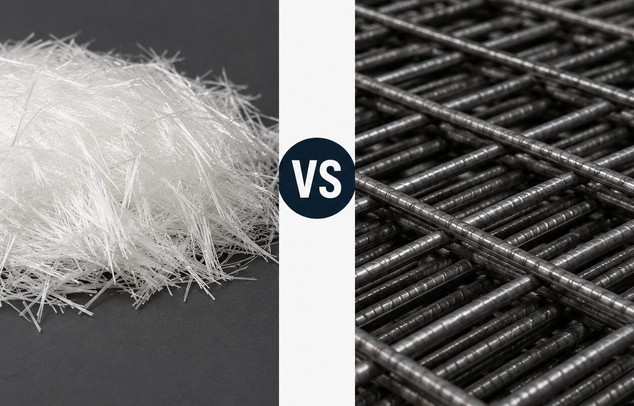
Concrete fibers and steel reinforcement mesh are two distinct methods of reinforcement that enhance concrete performance through different mechanisms; the choice of which solution is superior ultimately depends on specific project requirements. Concrete fibers provide distributed reinforcement throughout the entire concrete mixture, helping to mitigate shrinkage cracking, improve toughness, and streamline the construction process by reducing labor requirements.
Steel reinforcement mesh creates a robust structural steel grid with exceptional load-dispersing capabilities, performing particularly well in heavy load-bearing applications such as floor slabs, pavements, and foundations.
What Is Concrete Fiber?
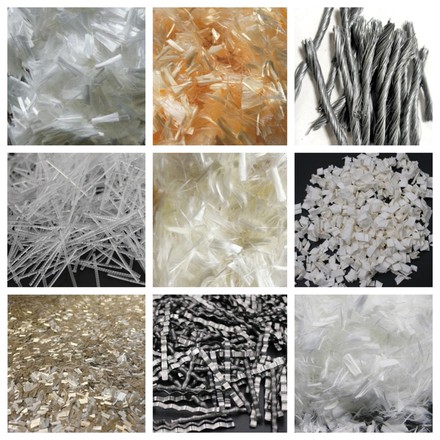
Concrete fiber is a reinforcement material that is typically added directly into the concrete mix during batching. Unlike traditional steel mesh, which occupies a fixed position, these fibers are evenly distributed throughout the entire concrete matrix, creating a more uniform reinforcement effect. Although the fibers are small in size, they play a crucial role in enhancing crack resistance and improving the overall performance of concrete.
Common Types of Concrete Fiber:
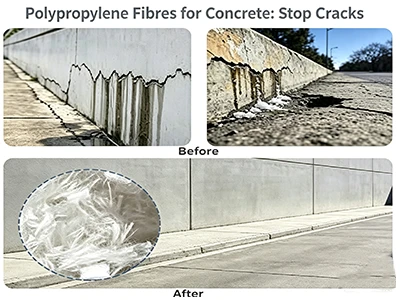
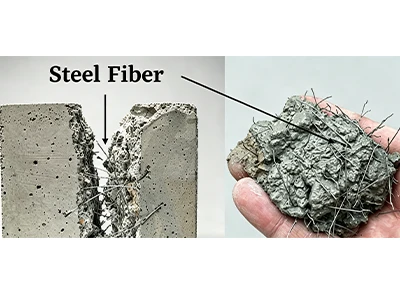
Common types of concrete fiber used in construction include polypropylene fiber, steel fiber, glass fiber, and polyester fiber. Concrete fibers help effectively reduce the formation of early-stage cracks. During the curing process, concrete naturally shrinks as moisture evaporates, and the fibers work to control and limit crack development before it spreads to the surface.
Applications of Concrete Fiber:
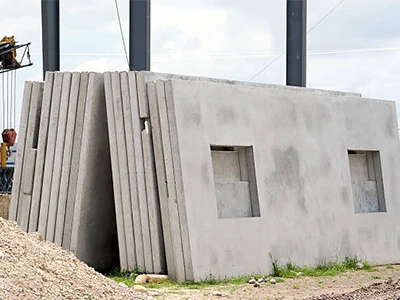
Concrete fiber has been widely used in many applications, including industrial floors, shotcrete projects, tunnels, pavement construction, and precast concrete manufacturing. Its growing popularity comes from its unique advantages: it not only improves construction efficiency but also helps reduce labor requirements.
What Is Mesh Reinforcement?
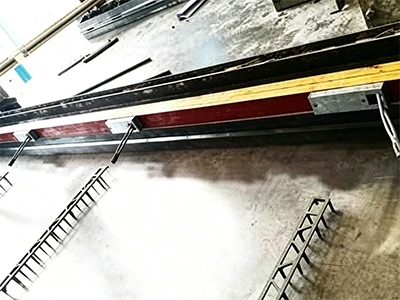
Mesh reinforcement refers to steel wire mesh or welded steel reinforcement grids used to strengthen concrete and improve its resistance to cracking and structural stress. The mesh is typically installed before concrete pouring and carefully positioned to ensure proper concrete cover and effective load distribution. Once embedded in the concrete, it acts as a reinforcement layer that enhances tensile strength and helps control crack propagation as the concrete begins to cure.

Applications of Mesh Reinforcement
Mesh reinforcement is commonly used in slabs, pavements, foundations, walls, and industrial floors where high structural stability is required. It is particularly effective in applications subjected to bending stress or concentrated loads, where additional reinforcement support is necessary.
Advantages of Mesh Reinforcement
One of the key advantages of mesh reinforcement is its ability to distribute loads across a larger area. Instead of allowing stress to concentrate at a single point, the steel grid spreads forces more evenly throughout the concrete section, significantly reducing the risk of major cracking or structural failure.
Key Differences Between Concrete Fiber and Mesh Reinforcement
|
Comparison Factor |
Concrete Fiber |
Mesh Reinforcement |
|
Reinforcement Method |
Provides distributed reinforcement throughout the concrete mix |
Provides concentrated structural reinforcement in specific locations |
|
Crack Control |
Improves crack resistance during early curing stages |
Helps control crack widening after cracks form |
|
Structural Performance |
Suitable for shrinkage control and toughness improvement |
Better for high-load structural applications |
|
Installation Process |
Mixed directly into concrete, reducing labor |
Requires positioning, tying, and support spacers |
|
Construction Efficiency |
Faster installation and simplified workflow |
More time-consuming due to manual placement |
|
Load Distribution |
Reinforcement is distributed evenly throughout the slab |
Reinforcement concentrated in mesh grid areas |
|
Best Applications |
Industrial floors, precast products, and crack control projects |
Foundations, slabs, pavements, heavy structural elements |
|
Labor Requirement |
Lower labor demand |
Higher labor demand |
|
Flexibility in Construction |
Easier to adapt to irregular shapes |
Less flexible for complex layouts |
|
Long-Term Durability |
Helps improve durability and impact resistance |
Provides strong structural stability over time |
When to Use Concrete Fiber
Concrete fiber performs best when crack control, construction speed, and overall efficiency are the main priorities. Unlike traditional reinforcement methods, concrete fiber is mixed directly into the concrete, simplifying the construction process while significantly improving overall concrete performance.
Concrete fiber is widely used in industrial floors, shotcrete applications, and precast concrete production. Fiber reinforcement helps minimize early-age cracking caused by concrete shrinkage and temperature changes. This not only improves the long-term durability of the structure but also effectively reduces future maintenance risks.
Can Concrete Fiber Replace Mesh Reinforcement?
Sometimes, but not always. Whether concrete fiber can replace mesh reinforcement mainly depends on structural requirements, load conditions, and project specifications. In some non-structural or light-load applications, fiber reinforcement can successfully replace traditional steel mesh. However, for heavy structural applications, mesh reinforcement still plays a critical role.
Today, hybrid reinforcement systems are becoming increasingly common. Many projects combine concrete fiber with mesh reinforcement to achieve both crack control and structural strength. This integrated approach not only improves structural durability but also enhances construction efficiency.
Conclusion
Concrete fiber and mesh reinforcement each offer unique advantages, and neither is universally better in every situation. Concrete fiber improves crack control, speeds up construction, and enhances toughness, while mesh reinforcement provides stronger structural support and load distribution. The right choice depends on project demands, structural requirements, and long-term durability goals. In many modern concrete projects, combining both methods can deliver the best balance between strength, crack resistance, and construction efficiency.
FAQ
Q: Can concrete fiber completely replace mesh reinforcement?
A: Not always. Concrete fiber can be used in some non-structural or light-load applications, but heavy structural projects still usually require mesh reinforcement for load-bearing support.
Q: Which is better for crack control: fiber or mesh?
A: Concrete fiber is generally better for controlling micro-cracks and plastic shrinkage cracks, while mesh reinforcement is more effective at limiting the expansion of larger cracks.
Q: Does fiber reinforcement improve concrete strength?
A: Yes. Fiber reinforcement improves toughness, impact resistance, and crack resistance, although it may not replace the structural support provided by mesh reinforcement.
Q: Is mesh reinforcement stronger than concrete fiber?
A: In load-bearing structural applications, mesh reinforcement generally provides stronger tensile support and load distribution.
Q: Why are hybrid reinforcement systems becoming more popular?
A: Combining concrete fiber with mesh reinforcement improves both crack resistance and structural strength while also increasing construction efficiency.
Q: Is concrete fiber easier to install than mesh reinforcement?
A: Yes. Fiber is mixed directly into the concrete, significantly reducing labor and installation time compared to placing and tying mesh reinforcement.
Q: What projects commonly use concrete fiber?
A: Concrete fiber is widely used in industrial floors, pavements, shotcrete, precast concrete products, and crack-control applications.
Q: What projects still require mesh reinforcement?
A: Heavy-load slabs, structural foundations, bridges, and engineered structural components often still require mesh reinforcement.