





Introduction
Whether for tying rebar at construction sites, shaping plants in landscape gardening, securing on-site materials, or packaging goods in daily warehouse operations, tie wire is a consumable item that is used in vast quantities, often overlooked, yet absolutely critical. Many buyers tend to focus solely on the unit price and make purchases indiscriminately, thereby neglecting the actual operating environment and the product's service life. Choosing the right tie wire has a subtle yet significant impact on the stability and durability of the entire reinforcement system. In concrete construction, black annealed tie wire and galvanized tie wire are the two most common options. Although they may look similar, their real-world performance can differ significantly depending on the environment.
In this guide, we take a closer look at the fundamental differences between black annealed and galvanized tie wire to help you make the most informed choice for your project.

What Is Black Annealed Tie Wire?
Black annealed tie wire is also commonly known as black wire or soft annealed tie wire. It is produced from high-quality low-carbon steel wire that undergoes a high-temperature annealing process to soften the material. The surface retains a natural black oxide layer and is typically coated with a thin layer of anti-rust oil for basic protection, without any additional galvanizing or protective coating.
Advantage
Its main advantage lies in its exceptional softness and flexibility. During construction, it can be easily bent, twisted, knotted, and retightened without requiring much force. Workers can handle it with one hand, and it remains pliable even after repeated bending without becoming brittle or breaking. This makes it highly efficient for rebar tying and significantly improves on-site productivity. In addition, because it does not undergo galvanizing, the production cost is lower, making it a cost-effective choice for projects with limited budgets or short-term use.
Disadvantages
However, its weakness is poor corrosion resistance. With only a thin oxide layer and light oil coating, it can rust quickly when exposed to moisture, rain, or humid air. Rust can reduce tying strength and lead to breakage. In construction applications, corrosion may also affect the integrity and compactness of concrete over time, creating potential long-term risks. Therefore, it is best suited for dry environments and temporary tying applications.

What Is Galvanized Tie Wire?
Galvanized tie wire is produced from high-quality steel wire that is coated with a protective zinc layer. Depending on the galvanizing process, it is generally classified into hot-dip galvanized and electro-galvanized tie wire. Its surface appears uniform, silver-white, and has a clean, bright finish.

Advantages:
The key advantage of galvanized tie wire is its excellent corrosion and rust resistance, effectively overcoming the main weakness of black annealed wire. Hot-dip galvanized tie wire has a thicker zinc coating with strong adhesion, providing superior protection against corrosion. It can withstand long-term outdoor exposure, including sunlight, rain, humidity, coastal salt spray, and even mildly corrosive environments such as farms or chemical areas, without rusting or degrading. This results in a long service life.
Electro-galvanized tie wire has a thinner zinc coating and offers moderate corrosion resistance, making it suitable for slightly humid environments. It is also more cost-effective compared to hot-dip galvanized wire.
In terms of performance, galvanized tie wire has moderate flexibility, is suitable for standard tying and knotting, and provides stronger holding force and better load stability compared to black annealed wire.
Disadvantages
The main drawback is the higher cost due to the galvanizing process. However, overall cost-effectiveness depends on the service life and working environment. In long-term or harsh conditions, galvanized tie wire often proves to be more economical.
Key Differences Between Black Annealed and Galvanized Tie Wire
|
Factor |
Black Annealed Tie Wire |
Galvanized Tie Wire |
|
Material |
Low-carbon steel, annealed |
Steel with zinc coating |
|
Surface Finish |
Black oxide layer + light oil |
Silver-white zinc coating |
|
Flexibility |
Very soft, highly flexible |
Moderate flexibility |
|
Workability |
Easy to twist and tie by hand |
Slightly harder but still workable |
|
Corrosion Resistance |
Low, easy to rust |
High, especially hot-dip galvanized |
|
Durability |
Suitable for short-term use |
Suitable for long-term use |
|
Strength Stability |
Adequate for general tying |
More stable under harsh conditions |
|
Environment Suitability |
Dry indoor environments |
Outdoor, humid, coastal environments |
|
Cost |
Lower upfront cost |
Higher initial cost |
|
Service Life |
Shorter lifespan |
Longer lifespan |
|
Maintenance |
Requires dry storage |
Low maintenance |
|
Typical Applications |
Indoor rebar tying, temporary fixing |
Outdoor construction, exposed conditions |
When to Use Black Annealed Tie Wire
When flexibility, installation speed, and cost control are critical, black annealed tie wire is a practical first choice. It performs best in environments where corrosion is not a primary concern and efficient tying is the priority. As long as the conditions involve dry indoor use, short-term or temporary binding, no need for long term exposure, and strict budget control, black annealed tie wire is the right option.
In construction, its core applications include indoor rebar tying for structural floors, temporary fixing of indoor pipelines, and bunding dry construction materials on-site. With good ventilation, dry conditions, and no exposure to rain, combined with relatively short construction cycles, the tie wire is usually embedded in concrete soon after tying. This means there is no need to worry about long-term rusting. Its softness also allows for faster tying, reducing labor effort and improving efficiency.
Black annealed tie wire is also an ideal solution for cost-sensitive projects. Its lower unit price helps reduce material procurement costs, and when long-term corrosion resistance is not required, its basic tying performance is more than sufficient to meet construction needs.
When to Use Galvanized Tie Wire
When durability and resistance to harsh environments are more important than ease of handling, galvanized tie wire becomes the ideal choice. While black annealed wire performs well in controlled conditions, galvanized wire is specifically designed for situations where exposure to the environment is unavoidable.
In outdoor construction projects, where reinforcement materials are exposed to rain, humidity, and temperature fluctuations, galvanized tie wire should be used. Its zinc coating acts as a protective barrier, effectively slowing down corrosion and ensuring that tying performance remains stable over time.
It is also an excellent option for coastal or marine environments, where salt in the air accelerates rusting. In such conditions, uncoated wire can deteriorate rapidly, leading to premature failure and increased maintenance costs.
For infrastructure projects and long-term applications, galvanized tie wire provides higher reliability. Structures such as bridges, tunnels, and large structural components benefit from materials that offer extended service life and consistent performance without significant degradation.
Conclusion
Both black annealed tie wire and galvanized tie wire serve distinct purposes; the specific choice depends on the unique requirements of your project. Black annealed tie wire offers excellent flexibility and cost-effectiveness, making it an ideal choice for various general indoor applications. In contrast, galvanized tie wire demonstrates superior corrosion resistance and long-term durability in harsh environments. By fully understanding the differences between the two, you can select the appropriate tie wire to ensure reliable reinforcement for your construction projects while effectively mitigating potential long-term risks.
FAQ
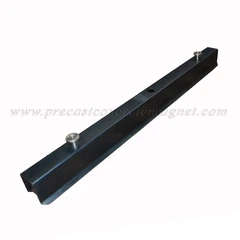
Q: What are magnetic systems used for in precast production?
A: Magnetic systems are used to fix formwork, position embedded parts, and create consistent edges on steel casting beds. They replace traditional methods like welding and drilling, improving efficiency and accuracy.
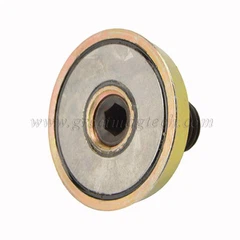
Q: Are shuttering magnets strong enough for heavy formwork?
A: Yes, shuttering magnets are designed with a high holding force and can securely fix heavy formwork. The actual performance depends on steel plate thickness, surface condition, and correct usage.
Q: Why do magnets sometimes slip during concrete pouring?
A: Slipping usually occurs due to poor surface contact, dirt or debris on the steel table, insufficient steel thickness, or incorrect magnet selection for the load.
Q: Can magnetic systems replace welding completely?
A: In most modern precast factories, magnetic systems can replace welding for formwork and insert fixing. However, in certain special cases, welding may still be used.
Q: How long can magnetic systems be reused?
A: With proper maintenance, magnetic systems can be reused for many production cycles. Regular cleaning and inspection help maintain performance and extend lifespan.
Q: What factors affect magnet performance in production?
A: Key factors include steel plate thickness, surface cleanliness, contact area, temperature, and correct magnet selection based on load requirements.
Q: Are magnetic systems suitable for all precast projects?
A: Magnetic systems are suitable for most steel formwork applications. However, they require a steel casting surface to function properly.
Q: How do magnetic systems improve production efficiency?
A: They reduce setup time, eliminate drilling and welding, improve positioning accuracy, and allow faster turnover of casting tables.