





Introduction
Precast concrete walls have been utilized in construction since the early 1900s and gained significant popularity during the 1960s.
The exterior surface of precast concrete may exhibit a range of finishes, from a decorative exposed aggregate finish to a form face finish that resembles cast-in-place concrete.
Certain precast walls serve as column covers, while others span multiple floors in height and feature window openings.
Typically, the architect is responsible for choosing the cladding material based on its aesthetic qualities, outlining the necessary measures for weatherproofing, and establishing performance standards.
The role of the structural engineer involves the following:
● Designing the structure with the capacity to support the cladding.
● Identifying and specifying connection points.
● Assessing the potential impact of structural movement on the cladding.
The manufacturer of precast concrete is responsible for designing the cladding to meet the specified loads, erection loads, and connection details. Additionally, they must ensure that the cladding is weatherproof, performs well, and is durable.
The precast concrete wall panels give the designer diverse shapes, colors, textures, and finishes. The evaluation of samples is a crucial element in applying precast concrete.
The preponderance of the review and approval process occurs at the precast plant before the commencement of precast panel production. This assessment is supplementary to the quality control and field testing procedures conducted during the production phase.
Generally, the building structure provides independent support to each precast panel through metal components and anchors. Sealant is typically used to fill the joints between each precast wall.
This article delves into precast concrete walls' various types, connections, characteristics, and benefits.
What are Precast Concrete Walls?
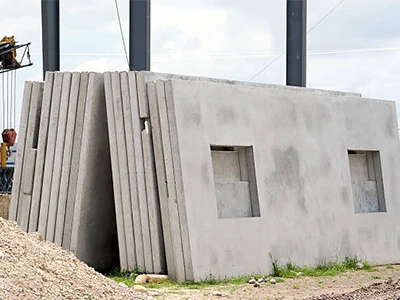
Precast concrete walls are built by pouring concrete into a reusable wall form or mold, curing it in a controlled environment, transporting it to the construction site, and lifting it into position. The primary purpose of utilizing precast walls is to improve construction efficiency.

Precast Concrete Wall Types
1. Cladding or Curtain Precast Concrete Wall
Precast cladding or curtain walls are commonly utilized as building envelopes. These walls are designed to be non-load bearing, resist wind, and enclose the area.
This precast wall design integrates divider boards, window divider units, spandrels, mullions, and section covers.
2. Shear Precast Concrete Wall
Shear walls are employed to provide lateral resistance against the framework by being combined with the vertical movement of the floor system. The effectiveness of precast shear dividers is typically dependent on the inter-panel connections.

3. Lite Precast Concrete Wall
The Lite walls resemble shear walls as internal support elements in parking structures. The distinguishing factor is that they possess an aperture to facilitate light ingress. Enhancing visibility for cars while driving through garages is of utmost importance.
In addition, incorporating distinctive features into your parking garage can present a valuable opportunity. These features facilitated increased light ingress and served as a safety measure for the garage.
4. Solid Precast Concrete Wall
In general, solid walls have a thickness ranging from 6 to 12 inches, facilitating heat absorption over the day's course and its gradual release at night. This feature enables better regulation of the indoor temperature of your tower.
In the context of utilizing these panels as an architectural structure, it is important to note that a solid wall lacking insulation would necessitate an additional step of incorporating insulation.
Nonetheless, if these walls are utilized in a parking garage structure, it presents a cost-efficient alternative that enables you to establish a distinctive identity for your enterprise.
Similar to other variants of precast concrete wall panels, solid walls are suitable for interior and exterior applications. This implies you can apply paint directly onto the interior wall or incorporate an additional wall system to finalize the construction procedure.

5. Insulated Precast Concrete Wall
Precast insulated concrete walls are highly effective for constructing energy-efficient buildings. There exist three layers that offer a high degree of thermal efficiency. With multiple layers, the thickness of these panels usually ranges from 9 to 12 inches, although it may differ based on the preferred r-value.
Occasionally, these walls are referred to as "sandwich" walls due to the insulation between two precast concrete layers. The walls exhibit exceptional durability due to the presence of wythes that bind all the layers cohesively.
You can select two distinct concrete aggregates by utilizing two distinct layers of concrete. This feature enables you to select two unique textures or colors to depict the interior and exterior of your tower.

6. Load-Bearing Precast Concrete Wall
Load-bearing walls can sustain the weight of a structure and can effectively prevent the necessity of columns and beams within a building. Ultimately, this maximizes the utilization of the interior space for your company.
In contrast to non-loadbearing walls, this particular precast concrete wall is a crucial element of your building and cannot be eliminated without substitution. Load-bearing panels are utilized across various industries, such as educational institutions, student residential facilities, and data centers.

7. Non-Load-Bearing Precast Concrete Wall
Non-load-bearing precast concrete walls, referred to as "curtain walls," are frequently utilized as an enclosure system for an existing structure.
As these elements do not bear significant weight or provide essential structural support to the building, they can be readily replaced and adjusted.

8. Precast Concrete Sandwich Panels
The precast concrete sandwich panels comprise two layers of concrete enclosing insulation material.
Ordinarily, high-strength concrete is used for the outside layer, whereas lightweight concrete is used for the inside layer. These panels are excellent for use in buildings with high insulation values and are suitable for exterior and interior wall construction.

9. Architectural Concrete Wall Panels
Architectural concrete wall panels are specifically engineered to enhance the visual appeal of a building's exterior.
Architectural concrete wall panels are a versatile option for interior and exterior walls, providing exceptional durability and minimal maintenance requirements. High-durability and low-maintenance architectural concrete wall panels can be used for exterior and interior walls.

Procedure for Precast Concrete Wall Panel Production
1. Design and Mold Making
The initial stage of the production process involves creating a wall panel design that adheres to the architectural and engineering specifications of the project.
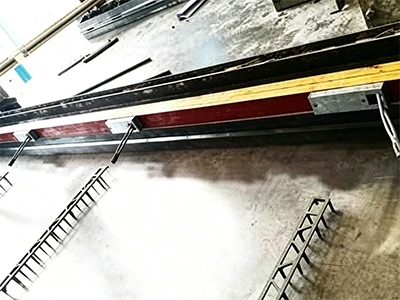
A mold is made exactly to the requirements of the wall panel once the design has been decided upon. Often constructed of steel or wood, the mold must be meticulously developed to guarantee that the final product satisfies the needed dimensions and tolerances.
All the materials needed to construct precast concrete wall construction are available at GME.
2. Concrete Mixing
The next step is the preparation of the concrete mixture. The concrete commonly comprises Portland cement, aggregates (such as crushed stone, sand, or gravel), water, and essential admixtures (such as accelerators, air-entraining agents, or plasticizers).
The mix must be meticulously proportioned to satisfy the necessary strength and durability specifications.
3. Reinforcement Placement
After preparing the concrete mix, the subsequent step entails the placement of any required reinforcement within the mold.
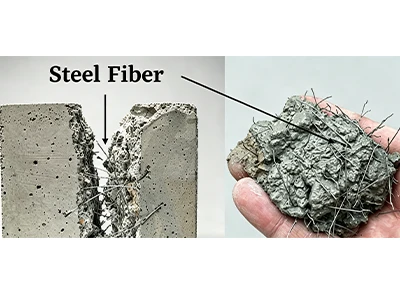
Reinforcement is typically incorporated into wall panels to enhance their strength and durability. This can be achieved using steel bars, wire mesh, or fibers. The reinforcement must be positioned precisely according to the design's specified location and configuration.
4. Concrete Pouring
After the reinforcement has been properly positioned, the concrete mixture is poured into the mold. It is imperative to exercise caution while placing the concrete to ensure that it adequately occupies all the voids and cavities in the mold and delivers a consistent and even surface finish.
It is imperative to compact the concrete thoroughly to eliminate any air pockets that may compromise the panel's strength.
5. Curing
After pouring the concrete, the panel can undergo a designated curing period. The process of curing involves facilitating the hardening and strengthening of concrete.
The curing period depends on various factors, including the concrete mix type, ambient temperature, and humidity. The process of curing usually requires several days or weeks.
6. Stripping
After the concrete has adequately cured, the subsequent procedure entails extracting the panel from the mold. It is imperative to exercise caution while carrying out this process to prevent any harm to the panel. The stripping process may entail using hydraulic jacks or cranes to extract the panel from the mold.
7. Finishing
The ultimate stage of the production process entails the completion of the panel. The process may involve the elimination of any rough edges or imperfections, the application of a surface finish (such as a coat of paint or a textured coating), and the addition of essential accessories (such as windows, doors, or electrical conduits).
Upon completion, the panel is prepared for transportation to the construction site and subsequent installation within the building.
Precast Concrete Wall Connections
1. Bolted Connections
Bolted connections represent a streamlined and expeditious approach to the erection process. The ultimate alignment and adjustment can be executed subsequently without causing any delay in crane operation. The fastening process must adhere to the erection drawings and employ materials as designated by the designer.
2. Welded Connections
Welded connections are a prevalent and standard method to assemble precast concrete structures. These connections exhibit high structural efficiency and adapt seamlessly to diverse field conditions.
The connections are typically established by interposing a flexible plate between two structural steel plates integrated into the cast-in-place or precast concrete panel and subsequently fused.
3. Dowel/Anchor Bolt Connections
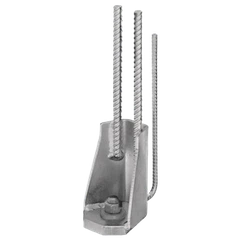
Dowels' tensile or shear strength in a dowel connection depends on the dowel diameter, embedded length, and established bond. The protruding threaded anchor bolts and rebar anchor dowels on the foundation are the crucial initial connection points for precast members.
Aspects of Structural Design for Precast Concrete Walls
The precast walls are designed to function as non-load-bearing blind dividers or facades. The precast walls must resist parallel loads imposed by self-weight, wind, and seismic forces.
It is imperative to evaluate the design, specification, and installation of precast walls to avoid imposing undue loads on the walls.
Throughout the design phase, it's essential to consider factors such as the erection, transportation, development, and impact of loads on precast walls.
The wall joints must be of adequate width to accommodate thermal expansion and differential movements caused by seasonal variations.
The divider holes' spacing and the divider's downward placement, protected by a water-resistant film, provide additional protection against water penetration into the structure.
Characteristics of Precast Concrete Walls
1. Thermal Resistance.
The warm performance characteristics of precast walls are derived from the insulation installed within the cavity or interior of the reinforcing wall, typically composed of a metal stud wall.
2. Water/Moisture Resistant
Ensuring water/moisture protection in precast walls is crucial because the precast walls are not structurally linked to the columns and beams, which are the primary structural components.
The sealer or joint seal is utilized in the connections and joints to prevent moisture ingress into the building. Pigmented sealants are utilized to maintain consistency in the appearance of precast walls and their sealants.
3. Fire Safety
The precast walls are fabricated using concrete that possesses commendable fire-resistant properties. The thermal performance characteristics of precast wall panels are primarily determined by the quantity of insulation installed in the cavity or within the backup wall. In commercial construction, the backup wall is typically a metal stud wall.
4. Durability
The durability parameter of the precast walls is equivalent to that of concrete. In any case, the durability of the structural member is contingent upon the established connections.
Any irregularities present in the member can be corrected through various methods such as sandblasting, complete uncovering, corrosive washing, hedge pounding, or other suitable techniques.
5. Easy to Maintain
Since the walls are constructed with concrete, they do not require any maintenance. Regular maintenance is required for the connection, sealants, anchorages, and accessories utilized in precast walls.
Advantages of Precast Concrete Walls
The utilization of precast concrete wall panels is versatile across various industries and can be tailored to suit your organization's specific requirements.
Below you'll learn more about precast concrete walls' main advantages and how they can assist in building a more sustainable, cheap wall system that'll last longer.
1. Enhances Energy Efficiency
The precast concrete wall panels are fabricated using locally sourced materials. This leads to a more streamlined process, eliminating the need for lengthy transportation routes to consolidate resources.
Furthermore, it is noteworthy that each precast plant exclusively caters to a specific radius in its vicinity, thereby minimizing potential delays in delivery and logistics.
In a regulated setting, there is a greater level of precision and methodology that minimizes the quantity of waste generated in every project.
2. Better Quality
Precast concrete walls can be constructed in a controlled environment using an assembly line process. At the precast concrete manufacturing facility, each team member is highly skilled and specialized in their respective tasks related to constructing your structure.
In contrast to a conventional construction site that involves multiple variables and possible communication gaps, a precast plant employs well-defined methodologies and procedures that mitigate the likelihood of mistakes and extended project durations.
Precast concrete walls offer flexibility, enabling your company to adjust or expand easily.
To enhance the tensile strength of the wall, it is recommended to reinforce the precast insulated concrete walls with either steel or welded wire mesh. This extends the lifespan of your structure and protects against potential cracks.
3. Visually Appealing
When utilizing precast concrete for constructing a new building amidst a campus of pre-existing structures, it is imperative to ensure that the new building blends in seamlessly.
One can fabricate panels with various colors and textures to meet your requirements by integrating diverse aggregates, cement, and pigments.
The range of design possibilities for precast concrete walls is extensive. By utilizing various form liners and concrete graphic techniques, it is possible to incorporate logos, text and designs onto a structure to align with the brand and aesthetic preferences.
4. Faster Construction Speed
The precast concrete wall systems exhibit high efficiency and practicality in their production. They can be conveniently conveyed to the construction site for prompt installation, minimizing on-site construction duration. This leads to expedited completion times, facilitating the timely accomplishment of construction projects.
5. Cost-effective
Precast concrete wall systems provide a cost-effective solution due to their superior quality control and streamlined production techniques. A significant share of your budget will be allocated toward the design and production of your structure.
This implies that your budget will be allocated towards manageable and predictable expenses. In the end, this aids in mitigating the potential risk of exceeding the budget due to unanticipated expenses and delays.
6. Durability
Typically, the compressive strength of concrete ranges from 3,500 - 5,000 pounds per square inch (psi). A positive correlation exists between the psi level and the compressive strength of the building material.
Consequently, this implies that your structure will have an extended lifespan due to the increased psi level. The precast concrete wall panels exhibit high resilience against natural calamities such as earthquakes, fire, and severe weather conditions.
7. Design Flexibility
The precast concrete wall systems provide a diverse array of design alternatives, encompassing a variety of shapes, textures, and finishes. This feature enables architects and builders to tailor the walls according to the project's requirements and visual appeal.
8. Sustainable
Precast concrete wall systems are a construction choice that is environmentally friendly because they are produced off-site in a controlled factory setting, minimizing waste and lowering environmental impact. Additionally, they use materials produced nearby, lowering the price and impact of transportation.
Conclusion
The utilization of precast concrete wall systems presents a multitude of benefits in comparison to conventional on-site construction techniques.
These systems offer advantages such as rapid construction, cost efficiency, longevity, adaptable design, energy efficiency, and sustainability.
Precast concrete wall systems present a cost-effective, efficient, and eco-friendly solution for varying-scale construction projects, as they can be produced in a controlled factory environment.