





Precast concrete refers to the fabrication of concrete products on-site at a factory or job site, rather than pouring in the final design location. One of the advantages of precast concrete is that it can be produced in a controlled environment, resulting in greater quality and consistency of finished product. Precast concrete can also be used to create complex shapes and designs that may be difficult or impossible to cast in place concrete realization, precast concrete can also be used to create large panels that can be hoisted into place with a crane, saving time and money on construction projects.
Common precast concrete components include: precast floors, precast beams, precast walls, precast concrete panels, etc. These precast concrete products have the advantages of stable quality, convenient construction, saving time and labor costs greatly reduced by, etc.

Concrete is a composite material that is composed of cementitious materials, aggregates and water in an appropriate proportion, and then hardened after a certain period of time. Concrete has high hardness, high compressive strength, durability, wide source of raw material quality and materials, simple production method, low cost, strong plasticity, and is suitable for various natural environments. It is the most widely used artificial civil engineering and building material in the world.
Common concrete products include: concrete pipes, concrete piles, concrete slabs, concrete bricks, concrete beams, concrete walls, etc. These products are widely used in the construction industry, transportation, water conservancy and other fields.

What are the 3 types of concrete?
Portland cement is available in three types, aggregates and water. Portland cement is the principal component of concrete.
What is the difference between concrete and precast concrete?
The components of precast concrete can be used immediately when delivered. The production process of precast concrete is carried out in the factory, the concrete is poured into the mold, and then transported to the project site for assembly. The production and curing process of concrete is mixed and poured on site. This eliminates the time spent assembling cardboard shapes, bending rebar, pouring and vibrating concrete, and waiting for the concrete to cure.Precast concrete offers consistent quality, reduces construction time and labor costs and is more durable and flexible than traditional concrete.
Traditional concrete, In the conventional method, the concrete is formed into the desired shape at the project location and left to cure. Cast-in-situ concrete is to transport the concrete from the commercial concrete mixing station to the construction site with a concrete transport vehicle, and then pour the concrete to the construction site by using a car pump, ground pump, vehicle pump, tower crane or self-unloading of a concrete transport vehicle. In the pre-supported formwork on site, the formwork will be removed after the concrete reaches a certain strength after a period of time.on the other hand, maybe less expensive for small projects or repairs, but it may not be as efficient for large construction project
What is the advantage of using precast concrete?
Because precast concrete is easier to control, it provides quality and durability generally higher than cast concrete. A manufacturer with precasts will likely get higher prices because of the large number of purchases made in a single project construction process.
Cost-effective for large projects
Compared with cast-on concrete, the price associated with precast concrete decreases with increasing construction size. Large-scale projects that require repeatable concrete components, such as installation of airport taxiway illumination are excellent candidates for modern use of precast products, as installation time will quickly increase construction costs. Precast concrete has an excellent economic scale that can be useful in large-scale commercial projects or for small business.
Improve concrete strength
During the construction of traditional concrete components, steel bar binding, formwork support, and concrete pouring are carried out on site. There are many influencing factors, and phenomena such as leakage vibration, honeycomb pitting, and non-vertical wall panels are prone to occur.
When the prefabricated factory is used to produce components, all flow construction is adopted, the division of labor is clear, the personnel are relatively satisfied, the workers are skilled, the construction sites are concentrated, and the construction process is easy to monitor, so that it is easy to ensure the construction quality. The concrete strength grade of prefabricated components will generally be one grade higher than the design strength grade.
Improve labor productivity and reduce processing costs.
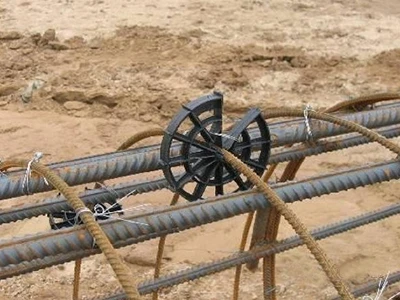
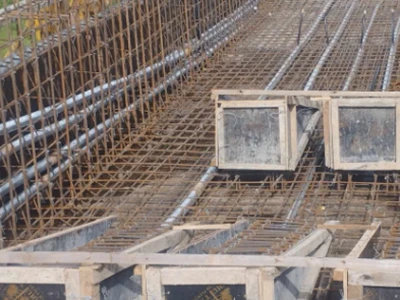
Many commercial buildings/utility buildings/office buildings use a lot of rods reinforcement bars, rebars and wires in the precast process; adopt modern automatic processing equipment, which greatly reduces labor costs and improves worker productivity; reduces material waste and energy The processing of consumed steel bars can be carried out in strict accordance with the design drawings and standards to ensure the size and accuracy of steel bar products, ensure efficient processing, and speed up the construction progress.
Increase the indoor net space.
After the prefabricated components are produced, they can meet the requirements of fair-faced concrete. After they are transported to the construction site and installed, the interior wall painting is exempted. Compared with the traditional building space, the net size of the interior space is increased, and the usable space is increased to meet Meet the needs of consumers to make more use of space.
What are the Different Types of Precast Concrete Structures?
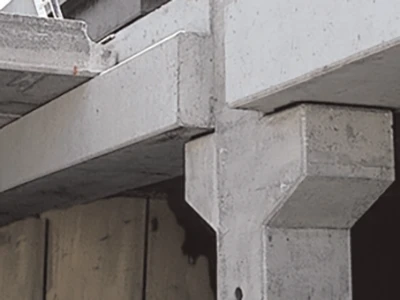
Precast concrete components can be roughly divided into floor slabs, wall panels of shear wall structures, stairs, column beams of frame structures and connecting beams of shear wall structures, external wall panels and balcony panels, bay windows and other special-shaped components. kind.

Precast floors usually include laminated floors, solid floors, prestressed hollow floors, prestressed ribs and prestressed double T-slabs, etc. Stairs are the most commonly used and cost-effective prefabricated components.
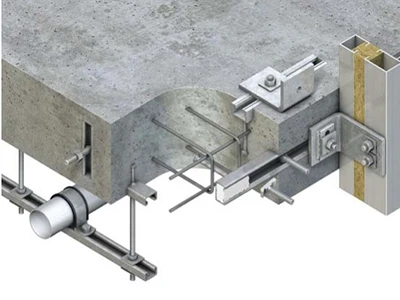
According to its structural form, it can be divided into solid wall panels, sandwich insulation wall panels and double-sided laminated wall panels. External wall panels are non-structural wall panels used for frame and cylinder structures. They are generally connected to the main structure with bolts. It can be made into a decorative integrated board or a decorative and thermal insulation integrated board.
In summary, precast concrete offers several advantages over traditional concrete, including consistent quality, time and cost savings, durability and longevity, and flexibility and versatility. Its applications in construction are diverse and it can be used for a wide range of functional and aesthetic elements Therefore, precast concrete is a superior choice for large-scale construction projects, where efficiency, quality, and durability are paramount.
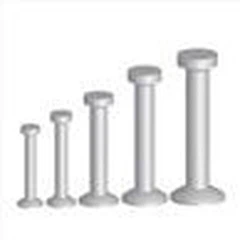
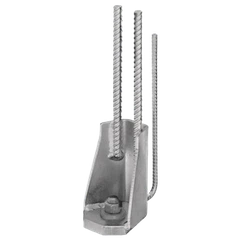
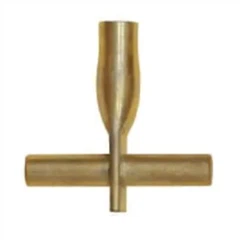
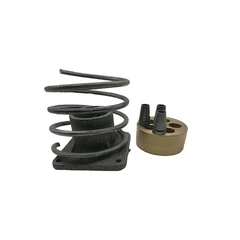
We are specialized in selling precast concrete magnets, erection anchors, coil insert and more required for the production of precast concrete components