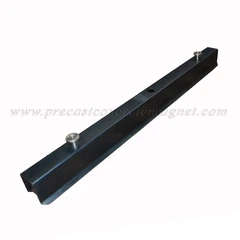
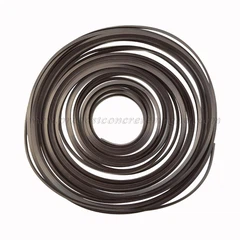
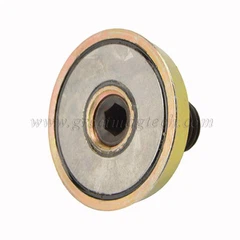
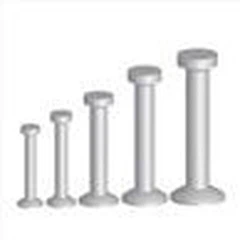


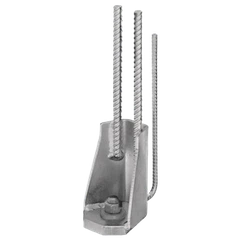
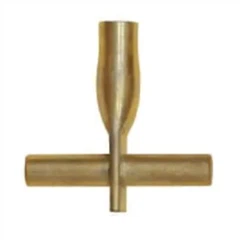
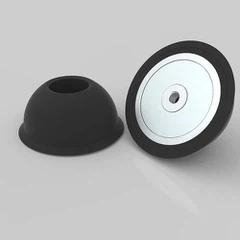
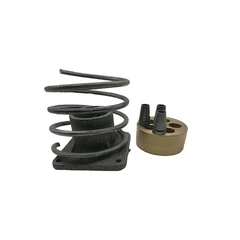

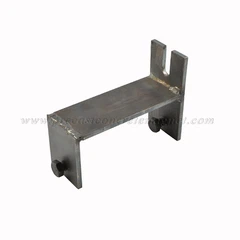
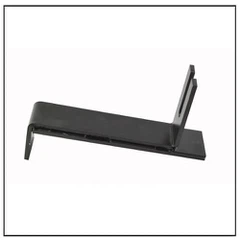


The precast concrete formwork fixing magnetic box is a magnetic fixing device specially developed for fixing precast concrete formwork. Compared with traditional mechanical fixing methods such as screws and nuts, magnetic box fixing has the following advantages:
Effectively reduce the process and time of installing templates and improve work efficiency (up to 70%).
It has strong suction and holding power, easy operation, safe and reliable.
No welding is required, so the mold table will not be damaged.
The cost is low, and the cost can be recovered in about 3 months. There is no need to choose different magnetic boxes for different products. One magnetic box can be used with different fixtures to meet more production needs.
Operating Temperature
shuttering magnets are generally made of sintered NdFeB permanent magnet materials.
Two properties are crucial to the shuttering magnet:
1) Residual magnetism (Br): After the ferromagnetic material is magnetized and the magnetic field is removed, the remaining magnetization intensity on the magnetized ferromagnet directly affects the attraction of the shuttering magnet. The higher the magnet performance, the greater the Br.
2) Intrinsic coercivity (Hcj): Intrinsic coercivity is a major indicator of the permanent magnet material's ability to resist external reverse magnetic fields or other demagnetization effects to maintain its original magnetization state. It directly affects the performance of the magnet. In the case of attenuation from the external environment (such as reverse magnetic field, high temperature, etc.), the larger the Hcj, the stronger the anti-attenuation ability.
 |
 |
 |
It can be seen that the maximum operating temperature of the lowest-performance NdFeB magnet material is also 80 degrees. Therefore, generally, magnetic boxes are made of N or M-grade NdFeB material. If we produce PC components, the temperature during maintenance is lower than 65 degrees does not affect the magnetism of the magnetic box. If the magnetic box needs to work at a temperature of 80 degrees or above, a higher grade of NdFeB material can be used.
The magnetic surface is uneven and cannot fit closely with the mold table
1. The bottom of the magnetic box will inevitably absorb attachments such as iron wire and waste chips on the mold table during operation, which will cause the working suction force of the magnetic box to weaken.
2. Due to the structure of the magnet block itself, if the production process is not well controlled, it may also cause the iron bars to be misaligned (the suction surface is uneven), resulting in a decrease in the suction force of the magnetic box.

The magnet body in the magnet block is damaged
The physical properties of sintered NdFeB material are hard and brittle, brittle, and easy to corrode, so the magnet cannot be knocked with external force and the coating on the surface of the magnet cannot be damaged. If the magnet inside the magnetic block is broken and the machine body is damaged, the suction force of the magnetic block will decrease.
Therefore, when assembling magnets and iron bars into magnetic blocks, the surface of the magnet should be as low as possible as low as the plane of the iron bar, which can effectively avoid collisions. The magnet itself also needs a certain protective layer to avoid damage and corrosion to the body.
To protect the magnet body, Saixin Company uses the latest technology to put a stainless steel ring on each magnet, and through welding and hammering, the stainless steel ring and the magnet are tightly fitted.