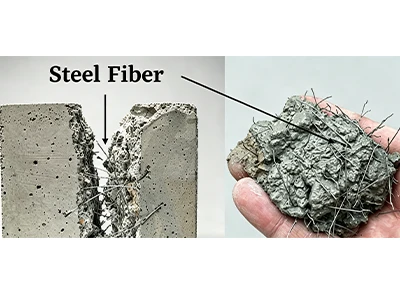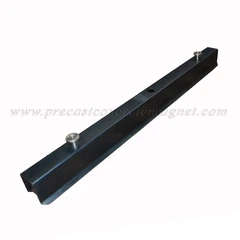





Concrete structure is the main form of construction projects, and concrete precast components are an integral part of it. At present, most small and medium-sized components are produced in a prefabricated manner, because this not only improves labor efficiency but also reduces costs. However, certain appearance defects often occur during the production and maintenance of concrete precast components. How to prevent and cure them is an important factor in ensuring the production of qualified precast components. This article conducts a preliminary analysis and research on this issue.
Surface Cracks
Causes of structural cracks
1) If a component is too thin, or too long, or if the negative reinforcement is stepped on, the integrity of the component will be destroyed. The internal stress-bearing steel bars of the component will corrode, which will also seriously weaken the component's load-bearing capacity.
2) Inadequate maintenance. The processing of prefabricated components must be carried out in strict accordance with the regulations. The normal temperature is around 20°C. Watering should be done at least 3 times at night within the first 3 days. If it does not meet the regulations, the stiffness of the component itself will become worse, seriously affecting the quality of the component.
3) The formwork strength of prefabricated components is unqualified. When removing sections and demoulding, the concrete strength of the components should not be less than 50%; when removing the bottom formwork of panels, beams, columns, roof trusses and other components, the concrete strength: for small components of 4m and less than 4m, the concrete strength should not be lower than the design 50% of the design number; for components larger than 4m, it should not be less than 70% of the design number. When removing the core form of the hollow slab, the strength of the concrete should ensure that collapse and cracks do not occur, otherwise, the overall performance of the prefabricated component will be reduced.
4) During the installation process of prefabricated components, the grouting is uneven and the water-cement ratio of the cement mortar is too large. The overall performance of the component is destroyed under the action of external forces, resulting in bending and cracks along the length of the component, that is, longitudinal cracks.
5) Improper lifting and environmental factors will also affect the overall performance of the components and produce cracks of varying degrees.
Repair methods for cracks
For prefabricated components in stress-bearing parts, if a large number of serious (penetrating or deep) cracks are found, there is generally no repair value. Even if repaired, the cost will likely be close to or exceed the component cost, so it should be scrapped. If the component only has general cracks, reinforcement and repair methods can be used to deal with them.
For cracks with a width less than 0.2 mm, in order to prevent the components from being corroded by the steel bars, especially the parts with thin steel protective layers, one liquid (epoxy base liquid) and one cloth (glass silk cloth) or one liquid are often used to repair the cracks. The specific requirements are to clear a closed area about 15 cm to 20 cm wide along the middle of the crack, with a length of 20 cm to 50 cm at both ends of the crack, and then use a wire brush to grind to the fresh concrete surface, and clean the brushed surface thoroughly ( Use high-pressure water, electric air blowing or artificial air.) If there are impurities such as oil stains, they must be scrubbed with acetone, dried, air-dried or burned, and then applied with epoxy base liquid and glass fiber cloth. Finally, keep it under dry conditions for natural curing, and be careful not to allow water to penetrate before solidification.
For cracks with a width greater than 0.2 mm, high-strength materials can be used to repair them after drilling. The specific steps are to dig out a trapezoidal cross-section slot along the seam with a depth no less than the seam depth (the seam can be guided with the help of colored water), a bottom width of 2cm to 4cm, and a side slope of less than 1:0.3. If the seam depth is greater than the protective layer of the steel bars, it should also be cut open and the steel bars exposed. After cleaning the gouge with the same cleaning method as mentioned above, fill it with high-strength materials. Commonly used filling materials include epoxy mortar, chlorine-biased mortar, styrene-acrylic emulsion polymer cement mortar, etc.
Chlorine-biased mortar is a high-strength mortar with properties similar to epoxy mortar. The backfill repair process and steps are the same as epoxy mortar except that a layer of chlorine-biased base fluid needs to be applied on the joint surface. Chlorine-biased mortar requires surface wet curing by methods such as wet straw bags or sprinkling water after initial setting, and the time should not be less than 14 days.
Styrene-acrylic emulsion cement mortar is a polymer cement mortar made by adding an appropriate amount (5% to 20% of cement dosage) of styrene-acrylic acid copolymer emulsion on the basis of cement as the cementing material. It has high Compressive, cracking and flexural strength. Except that one or two coats of styrene-propyl liquid must be applied to the joint surface, the backfill repair process and steps are all the same as those for chlorine-biased mortar.
For prefabricated components in secondary or non-stress-bearing parts, if a large number of serious cracks occur and the stress-bearing steel bars have been damaged, there is no point in repairing them and they should be scrapped. If there are minor cracks on the surface, no treatment will be done. If only general cracks occur, appropriate caulking and repair methods should be used. Commonly used backfill materials are mainly pre-shrunk grout with better performance and more economical, supplemented by high-strength mortar such as epoxy which is relatively expensive.
Pre-shrunk mortar is a kind of dry hard cement mortar that is mixed and stored in a pile for 0.5 to 1.5 hours before use. After mixing, the mortar can form a ball when held in hand and feels moist but does not release water. At this time, it should be use immediately. The filling method and process are the same as those of chlorine offset mortar, except that a layer of plain cement slurry should be applied on the joint surface first. If there are parts with special requirements, the aforementioned high-strength mortar such as epoxy can be used for comprehensive repair, or a combined repair method can be adopted in which the bottom layer of the bonding layer is filled with high-strength mortar, and the middle and surface layers are filled with pre-shrunk mortar.
Pockmarked Noodles
Causes of pockmarked noodles
It means that the concrete surface fails to form a corresponding outer surface by the cement mortar or the outer surface is damaged by the formwork, showing numerous irregular concave spots the size of beans. The diameter of the concave spots is usually no more than 5 mm.
Common causes are:
1) The exhaust at the upper slope of the horseshoe is not smooth, and the anchor section has dense steel bars under the anchor. Due to the location restrictions of the pullout pipe, bellows, etc., the vibration is difficult to reach or the vibration is insufficient. Some air bubbles remain between the concrete and the formwork, causing numbness. noodle.
2) The continuity of concrete pouring is poor. Before the new concrete is put into the mold, the poured concrete stays for too long, and part of the concrete has solidified during vibration, causing pitting at the joint between the old and new concrete layers.
3) Use small aggregate concrete to pour the horseshoe horizontally in layers. When the web is poured, the cement mortar flows along the gaps or surfaces of the formwork to the surface of the underlying concrete. After the formwork is removed, intermittent and continuous "tears" will appear, similar to pockmarked surfaces.
4) Improper cleaning of the formwork and release agent or wetting process before concrete pouring will cause the moisture in the concrete to be absorbed by the formwork, and the formwork joints will leak grout, resulting in mortar defects on the surface of the above components, resulting in pitted surfaces.
5) The surface of the formwork is unclean and contains originally poured concrete, cement slurry, mortar, or other debris, causing pitting after concrete pouring.
Repair methods for "pitted noodles"
Pockmarks are pits on the concrete surface, which have no major impact on the structure and are usually not treated. If you need to handle it, the method is as follows:
Use a dilute oxalic acid solution to clean the release agent oil spots or stains with a brush, and soak them with water before repairing. Cement mortar is used for repair. The cement type must be consistent with the original concrete. The sand must be fine sand with a maximum particle size of <1 mm. The ratio of cement mortar is generally about 1:2 or 1:2.5. Since the quantity is not large, it can be manually mixed in a small bucket and used as needed. If necessary, you can mix white cement to adjust the color through experiments. According to the method of a painter scraping putty, use a scraper to vigorously press the mortar into the pitted area, and then scrape it smooth until it meets the appearance requirements. After the repair is completed, cover and moisturize it in time to maintain it consistent with the original concrete.
Honeycomb
Causes of "Honeycomb"
It means that there is no cement slurry on the surface of the concrete, and there are gaps between the aggregates, causing the concrete to form more or less holes, which are as big as honeycombs and irregular in shape. The exposed stones are more than 5 mm. The main bars are not leaked, but the stirrups may be leaked. Common causes are:
1) The formwork is leaking slurry, the vibration is insufficient or excessive, and the slurry leakage is serious.
2) The concrete slump is too small, and the vibration equipment has insufficient excitation force or leaks vibration.
3) Improper concrete pouring method, concrete segregation, material cutting with the slurry method, and improper use of the slurry vibrating method.
4) Insufficient concrete mixing and vibration make the concrete uneven and non-dense, resulting in serious local mortar defects.
Repair method of "honeycomb"
Small honeycombs can be repaired using the pockmarking method; large honeycombs can be repaired using the following methods:
Carefully remove the concrete at the honeycomb and surrounding weak parts, and clean the joint surface with high-pressure water and wire brushes. Cement mortar is used for repair. The cement type must be consistent with the original concrete. The sand should be medium-coarse. The proportion of cement mortar is about 1:2 or 1:3, and stir evenly. When waterproofing is required, add 1% to 3% of the cement amount of ferric chloride waterproofing agent into the cement mortar to accelerate the setting and improve the quality of the cement. Waterproof performance. However, the dosage should be determined through experiments to effectively adjust the concrete color.
According to the plastering method, use a trowel to vigorously press the mortar into the honeycomb and carefully scrape it flat. Use a ruler to straighten the edges and corners to ensure a consistent appearance. After the repair is completed, cover and moisturize it in time to maintain it consistent with the original concrete.
Holes
Causes of holes
It refers to defects on the surface of the concrete that exceed the thickness of the protective layer but do not exceed 1/3 of the cross-sectional size. There are gaps in the structure and there is no concrete partially or partially. Dog holes refer to holes that can be seen through the concrete structure. Common causes are:
1) The distance between the inner and outer templates is narrow, making vibration difficult. The aggregate particle size is too large and the web steel bars are too dense, causing the concrete to be stuck by steel bars and drawn pipes or corrugated pipes, causing holes to form in the lower concrete.
2) The fluidity of concrete is poor, or the concrete segregates and coarse aggregates are concentrated, resulting in poor concrete pouring.
3) Failure to vibrate according to the pouring sequence caused vibration leakage points. The layers were not poured or the layers were too thick, resulting in the insufficient vibrating radius of the lower concrete and forming loose parts.
4) The cement agglomerates or the aggregate contains ice, mud, and other debris.
Hole repair methods
Carefully remove the loose concrete and protruding aggregate particles in the repaired area. The upper part of the hole should be sloping outwards and upwards, and the lower part should be square and level. Use high-pressure water and a wire brush to clean the base layer. Before repairing, fill it with wet cotton gauze and other materials and keep it moist for more than 72 hours to fully moisten the concrete around the cavity. The repair should be filled with fine stone concrete or shrinkage-compensating concrete that is one level higher than the original concrete. The cement type should be the same as the original concrete. In order to reduce or eliminate the gaps between old and new concrete, the water-cement ratio should be controlled to 0.5, and aluminum powder should be added as an expansion agent within a cement dosage of 0.1‰. The hole is first coated with cement slurry and then filled with fine stone concrete or shrinkage-compensating concrete that is one level stronger than the original concrete and carefully tamped in layers to avoid cracks on the contact surface between the old and new concrete. At the same time, the new concrete surface is smoothed and polished until it meets the appearance requirements. The smoothed concrete surface should be covered with plastic film for curing and tightly compacted with supporting formwork.
Exposed Tendons
Refers to the exposed steel bars inside the concrete on the surface of the component. The reasons are:
1) Concrete has poor workability, segregation occurs, and there is a lack of slurry in the formwork parts or slurry leakage in the formwork.
2) The cross-section of the structural members is small, the steel bars are too dense, and the diameter of the stones is large and stuck on the steel bars.
3) The concrete protective layer is too small or the concrete at the protective layer leaks vibration or is vibrated incorrectly.
Prevention and control measures are as follows:
1) The concrete mix ratio has good workability.
2) In areas with dense steel bars, select appropriate stone particle sizes according to regulations. The maximum particle size shall not exceed 1/4 of the minimum size of the structural section, and shall not exceed 3/4 of the minimum clear spacing of steel bars.
3) The thickness, location, and quantity of the steel protective layer pads should be accurate.
Missing Edges and Corners
Refers to the partial falling, irregular, and angular defects of concrete at the corners of structural components. The reasons are:
1) The formwork is removed too early, causing the concrete corners to be damaged when the formwork is removed.
2) The mold removal operation is too violent, and the edges and corners are not well protected by external force or heavy objects and are knocked off.
3) The wooden formwork is not fully watered or moistened enough. After the concrete is poured, the form absorbs water and expands, causing the corners to crack, and the edges and corners are glued off when the formwork is removed.
4) The template residue has not been cleaned, the isolation agent has not been applied or the application has been uneven.
Prevention and control measures are as follows:
1) Control the formwork strength. When removing the side non-load-bearing formwork, the concrete strength should not be less than 1.2Mpa.
2) When removing the formwork, attention should be paid to protecting the edges and corners and avoiding excessive force.
3) The wooden formwork should be moistened before pouring, and carefully maintained after the concrete is poured.
4) The residue on the formwork must be cleaned, and there must be no residual slurry or debris.
Conclusion
Various defects often occur when making concrete precast components under normal conditions. Some defects can be repaired through professional methods, but some defects can only be prevented through strict control of the production process.