





Introduction
In the realm of modern construction, efficiency is paramount. Indeed, many facilities report production speeds that are 30% to 50% faster than those of traditional on-site construction methods-an improvement that is by no means insignificant.
I have witnessed production lines plagued by a constant stream of delays, rework, and labor bottlenecks. Yet, simply by introducing more refined systems and smarter workflows, output has undergone a transformative change.
So, how exactly do top-tier prefabrication plants achieve such gains in efficiency? From magnetic formwork systems to automation technologies and layout optimization, this guide delves deep into the core strategies that tangibly drive productivity growth, reduce costs, and ensure consistent quality.

Standardized Production Processes in Precast Factories
Standardization lies at the very core of achieving efficient operations within prefabrication plants. Unlike on-site construction, the factory environment relies on repeatable operational workflows to ensure that every stage of production maintains a high degree of consistency.
From mold setup and concrete pouring to the curing process, every step strictly adheres to a predetermined sequence of procedures. This not only effectively minimizes human error but also ensures that every prefabricated component meets uniform quality standards.
The utilization of standardized molds and precast panel systems further enhances production efficiency. Thanks to fixed-dimensional specifications and reusable formwork systems, the factory can rapidly transition between different production cycles without the need to redesign or reconfigure its production facilities.
Furthermore, production planning and scheduling become significantly more predictable as a result. The factory can optimize its production cycles based on its specific capacity, thereby effectively reducing project delays and enhancing delivery reliability.
Role of Magnetic Formwork Systems in Efficiency

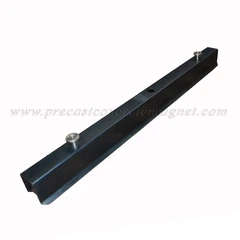
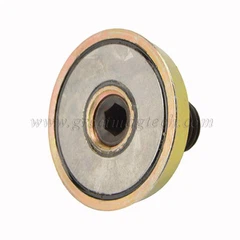
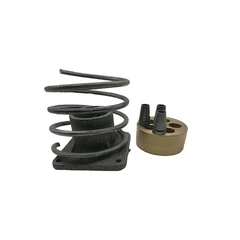
Shuttering Magnet

Shuttering Magnetic For Vertical Mould

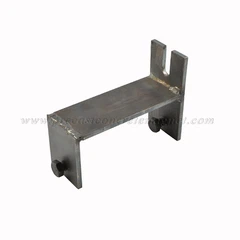
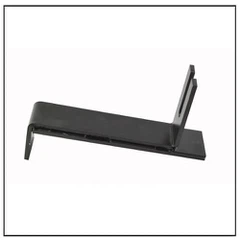
formwork Magnet

formwork Magnetic
Magnetic formwork systems have become a practical solution for improving efficiency in precast factories, especially in environments where high production speed and consistency are required. Compared to traditional welding or bolting methods, setup time is significantly reduced. Magnets can be positioned and activated within seconds, eliminating the need for drilling or permanent fixing.
One of the key advantages of these systems is their ability to be quickly repositioned. When panel sizes or design requirements change, operators can easily move the magnets without causing any damage to the casting table. This flexibility helps accelerate production cycles and reduces downtime between batches.
Magnetic systems also require less labor. Fewer workers are needed for setup, and the process is less physically demanding than mechanical fixing methods. This not only improves overall productivity but also helps reduce labor costs.
In addition, these systems are reusable. Unlike welded or disposable fixing methods, magnetic formwork components can be used across multiple projects, contributing to long-term cost savings and a more efficient production workflow.
Automation and Machinery in Precast Production
In modern precast factories, automation has become a key driver of efficiency. As demand for higher production speed and consistency continues to grow, traditional manual operations are gradually being replaced by integrated machinery capable of delivering repeatable and stable results.
Automated casting beds and conveyor systems significantly optimize production flow. Materials no longer rely on manual handling but move through predefined stations, reducing handling time and improving workflow continuity and efficiency.
Rebar processing has also been greatly improved with automated cutting, bending, and tying systems. These machines ensure precise dimensions and consistent reinforcement assembly, minimizing errors and variability commonly associated with manual operations.
Today, robotic systems are increasingly used for formwork positioning and surface finishing. These robots perform repetitive tasks with consistent accuracy, enhancing surface quality while reducing dependence on highly skilled labor.
How to Optimize Factory Layout and Workflow Design
An efficient precast factory is not defined by equipment alone-it begins with a well-designed layout. A carefully planned workflow reduces unnecessary movement, shortens production cycles, and improves coordination between different stages of production.
Streamline Material Flow
Material movement should follow a clear and linear path. Areas for raw materials, rebar processing, casting, curing, and finished product storage should be arranged logically to avoid backtracking. A smooth material flow reduces handling time and helps minimize congestion on the shop floor.
Define Key Production Zones
Dividing the factory into dedicated zones-such as rebar processing, formwork assembly, casting, and finishing-helps maintain order and improve operational clarity. Each zone can operate independently and efficiently without interference from other processes.
Reduce Handling and Transportation Time
Excessive material movement slows down production. Keeping equipment and workstations as close as possible reduces transport distances and speeds up transitions between different stages.
Integrate Workflow with Equipment
Factory layout must align with the actual production process. By properly arranging machinery, casting beds, and conveyor systems, factories can ensure smooth workflow continuity and avoid production bottlenecks.

Digitalization and Smart Production Management
Digital tools are reshaping the way precast factories operate, making data a key driver for improving efficiency and strengthening operational control. With the use of ERP and MES systems, factories can integrate planning, inventory management, and shop-floor production into a unified workflow, reducing manual coordination and enhancing visibility across all processes. Real-time production monitoring, enabled by sensors and digital dashboards, allows managers to track casting progress, curing status, and equipment utilization, enabling faster responses to delays or production disruptions. Data-driven decision-making further improves overall performance by analyzing production patterns, optimizing resource allocation, and enhancing scheduling accuracy. Through integration with BIM and project planning systems, factory production can be closely aligned with construction timelines, significantly improving coordination efficiency, data accuracy, and overall project delivery performance.
Conclusion
The ability of prefabrication plants to enhance efficiency stems not from any single innovation alone, but rather from the synergistic application of intelligent systems, controlled environments, and optimized workflows. From the utilization of magnetic formwork to automated production and digital management, every improvement contributes to achieving faster production speeds, lower costs, and more consistent product quality. When these elements operate in concert, they establish a streamlined and highly efficient operational framework that significantly outperforms traditional construction methods.
FAQ
Q: What is the most effective way to improve efficiency in a precast factory?
A: The most effective approach is to optimize the entire production system rather than focusing on a single process. This includes improving factory layout design, adopting automation technologies, implementing magnetic formwork systems, and integrating digital management tools such as ERP and MES. Efficiency gains come from the coordination of all production stages.
Q: How do magnetic formwork systems improve production efficiency?
A: Magnetic formwork systems reduce setup time, allow quick positioning and repositioning, and eliminate the need for welding or drilling. They improve alignment accuracy and accelerate production cycles, especially in repetitive precast panel manufacturing.
Q: Can automation significantly reduce labor costs in precast production?
A: Yes. Automation reduces the need for manual handling and repetitive tasks. Although the initial investment may be higher, it lowers labor costs over time, improves product consistency, and significantly increases production capacity.
Q: How can factories reduce material waste during production?
A: Material waste can be minimized through precise batching, controlled pouring, and the use of high-precision formwork systems. In addition, standardized production processes and strict quality control help reduce rework and material loss.
Q: What role does factory layout play in improving efficiency?
A: A well-designed factory layout reduces unnecessary movement, shortens material transport distances, and ensures smooth workflow transitions. Proper zoning and a linear material flow path can significantly improve production efficiency.
Q: How does digitalization improve overall precast factory performance?
A: Digital systems enable real-time monitoring, improve scheduling accuracy, and support data-driven decision-making. Integration with BIM systems also ensures that production aligns with project timelines, helping to avoid delays.
Q: What are common inefficiencies in precast factories?
A: Common inefficiencies include poor layout design, excessive material handling, inconsistent production processes, low levels of automation, and inadequate quality control. Addressing these issues can significantly improve overall operational performance.