





Introduction
In modern construction, one of the most critical decisions engineers and contractors face is choosing between precast concrete and cast-in-place concrete. At first glance, these two materials may appear virtually identical. However, their respective methods of production, transportation, and installation can have vastly different impacts on construction schedules, costs, quality control, and structural performance.
So, how do you determine which construction method is best suited for your specific project? In this guide, we will delve into the key differences between precast and cast-in-place concrete, explore the advantages and disadvantages of each, and help you identify the optimal solution based on your unique construction requirements.

What Is Precast Concrete?
Precast concrete refers to concrete components that are manufactured in a factory and then transported to the construction site for installation. These precast elements are produced off-site using standardized molds and strict quality control procedures. This manufacturing approach ensures consistent structural performance, higher dimensional accuracy, and faster construction schedules.
Precast Concrete Manufacturing Process:
Mold Preparation:
Steel or specialized formwork molds are prepared to match the required component shape and dimensions. Release agents are applied to ensure smooth and efficient demolding.
Reinforcement Placement:
Reinforcing bars, steel mesh, or prestressing strands are placed inside the molds to provide structural strength and load-bearing capacity.
Concrete Pouring:
High-quality concrete mixtures are poured into the molds. Vibration or compaction techniques are used to remove air pockets and ensure proper consolidation of the concrete.
Curing Process:
The concrete is cured under controlled temperature and humidity conditions to achieve optimal strength and durability.
Transportation and Installation:
After curing is completed, the finished precast components are transported to the construction site and installed using cranes or lifting systems.

Typical Precast Concrete Components:
Precast technology can be used to manufacture a wide range of structural elements, including:
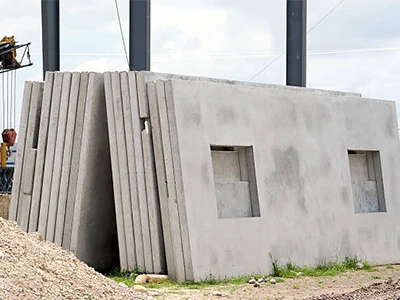
Wall panels are used for interior and exterior building wall systems
Beams designed to support structural loads
Slabs used for floors and roofs
Columns that provide vertical structural support
Stairs for residential and commercial buildings
Bridge girders used in transportation infrastructure
Common Applications of Precast Concrete:
Residential construction, such as housing developments and apartment buildings
Commercial structures, including office buildings, parking garages, and retail centers
Bridges and infrastructure, including highways and transportation systems
What Is Cast-in-Place Concrete?
Cast-in-place concrete, also known as site-cast concrete, is a construction method in which the mixing, pouring, and curing of concrete all take place directly at the construction site rather than in a factory. In this method, the concrete is poured and formed exactly where the structural element is required, allowing the concrete to become an integral part of the final structure.
On-Site Mixing, Pouring, and Curing Process
The entire process begins with the installation of formwork, which defines the shape and dimensions of the concrete component. Reinforcement bars (rebar) are then placed inside the formwork to provide tensile strength and ensure structural stability. Concrete can either be mixed directly on-site or delivered by ready-mix trucks and poured into the prepared molds. After pouring, the concrete is vibrated and finished to eliminate air pockets and achieve a uniform density. Proper curing follows, allowing the concrete to gain strength under controlled moisture and temperature conditions.

Role of Formwork, Reinforcement, and On-Site Labor
Formwork acts as a temporary mold that holds the wet concrete in its intended position until it hardens. Reinforcement, typically steel rebar, enhances the concrete's ability to resist tensile stress and cracking. Skilled on-site workers play a critical role in the process, as they are responsible for assembling the formwork, accurately positioning the reinforcement, and managing the pouring and finishing operations.
Advantages in Complex and Custom Structures
One of the key advantages of cast-in-place concrete is its high level of flexibility. Because the concrete is formed directly on-site, engineers and contractors can easily accommodate irregular geometries, unique architectural designs, and large continuous structural elements. This adaptability makes cast-in-place concrete particularly
Typical Cast-in-place Applications:
foundations
retaining walls
large slabs
custom architectural elements
irregular structures
Precast vs Cast-in-Place Concrete: Key Differences
Manufacturing Location
Precast concrete components are produced in a controlled factory environment and then transported to the construction site for installation. This off-site production model allows manufacturers to utilize specialized equipment, standardized molds, and consistent curing conditions.
Cast-in-place concrete, on the other hand, is mixed, poured, and cured directly at the construction site. While this method offers flexibility for constructing unique or customized structures, it is largely influenced by site conditions, equipment availability, and overall project coordination.
Quality Control and Inspection
Factory-based production gives precast concrete a clear advantage in terms of quality consistency. Strict control over material proportions, curing temperature, and dimensional accuracy helps ensure uniform structural performance. Cast-in-place concrete relies on on-site inspections and field testing, and the results may vary depending on environmental conditions and the expertise of the construction team.
Labor Requirements
The precast construction approach significantly reduces on-site labor demand. Key processes such as reinforcement placement and concrete casting are completed in the factory before delivery.
In contrast, cast-in-place concrete systems require larger on-site crews to handle formwork installation, reinforcement tying, concrete pouring, and surface finishing.
Construction Speed and Weather Factors
Precast elements can be manufactured simultaneously with site preparation, enabling rapid progress once installation begins.
Cast-in-place concrete projects often face delays due to the time required for curing, as well as weather-related factors such as rainfall, extreme temperatures, or high humidity.
Transportation and Logistics
Precast components must be transported and lifted using cranes, which requires careful planning and logistical coordination.
Cast-in-place concrete eliminates the need to transport large structural elements, but it demands greater on-site resource management and coordination.
|
Aspect |
Precast Concrete |
Cast-in-Place Concrete |
|
Manufacturing Location |
Manufactured in factories using molds and controlled curing conditions. |
Mixed and poured directly at the construction site. |
|
Quality Control |
Stable quality due to controlled production, precise molds, and strict inspection. |
Quality varies depending on weather, site management, and workmanship. |
|
Construction Speed |
Faster installation since elements are delivered ready for assembly. |
Slower due to on-site pouring, curing time, and formwork removal. |
|
Labor Requirements |
Reduced on-site labor because most work is completed in the factory. |
Requires more workers on-site for formwork, pouring, and finishing. |
|
Design Flexibility |
Standardized designs; customization possible but limited by molds. |
Highly flexible and suitable for complex or irregular shapes. |
|
Weather Impact |
Minimal weather impact since production occurs indoors. |
Weather conditions can delay pouring and curing. |
|
Transportation |
Large components require transportation and lifting equipment. |
No need to transport large prefabricated elements. |
Advantages of Precast Concrete

Faster Construction Timelines and Higher Project Efficiency
Precast concrete components are manufactured in controlled factory environments while site preparation and foundation work are carried out simultaneously. This parallel workflow significantly shortens the overall construction schedule. Once delivered to the construction site, precast elements can be quickly installed using cranes and standardized connection systems.
Excellent Quality Control in Factory Production
One of the greatest advantages of precast concrete lies in its manufacturing environment. The production process takes place in specialized factories where key factors such as concrete mix proportions, curing temperature, and reinforcement placement can be carefully monitored. Regular quality inspections and standardized production procedures further enhance the reliability and consistency of the finished components.
Reduced On-Site Labor Requirements
Because most of the fabrication work is completed off-site, precast construction significantly reduces the amount of labor required at the job site. Workers mainly focus on positioning and connecting the finished components rather than carrying out complex formwork assembly and concrete pouring. This approach simplifies site operations, lowers labor costs, and minimizes potential construction errors.
Superior Durability and Structural Performance
Precast concrete elements are designed from the beginning to ensure strength and long-term performance. High-quality raw materials, optimized curing conditions, and precise reinforcement placement improve the durability of the components and their resistance to environmental stresses. In many applications, prestressing techniques are also used to further increase load-bearing capacity and structural efficiency.
Improved Construction Site Safety
Reducing on-site activities such as formwork assembly and concrete pouring can significantly improve safety conditions on construction sites. With fewer workers exposed to heavy construction tasks and hazardous environments, the likelihood of accidents decreases. In addition, precast systems allow contractors to plan lifting operations and installation sequences more effectively.
Reduced Material Waste and Environmental Impact
Compared with traditional cast-in-place construction, precast concrete manufacturing typically offers higher resource efficiency. Factory production allows leftover materials to be recycled, while precise batching helps reduce unnecessary waste. Furthermore, shorter construction periods and fewer on-site activities help minimize environmental disturbance, making precast concrete an increasingly sustainable choice for modern construction projects.
H2 Advantages of Cast-in-Place Concrete
Greater Design Flexibility for Complex Structures
Cast-in-place concrete offers exceptional design freedom because the concrete is poured directly on the construction site. Engineers and architects can shape it into almost any form, making it an ideal choice for projects with irregular layouts, curved structures, or complex reinforcement requirements.
Suitable for Unique Architectural Designs
For projects that require distinctive architectural features, cast-in-place concrete is often the preferred solution. Because the formwork can be specifically designed for each project, it becomes much easier to achieve complex shapes, decorative surfaces, and customized structural components.
Adaptable to Project Changes During Construction
Construction projects often encounter unexpected design adjustments or site conditions during the building process. Cast-in-place concrete allows contractors to respond quickly to these changes without needing to redesign prefabricated components. Modifications to reinforcement placement, formwork dimensions, or embedded elements can be implemented directly on-site, helping ensure that construction progress continues smoothly.
Ideal for Continuous or Monolithic Structures
Cast-in-place systems perform particularly well when constructing continuous structures such as large foundations, structural cores, retaining walls, and heavily reinforced slabs. Because the concrete is poured as a single unit, it forms a monolithic structure with excellent load distribution and structural continuity.
Applications: When to Use Precast vs Cast-in-Place
Situations Where Precast Concrete Performs Best:
Modular Construction
Precast concrete is widely used in modular and prefabricated construction. Structural components such as wall panels, floor slabs, and other building elements can be manufactured while site preparation and foundation work are being carried out simultaneously. This parallel process significantly shortens the overall project timeline.
Parking Structures
Parking garages often rely on precast concrete systems because their designs are typically repetitive and require rapid construction. Precast beams, columns, double-tee slabs, and stair components can be installed quickly, reducing labor costs and minimizing disruption to surrounding traffic and urban environments.
Precast Wall Panels
For building projects that require consistent façade quality and efficient installation, precast wall panels are a reliable solution. These panels provide structural support, excellent weather resistance, and architectural flexibility while maintaining high manufacturing precision.
Bridges and Highway Systems
Infrastructure projects such as bridges and highway systems benefit greatly from precast components. Typical precast elements include bridge girders, deck panels, and traffic barriers, which can be fabricated off-site and installed efficiently to improve construction speed and safety.
Precast Foundations
Precast foundation systems are increasingly used in both residential and commercial construction. Compared with traditional cast-in-place foundations, precast systems offer controlled curing conditions, more consistent quality, and faster installation.
Preferred Applications for Cast-in-Place Concrete
Complex Structural Geometry
When buildings require unique shapes, irregular forms, or intricate architectural details, cast-in-place concrete becomes the preferred solution due to its high level of flexibility during on-site construction.
Custom Architectural Elements
For projects that include highly customized design features, cast-in-place concrete allows construction teams to make adjustments and refinements during the building process.
Large Continuous Foundations
Massive foundations or slabs that must be poured as a single continuous structure are typically constructed using cast-in-place concrete methods to ensure structural integrity.
Conclusion
In modern architecture, both precast and cast-in-place concrete play pivotal roles. Precast systems offer distinct advantages, including rapid construction speeds, consistent quality, and a reduced need for on-site labor. Conversely, cast-in-place concrete provides greater design flexibility, making it particularly well-suited for projects involving complex structural geometries or requiring bespoke solutions.
Ultimately, the determination of which approach constitutes the optimal choice depends on your project's specific design requirements, construction schedule, budget, and on-site conditions. By gaining a comprehensive understanding of the respective strengths and limitations of these two construction methods, engineers and contractors can make informed decisions that effectively enhance construction efficiency, ensure safety, and guarantee the superior long-term performance of the built structure.
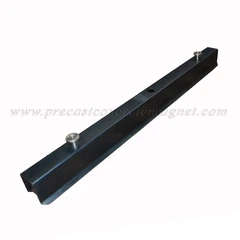
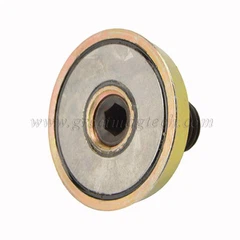
If you are planning a precast concrete construction project, collaborating with experienced suppliers and utilizing high-quality precast accessories will further contribute to boosting construction productivity and reinforcing the structural reliability of the building.

FAQ
Q: What is the main difference between precast concrete and cast-in-place concrete?
A: The primary difference lies in where the concrete is produced and installed. Precast concrete is manufactured in a controlled factory environment and then transported to the construction site for installation. In contrast, cast-in-place concrete is poured and cured directly at the construction site.
Q: Is precast concrete stronger than cast-in-place concrete?
A: When properly designed, both precast concrete and cast-in-place concrete can achieve similar structural strength. However, precast concrete often benefits from stricter quality control because it is produced in a controlled factory environment where curing conditions remain consistent.
Q: Which construction method is more cost-effective for building projects?
A: The cost-effectiveness of precast versus cast-in-place concrete depends on factors such as project size, design complexity, and location. Precast systems can help reduce labor costs and shorten construction schedules, which often lowers the overall project cost. For smaller projects or structures with highly customized shapes, cast-in-place concrete may be the more economical option.
Q: When should precast concrete be preferred over cast-in-place concrete?
A: Precast concrete is typically preferred for projects that require fast construction, repetitive structural components, and consistent quality. Typical applications include parking structures, bridges, wall panels, and modular buildings.
Q: What factors should be considered when choosing between precast and cast-in-place concrete?
A: Several factors influence this decision, including project schedule, structural complexity, transportation limitations, site accessibility, and the availability of lifting and installation equipment. Engineers and contractors must carefully evaluate these conditions to determine which construction method offers the most efficient and reliable solution.
Q: Are there transportation challenges when using precast concrete?
A: Yes, transportation is an important consideration when using precast components. Large precast elements must be transported from the manufacturing plant to the construction site, which often requires specialized transport vehicles and lifting equipment. Proper planning and efficient logistics coordination are essential to ensure safe and smooth delivery.
Q: How does weather affect precast and cast-in-place concrete construction?
A: Weather conditions can significantly affect cast-in-place concrete construction because the pouring and curing processes take place on-site. Rain, low temperatures, or extreme heat may cause delays. In contrast, precast concrete production is less affected by weather because it occurs in a controlled factory environment, making construction schedules more predictable.
Q: Can precast concrete and cast-in-place concrete be used together in the same project?
A: Yes. Many modern construction projects adopt a hybrid approach that combines both precast and cast-in-place concrete. For example, foundations may be poured on-site, while walls, beams, and floor slabs are manufactured as precast components. This approach allows engineers to take advantage of the strengths of both construction methods.