




Introduction:
Concrete possesses extremely high compressive strength, yet surprisingly, it is also highly prone to cracking. In fact, research indicates that over 80% of concrete cracks originate in the early curing stages. Some well-designed structures have been observed to crack simply due to inadequate shrinkage and stress control. What's the solution? Fiber reinforcement.
Whether it's polypropylene fibers, steel fibers, or synthetic fibers, fibers are increasingly used in modern concrete to improve crack resistance, durability, and long-term performance. These tiny reinforcing materials are distributed throughout the concrete matrix, helping to control shrinkage cracking and distribute stress more evenly. In this guide, we'll explore how fibers prevent concrete cracking and why they are becoming crucial in precast and structural applications.
What Causes Cracks in Concrete?
Plastic Shrinkage Cracks:
These cracks usually appear during the early curing stage. When freshly poured concrete loses moisture too quickly-often due to high temperatures, strong winds, or low humidity-the surface begins to shrink before the concrete has developed sufficient strength. This rapid loss of moisture can result in shallow cracks that may form within just a few hours after the concrete is placed.
Drying Shrinkage Cracks:
These typically occur at a later stage as hardened concrete gradually loses internal moisture over time. As water evaporates from the cement matrix, the volume of the concrete slightly decreases. If the concrete is restrained by reinforcement bars, friction with the subgrade, or adjacent structural elements, internal stresses accumulate, and cracks begin to develop.
Thermal Cracks:
Thermal cracking is caused by temperature differences within the concrete mass. During the hydration process, cement generates heat. When the interior of the concrete remains warm while the outer surface cools, the resulting temperature gradient can create internal stresses that lead to cracking.
In addition, environmental factors such as temperature fluctuations, wind exposure, and humidity levels can accelerate these processes. Together, these factors explain why crack control is a key concern in modern concrete design and why reinforcement method including fiber reinforcement, are widely used to improve concrete durability.
What Are Concrete Fibers?

Polypropylene Fiber(PP Fibers)

Polyacrylonitrile Fiber (PAN Fiber)

Polyvinyl Alcohol Fiber(PVA Fiber)

Polyester Fiber (PET Fiber)

Cellulose Fibers

Basalt Fiber

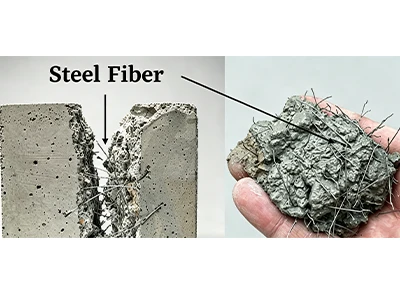
Steel Fibers For Concrete

Imitation Steel Fiber

Polypropylene Twisted Fiber
Fiber-reinforced concrete (FRC) refers to concrete in which finely dispersed fibers are added to the concrete mix to enhance its mechanical properties. Traditional concrete has high compressive strength but relatively low tensile strength, making it prone to cracking under stress or shrinkage. By adding fibers to the mix, the toughness, crack resistance, and structural integrity of concrete can be improved. FRC does not rely solely on large reinforcing bars but rather strengthens the material from within, making it more reliable under actual construction conditions.
During the mixing process, fibers are added directly to the concrete and evenly distributed throughout the material. After the concrete hardens, these fibers remain embedded in the matrix, forming a network structure that enhances crack resistance and improves overall durability. This combination makes fiber-reinforced concrete more stable under environmental stress and mechanical loads.
How Fibers Prevent Concrete Cracking
Micro-Reinforcement Within the Concrete Matrix
When fibers are mixed into fresh concrete, they disperse throughout the entire material. Unlike traditional reinforcement that works at specific locations, fibers provide reinforcement in all directions. These tiny elements act like internal supports, strengthening the concrete matrix and improving its resistance to stress and displacement.
Bridging Micro-Cracks Before They Expand
Cracks usually begin at a microscopic level. Fibers work by bridging these micro-cracks as soon as they appear. Instead of allowing cracks to open and propagate, fibers hold the concrete together, reducing crack width and slowing further crack development. This early crack control significantly improves the durability of the structure.
Stress Distribution Across the Structure
Fibers help distribute internal stresses more evenly throughout the concrete. When shrinkage, temperature changes, or external loads occur, fibers reduce localized stress concentration. This results in a more balanced structure that is less likely to develop localized cracking.
Reduced Plastic Shrinkage During Early Curing
During the early curing stage, moisture loss can cause plastic shrinkage cracks. Fibers limit this movement by restraining the concrete surface and maintaining internal cohesion within the mix. This helps preserve surface integrity before the concrete fully hardens.
Improved Toughness and Tensile Performance
Fiber-reinforced concrete behaves more like a composite material. It becomes tougher, more impact-resistant, and better able to withstand tensile forces. Instead of brittle cracking, fiber-reinforced concrete gains greater flexibility and improved long-term crack resistance.
Types of Fibers Used in Concrete
|
Fiber Type |
Material & Characteristics |
Main Benefits |
Typical Applications |
|
Polypropylene Fibers |
Synthetic polymer fibers with good flexibility and chemical resistance |
Controls plastic shrinkage cracking, improves durability |
Slabs, pavements, precast concrete, residential construction |
|
Steel Fibers |
High-strength steel fibers with strong load-bearing capacity |
Enhances toughness, impact resistance, and load capacity |
Industrial floors, tunnels, bridge decks, heavy-duty concrete |
|
Glass Fibers |
Alkali-resistant glass fibers designed for concrete reinforcement |
Improves crack resistance and surface durability |
Architectural panels, façade elements, decorative concrete |
|
Polyvinyl Alcohol Fiber (PVA) |
High-performance synthetic fiber with strong bonding to the cement matrix |
Excellent crack control and ductility |
High-performance concrete, repair mortars, engineered cementitious composites |
|
Basalt Fiber |
Fibers made from natural volcanic basalt rock sourced materials |
High temperature resistance and corrosion resistance |
Infrastructure, marine structures, and durable concrete projects |
|
Imitation Steel Fiber |
Synthetic macro fibers designed to simulate steel fiber performance |
Lightweight, corrosion-resistant alternative to steel fiber |
Industrial floors, precast elements, large slabs |
Applications of Fiber-Reinforced Concrete

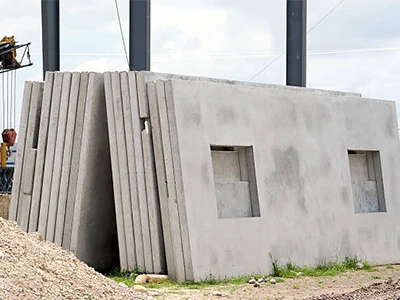
Precast Concrete Products and Panels
Fiber-reinforced concrete is widely used in the production of precast components because it improves crack resistance and enhances structural integrity during transportation and installation. Precast panels, pipes, and architectural elements often experience handling stresses before reaching the construction site. Fibers help distribute these stresses throughout the concrete matrix, reducing the risk of early cracking.
Industrial Flooring and Slabs-on-Grade
Industrial floors must withstand heavy loads from machinery, forklifts, and continuous traffic. Fiber reinforcement helps control shrinkage cracks that commonly occur in large slab areas. By improving tensile strength and impact resistance, fibers make concrete floors more resistant to wear and fatigue.
Shotcrete and Tunnel Linings
Shotcrete applications often involve complex surfaces and challenging construction conditions. Fiber-reinforced concrete improves cohesion during the spraying process and enhances the structural toughness of the finished lining.
Bridge Decks and Pavements
Concrete used in bridges and pavements is frequently exposed to traffic loads, temperature fluctuations, and environmental conditions. Fiber reinforcement helps limit crack propagation and improve fatigue resistance, which extends service life and reduces maintenance requirements.
Residential and Commercial Construction
In residential and commercial projects, fiber-reinforced concrete is commonly used in driveways, foundations, sidewalks, and floor slabs. Fibers provide additional crack control during curing and service, helping maintain long-term structural reliability and surface appearance.
Conclusion:
While concrete cracking is common, it is not inevitable. Fiber reinforcement is a practical and effective means of controlling shrinkage, dispersing internal stress, and strengthening the concrete matrix. By incorporating fibers into concrete mixes, builders can significantly reduce the risk of cracking and improve durability in a variety of applications, from precast components to industrial floors. As the construction industry's demand for materials with higher strength and longer service life continues to grow, fiber-reinforced concrete is becoming a reliable solution for modern structural performance.
FAQ
Q: What types of fibers are commonly used to prevent concrete cracking?
A: The most commonly used fibers in concrete include polypropylene fibers, steel fibers, glass fibers, and synthetic macro fibers. Polypropylene fibers are widely used to control plastic shrinkage cracks during the early curing stage, while steel fibers improve structural toughness and load-bearing capacity. Synthetic fibers are often used in industrial floors and precast components because these applications require higher durability and effective crack control.
Q: Can fibers completely eliminate cracks in concrete?
A: Fibers cannot completely eliminate cracks, but they can significantly reduce the size and spread of cracks. By bridging micro-cracks within the concrete matrix, fibers help control crack development and prevent small cracks from expanding into larger structural problems.
Q: Can fibers replace traditional reinforcement bars?
A: In some applications, especially slabs and industrial floors, synthetic macro fibers can partially replace traditional reinforcement bars. However, in structural elements such as beams or columns, fibers are usually used together with conventional rebar to improve crack control and overall toughness.
Q: How are fibers added to concrete?
A: Fibers are typically added directly during the concrete batching or mixing process. Proper mixing ensures that the fibers are evenly distributed throughout the concrete, allowing them to function effectively as internal reinforcement.
Q: Do fibers affect the strength of concrete?
A: Fibers mainly improve the tensile behavior, toughness, and crack resistance of concrete rather than its compressive strength. By controlling crack formation and distributing stresses more evenly, fiber-reinforced concrete generally demonstrates better durability and long-term performance.