





Introduction
In precast concrete production, even small decisions can have a significant impact on efficiency. One of the most easily overlooked choices is how the formwork is secured to the pouring platform. Traditionally, screw fixing has been widely used, but modern precast concrete plants are rapidly shifting towards shuttering magnets.
So, which method is better suited for your precast concrete production line? In this guide, we'll compare shuttering magnets and screw fixing in terms of installation speed, flexibility, safety, and long-term efficiency.
What Is a Shuttering Magnet?
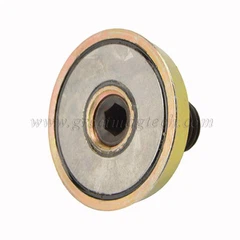
A shuttering magnet is a specialized magnetic fixing device used in precast concrete production to secure formwork firmly to steel casting tables. Instead of drilling holes or tightening bolts, the magnet provides a strong holding force through magnetic attraction, allowing formwork to be positioned quickly and accurately. In modern precast factories, this simple but effective solution significantly improves efficiency and reduces setup time.
The typical structure of a shuttering magnet is designed for both strength and durability. A heavy-duty steel housing protects the internal components and distributes magnetic force evenly across the contact surface. Inside the housing is a powerful neodymium magnet core, known for its high magnetic energy and compact size. A switching mechanism-usually operated by a lever or button-allows workers to activate or deactivate the magnet easily. When switched on, the magnet locks firmly onto the steel table; when released, it can be repositioned without effort.
Shuttering magnets attach formwork directly to steel casting beds without damaging the table surface. This makes layout adjustments fast and repeatable, especially when producing different precast elements such as wall panels, beams, and slabs.
Common models provide forces such as 900 kg, 1800 kg, or 2100 kg, ensuring the formwork remains stable even during vibration and concrete pouring.
Because of their speed, flexibility, and long service life, magnetic fixing systems have become a preferred solution in many modern precast factories, replacing slower mechanical fixing methods in high-efficiency production environments.

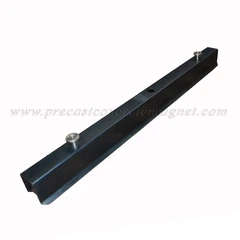
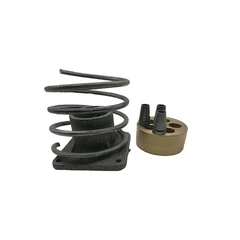
Shuttering Magnet

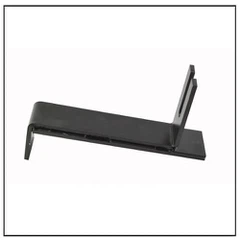
Shuttering Magnetic For Vertical Mould

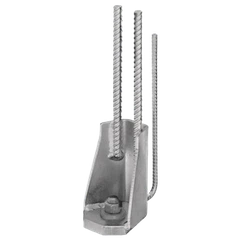
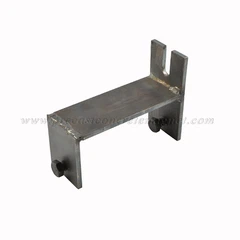
Shuttering Magnet Of Side Rods

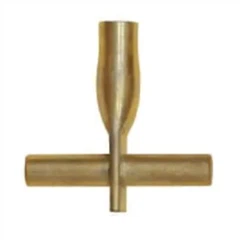
Precast Concrete Shuttering Magnet
What Is Screw Fixing in Formwork Systems?
Screw fixing is one of the traditional methods used to secure formwork in precast concrete production. Before magnetic systems became widely available, many factories relied on screws or bolts to fasten formwork panels directly onto steel casting tables. Mechanical fasteners hold the formwork firmly in place, preventing movement while concrete is poured and vibrated.
In practice, screws are typically drilled through the formwork plate or into pre-designed holes in the casting table. Workers align the formwork according to the required panel dimensions, then tighten screws to lock the structure in position. This process creates a rigid connection between the formwork and the table surface.
Several basic tools are required for this method. Power drills are commonly used to drive screws into the steel table or formwork components. Wrenches or screwdrivers may also be needed for tightening and removal. In larger operations, pneumatic tools are sometimes used to speed up the process.
Screw fixing is still used in certain situations. Small precast workshops, temporary molds, or customized elements with irregular shapes may rely on this approach because it does not require specialized equipment.
However, the method also has limitations in large-scale precast production. Drilling and tightening screws takes time and increases labor intensity. Frequent drilling may damage casting tables over time, and repositioning formwork can be slow. Compared with modern magnetic systems, screw fixing generally offers less flexibility and lower efficiency on high-output production lines.

Installation Speed Comparison
Installation speed plays a crucial role in precast concrete production. Even small delays during the formwork fixing process can accumulate into several hours of lost productivity over an entire production cycle.
Time Required to Position Formwork Using Screws
Traditional screw fixing involves multiple steps. Workers must align the formwork, drill or locate fixing holes, insert screws, and tighten them securely. Whenever adjustments are needed, the process must be repeated in reverse-loosening the screws, repositioning the formwork, and tightening them again. On large casting tables where numerous panels must be handled, this process can quickly become time-consuming and labor-intensive.
Time Required for Magnetic Formwork Systems
Magnetic systems greatly simplify installation. Workers only need to position the formwork and activate the shuttering magnet using a simple lever or switch. No drilling or fastening is required. This fast setup allows the formwork to be secured in seconds rather than minutes, which is particularly valuable in high-volume precast factories.
Impact on Production Efficiency and Labor Cost
Shorter installation times directly improve production efficiency. The less time workers spend fixing formwork, the more casting tables can be prepared during the same shift. Faster installation also reduces labor intensity and lowers the number of workers required for repetitive tasks.
Repositioning Flexibility During Layout Adjustments
Precast panel layouts often change according to project requirements. With screw fixing, every modification requires removing and reinstalling screws. Magnetic systems allow formwork to be repositioned quickly, enabling more flexible production planning.
How Installation Speed Affects Daily Production Capacity
In large precast factories, saving just a few minutes during each formwork setup can translate into additional casting cycles every day. Over time, faster installation contributes to higher output, smoother workflows, and improved overall factory productivity.
Flexibility and Adjustability in Precast Production
Flexibility is one of the greatest advantages that magnetic fixing systems bring to precast production. In factory environments where mold layouts and panel configurations frequently change, the ability to reposition formwork quickly can significantly improve efficiency.
Shuttering magnets can be repositioned instantly without drilling or additional tools. Workers simply release the magnet and move it to a new position. This saves time and avoids drilling holes in the casting table, which can weaken the table surface over time.
In many precast factories, the dimensions of wall panels, slabs, or architectural elements often vary from one production cycle to another. Magnetic systems allow operators to quickly modify mold configurations, ensuring accurate positioning without extensive setup changes. Magnetic formwork systems can also be placed and repositioned rapidly, making them highly compatible with robotic equipment and automated handling systems.
By comparison, screw fixing systems offer far less flexibility. Once screws are drilled and tightened, adjusting the formwork layout requires removing fasteners, repositioning the formwork, and drilling again. This not only slows down production but also increases labor costs.
For precast factories producing custom components or frequently changing panel dimensions, flexible magnetic fixing systems provide clear operational advantages. They simplify layout adjustments while maintaining strong and reliable formwork stability.
Durability and Maintenance
Wear and Tear of Screws, Threads, and Drilled Holes
In screw fixing systems, repeated drilling and tightening gradually damage the threads and the mounting holes. Over time, screws may loosen, strip, or become difficult to remove, especially when exposed to concrete residue and corrosive conditions. Frequent replacement of screws and repairs to damaged steel casting tables can increase maintenance time and operational costs.
Long-Term Maintenance of Shuttering Magnets
Shuttering magnets are designed for repeated use in demanding precast production environments. Their steel housing protects the internal magnetic system, allowing them to maintain stable performance across multiple production cycles. Compared with screw fixing systems, magnets generally require fewer mechanical adjustments during daily operations.
Cleaning Magnets to Maintain Holding Force
To ensure reliable magnetic performance, magnets should be kept clean and free of debris such as concrete dust, rust particles, or metal fragments. Regularly wiping the contact surface and checking the base plate helps maintain full contact with the steel casting table, preserving the required holding force.
Repair or Replacement Considerations
If a screw fixing point becomes damaged, repairing the steel casting table may require re-drilling or welding. In contrast, shuttering magnets are modular units. When wear occurs, individual components can usually be replaced without modifying the casting table itself.
Lifespan Comparison of Both Fixing Methods
With proper maintenance, shuttering magnets can withstand thousands of production cycles, making them a durable choice for high-volume precast factories. Screw fixing systems may still perform reliably in small setups, but they typically wear out faster in repetitive industrial production environments.
Safety and Operational Efficiency
Traditional Screw Fixing
Worker safety during drilling and tightening
Traditional screw fixing requires drilling, tightening, and repeated manual adjustments. Workers often operate power tools while standing on large steel casting tables, which increases the risk of slipping, fatigue, or accidental contact with rotating equipment. Over time, repetitive drilling and tightening can also place physical strain on wrists and shoulders, especially during high-volume production cycles.
Risk of tool accidents or stripped threads
Screw fixing introduces several mechanical risks. Drill bits may slip during operation, and screws can strip or break under excessive torque. Damaged threads slow down installation and affect efficiency. When screws fail or become stuck, additional tools are needed to remove them, which increases downtime and creates further safety concerns. Even short delays during repeated formwork installations can significantly affect overall production efficiency.
Shuttering Magnets
Safe operation of magnetic systems
Operators do not need to drill holes or tighten hardware. Instead, they simply place the magnet in the desired position and activate the switching mechanism. The magnet immediately generates a strong holding force against the steel casting table. With fewer moving parts and no drilling required, the entire process becomes more controlled and predictable.
Reduction of physical labor with magnetic systems
Workers can quickly reposition formwork without repeatedly tightening screws or using tools. Adjustments become faster and easier, allowing crews to focus on alignment and layout accuracy rather than manual fastening. Over time, this streamlined workflow improves production efficiency while also providing a safer working environment.

Cost Comparison Over Time
At first glance, screw fixing appears to be more economical. Screws and bolts are inexpensive and widely available, so the initial installation cost is relatively low. For small projects or occasional formwork adjustments, this traditional method may seem practical. However, when installation time and labor costs are taken into account, the true cost becomes more apparent.
Magnetic systems require a higher upfront investment because shuttering magnets are precision components designed to generate strong holding force. However, their advantages become clear during daily production. Magnets can be positioned and released within seconds, while screw fixing requires drilling, tightening, and later removing each fastener. In repetitive precast production, this difference can significantly reduce labor hours.
Labor costs are often one of the largest operating expenses in precast plants. Workers installing screw-based systems must use tools, align holes, and repeatedly tighten fasteners. Over time, these seemingly minor tasks accumulate into substantial labor costs. Magnetic systems simplify the workflow. With a quick switching mechanism, operators can place or reposition formwork rapidly, improving the overall efficiency of the production line.
Downtime is another hidden cost. When layout changes or adjustments are required, screw fixing slows the process. Each modification requires removing and reinstalling hardware. Magnetic systems allow quick repositioning without drilling or damaging the casting table surface.
Maintenance requirements also differ. Screws may wear out, strip threads, or damage steel casting tables due to repeated drilling. Magnets, when properly maintained and kept clean, generally have a longer service life.
Conclusion:
Both shuttering magnets and screw-fixed formwork can be used for formwork fixing in precast component production, but their efficiency and practicality differ significantly. Screw fixing remains a traditional solution, especially suitable for small or temporary construction projects. However, magnetic formwork offers faster installation, greater flexibility, and a more efficient workflow for modern precast component plants.
With increasing production demands and automation, shuttering magnet systems are rapidly becoming the preferred solution. Choosing the right fixing method is not only about securing the formwork but also about optimizing the entire precast component production process.
FAQ
Q: Which fixing method is better for precast production?
A: Shuttering magnets are significantly faster to install and remove. With a simple switching mechanism, magnets can be positioned or released within seconds.
Screw fixing, on the other hand, requires drilling, aligning holes, tightening screws, and later removing them, which takes considerably more time. In repetitive precast production, the time saved by using magnets can significantly improve daily production efficiency.
Q: Is the holding force of shuttering magnets strong enough to secure formwork?
A: Yes. Modern shuttering magnets use high-strength neodymium magnets combined with durable steel housings to generate powerful holding force. When used on properly prepared steel casting tables, they provide reliable stability during concrete pouring and vibration.
Q: When is screw fixing still suitable?
A: Screw fixing can still be suitable for small projects, temporary formwork setups, or environments where magnetic systems cannot be used. It is a simple and familiar method, but it is generally less efficient in large-scale precast factories.
Q: Do shuttering magnets damage the casting table?
A: No. One advantage of magnetic systems is that they do not require drilling into the steel casting table. This helps protect the table surface and reduces long-term wear compared with repeated screw installation.
Q: Which system is more cost-effective in the long run?
A: Although shuttering magnets require a higher initial investment, they often become more economical over time. Faster installation, reduced labor requirements, and lower maintenance needs typically lead to better long-term return on investment.
Q: Can shuttering magnets be reused for different precast molds?
A: Yes. Shuttering magnets are designed for repeated use and can be easily repositioned to accommodate different mold layouts. This flexibility makes them particularly useful for precast factories that produce panels in multiple sizes and designs.