




Introduction
Concrete has high compressive strength but low tensile strength. For decades, steel reinforcement has been the standard solution to this deficiency. Today, fiber-reinforced materials such as polypropylene fibers, steel fibers, and synthetic fibers are increasingly being used to control cracking and improve concrete durability.
Therefore, an important question arises: can fibers truly replace steel reinforcement?
The answer is not always so simple. In some applications, fiber reinforcement can partially replace steel reinforcement. In other applications, steel reinforcement remains crucial for structural safety.
What is Fiber Reinforced Concrete (FRC)?
Fiber-reinforced concrete (FRC) is a type of concrete in which fine fibers are evenly distributed throughout the mix. These fibers act as micro-reinforcements within the concrete matrix, helping to control cracking and improve overall durability. Unlike traditional reinforcing materials such as steel bars or steel mesh, which only strengthen specific structural areas, fibers are distributed throughout the entire concrete volume. This allows the fibers to intercept and bridge cracks as they form, thus limiting crack propagation and improving the material's toughness.
Types of Fibers:
Steel fibers have high tensile strength and are commonly used in industrial flooring, tunnel linings, and heavy-duty pavements with high impact resistance requirements.
Polypropylene fibers are a lightweight synthetic fiber widely used to control plastic shrinkage cracks and improve surface durability.
Glass fibers, due to their uniform distribution and aesthetic appeal, are commonly used in building panels and decorative concrete components.
Polyvinyl alcohol (PVA) fibers are used in engineering cementitious composites requiring excellent crack control performance.
Volcanic rock fibers, made from natural volcanic rock, have good chemical resistance and thermal stability, making them suitable for harsh environments.
How Reinforcing Steel Bars Strengthen Concrete Structures
Reinforcing steel bars, also known as steel reinforcement, are embedded within concrete to resist tensile forces. Concrete bears compressive loads, while the steel bars absorb tensile stresses, allowing these two materials to work together to form a unified structural system. This combination significantly improves the load-bearing capacity of concrete members.
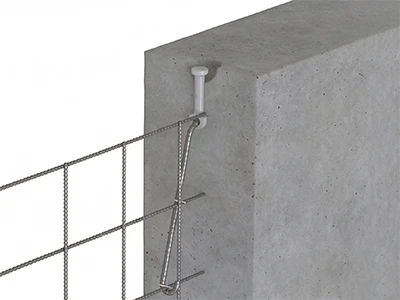
In actual construction, reinforcing steel bars are typically arranged in the form of steel cages or steel meshes in slabs, beams, columns, and foundations. These steel cages can evenly distribute loads, control crack propagation, and maintain the designed structural geometry during concrete pouring.
Reinforcing steel bars also help prevent sudden structural failure. Unlike ordinary concrete, reinforced concrete does not undergo brittle cracking; instead, it can withstand loads and gradually deform, thus providing early warning before failure.
The Working Principle of Fiber-Reinforced Concrete
Fiber reinforcement improves concrete performance by uniformly distributing thousands of tiny reinforcing units throughout the concrete mix. Unlike traditional steel reinforcement that strengthens specific structural areas, fibers act directly within the concrete matrix, helping to control cracking and improve overall durability.
The Mechanism of Fiber-Controlled Cracks
Concrete naturally develops microcracks during curing and undergoes shrinkage or temperature changes. Fibers, uniformly distributed throughout the concrete, act as internal reinforcement. When microcracks begin to form, the fibers intercept them, limiting their propagation and preventing them from developing into larger structural cracks. This distributed reinforcement helps maintain the structural integrity of the entire concrete cross-section.
Bridging Microcracks in the Early Shrinkage Stage of Concrete
During the early curing stage, concrete undergoes plastic shrinkage, which often leads to surface cracking. Fibers form a network that bridges these emerging microcracks. By connecting the concrete matrix together, the fibers can reduce crack width and slow crack propagation, thereby improving the long-term durability of the material.
Improved Impact Resistance and Toughness
Fibers also enhance the toughness of concrete. Fiber-reinforced concrete does not fail suddenly but absorbs and disperses stress more effectively. This enhanced impact resistance and ability to withstand repeated loads make it suitable for industrial floors, pavements, and precast components where durability is of paramount importance.
Applications of Fiber Reinforcing Steel
Industrial Concrete Slabs: Steel fibers or synthetic fibers help control shrinkage cracks and distribute loads from forklifts, machinery, and heavy-duty racks. Compared to traditional steel mesh, fiber-reinforced materials simplify installation and reduce labor time.
Road and Pavement Construction: Fiber reinforcement can improve impact resistance and help limit crack propagation caused by temperature changes, traffic loads, and environmental stresses.
Shotcrete Applications: Fibers can provide multi-directional reinforcement in shotcrete layers. This improves toughness and energy absorption capacity while avoiding complex steel reinforcement installations in confined spaces.
Precast Concrete Components: Fibers are commonly used to enhance crack resistance and surface durability in components such as pipes, panels, and small structural members. In ground concrete slab applications, fibers help distribute loads and reduce shrinkage cracks.
Reinforced Concrete Remains Essential In The Following Scenarios:
Structural Beams and Columns: Structural beams and columns rely on reinforcing steel to resist bending and compressive forces from building loads. The steel forms a stable frame within the concrete, enabling these members to safely support floors, roofs, and other structural components.
High-Capacity Foundations: High-capacity foundations also require reinforcement to distribute concentrated loads from walls, columns, and heavy equipment. Fiber alone cannot provide the structural reinforcement needed to prevent settlement or long-term deformation.
Multi-Story Building Structures: Multi-story building structures rely on reinforced concrete systems to transfer loads between floors. The reinforcing cage ensures that stresses are properly transferred to floors, beams, and columns.
Ductility in Seismic Zones: In seismic zones where ductility is required, reinforcing steel plays a crucial role. It allows concrete structures to bend and absorb energy during earthquakes, reducing the risk of sudden brittle failure.
Finally, for structural members requiring precise load transfer, such as shear walls or reinforced concrete slabs, the strength and positional stability provided by reinforcing steel are critical. In these applications, fibers are typically used as a supplementary material rather than a replacement.
|
Comparison Factor |
Fiber Reinforcement |
Steel Rebar Reinforcement |
|
Crack Control |
Fibers are evenly distributed throughout the concrete mix and help control micro-cracks caused by shrinkage and temperature changes. |
Rebar mainly controls larger structural cracks and limits crack width in reinforced elements. |
|
Structural Strength |
Improves toughness and impact resistance but provides limited tensile reinforcement compared with steel bars. |
Provides high tensile strength and is essential for structural load-bearing elements such as beams, columns, and foundations. |
|
Labor Requirements |
Lower labor demand since no reinforcement cage assembly or tying is required. |
Higher labor requirements due to rebar placement, tying, and alignment. |
|
Durability |
Synthetic fibers resist corrosion and help distribute cracks, improving long-term durability in certain environments. |
Steel rebar provides strong reinforcement but may corrode if the concrete cover is insufficient or exposed to harsh environments. |

Polyvinyl Alcohol Fiber

Polypropylene Fiber

Steel Fibers

Polypropylene Twisted Fiber
Conclusion:
Fiber reinforcement has revolutionized how engineers think about concrete durability and crack control. In many applications, such as slabs, pavements, and precast components, fibers can significantly reduce or even replace traditional steel reinforcement. However, when structural loads and safety requirements are high, steel reinforcement still plays a crucial role. The most effective solution is often to combine the two systems: steel reinforcement for structural strength and fibers for crack control and durability.
FAQ
Q: Can fiber completely replace rebar in concrete structures?
A: In most structural applications, fiber cannot fully replace traditional steel rebar. Fibers mainly help control cracking, improve toughness, and enhance durability. However, structural elements such as beams, columns, and load-bearing foundations still require steel reinforcement to handle significant tensile forces and ensure structural safety.
Q: What types of fibers are commonly used in concrete reinforcement?
A: Common concrete fibers include steel fibers, polypropylene fibers, glass fibers, basalt fibers, and PVA fibers. Each type offers different advantages. For example, polypropylene fibers are widely used for shrinkage crack control, while steel fibers are often used in industrial floors and heavy-duty applications.
Q: In which applications can fiber replace or reduce rebar?
A: Fibers are often used in slabs-on-ground, industrial floors, pavements, shotcrete, and some precast concrete elements. In these situations, fibers can reduce or partially replace traditional reinforcement by improving crack resistance and distributing stresses more evenly.
Q: Does fiber reinforcement improve concrete durability?
A: Yes. Fibers help control micro-cracking, reduce shrinkage cracks, and improve impact resistance. By limiting crack propagation, fiber-reinforced concrete can enhance long-term durability and reduce maintenance requirements.
Q: Is fiber-reinforced concrete more cost-effective than rebar reinforcement?
A: In certain projects, fiber reinforcement can reduce labor costs and construction time because it eliminates the need for cutting, placing, and tying steel bars. However, the overall cost-effectiveness depends on the project type, structural requirements, and fiber dosage.
Q: Can fibers and rebar be used together in concrete?
A: Yes. Many modern construction designs combine fibers with traditional steel reinforcement. Rebar provides primary structural strength, while fibers help control cracking and improve durability. This hybrid approach often delivers better overall performance in demanding construction environments.