


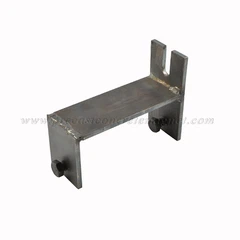



Assembled buildings are the future development direction of the construction industry. Prefabricated concrete components are concrete components prefabricated in factories or on-site according to design specifications. Effectively improving the production quality of prefabricated components has positive significance for engineering construction. The lifting drive wheel mechanism is an important facility in the production of prefabricated concrete components. It is necessary to explore its application points in depth.

Preparatory Work For The Production Of Prefabricated Concrete Components
Matching Of Machinery And Tools
According to the production process of prefabricated concrete components, corresponding equipment is prepared for each process, mainly including mixing equipment, weighing raw materials according to the mix ratio requirements, and mixing to obtain concrete that meets the construction requirements; vibrating table and vibrating rod, used to improve the compactness of concrete; demoulding device; steel molds and appropriate spare molds of appropriate specifications for emergency use; loaders or small bulldozers and generators. All kinds of equipment related to the production of prefabricated concrete components must meet quality requirements, otherwise they are prohibited from being put into use.
Mold Calibration
The plate of the mold is selected concerning the geometric dimensions of the prefabricated components. For example, when the component size is large, slightly thicker steel is selected to maintain the stability of the force to avoid deformation under the action of force. The mold must be made finely and match the size of the prefabricated component. Strengthen the control of the shape and size, especially the corners must be kept stable and cannot be damaged when the mold is removed.
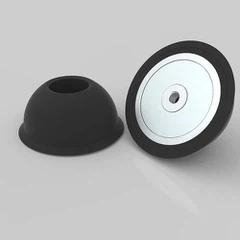
Layout of the concrete prefabricated component production line Looking at the entire process of prefabricated component production, the mold table is used as the bottom mold to carry the concrete prefabricated components and maintain the stability of the components and the rationality of the shape. The mold table needs to move on the production line. The power of this action comes from the driving wheel mechanism, which pushes the mold table to complete the forward and backward movements of a specific distance under the action of friction.
Vibration
Vibration is an important measure to improve the compactness of prefabricated components. In the vibration process, the lifting drive wheel mechanism is mainly used to vibrate the poured concrete until the concrete is transformed into a dense state. During vibration, the driving mold table and the prefabricated component vibrate together, and the operating state of the vibration equipment is reasonably controlled. The lifting drive wheel provides vertical vibration. Vibration is highly disturbing. Under the premise of ensuring compaction, the adverse effects of vibration should be minimized as much as possible. For example, the lifting drive wheel mechanism can be separated from the mold platform during vibration. Given the importance of the lifting drive wheel mechanism.
Precautions For The Production Of Precast Concrete Components
Precasting
Carefully select raw materials that meet the quality standards, accurately weigh them according to the mix ratio, and mix them to obtain concrete with good slump and uniformity. The vibration uses an attached vibration motor. First, load the material on the vibration table and vibrate until the concrete is dense. The vibration time is reasonably controlled with the vibration motor power as a reference to avoid under-vibration and over-vibration. After the filling and vibration are completed, the mold is transferred to the designated place for stacking. The site is required to be flat and solid to avoid affecting the molding effect of the precast components. The mold cannot be discarded on the ground at will, and no watermarks can be generated on the surface of the component after demolding, that is, the apparent quality of the concrete precast components must be good.

Mold Assembly
Before prefabrication, a detailed inspection is carried out to determine whether there are leaks in the mold. If there are, use rubber strips to pad or take other treatment measures to avoid honeycomb and pockmarks due to leakage of slurry; after confirming that the mold is installed correctly, fix it with screws or buckles, clean up the debris attached to the template, and evenly apply the release agent. The brushing material can be motor oil, and it must be done when the mold surface is kept dry, otherwise, it will cause the mold to stick due to residual moisture. When the temperature is low, take an appropriate amount of diesel to dilute the motor oil. The appropriate amount is 1:1. Avoid excessive use of diesel, otherwise bubbles will be generated on the surface of the component, which will affect the apparent quality of the concrete prefabricated component after molding. The thinner the oil on the mold surface, the better without affecting demolding.
Demolding
When the time reaches 5-6 hours and the temperature reaches about 23°C, arrange demolding. Take a pad with the same thickness as the edge of the mold, and turn it over on the ground together with the prefabricated block. During this period, strengthen protection to avoid abnormal conditions such as edge biting and corner loss.
Health
Health is a key measure to improve the quality of prefabricated concrete components. After the prefabricated parts are demolded, the strength of the concrete has not yet fully met the requirements and cannot be transported out at will. Combine the method of sprinkling water and covering with plastic cloth to do 3-4 days of curing on site. After the strength of the concrete reaches the requirements, it will be transported to the designated area for storage. During this period, sprinkle water appropriately according to the ambient temperature and the characteristics of the concrete to avoid cracking.
Precast Concrete Components In And Out Of The Factory Process
Before Precast Concrete Components Leave The Production Site
Before the production of precast concrete components, the construction unit should organize the design, production, and construction units to conduct design document disclosure and review. The relevant units that produce precast components should not only have relevant qualifications but also have production process equipment and test conditions to ensure product quality requirements. The quality of raw materials, mechanical properties of steel bar processing and connection, concrete strength, etc. of precast components should be tested and inspected according to relevant national standards. When the production unit does not have the corresponding test capabilities for the test items, it should entrust a third party to test. After the quality assessment results of the precast component steel bar, concrete, prestressing, precast component test, inspection data, and other items are qualified, it can be evaluated as a qualified product. Each precast component should be labeled on the surface, and the content of the logo includes the component model, size, weight, production date, manufacturer, quality acceptance mark, etc.
After The Prefabricated Concrete Components Leave The Site
The unavoidable disadvantage of prefabricated concrete components is that once they are severely damaged or deformed, they will be difficult to repair, which will reduce the efficiency of on-site construction, delay the construction period, and cause economic losses. Therefore, the storage and lifting of prefabricated concrete components after they leave the site are very important. The storage of prefabricated components should be classified according to product types, specifications, and inspection status. The storage location and storage method should be strictly implemented to the requirements of the specifications to avoid deformation, cracking, and damage to prefabricated components. The transportation method of prefabricated components should also be calculated and designed according to the different characteristics of prefabricated components. If necessary, corresponding temporary reinforcement measures should be taken for the weak positions of the components to avoid the prefabricated components from being damaged and difficult to repair during transportation and storage.
Concrete Prefabricated Components On-site Construction
The on-site construction stage of prefabricated components is an important stage that determines the final construction quality of prefabricated buildings. The construction and installation of prefabricated components directly affect the final quality acceptance results. Therefore, before the construction of prefabricated buildings, a special plan should be formulated for the construction of prefabricated concrete structures. The special construction plan should include the project overview, preparation basis, schedule, construction site layout, transportation and storage of prefabricated components, installation, and connection construction, green construction, safety management, quality management, information management, emergency plan, and other contents. For all prefabricated components that are not subject to structural performance inspection when entering the site, quality control can be carried out by the construction unit or the supervision unit on-site supervision of production. When there is no on-site supervision, the prefabricated concrete components should be tested for concrete strength, protective layer thickness, number, specifications, spacing, etc. of main force-bearing steel bars before entering the site. At the same time, the quality certification documents at the time of entry should add component production process inspection documents.
Factors Affecting The Quality Of Precast Concrete Components And Control Measures
Influence And Control Of Raw Materials
1) Cement. Many types of cement can be selected in the production of precast concrete components, depending on actual needs and the characteristics of cement. For example, slag cement mixture has strong fluidity, but it is prone to water seepage and segregation; ordinary Portland cement has better working performance, which is better than slag cement and pozzolan cement; although pozzolan cement lacks fluidity, it has good cohesion. In the production of precast concrete components, if slag or pozzolan cement is used as cement, it is easy to cause the surface moisture to lack uniformity. The impact on the precast components is uneven color after demolding, among which uneven flower bands and black lines are particularly common. In general, ordinary Portland cement has high feasibility in the production of precast concrete components.
2) Aggregate. Fine aggregate is preferably sand, and its requirements are particle size <5mm, mud content <3%, hard texture, good gradation, good cleanliness, and quality inspection when sand enters the site, and any substandard sand is prohibited from entering the site. The basic requirements for coarse aggregate are anti-slip, hard, and wear-resistant, with a needle-like content of ≤25%, stone strength of not less than grade 3, and mud content of <2%. If crushed stone is used, it is necessary to ensure that the maximum particle size of the material is not greater than 1/4 of the minimum side size of the structure.

Influence And Control Of Mix Ratio
1) Aggregate ratio. The ratio of the absolute volume of aggregate to the absolute volume of cement slurry is called the aggregate ratio. Under the premise of a consistent water-cement ratio, as the total amount of cement slurry increases, the content of aggregate decreases, the fluidity of the mixture increases, and the slurry phenomenon can be seen. At the same time, the production cost of prefabricated components will rise accordingly. If the amount of cement slurry is reduced, it is difficult to effectively fill the gaps in the aggregate, resulting in poor viscosity of the concrete. Its limitation is that it is difficult to ensure the strength of the component, and the components formed by construction have quality defects such as rough surface and honeycomb surface, and collapse in severe cases. According to the above-mentioned rules, the aggregate ratio can be appropriately increased in the concrete mixing of prefabricated components, the amount of cement can be reduced, and the performance of the mixture can be guaranteed.
2) Water-cement ratio. It is forbidden to mix concrete with too small a water-cement ratio, otherwise the compactness of the molded components will be poor. To make the concrete have good water retention and cohesion, it is not advisable to use too large a water-cement ratio. Therefore, the control of the water-cement ratio follows the principle of moderation. When mixing, to make the mixture have strong fluidity, you can consider increasing the mixing water, but no matter how the water amount is adjusted, the water-cement ratio cannot be changed, and the amount of cement should be appropriately increased so that the molded prefabricated components have sufficient strength.
Influence And Control Of Construction Technology
1) Vibration. According to the different vibration equipment, choose the appropriate vibration method: when using a vibration table, determine the best vibration time after testing, and the amplitude and frequency should be reasonable; when using a flat plate vibrator, the moving distance is the key control indicator, so that the vibrator plate covers the compacted part by about 10cm; when using an inserted vibrator, the moving distance is not more than 1.5 times the action radius of the equipment. Considering the disturbing characteristics of vibration, keep a distance of not less than 5cm from the side mold.
2) Demolding. Remove the formwork when the concrete reaches a certain strength and the edges and corners are not damaged during the removal process. Operate with caution to avoid damage to the components due to touch or other reasons. If there are defects or unevenness in the local area after removal, make appropriate repairs.
3) Curing. Arrange curing after demolding to control the temperature and humidity of the concrete so that the concrete can be effectively formed until the strength reaches the design requirements and there are no cracks, shrinkage, or other problems on the surface. The ambient temperature has a significant impact on demolding. When the temperature is below 5℃, cover and keep warm, and watering is prohibited to avoid freezing.
Conclusion
In summary, precast concrete components have been widely used in each operation stage of construction. Precast concrete components are an important part of prefabricated concrete structures, and their production quality has an important impact on structural safety, project progress, and cost. This paper discusses in detail the production process and quality control factors of precast concrete components to improve the production efficiency and production quality of precast concrete components.