




Concrete prefabricated residential structure is a new industry. At present, a complete supporting industrial production system has not been formed, and the construction technology is far from meeting the needs of modern residential industrialization production.
The main components of industrialized housing, and the supporting architectural decoration, electrical, equipment, and other professional reservations and embedding must be carried out in the factory. Therefore, before the processing and production of prefabricated components, in-depth design of electrical, equipment, production, hoisting, and other specialties should be carried out.
Before the construction of prefabricated housing, there should be a complete set of construction organization designs, advanced and reasonable construction methods, and a controllable quality control system to ensure that this new structural system is successfully realized from the processing of components to the finished housing.
Characteristics Of The Construction Method And Construction Principle
1. Characteristics Of The Construction Method
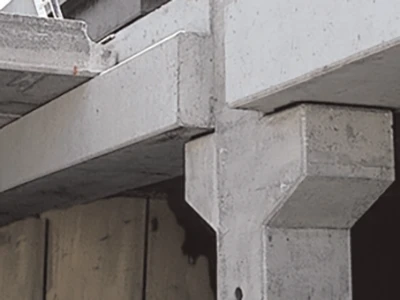
The precast concrete assembled integral structure makes full use of the advantages of factory production of components, realizes the standardization of prefabricated component design, factory production, transportation logistics, and installation specialization, improves construction production efficiency, and reduces the generation of construction waste.
2. Prefabricated Components Are Designed With Standard And High Production Accuracy
Based on the demand for component use, make component production and transportation plans in advance. Before component processing, the production plan should be arranged according to the overall component demand schedule to ensure component production, transportation, and on-site installation matching supply, and ensure on-site flow construction.
3. Prefabricated Component Production, Transportation And Matching
According to the demand for component use, make component production and transportation plans in advance. Before component processing, the production plan should be arranged according to the overall progress plan of component demand to ensure the matching supply of component production, transportation, and on-site installation, and ensure on-site flow construction.
4. Component Hoisting Sequence
According to the component layout diagram of the standard unit, the principle of far first and near later is adopted to ensure a reasonable tower crane hoisting sequence. Before hoisting the components, the prefabricated components can be numbered in sequence to control the hoisting sequence.
5. Convenient And Fast Tool Support
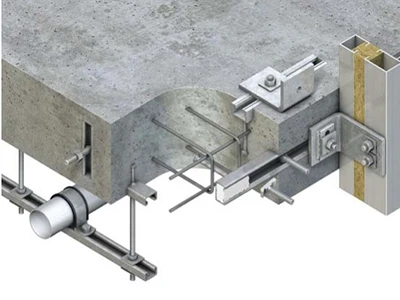
According to the stress characteristics of the components, tools for quick support and positioning of components are designed; matching embedded parts are set during the production of prefabricated components and the pouring of concrete at the cast-in-place parts to ensure that the components are easy to support and quickly put in place.
6. Fewer Common Quality Problems
The prefabricated exterior wall panels are a "sandwich" sandwich insulation system. By adopting the reverse brick hitting process and the tongue-and-groove design at the component joints, the problems of leakage, cracking, hollow bricks, and expansion and falling of the exterior wall are solved from the process and structure; the common problems such as easy damage to the drip line and decorative line of the components and large deviation of the room construction size are solved through factory production.
7. Reliable Connection Of Prefabricated Components
Based on the stress characteristics of the prefabricated components, a specific connection method is adopted to connect them with the cast-in-place structure to meet the structural bearing capacity and deformation requirements. Prefabricated wall panels are connected by sleeve grouting technology, prefabricated composite components are connected by cast-in-place concrete with steel bars tied on the composite surface, prefabricated bay windows, prefabricated stairs and prefabricated decorative panels are connected by bolts or welding, and after connection, they are formed into one by post-casting concrete at the node position, so as to achieve reliable component connection and meet the safety and durability of the structure.
8. Fewer Construction Safety Hazards
The insulation and exterior decoration of prefabricated wall panels, prefabricated bay windows and prefabricated decorative panels are processed in the factory, reducing the amount of exterior decoration work. The external formwork of the cast-in-place nodes between the prefabricated wall panels of the exterior wall adopts the prefabricated concrete insulation and decoration integrated formwork solution, which avoids the problem of difficult support of the outer node formwork and many safety hazards of subsequent insulation construction, and reduces the high-risk operation of exterior decoration.
9. High Labor Efficiency
The traditional cast-in-place structure consists of steel bar binding, formwork support, concrete pouring, and external insulation and decoration finishing of the wall; the prefabricated structure housing converts the traditional operation surface process into factory production, which greatly reduces the construction difficulty of the operation surface, reduces the construction process of the operation surface, and greatly improves labor efficiency.
10. Good Energy-saving And Emission-reduction Benefits
Component factory production reduces the loss of building materials; on-site wet operations are significantly reduced, reducing the generation of construction waste; the formwork support area is reduced, reducing the use of wood; the amount of steel and concrete on-site engineering is reduced, reducing the on-site water and electricity consumption, and also reducing the emission of pollutants such as construction noise and smoke, with significant energy-saving and emission-reduction benefits.
Principle Of Construction Technology
The installation of components is carried out simultaneously with the cast-in-place operation, that is, the prefabricated wall panels are constructed simultaneously with the cast-in-place wall. After the prefabricated wall panels are installed, the sleeve grouting process is used to connect the steel bars and the wall panels to ensure the stress performance of the steel bars and the wall panels, and the cast-in-place nodes are cast to form a whole;
The installation of prefabricated composite components is carried out simultaneously with the cast-in-place construction of the floor slabs, and the composite layer concrete is cast to form a whole;
The structural construction is completed by installing prefabricated stair slabs and prefabricated decorative panels with each layer and installing prefabricated bay windows at different levels; the installation and use of prefabricated concrete insulation and decorative integrated formwork solves the problem of external formwork support for cast-in-place nodes between prefabricated wall panels.
This method strictly controls the quality of each link such as transportation, storage, hoisting, installation, connection, cast-in-place node processing, and finished product protection of prefabricated components, and through the extensive use of special hoisting, support, installation, and other tools for prefabricated components, the installation and construction of prefabricated components is convenient and reliable, which improves labor productivity and achieves the social benefits of energy conservation and emission reduction.
Key Points Of Prefabricated Wall Panel Installation And Node Construction:
1. Process Flow:
Prefabricated wall panel installation preparation → Prefabricated wall panel hoisting → Prefabricated wall panel quick positioning → Prefabricated wall panel inclined support installation → Prefabricated wall panel fine adjustment → Cast-in-place node steel bar binding → Mechanical and electrical box, wire pipe burial → Prefabricated wall panel grouting operation → Cast-in-place wall formwork → Cast-in-place node formwork between prefabricated wall panels → Prefabricated concrete insulation decoration integrated (PC) template installation → Wall concrete pouring
2. Preparation Before Installation Of Prefabricated Wall Panels
Before the grouting construction of prefabricated wall panels, operators are trained to enhance their awareness of the importance of grouting quality through training, clarify the one-time and irreversible characteristics of the operation behavior, and attach importance to the grouting operation they are engaged in; in addition, through the simulated operation training of the staff's grouting operation, the grouting operation operation process is standardized, and the grouting operation essentials and control points are mastered.
Transportation and storage of grouting materials When storing grouting materials on site, a special grouting material storage warehouse must be set up. The warehouse is required to be rainproof and ventilated, and a grouting material storage rack (at a certain height from the ground) is set up in the warehouse to keep the grouting materials in a dry and cool place.
The tools required for grouting operations include measuring cylinders, buckets, mixers, grouting cylinders, electronic scales, etc. According to the number of wall panels to be poured, a certain amount of grouting materials is configured.
The surface of the prefabricated wall panels and cast-in-place structures should be cleaned and free of oil, dust, stickers, chips, and other debris. The rough surface of the components should be trimmed and there should be no loose concrete fragments and stones. The surface of the components in contact with the grouting material should be moistened with water and there should be no obvious water accumulation to ensure that the joints between the grouting material and the components in contact with it are tight and leak-free.
3. Lifting Of Prefabricated Wall Panels
Prefabricated component single-side numbered lifting beam Prefabricated component single-side numbered universal lifting beam, in order to ensure that the lifting points of the wire ropes on both sides are replaced when lifting between different components, which consumes a lot of time, the lifting beam is set to two lifting points on one side, and the component number lifting point is set on the other side according to the needs of the engineering components.
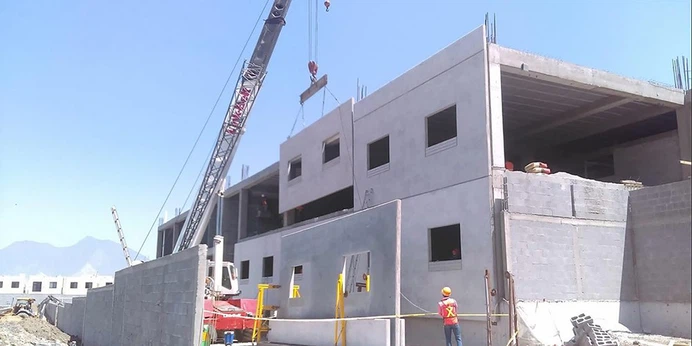
Modular lifting beam for wall panel lifting Use reasonable lifting points according to the position of the lifting ring of the prefabricated wall panel, connect the wire rope with the reserved lifting ring of the exterior wall panel with a shackle, lift it to 500mm from the ground, and check the appearance quality of the component and the connection of the lifting ring before continuing to lift. Before lifting, the lower side of the prefabricated wall panel needs to be nailed with a 500mm wide full-length multi-layer board. The lifting is required to be slow and uniform to ensure that the edge of the prefabricated wall panel is not damaged.
When the prefabricated wall panel is hoisted, the tower crane is required to lift slowly. When it is hoisted to about 600mm above the working layer, the construction personnel use two slip ropes to hook with a hook, pull the board with the slip rope, and slowly lower the wall panel.
4. Positioning Of Prefabricated Wall Panels
When prefabricated components are installed, to ensure that the components are quickly positioned and accurately positioned, auxiliary tools are designed for installation. The prefabricated wall panel uses the reserved positioning steel bars of the cast-in-place structure top plate to connect with the reserved grouting sleeve of the prefabricated wall panel. When the wall panel is hoisted, quick positioning measures are used to position it. After it is in place, it is adjusted and fixed by the oblique support of the wall; after the wall panel is corrected, fine-tuned, and fixed, the prefabricated wall panel grouting operation is carried out. The cement-based grouting material is used to fill the steel bar connection sleeve with the grouting gun to seal the connection and form a whole.
5. Installation Of Prefabricated Wall Panel Oblique Support
Use bolts to install the oblique support rods of the prefabricated wall panels on the bolt connectors on the prefabricated wall panels and cast-in-place panels, and make initial adjustments to ensure that the wall panels are roughly vertical. After the prefabricated wall panels are initially in place, use the fixed adjustable oblique support bolt rods for temporary fixation. After the long rod oblique support is fixed, immediately replace the quick positioning measure with the short rod oblique support to facilitate the subsequent precise correction of the wall panels.
6. After The Wall Panels Are Quickly In Place, Make Precise Adjustments To The Wall Panels
After the lifting is completed, install the oblique support on the wall panel floor. The long screw rod of the oblique support is 2387mm long and the short screw rod is 955mm long, and the adjustable length is ±100mm.
For the precision adjustment of the wall panel installation, use the long and short oblique support adjustment rods to make corrections and adjustments perpendicular to the wall panel direction, parallel to the wall panel direction, and the horizontal line of the wall panel. The adjustment requirements are adjusted slowly according to the pre-controlled line.
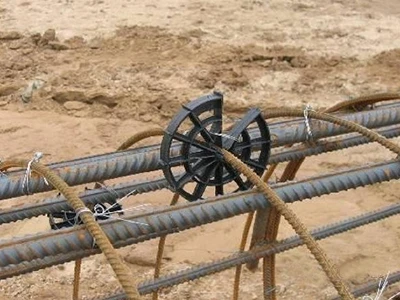
7. Cast-in-place Node Reinforcement Binding
8. Electromechanical Wire Box And Wire Pipe Burial
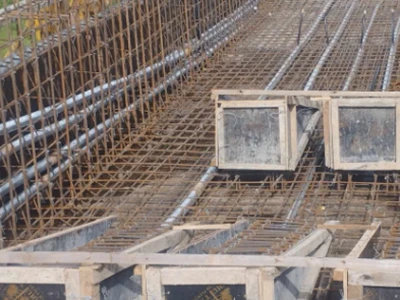
In order to prevent the displacement of various electromechanical pre-buried pipes and wire boxes during burial, a customized new wire box is used. This type of wire box has two steel sleeves. When used, the additional positioning steel bars are used to tie the main bars firmly.
9. Prefabricated Wall Panel Grouting
According to the unit structure characteristics and the order of hoisting, this article only summarizes the construction process and construction technology of different links such as production, transportation, storage, hoisting, installation, connection, and cast-in-place node processing of wall components. Through the use of special tools for hoisting, positioning, and installation of prefabricated components, the structure construction is convenient, the quality is reliable, and the labor productivity is improved.