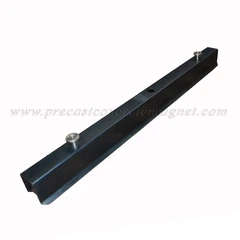
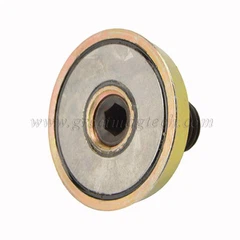


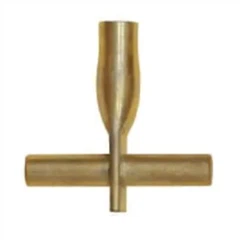
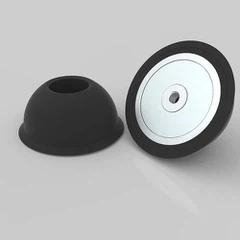

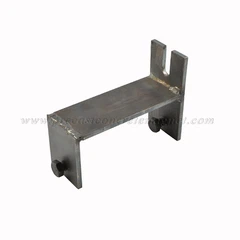
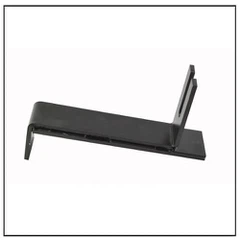


Building a hospital in a project hospital can be time-consuming. Designing each room from scratch takes effort. However, using prefabs is a quicker method! Think of it like using a prefabricated component magnetic box fixing fixture tool that holds everything in place perfectly, making assembly fast and hassle-free. Just like this handy fixture ensures precision in real-world construction, prefabs in project hospitals let you snap pre-designed rooms into place effortlessly!
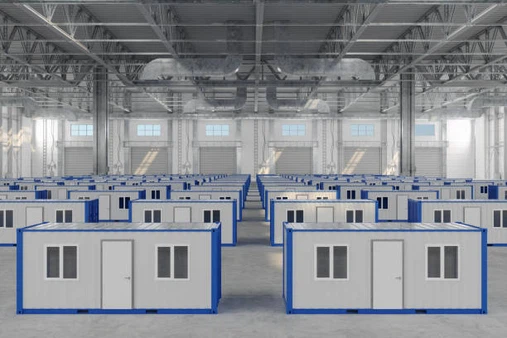
Wards, offices, and entire departments can have ready-to-use layouts made with prefabs. There is no need to construct the same rooms repeatedly. Simply save your design, make any necessary adjustments, and continue.
This guide will show you how to make your prefabs. We will walk you through the step-by-step process of selecting, saving, and placing prefabs. Let's dive in and start creating smart, reusable hospital layouts!
Understanding Prefabs in Project Hospital
Thanks to the useful prefab tool, players can construct, store, and reuse pre-designed rooms and layouts in project hospitals. Prefabs can let you build a large multi-department hospital or a small clinic more quickly while maintaining consistency. Let's examine what prefabs are, their use, and how they might enhance your hospital construction experience.
Prefabs are essential for project hospital's easy and accurate construction of medical buildings. They greatly expedite hospital-building by enabling players to create, save, and reuse pre-configured rooms and layouts.
By employing prefabs, players can avoid the tedious process of creating each room from scratch. This allows them to concentrate on streamlining operations, making better use of available space, and maintaining the hospital's aesthetic coherence. In addition to saving time, prefabs offer flexibility, enabling rapid hospital expansions and changes in response to changing patient needs.
Why Use Prefabs?
Using prefabs in a project hospital can significantly improve your hospital-building experience. They save time, ensure consistency, and make expansion easier. Here is why you should take advantage of this powerful feature.
Save Time and Effort
It might be time-consuming to manually design every area, particularly when creating several identical places. When using prefabs, you only have to make a layout once. After saving it, you can immediately place it whenever you need to.
Ensure Consistency in Design
Prefabs help maintain your hospital's appearance and operations. If every doctor's office, patient ward, or waiting area has the same layout, staff and patients will find it easier to navigate.
Expand Your Hospital Easily
As your hospital grows, you will require extra space to accommodate the inflating number of patients. Prefabs allow you to easily add additional offices, wards, or entire departments without starting from scratch and with little to no fuss regarding expanding hospital facilities.
Adapt and Improve Over Time
Prefabs can be customized and reusable. They can be changed according to patient flow, effectiveness, or aesthetics. If you find a design issue, you can modify the prefab and save an updated version, which will improve the general architecture of your hospital.
Optimized Space Utilization
Additionally, properly designed prefabricated components maximize space utilization in the hospital. By ensuring rooms are efficiently organized, players can minimize wasted space, improve accessibility, and improve the overall experience for patients and their families.
Enhance Gameplay Experience
Prefabs make the game more enjoyable. Instead of getting stuck in repetitive construction, you can optimize hospital efficiency, improve patient care, and tackle new challenges.
Types of Prefabs in Project Hospital

Prefabs in project hospitals come in different types, each serving a unique purpose. Understanding these categories will help you build and organize your hospital more efficiently.
Room Prefabs
These are individual rooms designed for specific hospital functions. Examples include:
Doctor's offices – fully equipped with desks, chairs, and diagnostic tools.
Patient wards – beds, monitors, and essential medical equipment for hospitalized patients.
Waiting areas – seating arrangements, vending machines, and decorations for patient comfort.
Department Prefabs
Department prefabs are larger pre-designed sections of the hospital that contain multiple rooms. These are useful for expanding quickly. Examples include:
Emergency departments – triage, examination rooms, and trauma care areas.
Radiology units – one package includes X-ray, MRI, and CT scan rooms.
Surgical wings – operating rooms, pre-op, and recovery areas combined.
Furniture Layouts
Not every prefab needs to be a full room. You can create prefabs for specific furniture arrangements, such as:
Nurse stations – desks, computers, and storage in a compact design.
Treatment zones – bed and equipment layouts optimized for efficiency.
Reception areas – check-in desks, seating, and decorative elements.
How To Create Prefab in Project Hospital
Creating a prefab in a project hospital is simple. Following these steps, you can quickly generate and use prefabs to facilitate your hospital layout.
Step 1: Enter Build Mode
To enter the build mode, click the hammer and wrench icon in the bottom menu. In this mode, you can construct a hospital room that serves all required functions. You can arrange walls, floors, furniture, and equipment your way with this.
Step 2: Design Your Room or Area
Beds should be placed in the patient wards, diagnostic equipment in the exam rooms, and desks in the doctor's offices. Before saving a prefab, ensure your room is fully furnished and meets hospital standards.
Step 3: Use the Selection Tool
After your room is finished, choose the prefab tool from the build menu. Over the area you wish to save, click and drag. The selection box should span the full space, including the walls and ground, to guarantee that it duplicates accurately when put later.
Step 4: Save the Prefab
Once you have selected the area, click the Save as prefab button. A window will appear, prompting you to name your prefab. Select a name that is both descriptive and easy to find later. You can also put it in a category for better organization.
Step 5: Test the Prefab
Test your prefab by setting it up in your hospital before using it extensively. Ensure that all the equipment operates as intended, that the doors line up perfectly, and that employees can move around the room without any problems. Make any necessary changes and save a revised version.
Step 6: Organize and Manage Prefabs
You might eventually make several prefabs for various rooms and departments. Use the build menu's prefab management system to keep them organized. Managing your prefabs into categories guarantees easy access when the building grows.
Placing and Using Prefabs
Once you have created and saved a prefab in the project hospital, you can quickly place it anywhere in your hospital. Follow these steps to access, place, and adjust your prefabs for maximum efficiency.
Step 1: Access the Prefab Library
Open build mode by clicking the hammer and wrench icon to use a prefab. Next, from the build menu, choose the Prefab Tool. Your saved prefabs appear here, neatly arranged according to the types of rooms or areas you have made.
Step 2: Select a Prefab
Use the search feature to locate the required prefab or browse your saved prefabs. Click on a prefab to select it. The prefab will show as a transparent preview so you can see how it will work with your hospital's design.
Step 3: Place the Prefab
Move the prefab to your desired location. Check that there is adequate room for the complete selection without causing any overlap with pre-existing structures. If the placement looks good, left-click to confirm. The prefab will instantly appear with all walls, flooring, furniture, and equipment.
Step 4: Adjust and Customize
After placing a prefab, you can make modifications as needed. Use the build tool to enlarge or reshape the prefab or the demolish tool to eliminate portions of it if the room arrangement does not precisely match the design of your hospital. Additionally, you can rearrange equipment, adjust wall colors, or update furniture without impacting the prefab's saved version.

Step 5: Connect to the Hospital Workflow
Ensure that the prefab is operational within the overall hospital framework, that doors are correctly orientated, and that corridors are accessible. Patients should have access to the required medical equipment, and staff should be free to move around. If a prefab includes important areas like an operating room or diagnostic lab, check that it satisfies all standards.
Step 6: Save Updates if Necessary
If you make significant improvements to a prefab, consider saving the updated version for future use. Simply reselect the modified area and overwrite the old prefab or create a new one. This allows you to refine your designs and continuously optimize your hospital layout.
Traditional vs. Prefabricated Hospitals
| Aspect | Traditional Hospital Construction | Prefabricated Hospital Construction |
| Construction Time | 24–36 months (longer due to on-site work) | 12–20 months (modules built off-site in parallel) |
| Cost Control | Higher chance of cost overruns due to delays | More predictable costs with prefabrication |
| Quality | Quality depends heavily on on-site workmanship | Factory-controlled environment ensures consistency |
| Labor Demand | Requires a large on-site workforce | Reduces on-site labor, fewer workers needed |
| Safety | Higher risk with more site activities | Fewer site operations reduce accidents |
| Flexibility | Flexible for late-stage changes | Less flexible once prefab modules are designed |
| Sustainability | More waste, less energy-efficient | Less waste, better energy efficiency |
Advanced Tip for Prefab Construction
Here are some additional tips you can use to enhance your prefab customization:
Optimising Layout for Staff Efficiency
Adjusting layouts for increased employee productivity is critical. Regularly used equipment should be positioned near staff workstations to minimize needless transportation, and doorways and hallways should be arranged to avoid traffic to guarantee efficient patient and staff flow. Efficiency is further increased by tailoring room sizes to patient needs and equipment specifications.
Decorating to Improve Aesthetics
Decorations greatly enhance aesthetics and realism. Adding wall art, plants, and posters makes the hospital setting more engaging. Different textures on the walls and floors aid in departmental differentiation, enhancing the overall aesthetic appeal. Incorporating entertainment options, vending machines, and seats into waiting spaces can improve patient comfort.

Creating Modular Prefabs for Flexibility
The development of modular prefabs allows for flexibility in hospital design. Instead of the current prescribed practice of large, rigid prefabs, prefabs can be smaller, modular units. The creation of small prefabs can provide many little doctor's offices, patient wards, and reception settings that can be set up as needed for reorganization and expansion.
Customizing Prefabs for Patient Needs
Customizing prefabs for distinct patient needs guarantees specialized care. Wards can be customized explicitly for individual medical situations with a variation in bed separation or specific required equipment. Separate prefabs can contain pediatrics, geriatrics, and urgent care considerations for patient needs. Adding variant hospital themes, such as modern, vintage, high-tech, etc., is an additional layer of customization.
Refining Prefabs Based on Gameplay Feedback
Refining prefabs from gameplay feedback is critical to their efficiency in the long run. Observing patient movement and carer interactions with prefabs in real-time is important to discovering pain points. If there are issues with bottlenecks based on the clinic, changing the general room setup can improve accessibility. Also, continuously updating saved prefabs will adjust the layout for gameplay, improving ergonomics and efficiency.
Conclusion
Creating and using prefabs in project hospitals is a game-changer for efficient hospital management. In addition to saving time, prefabs improve gameplay, making hospital administration less tiresome and more interesting. You can concentrate on streamlining processes, enhancing patient care, and growing services rather than building the same rooms repeatedly.
You can streamline hospital expansion and maintain consistency by designing well-structured rooms, saving them as prefabs, and placing them strategically. Additionally, if you are interested in real-world construction efficiency, shuttering, and formwork magnets are key tools for anchoring formwork for fabricating prefabricated concrete wall panels. Now, put your prefab knowledge to work and create the perfect medical facility!
FAQ:
What Types of Prefab Concrete Elements Are Used in Hospitals?
Hospitals often use precast wall panels, floor slabs, structural frames, staircases, and façade systems. These elements allow fast installation and consistent quality, making large-scale healthcare projects more efficient.
How Much Construction Time Can Prefab Save in a Hospital Project?
Prefabrication can reduce construction schedules by 20–40%. While traditional hospitals may take 24–36 months, a prefabricated approach can cut delivery to nearly in half, ensuring facilities are operational faster.
What Are the Main Challenges of Using Precast in Healthcare?
Key challenges include transportation limits for large elements, early design coordination, and upfront investment. However, with proper planning and local precast partners, these issues can be minimized.
Is Precast Concrete More Expensive Than Traditional Methods?
Initial costs may be slightly higher, but savings from reduced labor, fewer delays, and long-term durability often make precast the more cost-effective solution for modern hospitals.