




The cost of fabricating a concrete structure typically ranges from $375 to $1,300 per cubic meter. Yes, that's a broad scope, so let's break it down into more specific situations. The simpler the structure, the lower the cost per cubic meter.
Cost of Simple Precast Blocks
A great example of what I like to call "silly" concrete is the concrete eco-block. This "eco-block" is a concrete block, typically 2 feet wide x 2 feet high x 4 feet long, and typically costs $375 to $425 per cubic meter. They have a groove on the side and they are stacked and interlocked to form a wall system often used to separate piles of materials. These wall systems are common in ready-mix operations and are used to separate the various rock and sand aggregate materials used in batched concrete.

We call it "dumb" concrete because it is a very simple concrete structure, usually with just a lifting anchor cast into it. Typically, no steel reinforcement is required, no additional embedded steel members are required, and no CAD or engineering design work is required. Concrete mix designs are often very basic and low strength, and typically precasters will use very simple and cheap casting molds to produce these eco-blocks. All in all, a prefabricated structure like this will be one of the lowest cost per cubic meter price tags.
Precast Panel (non-construction) Costs
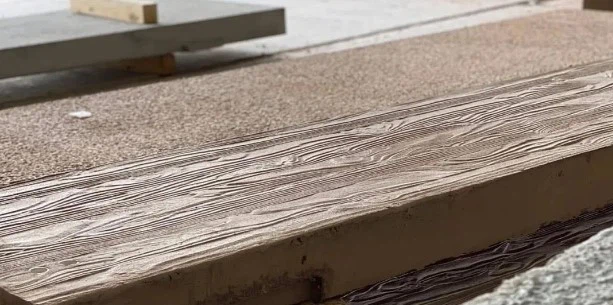
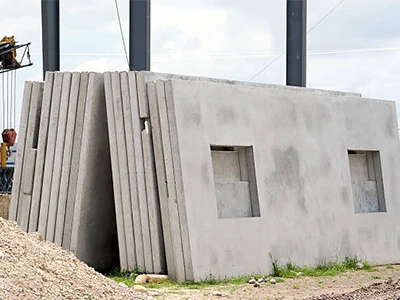
Now, let's move up a notch in complexity. Precast concrete slabs (or slabs) typically cost between $450 and $750 per cubic meter. This is a broader cost range because there is a wider range of options and factors that affect the total cost. If you consider the difference between a 6-inch-thick panel versus a 12-inch-thick panel, the labor costs for both thicknesses are roughly the same. You might have more rebar, obviously, you're going to have twice the concrete material, but the total labor cost is spread over twice the cubic meters, which equates to a lower cost per cubic meter for thicker panels. Other factors that affect cost may be the number of miscellaneous steel inserts or connecting components cast into the panel. Are these parts pure steel, galvanized steel, or stainless steel? Are component inventory items off-the-shelf, or custom-made for the project? Concrete slabs also come in a variety of finishes and edge treatments, depending on the end use of the product. If the panels require beveled edges, a specific textured finish, or an overall color, obviously those material and labor costs start to add up. When you get into the actual architectural finishes, the cost per cubic yard can increase dramatically to over $750 per cubic meter, depending on how professional the finished product is expected to be.
Cost of Standard Manholes, Junction Boxes, Catchment Bases and Water Inlets

Next, we will focus on the general costs of more traditional prefabricated structures used for stormwater drainage purposes. Prices for prefabricated manholes, junction boxes, sumps, and inlets typically range from $700 to $1,000 per cubic meter. Typically, these structures are standardized through city or state codes, eliminating the need for design analysis and custom CAD drawings. This standardization also allows for standardized casting molds and a more repetitive production process, which helps lower labor costs per cubic yard. These drainage structures also have few embedded components other than typical lifting anchors. In addition to the cost of this range, most of these structures come with cast iron or steel components such as manhole covers or drainage grates. A good rule of thumb is to assume that this cast iron access assembly will cost $300 to $500 per structure.
Cost of Custom Precast Drainage Structure

So what is the impact when a project requires more job-specific concrete structures? Often, standard "urban" catchment basins are insufficient for many different reasons:
The size and angle of the connecting tube require a larger junction box base.
Traffic load conditions are heavier than standard HS-20 loads.
The top elevation of the structure is crucial and requires precision.
Stormwater may contain contaminants that require a more durable concrete mix or interior coating.
Surrounding soil conditions may require sulfate-resistant concrete or exterior protective coatings.
Whatever the reason, when a more specific structure is required, a more labor-intensive set-up of the casting mold is often required, as well as additional engineering and CAD work. In this case, the benefit is to get a prefabricated structure to meet the exact needs of your project, rather than modifying your project requirements just to accommodate standard catch basin dimensions. The downside is that custom prefabricated structures can cost more and require longer lead times. As you can see, there are several factors that influence the cost of a custom concrete drainage structure, but a typical cost range is $750 to $1,100 per cubic meter of concrete...again, don't forget the additional $300 to $1,100 per cubic meter of concrete... $500 for structural steel access components.
Cost of standard utility banks, electrical manholes, communications manholes, and hand holes

Adding another step in complexity, we'll look at structures commonly used for underground power, power, and communications distribution in the "dry utility" market. Typical costs for utility vaults, electrical manholes, communications manholes, and handholes range from $700 to $1,100 per cubic meter. While these structures may be very similar to standard prefabricated drainage structures, they often require more built-in items to accommodate connections to buried pipes and to help facilitate the installation of electrical or communications wires. These embedded items may include anchors to pull cables, electrical grounds, conduit couplers (called terminators), cast-in threaded inserts to accept equipment mounting bolts, and flooring to help pull water away from the structure Sump. Another large cost associated with these utility structures is access covers or hatches. Due to the need for more frequent access to these structures, access hatches are typically galvanized steel or aluminum and require more safety features than typical stormwater manholes. These access hatches can vary widely, with size, materials, and load ratings being the major cost differences. These hatches can cost anywhere from $300 to $1,500 per structure, with hatches being smaller at the low end, 2 feet by 2 feet, and 4 feet by 8 feet at the high end of the cost range.
Cost of custom utility structures

As with custom drainage structures, the cost of underground concrete utility structures with more custom sizes and features can vary. Some common factors that affect costs include:
Type of bracing and racking system used to support cables.
The pulling force and materials required to pull iron.
The sump is configured to facilitate the pumping of the structure.
The depth of the pipe bank requires a deeper structure and creates higher lateral earth and water pressures on the vault.
Traffic load conditions are greater than normal HS-20 loads such as heavy equipment, aircraft, heavy forklifts, and rolling cranes.
Reinforcement requirements for non-ferrous metals.
Requirements for grounding devices integral to prefabricated vaults.
Exterior coatings or the use of additives to seal micropores in concrete due to contaminants in the soil.
Of course, these different factors will significantly affect the cost, but the typical cost range for these custom utility structures is $750 to $1,300 per cubic meter, plus access hatches described in the previous section add $300 to $1,500 per structure.
Cost of concrete paving foundation (foundation)

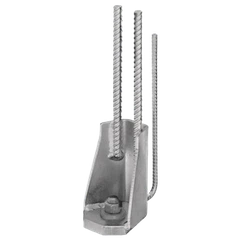
Precast concrete foundations come in a variety of shapes and sizes, with costs ranging from $800 to $1,000 per cubic meter of concrete. Typically, these foundations will be embedded with galvanized steel or anchor bolts, which will add another $50 to $300 to the cost of each foundation installation associated with the foundation. The type of steel, thickness of the plate, and anchor type and size all have an impact on the cost of cast-in welded plate. Typically, these embedded welding plates cost between $50 and $150 each. The casting of anchor bolts can vary greatly depending on the diameter, length, and grade of steel required. Typically, anchor bolts cost between $20 and $65 each, and typically dispersed anchors will have 4 to 6 of these anchor bolts per support base. Extension bases can come in endless configurations and sizes. The base plate of the foundation can be made in rectangular or round sizes of any thickness, while the raised base of the foundation can also be made in round or rectangular shapes at any necessary height. Sometimes a design requires multiple bases to be on the same footing plate, which can be easily accommodated in a prefabricated set-up. Another important note is that if the project has multiple extended bases of the same size, you can save significantly on the cost of the casting mold setup. When determining the bunk foundation layout for your project, it is best to consult with your local precast to determine the most economical option.
Concrete Sump Cost
Concrete sumps typically cost between $750 and $1,200 per cubic meter. Precast concrete sumps range in size from as small as 2 feet by 2 feet to very large sumps with length and width dimensions of 30 feet or more. Often, these larger sumps can be difficult to prefabricate due to transportation challenges. When smaller dimensions in width or length are greater than 16 feet, shipping costs begin to grow exponentially due to the required permits and escorts. If the volume of the sump is more important than the shape, precast can often be incorporated into the design by creating a rectangular design and limiting the interior width of the sump to 10 feet. By increasing the length and depth, the desired sump volume can be achieved, and you gain the benefit of reduced transportation costs (transportation costs are discussed below in this article). Sumps usually have multiple manhole access openings as well as vent ducts and inspection openings. Depending on the type of material (aluminum, steel, cast iron) and the size of the pass, the cost will be between $300 and $1,500 per pass. Vent ducts cost between $40 and $100, depending on size and material. Another potential cost associated with the oil pan may be the lining of the inner walls. In many cases, the water contained in the sump may contain abrasive chemicals, requiring a liner coating to be sprayed or the liner material to be integrally cast into the concrete wall. These lining systems can vary greatly depending on the desired application, but the cost of an interior lining can range from $20 to $60 per square foot of surface area.
Cost of Custom Trenching

Concrete trenches are used in a variety of applications, including protecting utility lines such as water or air, chemical pipes, electrical and communications lines, power transmission lines, or stormwater conveyance. We divide these ditch systems into two categories, utility ditches, and drainage ditches, and provide you with a cost breakdown for each category. Trench systems are typically priced by linear feet, so before we dive into the cost per cubic yard of concrete, let's address the next question you may have. "How thick do we estimate the walls and floors of the concrete trench should be?"
Cost of Utility Trenching

Concrete utility trenches for the trench foundation portion typically cost between $800 and $1,100 per cubic meter. The main factor that affects this cost range is the system used to secure the pipe supports or brackets. This can be as simple as providing threaded inserts cast into the wall to accept bolts. Other methods may include providing a cast support system, such as Unistrut, or providing cast-in welding plates to allow for welded connections to pipe supports. Materials range from standard black steel to stainless steel to non-metallic materials such as fiberglass. The length between pipe supports required usually depends on the type of pipe material used and the amount of support required. We see support systems ranging from 5 feet to 20 feet between supports.
Concrete Stormwater Gutter Cost

A trench used solely for water conveyance purposes has fewer variables. Concrete gutters cost between $750 and $1,100 per cubic meter of concrete.
Gutters usually have a steel or iron grating system to allow stormwater runoff into the gutter system. Again, both loading conditions and width play an important role in determining the final cost of these grating systems. The cost of a gutter grating system ranges from $100 to $800 per linear foot of trench, depending largely on the width of the trench.
Delivery costs of Precast Structures

So now that you know how to accurately estimate the cost of a precast structure...your next question is "How much extra will I have to pay to have my precast concrete structure shipped to my job site? We're here to help too To answer this question, you can find information on best practices for shipping prefabricated products here.
Just like any other shipping, delivery costs are a function of weight and distance. Being able to utilize the full capacity of a flatbed truck will reduce the cost per cubic yard of concrete. Typically, a flatbed truck can carry about 46,000 pounds, so filling the truck as close to this load capacity as possible is ideal. Department of Transportation regulations do not allow you to add additional products to your truck when it begins to exceed its load limit. These rules allow transportation of a single structure that exceeds the load limit, but in this case, allowing the load will incur additional charges. These additional fees are created as a way to "tax" heavier loads and provide more funding for road maintenance.
Assuming the structure is within normal shipping parameters, less than 9 feet wide, and weighs less than 46,000 pounds, you'll pay $100 to $100 per load if you're within a 575-mile radius. The further the job site is from the production plant, the higher the cost. Delivery costs range from $100 to $200 per load for 850 to 1,125 miles. When you travel more than 200 miles, costs can vary depending on the trucking market. Interstate trucking brokers can obtain backhaul rates that significantly reduce shipping costs.
If your cargo is significantly less than a typical 18-wheel flatbed load, smaller trucks and trailers are available at a lower price. For example, if you have a 7,000-pound structure, your delivery cost per load within a 450-mile radius will be approximately $700 to $100.
How Big and Heavy are Precast Concrete Structures?
A question we often hear is "How big and heavy can a precast concrete structure be and still be able to transport it? Often, people are surprised to hear that we can transport structures that are over 200,000 pounds and over 100 feet long. Yes, when The costs start to add up dramatically as you get into these megastructures, but here's some guidance on what to expect.
Extra wide transport

Standard shipping widths that do not require a permit are 8 feet 6 inches or less. Structures wider than 8 feet to 6 inches but not wider than 12 feet require an overwide permit ($550 to $825). Buildings wider than 12 feet but not wider than 14 feet require a permit and police escort ($800 to $1,400). Structures wider than 14 feet but not more than 16 feet require a permit and two police escorts ($1,700 to $2,000), and products wider than 16 feet require a permit, escort, and close coordination with the Department of Transportation, which may cost more than $2,200.
super high transport

Similar to the width plan, truckloads with an overall height from the ground of 14 feet or less are considered standard. Shipments over 14 feet tall (including product and trailer height) are more complex and depend on the route from the production plant to the job site to determine cost. Often, taller loads must be rerouted to avoid bridges and may require bucket elevator escorts to raise overhead power and communications lines during transport. Fortunately, most precast concrete structures can be designed and broken down into shorter sections to avoid these situations.
Overweight cargo

We all know concrete is heavy...and strong. That's part of the reason why it's such a great building material, but it can pose challenges when it comes to transporting it. As mentioned above, a typical flatbed truck has a load capacity of around 46,000 pounds, depending on the truck. Individual structures that are heavier than their load capacity will require an overweight permit. This overweight permit varies but can cost between $300 and $350 for loads between 46,000 pounds and 60,000 pounds. The cost of the permit will increase as weight continues to increase, and there may be other costs that come into play when you consider other factors such as delivery routes, load capacity at bridge crossings, and the weight of each wheel on the trailer. When you start to load over 85,000 pounds, a specialty trailer with extra axles is needed to handle the load. When you exceed 175,000 pounds, more specialized equipment is required to handle the cargo, and additional costs can range from $5,000 to $20,000 per load, depending on length, width, and height.
These guidelines are designed to help you create a cost estimate for your next precast concrete project. As you can see, many variables affect the overall cost, but by working with a local fabricator when designing your project, you can eliminate unnecessary costs and build in powerful features to reduce on-site installation costs.