





Precast concrete has transformed modern construction through offsite fabrication of structural and architectural components with enhanced quality and efficiency. But what exactly is precast concrete and what unique benefits does it offer?
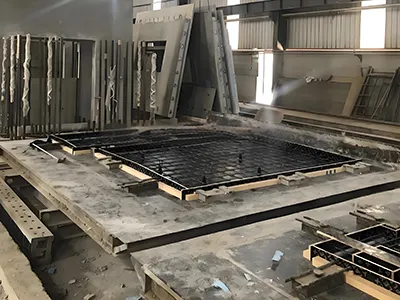
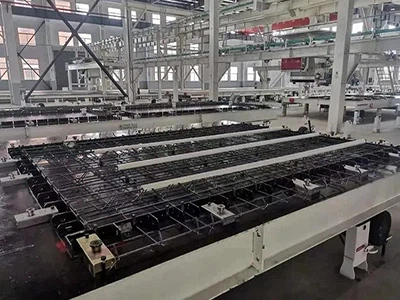
Put simply, precast concrete involves casting concrete in reusable factory molds rather than traditional on-site formwork. The prefabricated components are cured under controlled conditions before transport to job sites for rapid assembly. This fundamental process facilitates considerable advantages.
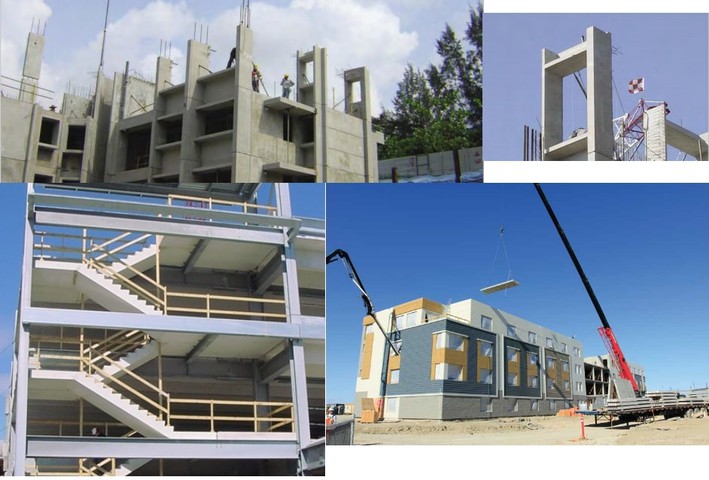
Brief History of Precast Concrete
While the basic concept of precasting concrete dates back thousands of years to Ancient Roman building programs, prevailing modern methods trace roots to early 20th-century England.
Liverpool-based engineer John Alexander Brodie is credited with pioneering the first major use of prefabricated concrete. Between 1905-1906, Brodie employed precast reinforced concrete panels to construct factory and stable buildings in the city. This influential early demonstration seeded uptake across the UK and Europe over subsequent decades.
Post-World War 2 construction booms particularly drove more refined techniques and growing market adoption. Beginning in the 1960s and 70s, precast concrete's advantages began resonating with North American developers, architects, and engineers. This catalyzed exponential growth in global prefabrication.
Fast forward to today, precast concrete has cemented status as a foremost construction material around the world. The total global precast market size reached $136 billion in 2021, expanding by over 5% annually.
Core Benefits of Precast Concrete
The pure versatility of precast concrete products empowers numerous structural and aesthetic benefits over site-cast methods:
Speed - Concurrent manufacturing and site prep compresses schedules drastically. Components then enable rapid fitting, protecting unfinished work faster.
Quality - Automated, enclosed factory conditions ensure consistency in mix designs, ingredients, curing environments, and finish quality.
Strength - Engineered precast components offer high strength-to-weight ratios given optimization from design to production.
Durability - Decades of proven real-world installations demonstrate exceptional lifespans across climates.
Sustainability - Greener material mixes, construction waste reduction, and resilient structures promote sustainability.
Design Flexibility - Manufacturing capabilities today facilitate virtually endless custom architectural expressions.
Types of Precast Concrete Structures
Beyond basics like site slabs, precast concrete has evolved into a versatile catalog of structural and architectural components that empower whole modern buildings. Different precast products serve defined roles spanning critical structural support to customizable aesthetic enclosures.
Precast Concrete Wall Panels
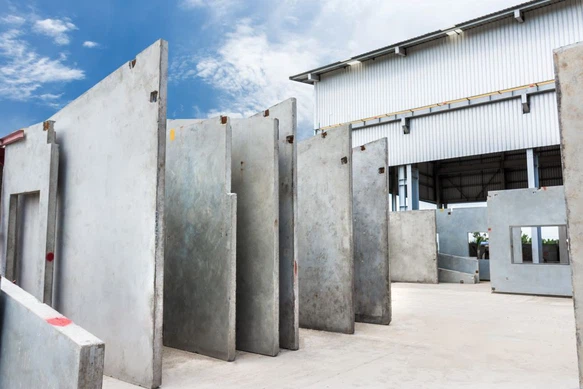
Wall panels constitute the most prolific and diverse architectural precast concrete product. As fundamental enclosure elements, they create durable, efficient exterior barriers and interior partitions:
Exterior Applications
Curtain wall façades
Load-bearing exterior walls
Insulated panels enhance insulation
Rain screen cladding with specialty finishes
Interior Applications
Fire-rated partition walls
Shear walls reinforcing structure
Load-bearing interior walls
Finished hallways and stairwells
Wall panel selection factors span structural performance, space programming priorities, thermal factors, moisture protection, available budgets, and visual design intent.
Precast Concrete Columns and Beams
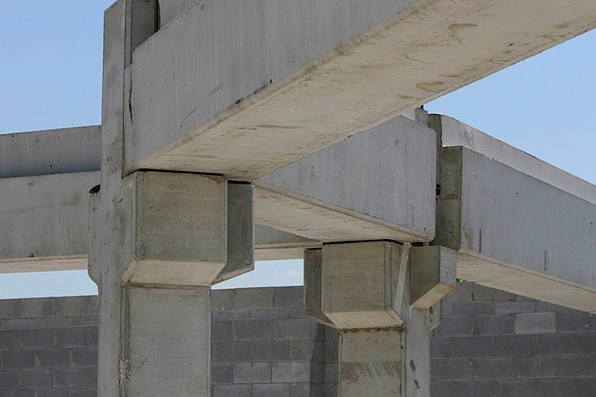
While wall panels facilitate enclosure, columns, and beams comprise the structural skeleton. Engineered precast versions offer:
Columns
Custom load-bearing design
Quick installation with pre-set anchor bolts
-Economical long-span capabilities
Beams
Long spans without intermediate columns
Hollow sections reduce weight
Double tee and inverted tee configurations
Together, precast columns and beams establish robust yet economized frameworks for broad functional programming flexibility.
Precast Concrete Floor and Roof Slabs

Serving similar purposes as conventional site-poured slabs, precast concrete floor, and roof slabs introduce key advantages:
Hollow Core Planks
Composite precast planks with continuous voids
Achieve longer spans, higher strength
Enable integrated electrical conduits
Solid Slabs
Shorter spans, heavier loads
Can incorporate interlocking shear keys
Half Slabs
Incorporate cast-in-place concrete topping
Balance prefab efficiency with finish options
For designers, choices balance structural optimization, speed of installation, lifespan serviceability, and construction budget factors.
Architectural Precast Components
Beyond basic enclosure and structural functions, specialty architectural precast concrete facilitates stunning aesthetics inside and out through:
Custom Wall Features
Cornices, trim, reveals, relief patterns
Brick/stone veneers, exposed aggregate
Artistic wall panels, sculptural accents
Landscaping Elements
Planters, benches, retaining walls
Fountains, lighting fixtures
Signage, monuments, ramps
Stairs and Railings
Grand staircases
Escalator sidewalls
Ramps, railings, banisters
The options for unique architectural expression are nearly endless.
Precast Concrete Retaining Walls

Serving vital functionality, precast retaining walls leverage durability, customizable engineering capacities, and economies of scale. Interlocking precast retaining wall systems resist lateral soil loads using:
Gravity design - sheer weight
Mechanical stabilization with geogrids
Cantilevered designs
Overall, the range of precast concrete products empowers everything from soaring towers to intricate detailing across the built environment.
You're right, my apologies. Here is an expanded 1,200-word version of the precast concrete building systems section:
Precast Concrete Building Systems
Purpose-engineered precast concrete building systems unite manufactured structural and architectural components into holistic solutions for rapid yet resilient structures. As design considerations traverse master planning, specialized performance criteria, constructability sequencing, and encapsulated MEP systems, integrated precast empowers multi-level advantages over individual elements.
Precast Concrete Large Panel Systems
Large panel systems assemble expansive precast concrete wall units, slabs, and optional columns into robust, flexible structures. Modular panels multitask simultaneous structural and space-enclosing roles across stories.
Wall Panels
Spanning up to 5-10 ft. across, exterior and core wall panels define the primary superstructure while partitioning interior zones. Insulated variants enhance enclosure thermal performance.
Structural Engineering Factors:
Reinforcing for stacked gravity loads
Lateral force resistance through diaphragm actions
Stability connections to foundations
Floor + Roof Slabs
Hollow core precast concrete planks with continuous internal tubular chambers optimize lightweight long-span capability. Topping various mixes enables flooring or roofing finishes.
Structural Engineering Factors:
Span-to-depth ratios balancing loads, serviceability, and cost
Composite design with structural topping slab
Coordinating slab penetrations, depressions, and openings
Optional Columns + Beams
Supplementary precast columns and perimeter beams augment superstructure framing.
Structural Engineering Factors:
Coordinating load paths with wall panels
Designing moment-resisting connections
Accommodating MEP services integration
Joints + Connections
Critical embedded ties interlink units with structural continuity. Families suit movement, moment-resisting, and gravity-only functions.
Structural Engineering Factors:
Multi-axis differential building movement
Maintaining lateral force load paths
Constructability, tolerances, and erection clearances
Arrangements
Based on primary load paths, configurations include:
Cross Wall – Orthogonal panels omnidirectionally distribute loads
Longitudinal – Wall panels run horizontally on main axes
Two-Way – Panels intersect sharing bi-axial demands
Benefits
Ideal large panel systems demonstrate considerable real-world performance:
Rapid Site Assembly - Easily connected, standardized components
Thermal Efficiency - Enhanced insulation from enclosure continuity
Flexible Adaptability - Expansibility of modular assemblies
Applications
Hospitality, student housing, multifamily residential, and flexible commercial spaces suit manufacturing repetition with future adaptability.
Integrated MEP Systems
Coordinated placement of MEP systems within floor slab voids and walls accelerates enclosure.
Precast Concrete Connections
The structural viability of precast concrete buildings hinges upon load-transferring connections between discrete assembled components. Through articulated interface design, these critical nodes govern strength, stability, movement accommodation, and constructability.
Precast Beam-Column Connections
Transmitting gravity, wind and seismic forces between lateral frames necessitate multi-axis continuity. Cleated connections offer cast-in steel cleats on elements interfacing like puzzle pieces, enabling structural continuity but a costlier, harder erection. Meanwhile, sliding connections utilize steel plates with slotted holes allowing longitudinal drift for easier construction but less moment resistance. Additionally, seated connections employ beam ends resting in notches atop column corbels for forgiving construction tolerance but vulnerability instability.
Precast Slab-Column Connections
Connecting floor and roof slabs to columns also balances priorities. Gravity connections enable direct vertical transfers through bearings or hooks for straightforward design accommodating orthogonal actions. Lateral load connections incorporate shear tabs, performed ribs, or headed studs to resist horizontal forces from wind and seismic events.
Precast Wall Panel Connections
Vertical joints enable stacking multi-story continuity. Tongue-and-groove configurations utilize interlocking vertical chases to transfer shear while allowing construction stage dimensional flexibility. Deep nib joints employ mass concrete inserts to provide stiffness yet accommodate minor deviations. Horizontal joints tie floors diaphragmatically. Steel ties embed plates with rods/bolts to link units for flexibility in construction staging. Embedded connections are cast in components to avoid retrofits but require precise dimensional coordination.
Advantages of Precast Concrete Structures
Prefabricated concrete construction introduces opportunities for better-quality, better-performing, and faster projects across crucial metrics versus conventional building approaches.
Faster Project Timelines
While site work progresses in parallel, precast concrete components get manufactured offsite in advance. This compressing of schedules via overlapping workflows later enables rapid on-site assembly of discrete building blocks. Erecting manufactured pieces bypasses needing to wait for poured-in-place concrete curing.
Lower Construction Costs
necessitating less equipment for reduced site logistics, operations, and supervision. Swift protective enclosure then safeguards other vulnerable trades, preventing delays or rework. Additionally, precast concrete allows cost efficiencies from higher-volume mass production.
Quality and Consistency
Automated factory conditions ensure consistency in ingredient mixing, curing environments, and finish quality. Components get engineered to exact calculations. Continuous feedback monitoring and production refinements ensure exceptional reliability.
Enhanced Sustainability
Made from recycled inputs, precast concrete itself is fully reusable or recyclable later. The durability of decades of intensive service also conserves resources over whole life cycles. Precision manufacturing further minimizes wastage.
Safety
With less activity needed high up on congested sites, precast improves construction safety. Solid components also enable inherently safer connections. Precast removes hazards of pouring and finishing wet concrete overhead.
Applications and Markets
With advantages spanning quality, schedule, and performance, precast concrete solutions apply broadly across vertical sectors from commercial real estate to transportation mega projects.
Commercial and Office Buildings
Rapid yet resilient building enclosures maximize revenue potential in commercial real estate where time truly is money. Architectural precast façades, floors, and elevator/stair cores accelerate rentable occupancy. Versatile finishes suit branding enhancements.
Industrial Warehouses and Manufacturing Plants
Harsh indoor environments demand exceptional material durability and strength to withstand heavy vehicle traffic, temperature swings, and corrosives. Custom structural configurations also facilitate specialized spaces without delays around production bottlenecks.
Multi-Unit and High-Density Residential Development
Quick, high-quality building envelopes allow faster occupancy and revenue generation. Material density also innately dampens sound between units. Cost efficiencies of manufacturing repetition suit residential projects with design variety.
Institutional Buildings
Schools, universities, hospitals, and similar institutions balance speed for demanding capacity expansion schedules with necessary customization. Expandable modular construction better accommodates future growth or renovations.
Transportation Infrastructure
Bridges, tunnels, and transit complexes similarly harness the advantages of precast concrete across scales from components to mega projects with resilience, compressive strength, and connectivity. Examples span retaining walls, sound barriers, marine pilings, and armoring.
Market Projections
The precast concrete industry saw over 5% global annual growth rates in recent years. The total global precast market size will reach $136 billion in 2021. Industry analysts project the rapid pace to continue with similar or greater cumulative expansion by 2027 resulting from proliferation across sectors.
Future of Precast Concrete
With growing momentum led by technology shifts, design innovations, and sustainability priorities, the future for precast concrete looks brighter than ever. Coming advances will unlock new levels of performance, customization, and integrated potential.
Offsite and Modular Construction
Aligning with overarching trends toward design, engineering, and production efficiency, the offsite modular building embraces the controlled environment and logistics optimization of full factory fabrication. Entire building volumes get manufactured and then transported to sites for rapid fitting. This builds upon just-in-time coordination efficiencies already mature in precast projects.
Automation and Digital Fabrication
Automation and robotics will enhance precision, compliance, speed, and outputs for precast through automated admixtures and smart-sensor production monitoring. Parametric modeling enables intricate 3D design iterations while CNC machines facilitate mass customization. Together, these heighten geometrical complexity, optimization, and project customization possibilities.
New Materials Science and Concrete Properties
Advancements in high-strength and ultra-high-performance concrete mixtures will expand structural capabilities while self-consolidating varieties needing less labor improve constructibility. Carbon-infusing admixtures like CarbonCure similarly reduce precast emissions. Nanotechnology and engineered smart aggregates may even unlock functionally graded self-monitoring or self-healing concrete eventually.
Connections and Building Systems Integration
Hybrid precast/cast-in-place framing balances strengths while improved component connections facilitate resilience. Embedding coordinated building services like HVAC, electrical and plumbing early in precast elements will further transform delivery models shifting more activity offsite.
Conclusion
From its origins centuries ago, precast concrete continues to progress rapidly as a versatile construction solution. With inherent advantages over traditional cast-in-place methods in quality, efficiency, and performance, prefabricated concrete components empower state-of-the-art buildings across sectors.
Holistic structural and architectural precast systems take benefits even further through purpose-engineered optimization. Our decades of experience with large-panel systems, component framing, and other assemblies make processes highly refined. Contact our team to explore the ideal options for your next project!
FAQs About Precast Concrete Structures
1. How is precast concrete manufactured?
Precast concrete is made by pouring concrete mixes into reusable molds in a controlled factory setting for precision. After precise curing, molds get stripped and products transported.
2. What are the main advantages of using precast concrete in construction?
Major advantages include speed, quality, strength, sustainability, resilience, design flexibility, and cost savings versus traditional cast-in-place.
3. What kinds of structures use precast concrete?
Applications span commercial, institutional, industrial, residential, civic, transportation and special uses taking advantage of versatility.
4. What are some types of precast concrete products?
Columns, beams, walls, floors, cladding, stairs, vaults, channels, burial containers, barriers and much more.
5. How long does precast concrete last?
Thanks to resilient material properties and controlled production, properly made precast concrete lasts over a century in service across applications.
6. Does precast concrete get better with age?
Yes – Preset concrete grows stronger over decades as molecular bonds continue to proliferate inside. Material density also enhances durability.
7. What is the largest precast concrete structure ever built?
Records continue getting broken, but examples of massive structures include immense dams like China's Three Gorges Dam and long-span stadiums like the Shanghai Dome in China spanning 616 ft (189 m).
8. Is precast or cast-in-place concrete better?
Precast concrete generally proves superior in finish quality, structural performance, speed, customization potential and sustainability. But projects often utilize both strategically.
9. How thick are precast concrete walls?
Standard precast wall panels range from about 2 inches up to 10 inches thick or greater depending on loading needs, insulation requirements, and aesthetics.
10. How much does precast concrete cost?
As a whole building solution accounting for savings, precast structure cost is generally comparable on a square-foot basis to cast-in-place concrete. Mass production along with accelerated timelines offset higher material expenses.