





Introduction
Rebar tie wire may seem simple, but choosing the wrong gauge can affect both construction efficiency and reinforcement stability. If the wire is too thin, it may break during tying; if it is too thick, it can be difficult to twist tightly and may increase manual labor.
In concrete construction, 16-gauge and 18-gauge tie wire are the most commonly used options. The right choice depends on rebar diameter, reinforcement density, tying method, site conditions, and whether the work is done manually or with automatic tying tools.
Key Takeaways
Choosing the right rebar tie wire gauge is all about balance. The wire must be strong enough to hold the reinforcement securely, while still remaining flexible enough for fast and smooth tying. For most general concrete projects, 18-gauge tie wire is practical and easy to handle. For heavier reinforcement areas, such as rebar cages, beams, columns, and foundations, 16-gauge tie wire often provides stronger holding performance.
What Does Tie Wire Gauge Mean?
Tie wire gauge refers to the thickness of the wire. In general, the smaller the gauge number, the thicker the wire. For example, 16-gauge tie wire is thicker and provides a stronger holding force than 18-gauge tie wire, while 18-gauge wire is thinner, softer, and easier to twist by hand.
Gauge directly affects both construction efficiency and tying performance. Thicker wire is suitable for heavy reinforcement structures such as rebar cages, beams, columns, and foundations, but it requires more effort to twist. Thinner wire is faster to use and works well for slabs, walls, and light to medium reinforcement, but it may not provide enough holding strength for heavy-duty applications.

Common Tie Wire Gauges Used for Rebar
16-gauge tie wire is thicker and stronger, making it suitable for heavy reinforcement cages, beams, columns, foundations, and areas where the rebar needs a firmer hold. It provides better stability, but it may require more effort when twisted by hand.
18-gauge tie wire is one of the most common choices for general concrete work. It offers a good balance between strength and flexibility, making it easier to twist during manual tying. It is often used for slabs, walls, light to medium reinforcement, and daily construction tasks.
19–21 gauge tie wire is thinner and more flexible. It is often used with automatic rebar tying tools or for light-duty tying, where high holding strength is not the main requirement.
14-gauge tie wire is stronger than 16-gauge but harder to handle manually. It may be used for special heavy-duty fixing, but it is not usually necessary for standard concrete reinforcement work.
16 Gauge vs 18 Gauge Tie Wire
|
Comparison Factor |
16 Gauge Tie Wire |
18 Gauge Tie Wire |
|
Thickness |
Thicker wire, stronger structure |
Thinner wire, more flexible |
|
Tying Strength |
Higher holding strength |
Moderate holding strength |
|
Flexibility |
Less flexible, harder to twist |
More flexible, easier to twist |
|
Manual Tying Efficiency |
Slower for manual tying |
Faster and easier for repeated tying |
|
Best Applications |
Heavy rebar cages, beams, columns, and foundations |
Slabs, walls, light to medium reinforcement |
|
Labor Fatigue |
Higher effort required |
Lower effort required |
|
Material Use |
Uses more material per meter |
Uses less material per meter |
|
Cost |
Usually, higher material cost |
More economical for general work |
|
Stability |
Better for heavy or dense reinforcement |
Suitable for general reinforcement stability |
|
Recommended Use |
Choose when strength is more important than speed |
Choose when flexibility and efficiency matter more |
How to Choose Tie Wire Gauge Based on Rebar Size
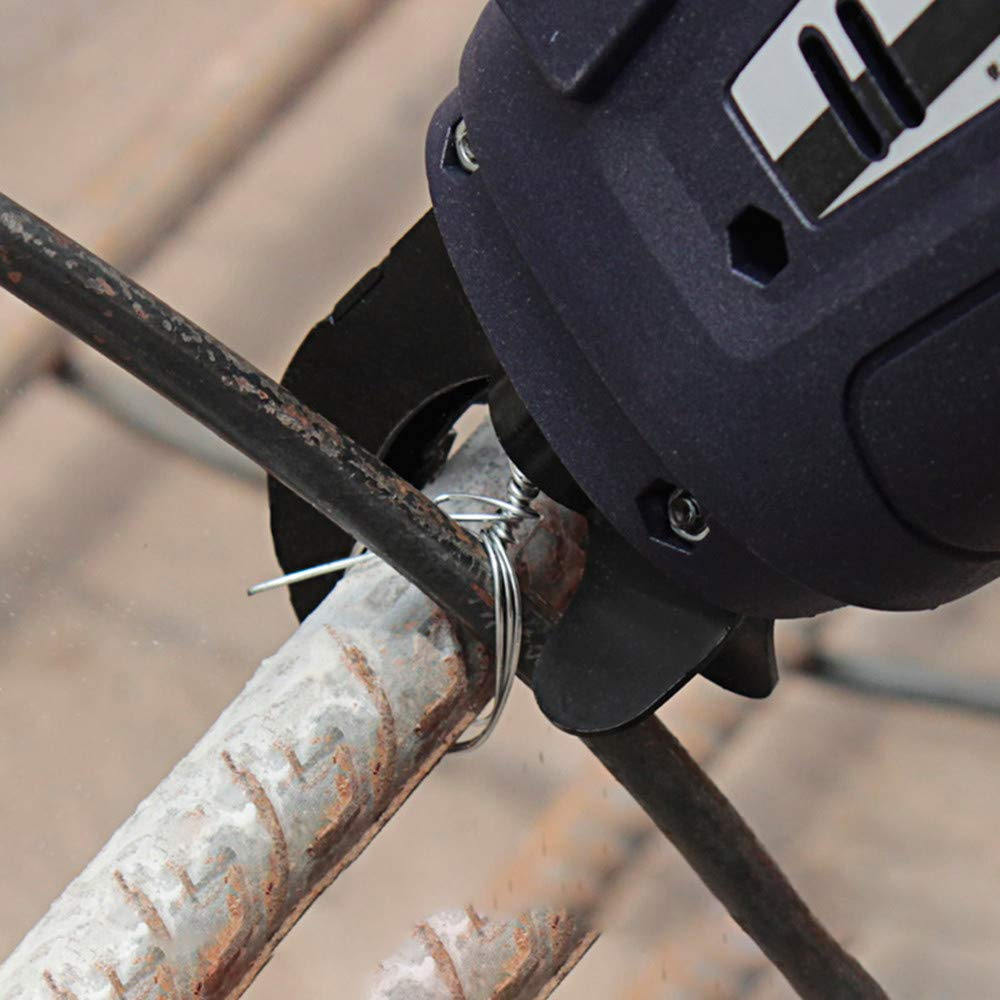
For Small-Diameter Rebar
For smaller rebar, 18-gauge tie wire is usually sufficient. It offers good flexibility, is easy to twist, and is suitable for general slabs, walls, and light reinforcement work.
For Medium Reinforcement Projects
Both 16-gauge and 18-gauge tie wire can be used. If the rebar layout requires higher stability, 16-gauge wire is a better choice. If the reinforcement is lighter and requires many quick ties, 18-gauge wire is more efficient.
For Heavy Rebar Cages, Beams, Columns, and Foundations
16-gauge tie wire is often the safer option. Its thicker diameter provides a stronger holding force and helps keep heavy reinforcement stable before concrete pouring.
For Dense Reinforcement Layouts
In narrow spaces, tie wire needs to balance strength and flexibility. This allows workers to create secure ties without slowing down the construction process.
For Automatic Rebar Tying Tools
Always follow the wire gauge recommended by the equipment manufacturer. Using incompatible wire may cause tool jamming, weak ties, or even equipment damage.
Does Thicker Tie Wire Always Mean Better Performance?
Tie wire is not always better just because it is thicker. Although a thicker wire can provide a stronger holding force, it may reduce construction efficiency if it exceeds the actual project requirements. An overly thick tie wire is harder to twist by hand, requiring more effort from workers. In large-area or repetitive tying work, this can slow down progress and increase labor fatigue.
For slabs, walls, or simple reinforcement layouts, overly thick tie wire often increases material cost without delivering a clear performance advantage. In many cases, a thinner and more flexible wire is easier to handle while still providing enough stability before concrete pouring.
Therefore, the tie wire gauge should be selected based on rebar diameter, reinforcement density, tying method, and application conditions, rather than simply choosing a thicker wire.
Manual Tying vs Automatic Rebar Tying Tools
|
Comparison Factor |
Manual Tying |
Automatic Rebar Tying Tools |
|
Common Wire Gauge |
Usually uses 16-gauge or 18-gauge tie wire |
Usually requires specific wire coil sizes |
|
Efficiency |
Slower for large projects |
Much faster for repeated tying |
|
Control |
Better control for tight or special ties |
More consistent but less flexible |
|
Best Applications |
Beams, columns, foundations, heavy rebar cages |
Large slabs, floors, and foundation mats |
|
Wire Requirements |
More flexible in wire choice |
Requires stable diameter, flexibility, and a smooth surface |
|
Labor Intensity |
Higher labor demand and fatigue |
Reduces worker fatigue |
|
Tying Strength |
Stronger ties can be made manually |
Suitable for standard repeated ties |
|
Tool Cost |
Low tool cost |
Higher initial equipment cost |
|
Risk of Tool Issues |
Low; simple hand tools |
May jam if the wire size or quality is unsuitable |
|
Recommended Use |
Best for critical, heavy-duty, or irregular areas |
Best for high-volume repetitive tying |
Material Type Also Affects Gauge Selection
Black Annealed Tie Wire
Black annealed tie wire is soft and easy to twist. It is suitable for manual tying, slabs, walls, and general concrete construction. For repeated hand tying, it is usually easier to use and helps improve work efficiency.
Galvanized Tie Wire
Galvanized tie wire has a zinc coating for better corrosion resistance. It is suitable for outdoor, humid, or moisture-exposed environments. Compared with black annealed wire, it is usually slightly stiffer and may require more effort during manual tying.
PVC-Coated Tie Wire
PVC-coated tie wire is suitable for coastal, chemical, or highly corrosive environments. Its outer coating improves protection, but it may also affect flexibility and actual wire diameter.
Selection Tip
When choosing tie wire, do not consider gauge alone. The working environment, tying method, corrosion resistance, labor efficiency, strength, flexibility, and durability should all be considered together.
Conclusion
Choosing the right rebar tie wire gauge is all about finding the right balance. The wire must be strong enough to hold reinforcement securely, while still being flexible enough for fast and smooth tying.
Before purchasing, consider the rebar diameter, reinforcement density, tying method, site environment, and tool compatibility. Selecting the proper tie wire gauge can improve installation speed, reduce wire breakage, and keep reinforcement stable before concrete pouring.
FAQ
Q: What gauge tie wire is most commonly used for rebar tying?
A: 16-gauge and 18-gauge tie wire are the most common choices for rebar tying. 18-gauge wire is often used for general concrete construction, while 16-gauge wire is better suited for heavier reinforcement structures.
Q: Is 16-gauge tie wire stronger than 18-gauge wire?
A: Yes. 16-gauge tie wire has a thicker diameter and generally provides stronger holding performance. However, it is slightly less flexible and may require more effort during manual tying.
Q: Can I use 18-gauge tie wire for tying rebar?
A: Yes. 18-gauge tie wire is suitable for many common concrete construction applications, including slabs, walls, and light to medium reinforcement work.
Q: What gauge tie wire is best for heavy rebar cages?
A: For heavy rebar cages, 16-gauge tie wire is usually the better choice because it provides stronger fastening and helps maintain better structural stability before concrete pouring.
Q: What gauge tie wire should be used with automatic rebar tying tools?
A: Automatic rebar tying tools usually require specific wire coils and wire diameters. Always follow the wire specification recommended by the tool manufacturer.
Q: How do I choose the right tie wire gauge?
A: When selecting tie wire, consider rebar diameter, reinforcement density, tying method, site environment, tool compatibility, and required holding strength. For general projects, 18-gauge wire is usually practical; for heavier reinforcement structures, 16-gauge wire is often more reliable.