




Concrete is the backbone of modern infrastructure and plays a vital role in construction, but the way it is reinforced has undergone a dramatic change. For decades, steel bars dominated the construction industry, providing strength and structure. However, this year, fiber-reinforced concrete (FRC) has emerged as a favorite among architects and engineers for its improved crack resistance and flexibility.
What Is Fiber Reinforced Concrete?
Fiber-reinforced concrete (FRC) is a new type of reinforced composite building material. It uses cement paste, mortar, or concrete as a base material, uniformly incorporating short, discontinuous fibers or continuous, coarse synthetic fibers, such as steel, glass, synthetic, or natural fibers, to significantly enhance the overall performance of concrete. These fine, strong fibers form a three-dimensional reinforcement network within the concrete, effectively improving the material's tensile strength, crack resistance, and impact resistance. The addition of fibers makes the concrete less susceptible to microcracks under load, enhancing the overall toughness and durability of the structure.

Feature of Fiber Reinforced Concrete
1. Crack inhibition. It prevents the propagation of existing defects (microcracks) in the cement matrix and effectively delays the formation of new cracks.
2. Seepage prevention. By preventing cracks, it increases the density of the cement matrix and prevents moisture intrusion.
3. Durability. It improves the cement matrix's frost resistance, fatigue resistance, and other properties, thereby enhancing its durability.
4. Impact resistance. It enhances the cement matrix's ability to withstand deformation, thereby improving its toughness and impact resistance.
5. Tensile strength. When used with high elastic modulus fibers, it can improve the tensile strength of the matrix.
6. Aesthetics: It improves the surface properties of cement structures, making them denser, smoother, smoother, and more aesthetically pleasing.

What Is Rebar Reinforcement in Concrete?
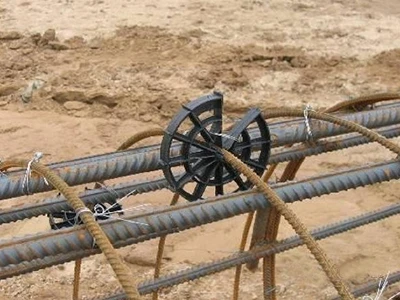
Rebar is a crucial component used to reinforce and support concrete structures. While concrete offers excellent compressive properties, it has relatively low tensile strength. Rebar compensates for this weakness, significantly enhancing its overall strength and structural stability. By embedding rebar within concrete, it increases its load-bearing capacity. This combination is widely used in buildings, bridges, foundations, and other projects.

Feature of Rebar
Uses and Functions
Rebar helps concrete resist cracking, bending, and breaking under heavy loads. It acts as a skeleton for concrete, ensuring the structural stability and long-term durability of buildings, bridges, foundations, and other critical infrastructure.
Materials and Types
Most rebar is made of carbon steel due to its excellent bonding properties and high tensile strength. However, in corrosion-prone environments, alternative materials such as epoxy-coated rebar, galvanized rebar, and stainless steel rebar are used.
How It Works
After hardening, concrete firmly grips the surface of the rebar. This bond allows the two materials to work together-the concrete absorbs compressive forces, while the rebar bears tensile forces-to form a balanced and resilient structure.
Fiber Reinforced Concrete vs Rebar:
1. Performance
Fiber-reinforced concrete (FRC): Fibers such as steel, glass, or synthetic fibers are uniformly dispersed throughout the concrete, increasing tensile strength, ductility, and crack resistance. Microcracks are controlled before they can propagate.
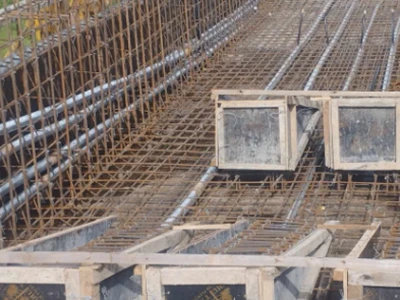
Rebar-reinforced concrete: Rebar is strategically placed in high-stress areas to withstand tensile and bending forces, providing predictable structural support.
2. Cost
FRC: Due to the use of specialized fibers, material costs are slightly higher, but repair and maintenance expenses can be reduced.
Rebar: Initial material costs are lower, but laying and tying require significant labor, increasing overall costs.
3. Tensile Strength
FRC: Provides a moderate increase in tensile strength across the entire matrix.
Rebar: Provides high tensile strength at designated stress points.
4. Durability
FRC: Excellent crack control; fibers reduce shrinkage and increase impact resistance.
Rebar: Strong and durable, but susceptible to corrosion if improperly covered.
5. Construction Complexity
FRC: Simple to lay; no additional positioning is required. Rebar: Complex installation; precise placement is crucial for structural integrity.
6. Applications
FRC: Suitable for pavements, industrial flooring, shotcrete, and precast components.
Rebar: Best suited for structural components such as beams, columns, slabs, and foundations.
Does Fiber in Concrete Replace Rebar?
Fiber-reinforced concrete (FRC) has gained popularity in the construction industry for its enhanced crack resistance, impact strength, and durability. But the question remains: Does it replace traditional steel reinforcement?
1. The Role of Fibers
Fibers, such as steel, glass, or synthetic materials, are uniformly distributed throughout the concrete mix.
They control shrinkage cracks, improve toughness, reduce microcracking, and make concrete more resilient.
In structural components requiring high tensile strength, FRC cannot completely replace steel.
2. Rebar in FRC Applications
Rebar remains essential for structural components such as beams, columns, slabs, and load-bearing walls. FRC typically supplements steel by increasing crack resistance and reducing maintenance requirements.
In non-structural applications, such as pavements, industrial flooring, shotcrete, or precast components, FRC can be used without added steel, depending on design specifications.
The combined use of steel and fibers creates a hybrid system that maximizes tensile strength, durability, and surface quality. This approach is increasingly common in modern concrete projects focused on efficiency, long life, and reduced maintenance costs.Does Fiber in Concrete Replace Rebar?
Conclusion
Fiber-reinforced concrete (FRC) offers significant advantages, including enhanced crack resistance, higher toughness, and longer durability. However, it doesn't always replace steel. Structural components subject to significant loads, such as beams, columns, and slabs, still require traditional steel reinforcement to achieve optimal tensile strength.
In many cases, combining fibers with steel can create a hybrid reinforcement system that maximizes structural integrity, reduces maintenance, and improves surface quality.