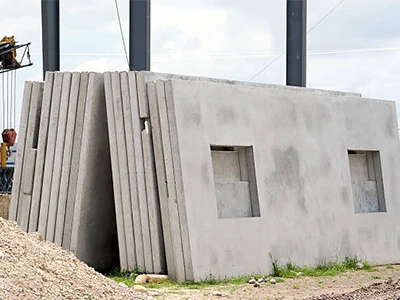





Concrete reinforcement technology has evolved far beyond traditional steel. In recent years, carbon fiber and glass fiber have emerged as innovative alternatives, transforming how we build modern infrastructure. According to industry studies, fiber-reinforced concrete can increase tensile strength by over 30% while reducing cracking and maintenance costs. But which fiber truly performs best? In this article, we'll break down carbon fiber vs glass fiber, analyzing their strength, durability, performance, and cost, so you can make an informed decision for your next precast or structural project.
What Is Fiber Reinforced Concrete (FRC)?
Fiber-reinforced concrete (FRC) is a modern composite material that enhances the properties of traditional concrete by adding dispersed fibers. Whether steel fibers, glass fibers, synthetic fibers, or carbon fibers, they are uniformly distributed throughout the concrete, significantly improving its tensile strength, flexural strength, and crack resistance.
Concrete has historically had high compressive strength but low tensile strength. For decades, steel mesh or reinforcing bars have been used to overcome this problem. However, with advancements in materials science, fiber reinforcement has emerged as a smarter and more efficient alternative, offering superior bond properties, less cracking, and greater design flexibility.

Polypropylene Fiber(PP Fibers)

Polyacrylonitrile Fiber (PAN Fiber)

Polyvinyl Alcohol Fiber(PVA Fiber)

Polyester Fiber (PET Fiber)

Cellulose Fibers

Basalt Fiber

Steel Fibers For Concrete

Imitation Steel Fiber

Polypropylene Twisted Fiber
Overview of Carbon Fiber Reinforcement
Carbon fiber reinforcement refers to the use of carbon fiber materials to improve the strength, durability, and crack resistance of concrete structures. Unlike traditional steel reinforcement, carbon fiber is lightweight, corrosion-resistant, and known for its exceptionally high tensile strength, making it increasingly popular in high-performance construction applications.
Carbon Fiber Reinforcement Offers Several Performance Advantages:
Extremely high tensile strength compared with many traditional reinforcement materials
Lightweight structure, reducing the additional load on concrete components
Excellent corrosion resistance, especially suitable for coastal or chemically aggressive environments
Improved durability and long-term structural performance
Low thermal expansion coefficient, helping maintain dimensional stability during temperature changes

Common Applications in Concrete Construction:
Bridge strengthening
Precast concrete elements
Tunnels and infrastructure projects
Seismic retrofitting and strengthening
High-performance industrial floors
Lightweight structural panels
Overview of Glass Fiber Reinforcement
Glass fiber reinforcement refers to the use of glass fibers to improve the tensile strength, crack resistance, and durability of concrete and cement-based materials.
One of the most commonly used forms is alkali-resistant glass fiber (AR glass fiber), which is specifically designed to withstand the alkaline environment inside concrete. These fibers help distribute stress throughout the concrete matrix, reducing shrinkage cracking and improving overall structural integrity.
Key Advantages of Glass Fiber Reinforcement:
Lightweight and easy to incorporate into concrete mixes
Good crack control and impact resistance
Strong resistance to corrosion and moisture
Suitable for thin and lightweight concrete elements
Improved surface durability and dimensional stability
More cost-effective than some high-performance reinforcement materials

Common Applications in Concrete Construction:
Carbon Fiber vs Glass Fiber
|
Comparison Aspect |
Carbon Fiber |
Glass Fiber |
|
Material Composition |
Made from carbonized polymer strands |
Made from molten glass filaments |
|
Tensile Strength |
Extremely high – up to 5x stronger than steel |
Moderate – stronger than steel per weight, but lower than carbon fiber |
|
Stiffness |
Very high – excellent load-bearing capability |
Lower stiffness, more flexible |
|
Weight |
Very lightweight, superior strength-to-weight ratio |
Lightweight, but slightly heavier than carbon fiber |
|
Corrosion Resistance |
Excellent – fully non-corrosive, ideal for marine or chemical exposure |
Good – resistant to corrosion, but may degrade in alkaline environments |
|
Durability |
Outstanding – retains strength for decades |
High – durable but less resistant in aggressive environments |
|
Fatigue Resistance |
Excellent – minimal strength loss over time |
Moderate – performance declines under cyclic loading |
|
Workability |
Requires careful handling due to brittleness |
Easier to handle and mix |
|
Cost |
Higher – premium reinforcement option |
Lower – economical and widely used |
|
Best For |
Projects demanding long-term strength and durability |
Projects needing cost efficiency and moderate performance |
Choosing the Right Fiber for Your Project
Choosing the right concrete reinforcing fiber depends on several key factors.
Structural Performance Objectives: For load-bearing components such as bridges, high-rise buildings, and precast slabs, carbon fiber is ideal due to its superior tensile strength and stiffness; while glass fiber is sufficient for decorative or non-structural applications, such as exterior walls or interior floors.
Environmental Factors: Carbon fiber's excellent corrosion resistance and durability make it more widely applicable in marine, chemical, or high-temperature environments; glass fiber performs best in milder environments.
Budget: Carbon fiber has a higher initial cost but can reduce long-term repair and maintenance costs; glass fiber offers a more cost-effective solution for projects requiring medium-strength reinforcement.
Project Type: Precast components, large infrastructure, and repair works typically require high-performance carbon fiber, while residential or decorative projects can take advantage of the affordability and ease of use of glass fiber. By carefully weighing these factors, engineers and contractors can select the most suitable fiber, ensuring the safety, durability, and cost-effectiveness of each concrete project.
FAQ
Q: Is carbon fiber stronger than glass fiber in concrete?
A: Yes. Carbon fiber has a higher tensile strength and stiffness compared to glass fiber, making it more suitable for load-bearing and high-performance applications.
Q: Can glass fiber be used in structural concrete?
A: Glass fiber is generally used for non-structural or decorative concrete elements. It can provide reinforcement but is less effective than carbon fiber for high-load structural applications.
Q: Why is carbon fiber more expensive?
A: Carbon fiber has higher material costs due to its manufacturing process and superior performance properties. The long-term durability and reduced maintenance often justify the initial investment.
Q: What are the benefits of using carbon fiber in precast concrete?
A: Carbon fiber improves structural strength, reduces weight, prevents corrosion, and enables thinner and lighter precast elements, enhancing efficiency and longevity.