




The efficient installation method of precast concrete foundation walls mainly includes the following steps and technical points.

Construction Preparation:
Before installing prefabricated wall panels, a series of preparations need to be carried out, including determining the installation location and quantity of wall panels, calculating the required materials and tools, and cleaning the installation location to ensure that the installation environment meets the requirements.
Transportation and Storage of Components:
Prefabricated components need to be protected during transportation and storage to avoid damage. Reasonable stacking methods can improve on-site work efficiency and reduce secondary handling.
Lifting of Precast Elements:
Lifting of precast wall panels is a critical step in the installation process. By using the proper lifting equipment and techniques, fast and accurate wall panel placement can be achieved. For example, for some structures, the "hole matching" operation of prefabricated walls can be completed within 2 minutes to achieve rapid installation.
Connection Method:
The vertical direction of the prefabricated wall is connected sequentially through the reserved insertion bars at the top and the reserved sleeves at the bottom; in the horizontal direction, hidden columns are formed by tying the steel bars protruding from the sides of the adjacent prefabricated walls. , and then connected through cast-in-place concrete. This type of connection helps improve the overall stability and durability of the structure.
Quality Control:
In the construction of prefabricated concrete shear wall structures, high installation accuracy is required, the connection forms are complex, and quality control is difficult. Therefore, it is necessary to firmly grasp the technical points of construction of prefabricated concrete shear wall structures to effectively ensure the construction quality and construction period of prefabricated buildings.
Waterproofing Treatment:
Since prefabricated exterior walls are assembled in pieces, how to waterproof the connecting joints is an important technical issue. This is directly related to the function and service life of the building.
Intelligent construction:
With the development of technology, intelligent equipment, and technologies are increasingly used in the construction process of prefabricated buildings. As shown in the smart PC wall panel installation animation, the application of these technologies can further improve installation efficiency and accuracy.
Efficient precast concrete foundation wall installation methods involve many aspects of technology and management measures, including construction preparation, component transportation and stacking, hoisting technology, connection methods, quality control, waterproofing, and intelligent construction. By combining these technologies and methods, fast, efficient, and high-quality installation of precast concrete foundation walls can be achieved.
What Lifting Equipment and Techniques are Used in the Installation of Precast Concrete Foundation Walls?
The lifting equipment and techniques used in the installation of precast concrete foundation walls mainly include the following aspects:
Hoisting Process:
including measurement and setting-out, on-site inspection of wall panels, wall panel numbering, installation of hoisting steel beams, connection of hoisting steel beams and pre-embedded lifting rings, lifting and leveling, lifting, rapid positioning measures, positioning, elevation Adjustment, wall bottom position adjustment, wall elevation vertical adjustment, positioning and fine-tuning and other steps.
Types and characteristics of commonly used lifting machinery: In the early stage of precast component hoisting operations, it is necessary to select and match equipment and tools, and formulate corresponding lifting processes and operating methods according to different types of precast concrete components. This involves the selection and use of temporary fixed facilities.
Special Hanging Beam:
To ensure uniform stress on the entire wall component, a special hanging beam (i.e. modular universal hanging beam) is used. This hanging beam is welded from H-shaped steel and can be adjusted according to prefabricated components of different sizes.
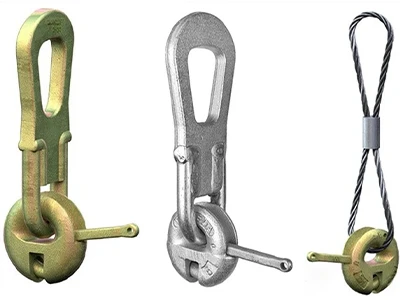
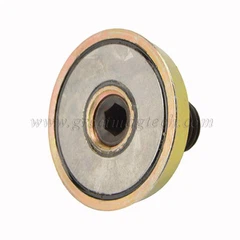
Lifting with Pre-embedded Lifting Clutch and Lifting Anchor: This method is very commonly used in practical engineering applications because of its fast lifting, and safe and reliable characteristics. As the most critical component of lifting embedded products, the reliability of their performance and correct installation are crucial.

Truck cranes and tower cranes:
In normal hoisting and transportation processes, the most commonly used lifting tools include truck cranes and tower cranes. When hoisting prefabricated components, the value of the lifting power coefficient will affect the safety and efficiency of the entire process. The power coefficient recommended by our country's specifications is 1.5.
The lifting equipment and technology in the installation of precast concrete foundation walls cover the entire process from preliminary preparation to specific operations, including but not limited to the use of special lifting beams, pre-embedded lifting nails, and special lifting slings, as well as the application of truck cranes and tower cranes. The selection and application of these technologies and equipment are of great significance to ensuring construction safety and improving construction efficiency.
How to Efficiently Transport and Stack Prefabricated Elements to Avoid Damage?
Efficient transportation and stacking of prefabricated elements to avoid damage requires consideration of many aspects. First of all, a detailed transportation and stacking plan should be developed before transportation, including transportation time, sequence, stacking site, transportation route, fixing requirements, stacking support pads finished product protection measures, etc. When choosing a transportation method, the specifications and quantity of prefabricated components and the specific conditions of the construction site should be considered. For example, low-platform trucks should be used to transport prefabricated components, and special racks should be installed on the vehicles. At the same time, reliable measures should be taken to stabilize the components.
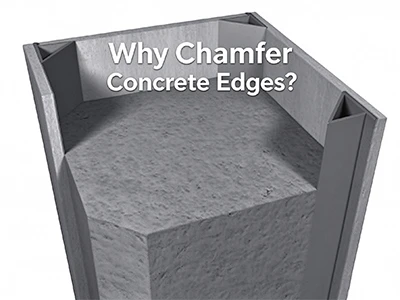
For large components that are ultra-high, ultra-wide, or have special shapes, special quality and safety assurance measures should be taken. In addition, the finished products should be protected during the hoisting and storage of prefabricated components in the processing site. For example, tap gently when removing the formwork to prevent damage to the edges and corners of the prefabricated components. Prefabricated components should be maintained as required. Prefabricated components that do not meet the design strength requirements are strictly prohibited from leaving the factory.
Hoisting operations are not allowed when encountering rain, snow, or fog, or when the wind force is greater than level 5. They should be arranged within the lifting radius as much as possible to avoid secondary handling; the component layout should match the hoisting arrangement to minimize the movement and amplitude of the crane during hoisting. Fixing measures should be taken to prevent components from being damaged during transportation, and they should be stacked according to design requirements to avoid damage caused by improper stacking.
In short, through careful planning and execution of the above measures, the transportation and stacking of prefabricated components can be effectively carried out to avoid damage and ensure the quality and safety of prefabricated construction projects.
What are the Specific Implementation Steps and Technical Points of Prefabricated Wall Connection Methods?
The specific implementation steps and technical key points of prefabricated wall connection methods mainly include the following aspects:
Preparation work before installation: First of all, foundation processing needs to be carried out, including foundation foundation and ground foundation processing, to ensure that the foundation of the building is stable and reliable.
Wall Installation Steps:
Driving piles and calibrating foundation positions to provide accurate foundation positioning for wall installation.
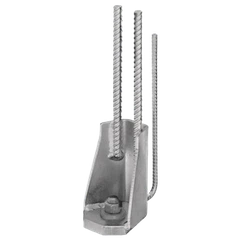
Install anchor bolts and support structures to ensure the stability of the wall during installation.
Install prefabricated wall panels and place the prefabricated wall panels in designated locations according to design requirements.
Make connections between wall panels to ensure structural stability.
Carry out fixing and correction of wall panels to ensure accurate position of wall panels.
Improve wall surface treatment, including the construction process of exterior wall panels, to ensure the overall structural strength and appearance quality of the building.
Install doors, windows, and ancillary facilities to complete the installation of the entire wall.
Technical Points:
When connecting prefabricated walls and cast-in-place beam nodes, choose to use shear walls to set beam grooves, reserve beam frames, and complete the node connections by on-site pouring. The height of the beam groove should be set at about 460mm, the width should be consistent with the width of the cast-in-place beam, and the support length of the shear wall should be compatible with the wall thickness.
Prefabricated buildings usually use two connection methods, mechanical and cast-in-place, to connect prefabricated components during the construction process. Mechanical and cast-in-place connection methods each have their advantages and should be selected based on the characteristics of the prefabricated construction project.
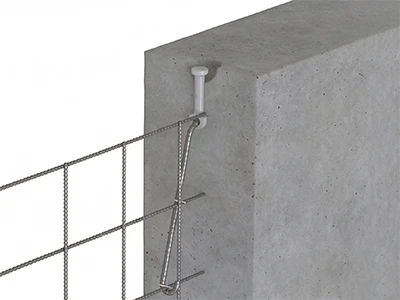
The connection between the outer back corrugation and the inner back corrugation adopts the measure of pre-embedding water-stop screw inner rods in the prefabricated wall to enhance the stability and waterproof performance of the connection.
The implementation steps and technical points of the prefabricated wall connection method involve the entire process from foundation treatment to wall installation, as well as the selection and application of technical points during the construction process, ensuring the stability, integrity, and functionality of the prefabricated wall.
How to Conduct Quality Control and Ensure Installation Accuracy?
In the construction of prefabricated concrete shear wall structures, key measures for quality control and installation accuracy include:
Positioning of steel bars: Ensuring the correct position of steel bars is the basis for ensuring the strength and stability of the shear wall structure. Precise positioning and layout of steel bars are required, especially in the configuration of steel bars on the transfer layer. The location and quantity of vertical steel bars must be reasonably arranged according to the characteristics of high-rise assembled monolithic concrete shear wall structure projects.
Wall Panel Hoisting:
Use scientific hoisting technology, such as prefabricated component hoisting pole technology, to improve the accuracy of prefabricated component installation. Before hoisting, all hoisting control lines must be carefully reviewed to ensure accuracy during the hoisting process and to avoid affecting the construction quality due to cumulative errors exceeding the allowable deviation value.
Rebar sleeve grouting: In the connection area between prefabricated components and cast-in-situ components, the quality control of steel pipe sleeve grouting construction is particularly important. Effective measures need to be taken to ensure the quality of grouting to ensure the structural safety and stability of the connection area.
Formwork Construction:
After the steel bar construction is completed, formwork construction must be done to improve the quality of concrete pouring. Before carrying out formwork construction, it is necessary to accurately locate the installation position of the formwork according to the requirements of the construction plan, and through standardized design analysis, ensure that the size of the formwork meets the requirements of the shear wall.
Control of Verticality and Horizontal Elevation:
For superimposed shear wall structures, special attention needs to be paid to the control of verticality and horizontal elevation. A certain gap must be reserved between the lower part of the prefabricated composite shear wall component and the structural floor, which directly affects the quality of the lower support bracket of the shear wall component, thereby affecting the stability of the entire structure.
Through the implementation of the above measures, the construction quality control and installation accuracy guarantee of prefabricated concrete shear wall structures can be effectively carried out. These measures cover all aspects from preliminary preparation to construction, aiming to ensure the safety, stability, and high-quality completion of prefabricated concrete shear wall structures through scientific construction technology and strict quality control.
What are the Best Practices and Technical Methods for Waterproofing Precast Exterior Walls?
The best practices and technical methods for waterproofing precast exterior walls mainly include the combination of structural waterproofing, material waterproofing, and structural waterproofing. Specifically, in the prefabricated integral shear wall structure, a combination of these three waterproof structures should be used at the joints. This comprehensive application can effectively improve the waterproof performance of prefabricated exterior walls and ensure the practical function and service life of the building.
During the construction process, special attention needs to be paid to the waterproofing joint processing of prefabricated exterior wall panels. Since the prefabricated exterior walls are assembled in pieces, the waterproofing of the connecting joints has become an important link. Therefore, on-site construction personnel should be proficient in relevant waterproofing technologies and construction points to ensure the effectiveness of the waterproof performance of exterior walls.
In addition, the current research status of waterproofing technology for prefabricated concrete building exterior walls shows that from the perspective of structural waterproofing and material waterproofing, the waterproofing of precast exterior walls of above-ground buildings has been focused on, involving double-sided laminated wall panels, PCF boards, decorative Insulation integrated sandwich insulation wall panels, prefabricated exterior wall panels, and other technologies. The application of these technologies can select the most appropriate waterproofing solution based on specific engineering needs and conditions.

Conclusion
Precast concrete foundation walls require regular maintenance and inspections after installation. This includes checking the tightness of connection points, cracks, and leaks in the walls. Through timely maintenance, the service life of the wall can be extended and the long-term stability of the building can be ensured.
The efficient installation of precast concrete foundation walls is an important development trend in the construction industry. The practical guidance provided in this article is designed to help professionals deeply understand and effectively apply this technology, thereby improving construction quality and efficiency and promoting the sustainable development of the industry.