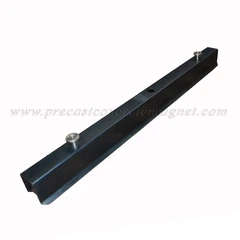
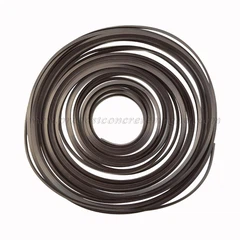




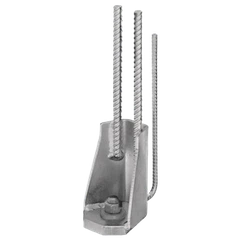
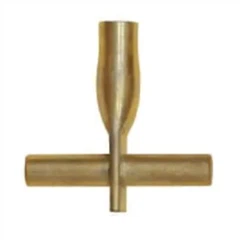

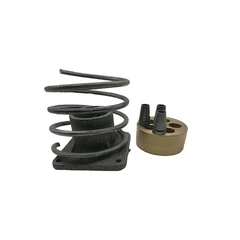

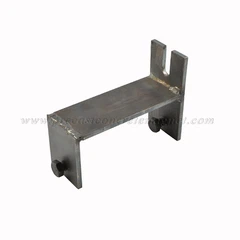
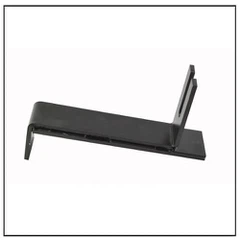


The platform on which the magnetic box is used should be kept clean and flat to prevent iron filings or concrete slurry from entering the inside of the magnetic box, which will affect the flexibility of the switch and may cause the magnet block to tilt. After each use, the remaining concrete and other ferromagnetic substances on the adsorption surface of the magnetic box need to be cleaned.
How to Properly Clean a Precast Concrete Shuttering Magnetic to extend its service life?
Proper cleaning of precast concrete shuttering magnets to extend their service life involves the following steps:
Before and after use, the magnetic core contact surface needs to be cleaned to ensure that no concrete, iron filings, etc. are adhered to it. This is because these foreign objects will affect the adsorption force of the magnetic box.
The service platform where the magnetic box is used should be kept clean and flat to prevent iron pins or concrete slurry from entering the inside of the magnetic box. This prevents affecting the flexibility of the power switch.
It is necessary to avoid magnet damage and external impact to the greatest extent and to keep the working surface of the magnet array as clean as possible. Iron filings and concrete will affect the flexibility of the switch.
For the bottom of the magnetic box, if there are foreign objects (such as concrete, grease, or film), the holding force will decrease. Therefore, check whether the bottom of the magnetic block and the platform are clean and flat before use.
Regularly adding engine oil to the guide rod position and performing appropriate anti-rust treatment on the magnetic box are important maintenance measures.

How Do the Maintenance Needs of Precast Concrete Shuttering Magnets Differ Under Different Environmental Conditions (such as humidity, and temperature)?
Temperature Effect:
The performance of precast concrete shuttering magnet is affected by temperature. Iron-chromium-cobalt magnets have excellent thermal stability, and their Curie temperature and maximum operating temperature can reach 680°C and 400°C respectively. However, when the ambient temperature reaches or exceeds the temperature limit of the magnet, it will cause a sharp drop in magnetic force. In addition, the magnetic induction intensity and coercive force decrease with increasing temperature. Therefore, when using precast concrete shuttering magnets in high-temperature environments, special care needs to be taken to avoid prolonged exposure to environments that exceed their maximum operating temperature.
Effect of Humidity:
Although there is not much evidence directly about the effect of humidity on precast concrete shuttering magnets, considering that the concrete material itself has a certain sensitivity to humidity, especially the importance of measuring humidity in concrete production, it can be inferred that precast concrete shuttering magnet Certain protective measures may also be required in environments with high humidity to prevent material performance degradation or damage caused by excessive humidity.
Temperature Difference Control:
When the temperature difference between the concrete and the environment is not greater than 15°C, measures need to be taken to drain the water and continue pouring. This shows that temperature difference control is an important consideration in the production process of precast concrete components, which indirectly illustrates that the maintenance needs of the precast concrete shuttering magnets may be different under different environmental conditions, especially in environments with large temperature differences.
The maintenance needs of precast concrete shuttering magnets under different environmental conditions mainly focus on strict control of temperature, especially in avoiding long-term exposure to high-temperature environments and maintaining an appropriate temperature difference range. At the same time, although there is insufficient evidence directly on the effect of humidity, considering the sensitivity of concrete materials to humidity, it can also be speculated that appropriate protective measures are also required in environments with higher humidity.
Are there Specific Types of Dirt or Compounds that are Difficult to Remove From Precast Concrete Shuttering Magnets, and What are the Solutions?
For precast concrete shuttering magnets, situations where specific types of dirt or compounds are difficult to remove mainly include dirt that cannot be removed with an iron scraper and compounds that are difficult to clean, such as concrete.
The corresponding solution is to use a stainless steel scraper for removal. If the iron scraper will stick, avoid using iron tools, and use a rubber hammer to tap lightly if necessary to prevent damage to the magnet. Additionally, if you encounter compounds that are difficult to clean, such as concrete, you can use a sander to remove them. These measures help keep the magnetic cartridge clean and maintain its performance.
What are the Common Failures of Precast Concrete Shuttering Magnets and How Can They be Prevented Through Regular Cleaning?
Common faults of precast concrete shuttering magnets mainly include:
1. Concrete and iron filings adhere to the contact surface of the magnetic core, affecting the adsorption force;
2. The bottom of the magnetic block absorbs concrete or waste, which affects the magnetic force;
3. Iron filings or concrete slurry enter the inside of the magnetic box, affecting the flexibility of the switch and the ability of the magnetic block to fit flatly to the platform;
4. Hitting or bruising with iron tools during use may cause the iron box to deform or even damage the magnet.
To prevent these failures, you can take the following steps for regular cleaning:
1. Clean the magnetic core contact surface before and after use to ensure that no concrete, iron filings, etc. adhere to it;
2. Frequently clean the concrete stuck to the joint apply engine oil, and regularly lubricate the guide rod position;
3. Keep the platform where the magnetic box is used clean and flat to prevent iron filings or concrete slurry from entering the inside of the magnetic box;
4. Avoid hitting or damaging the magnetic box with iron tools during use to avoid deforming the iron box or damaging the magnet. Through these measures, common failures of precast concrete shuttering magnets can be effectively prevented and their service life extended.