




Reasons for Bubbles in Precast Concrete Components:
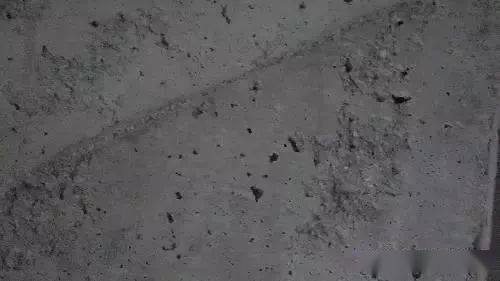
The causes of bubbles in precast concrete components are very complex, but they are usually inseparable from raw materials and process factors, such as cement type, admixture type, admixture dosage, aggregate thickness, mixing time, release agent usage, vibration operation, and construction temperature. Wait, let's conduct a detailed analysis of the mechanism of bubble generation:
Raw Materials
For concrete products with high water consumption and water-cement ratio, bubbles are more likely to occur. Certain grinding aids must be added during cement production, and grinding aids often induce too many bubbles. At the same time, if the alkalinity of the cement is too high and the particles are too fine, it will also lead to an increase in the gas content, which in turn increases the probability of bubbles. This is because the water bubbles trapped in the concrete will induce the generation of bubbles once they evaporate.
If there are many large bubbles in the concrete, it is generally caused by the air-entraining component in the water-reducing agent. Ordinary water-reducing agents, especially polycarboxylic acid-based and sulfonated lignin-based water-reducing agents, will contain some surface-active ingredients and have strong air-entraining properties. When more water-reducing agents are used, more water-reducing agents will occur. Many bubbles; in addition, when using rosin air-entraining agents as admixtures, the number of bubbles will also increase.
In the preparation process of concrete components, if the material ratio is improper, there are too many coarse aggregates, or the gravel contains too many needle-shaped particles, the fine materials will not be enough to fill the gaps in the coarse materials, thus inducing the formation of air bubbles produce.
Craftsmanship
Process reasons are the main cause of surface bubbles. For example, if the mixing is uneven and there is too much additive in a local area, more bubbles will be generated in that area; however, excessive stirring will cause an overall increase in internal bubbles, which will also have adverse effects.
Most precast concrete components are formed using steel molds. To facilitate demoulding, some release agent is usually brushed on the surface of the steel mold. In this way, during the tamping operation, due to water traveling along and above the concrete surface, even if the mold is demoulded, The agent is water-based and will still absorb more bubbles, so that the bubbles generated during vibration cannot be discharged along the surface in time, resulting in surface bubbles.
When concrete is mixed and poured, a small amount of air is usually mixed in. This part of the air cannot overflow on its own and can only be discharged through vibration. Therefore, the quality of the vibration operation is an important factor affecting the number of bubbles. If over-vibration, under-vibration, or vibration leakage occurs, it will lead to an increase in bubbles on the surface. Over-vibration will cause small internal bubbles to gradually reorganize into large bubbles, while over-vibration and leakage vibration will lead to uneven distribution of concrete and loose structure, resulting in local voids or irregular large bubbles.
The volume of bubbles on the concrete surface is sensitive to changes in temperature. If not handled properly, larger holes will be left on the concrete surface. Especially when the temperature fluctuates greatly between day and night, the volume of bubbles attached to the concrete surface changes with changes in ambient temperature. , when the strength of the concrete slurry is small, the slurry wrapped with bubbles will flow and deform with the bubbles. When the strength of the concrete slurry reaches a certain level, it is no longer affected by the bubbles. When the bubble volume is large, it will Larger holes are created in the concrete surface. In addition, the viscosity of the release agent is also sensitive to the ambient temperature. When the mold temperature is low, the viscosity of the release agent decreases and flows downward from the mold surface, causing a large amount of release agent to accumulate on the bottom surface and hindering the discharge of bubbles in the bottom layer. , causing more surface bubbles.
Preventive Measures for Bubbles on the Surface of Precast Concrete Components
Concrete Raw Materials
(1) Inspect the grade, variety, and performance of the cement used strictly by the requirements. If a precast concrete manufacturer has many cement suppliers, it should give priority to cement with low alkali content and less surface blistering. The cement grade should be consistent with the precast concrete mix proportion grade. In addition, the use of admixtures should be strictly controlled to ensure that the air content of concrete does not exceed 4%. Currently, there are many brands of admixtures sold in the market, and manufacturers should choose several for testing to select admixtures with high-quality chemical components.
(2) Within the scope permitted by the specification, aggregates with large particle sizes can be used to prepare concrete. This is because the increase in aggregate particle size can effectively reduce the water consumption of concrete, thereby reducing the water release and shrinkage of concrete. However, if the particle size of the aggregate is too large, it can easily cause concrete to segregate. Therefore, it is necessary to choose chicken embryo aggregates reasonably, with a moderate proportion of coarse and fine aggregates. The specifications of the stones can be selected based on specific construction conditions. When selecting, stones with good gradation and large particle size should be used as much as possible to reduce the amount of cement and water, reduce the water-clearing and shrinkage of concrete, and also Effectively reduce the heat generated during cement hydration.
Craftsmanship
(1) Carefully check the formwork and release agent before construction. To ensure the smoothness of the formwork surface, use a high-quality release agent to avoid viscous effects on air bubbles on the concrete surface. When applying the release agent, make sure it is uniform throughout and should not be applied too much or too thickly. When the concrete formwork has just been removed, the bubbles such as pockmarks and honeycombs should be treated with a mixed slurry of appropriate viscosity, and then the removed formwork should be used to plaster and compact it.
(2) Pay great attention to the vibration of precast concrete. It is necessary to select appropriate vibration equipment, strictly control the vibration time, reasonably select the vibration radius and vibration frequency of the vibration equipment, pay attention to the entire vibration process, ensure the density of the concrete after vibration, and resolutely avoid leakage and under-vibration. and the occurrence of over-vibration phenomena. Vibration should adopt the method of "quick insertion and slow extraction". "Quick insertion" is conducive to obtaining uniform vibration time for the upper and lower layers of concrete. "Slow extraction" is conducive to the concrete slurry filling the space left by the vibrator rod and preventing the formation of gaps, especially for hard concrete, "slow pulling" is particularly important. "Slow pulling" is not only conducive to the polymerization and filling of the concrete slurry but also promotes the escape of air bubbles.
(3) If heat distribution is uneven, measures must be taken to effectively reduce the impact of temperature changes on bubbles on the surface of precast concrete. The transportation and pouring of precast concrete must meet relevant construction requirements. For example: during summer construction, the coarse and fine aggregates of concrete must be shaded or cooled; when concrete is pumped during construction, mixer trucks should be used to transport the concrete. In addition, certain measures should be taken to keep warm during winter construction, especially for precast concrete molds. The forming process of concrete components is also a hydration reaction process. The hydration reaction will release a certain amount of heat, causing the temperature difference in the structure to increase, causing problems such as cracking and bubbles. Therefore, it is necessary to strengthen the maintenance of components and try to use steam curing during maintenance. For those that do not have steam curing conditions, try to keep the surface of the concrete components moist and control the mold temperature to prevent the formation of temperature gradients.