

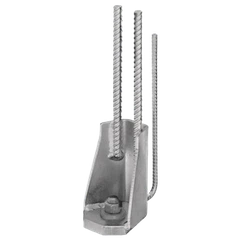
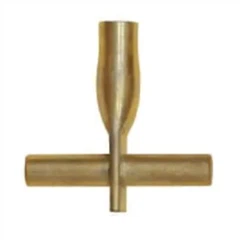
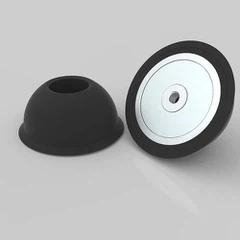
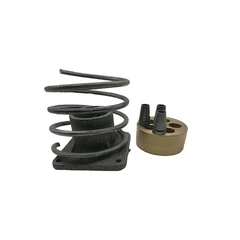



The Connection Methods of PC Components of Precast Concrete Buildings Mainly Include the Following:
Sleeve Grouting Connection:
This is a common connection method that uses steel sleeves and grouting materials to achieve connections between prefabricated components. The advantage of this method is that it can provide high connection strength and good durability, but the construction process is relatively complicated and requires a high technical level.

Slurry Anchor Lap Connection:
This connection method involves fixing one end of the steel bar to the prefabricated component and the other to another prefabricated component or structural body through anchors (such as corrugated pipes). This method is suitable for connecting vertical stress-bearing components and has the advantages of simple construction and low cost.
Solder Connection:
In some cases, to improve the load-bearing capacity and stiffness of the connection parts, welding is used to connect the steel bars. This method is suitable for occasions requiring high-strength connections, but attention must be paid to welding quality to avoid structural safety issues.
Bolted:
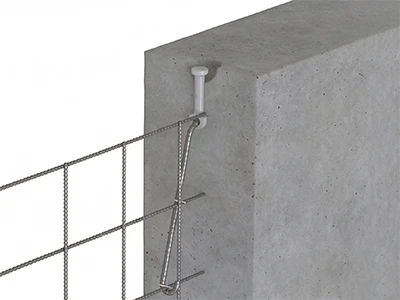
Bolt connection is another common connection method, which realizes the connection between prefabricated components through pre-embedded bolt holes, bolt heads, and nuts. The advantages of this method are fast construction and easy disassembly and reassembly, but it may require additional anti-loosening measures.
Joint Grouting And Sealing Technology:
Especially when there are joints between vertical precast concrete components and floor slabs, high-pressure grouting is used to seal them to ensure the sealing quality and save the connection space of the vertical components. This technology is not only environmentally friendly and energy-saving but also can be recycled multiple times.
Distributed Connection:
This is a newer connection method that uses a combination of multiple connection methods at the plate joints to improve the shear-bearing capacity and ductility of the overall structure. Research shows that this connection method has good shear bearing capacity and displacement ductility, and is suitable for high-rise prefabricated concrete structures.
There are various connection methods for PC components in prefabricated concrete buildings. Choosing the appropriate connection method is crucial to ensure the safety and seismic performance of the structure. In practical applications, the most appropriate connection scheme should be selected based on the specific conditions and design requirements of the project, comprehensively considering the characteristics and applicable conditions of various connection methods.
What Are The Detailed Construction Steps And Precautions For Sleeve Grouting Connections Of PC components In Prefabricated Concrete Buildings?
Construction Steps:
Production and arrival of prefabricated components:
During the production, delivery, and entry stages of precast components, it is necessary to ensure that the inside of the sleeve and the connecting cavity are unobstructed, which is the basis for ensuring the grouting quality of the sleeve.
Hoisting in place:
During the process of hoisting into place, measures should be taken to ensure that the position of the sleeve is accurate to avoid incomplete or non-dense grouting due to positional deviation.
Install grouting pipes and grouting pipes:
Determine the location of grouting pipes and grouting pipes according to design requirements, and install these pipes according to prescribed methods. This step is critical to ensuring that the grout material flows smoothly.
Grouting work:
When performing grouting operations, attention must be paid to the proportion of grouting materials, grouting pressure, and grouting time to ensure that the grouting material can fill the gap between the sleeve and the steel bar and form a tight connection.
Grouting port sealing and saturation test: After grouting is completed, the grouting port needs to be sealed and a saturation test performed to ensure that the grouting effect meets the design requirements.
Precautions:
Quality control: During the entire construction process, quality must be strictly controlled, including the quality of prefabricated components, the installation quality of sleeves, and the quality of grouting materials.
Technical points:
During the construction process, attention should be paid to the technical points of the steel sleeve grouting connection, such as the selection of grouting materials, the control of grouting pressure, and the grasp of grouting time. These are key factors that affect the connection performance.
Frequently asked questions and coping strategies:
In actual construction, problems such as no grout coming out of the grout hole and insufficient compressive strength of the grouting material may be encountered. Corresponding strategies need to be adopted promptly, such as adjusting the proportion of grouting materials, increasing the grouting pressure, etc.
Quality Inspection:
After the construction is completed, quality testing should be carried out, including but not limited to grouting fullness, compressive strength, etc., to ensure that the connection performance meets the design requirements.
Through the strict implementation of the above construction steps and precautions, the quality of the sleeve grouting connection of PC components of prefabricated concrete buildings can be effectively improved and the safety and durability of the structure can be ensured.
What Are The Application Cases Of Slurry Anchor Lap Connection In Prefabricated Concrete Buildings?
Study on the seismic performance of prefabricated concrete columns:
By designing and conducting quasi-static tests, the impact of defects in mortar anchor lap connections on the seismic performance of prefabricated concrete columns was studied. The test results show that the hysteretic curve of the defect-free component is relatively full, the stiffness degradation is slow, and the energy consumption and ductility performance are good. This shows that the slurry anchor lap connection has potential application value in improving the seismic performance of prefabricated concrete columns.
Experimental study on lap joints of steel grout anchors with reserved holes in prefabricated structures:
Through the pull-out test of 36 reinforced mortar anchor lap connection specimens, the failure shape, load-specimen deformation curve, and crack development process were studied. The test results show that this connection method has good performance and can significantly reduce the overlap length of steel bars, indicating that its application in prefabricated structures is feasible.
Experimental study on the seismic performance of prefabricated joint-limb shear walls:
Prefabricated specimens and cast-in-place comparison specimens were produced, and low-cycle repeated horizontal load tests were conducted to evaluate the seismic performance of the prefabricated specimens. The test and analysis results show that the strength and stiffness of the prefabricated specimens are improved, the displacement ductility is reduced, and the energy dissipation capacity is improved. Generally speaking, it can reach the "equivalent to cast-in-place", showing that the slurry anchor lap connection has better performance in the prefabricated joint limb shear. Application potential in force walls.
Experimental study on large-diameter steel grout anchor lap connections:
By fabricating and conducting uniaxial tensile tests, the anchoring performance of large-diameter reinforced mortar anchor lap connectors was explored. The test results show that this connection method is safe and reliable, and provides a new idea for the connection of prefabricated concrete structures.
Research on Mechanical Properties of Bellows Pre-hole Steel Bar Restrained Grout Anchor Lap Connection:
By designing, producing, and conducting unidirectional pull-out tests, the effects of different factors on the connection performance were studied. Research shows that this new connection method has great room for optimization in the hole-forming process and overlap length, and has good application prospects.
These cases demonstrate the diverse applications of slurry anchor lap connections in prefabricated concrete buildings, including improving the seismic performance of the structure, reducing the overlap length of steel bars, and enhancing the integrity and safety of the structure. Through these studies and experiments, we can see the importance and application potential of slurry anchor lap connection technology in prefabricated concrete buildings.
Specific methods and effect evaluation of welded connections to improve load-bearing capacity and stiffness in prefabricated concrete buildings.
In prefabricated concrete buildings, welded connections are an effective method to improve the load-bearing capacity and stiffness of the structure. By analyzing the information I searched, we can summarize the specific methods and effect evaluation of welded connections in improving the load-bearing capacity and stiffness of prefabricated concrete buildings.
Welded steel mortise and tenon connections have been shown to improve the seismic performance of fabricated columns, with ductility and energy dissipation capabilities no less than those of cast-in-place columns. This shows that by using appropriate steel plate thickness and considering the effects of axial compression ratio and shear span ratio, the bearing capacity and stiffness degradation index of assembled columns can be effectively improved. In addition, different welding methods (such as MIG/MAG, arc welding, and gas welding) have a significant impact on the stress and deformation values of welded joints, which means that choosing the appropriate welding technology and joint type is crucial to optimize the performance of the welded connection.
Research on fully welded composite beam-column joints shows that the main failure modes of the joints are local buckling of the lower flange and web of the steel beam and concrete crushing. This finding highlights the need for special attention to local stress distribution in welded joints during design and construction to avoid these common failure modes.
Further, studies have shown that the microstructure and mechanical properties of welded joints can be improved by using advanced welding techniques. These techniques include adjusting welding parameters (such as welding speed, heat input, and shielding gas composition) to optimize the performance of the welded joint. For example, by melting the transition zone between the weld and the base metal, stresses can be significantly reduced and the strength of the welded joint under varying loads can be increased.
In addition, the analysis of the load-bearing performance of welded joints of steel structures in construction projects shows that through the calculation of the welding characteristics of steel structures and the establishment of finite element models, the optimization analysis of the load-bearing performance of welded joints can be achieved. This method not only improves the calculation accuracy but also has good performance due to its short time consumption and can be widely used in the research of steel structures in construction projects.
The application of welded connections in prefabricated concrete buildings can improve the load-bearing capacity and stiffness of the structure by selecting appropriate welding technology and joint types, optimizing welding parameters, and adopting advanced welding technology. Through the application of these methods, the overall performance and safety of prefabricated concrete buildings can be effectively improved.
In prefabricated concrete buildings, anti-loosening measures for bolt connections and the selection of bolt types are key factors in ensuring
structural safety and stability.
We Can Summarize The Following Points About The Selection Method Of Anti-Loosening Measures And Bolt Types:
Anti-loosening measures:
Calculate and determine the tightening torque: Calculate and determine the theoretical tightening torque values of bolts of different specifications through engineering methods to improve the consistency and reliability of screw connections.
Friction and anti-loosening:
In situations of variable load, vibration, shock, high temperature, or large temperature changes, the use of friction to prevent loosening can improve the anti-loosening ability of the connection.
Mechanical anti-loosening device:
Although the mechanical anti-loosening device is reliable in preventing loosening, it should be noted that it cannot be disassembled or is not easy to assemble repeatedly, which may not be conducive to automated assembly operations.
Improve thread anti-loosening method:
By comparing various thread anti-loosening forms, a new way to improve thread anti-loosening is proposed. Appropriately increasing the bolt tightening force is very important for threaded connections.
Choose the Right Bolt Type
Consider the usage environment:
Select the appropriate bolt type according to different usage environments, including considering factors such as temperature changes, vibration, and impact.
High-strength bolted steel connection:
For fabricated beam-column joints, high-strength bolted steel connections can improve the mechanical performance and seismic performance of the joints.
Standardized construction technology:
The use of standardized construction techniques, including prefabricated component production, installation sealing, and waterproofing, can help improve the construction efficiency and quality of bolted fully assembled concrete structures.
Selecting the appropriate bolt type and taking effective anti-loosening measures are the keys to ensuring the safety and stability of prefabricated concrete buildings. In practical applications, factors such as the use environment, structural characteristics, and construction technology should be comprehensively considered to select the most suitable bolt type and take corresponding anti-loosening measures.
The connection method of prefabricated concrete building (PC) components is crucial to ensure the integrity and stability of the structure. Selecting the appropriate connection method requires consideration of the load-bearing needs of the structure, durability, construction speed, and cost-effectiveness. Bolted connections are suitable for temporary or non-load-bearing structures, welding and mechanical connections are suitable for occasions where high-strength connections are required, sleeve grouting connections and node connections are suitable for structures withstanding large forces, adhesive connections are suitable for decorative components, and concrete pouring Connections are suitable for forming a monolithic concrete structure. Each connection method has its specific advantages and limitations, so they need to be carefully considered during design and construction. By optimizing connections, the performance and safety of prefabricated concrete buildings can be improved while reducing costs and construction time.