




Corrugated ducts play a crucial role in post-tensioned prestressed concrete structures, serving as key components to ensure the overall structural safety and durability. They are primarily used to form the channels through which the prestressed steel strands pass, and are pressure-grouted after tensioning.
The two most widely used corrugated duct materials in engineering are HDPE (high-density polyethylene) plastic and metal (mainly galvanized steel). They differ significantly in physical properties, applicable scenarios, and economics. A thorough understanding of these differences is of great guiding significance for engineering design and construction selection.
What Is Metal Corrugated Duct?
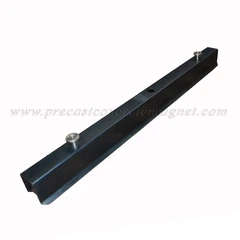
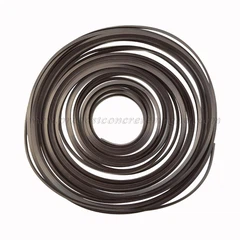
Metal corrugated ducts are typically formed by rolling high-strength galvanized steel strips and serve as a critical component for creating tendon channels in post-tensioned concrete structures. Their continuous corrugated and grooved design not only enhances axial flexibility-making on-site installation easier-but also provides exceptional radial stiffness and compressive strength. This ensures the duct remains stable and maintains its shape during concrete pouring, vibration, and tensioning, preventing collapse or deformation.

Key Features of Metal Ducts
High Strength and High Stiffness:
Galvanized steel structures possess superior resistance to compression, impact, and deformation. They can withstand the immense pressure of concrete pouring and construction loads, making them ideal for applications requiring extremely high structural strength, such as long-span bridges, heavy industrial floor slabs, and foundation beams for high-rise buildings.
Reliable Constraints: The robust structure ensures that the prestressed steel strands remain in their precise design position before, during, and after tensioning, preventing any misalignment that could affect prestressing efficiency.
Superior Fire Resistance and High-Temperature Resistance: Compared to high-density polyethylene (HDPE) ducts, corrugated metal ducts will not melt or lose their load-bearing capacity in high-temperature or fire environments. They maintain the shape of the steel strand channels for a certain period, thereby improving the fire safety of the structure and facilitating post-disaster repair. This makes them the preferred choice for buildings requiring higher fire resistance ratings.
Stable Geometry and Grouting Guarantee: The robust structure minimizes accidental deformation that may occur during transportation, installation, and concrete pouring. This ensures smooth and uniform internal channels, creating optimal conditions for subsequent pressure grouting.

Application Considerations and Limitations
Although metal corrugated ducts offer significant advantages, their limitations must also be considered during selection to achieve an optimized structural design:
Corrosion Resistance:
While the galvanized coating provides good protection against rust, extreme environments-such as marine structures, chemical plants, saline soils, or areas with stray electrical currents-may still present corrosion risks if the coating is damaged. This can potentially affect long-term durability.
Connection and Sealing:
Proper installation is essential to ensure that each duct segment is securely connected and fully sealed. Poor sealing may lead to grout leakage during pressure grouting, compromising tendon protection.
Friction Coefficient:
Compared with HDPE ducts, which have an extremely smooth inner surface, metal corrugated ducts exhibit a slightly higher friction coefficient between the duct and the prestressing strand. This must be considered in tensioning calculations, as it may result in slightly greater prestress friction losses.
What Is HDPE Corrugated Duct?
High-density polyethylene (HDPE) corrugated duct is a high-performance prestressing conduit manufactured from high-density polyethylene resin through spiral-winding or extrusion processes. Specifically designed for modern post-tensioned concrete structures, its primary function is to provide a strong, durable, and reliable protective channel for prestressing strands, ensuring that the prestressing system achieves the same service life as the concrete structure itself. HDPE ducts are widely used in bridges, large beams and slabs, underground tunnels, hydraulic structures, and various precast concrete elements.

Key Features of HDPE Ducts
Unparalleled Corrosion Resistance
HDPE is an inert polymer material with a stable molecular structure that does not participate in electrochemical reactions, thus fundamentally preventing corrosion. It resists the erosion of acids, alkalis, salts, oils, chlorides, and many chemical solvents. It is an irreplaceable choice in marine engineering, coastal areas, saline-alkali land, chemical plants, sewage treatment facilities, and areas with stray currents, providing long-term durability far exceeding that of metal corrugated pipes.
Excellent Flexibility and Ease of Construction
It can be easily bent without special tools, perfectly adapting to complex curved reinforcement requirements. This not only significantly reduces installation difficulty and time but also reduces quality risks caused by improper on-site cutting and connection, making it particularly suitable for irregularly shaped modern buildings.
Extremely Low Friction Inner Wall and Grouting Compactness
The inner wall of HDPE is very smooth, with a significantly lower coefficient of friction than metal corrugated pipes. This effectively reduces friction between the prestressing tendons and the duct wall, minimizing prestress loss and allowing for more precise prestressing application. The slurry has low flow resistance, which allows it to fill the entire duct more smoothly, facilitating air removal and forming a dense and complete protective layer, thus greatly improving the protective effect on the prestressed tendons.
Limitations of HDPE Corrugated Ducts
1. Lower rigidity and reduced impact resistance
Compared with metal corrugated ducts, HDPE has a lower elastic modulus, resulting in weaker radial stiffness and impact resistance. During concrete pouring and vibration, improper handling-such as allowing the vibrator to strike the duct directly-can easily cause flattening, deformation, or cracking. Such damage may block the tendon path, hinder strand installation or tensioning, and severely affect the density and quality of subsequent grouting.
2. Poor fire and high-temperature performance
As a thermoplastic material, HDPE begins to soften and lose its shape once temperatures approach its melting point (approximately 120–130°C), and it will burn under open flame. Therefore, it is not suitable for structures exposed to sustained high temperatures, such as chimneys, boiler foundations, or industrial heat zones.
3. Sensitivity to ultraviolet radiation
Non-stabilized HDPE degrades when exposed to direct sunlight. UV radiation breaks polymer chains, causing embrittlement, chalking, and reduced mechanical performance. If HDPE ducts are stored outdoors for extended periods before installation, their structural integrity may deteriorate even before use.
4. High requirements for joint connection and sealing
HDPE ducts are typically extended using heat-fusion welding or specialized connectors. If welding parameters are not properly controlled or if joints are installed poorly, defects such as weak bonding or incomplete fusion may occur. During pressure grouting, slurry may leak from improperly sealed joints, leading to voids inside the duct and preventing full encapsulation of the prestressing steel-creating long-term corrosion risks.
HDPE vs Metal – Side-by-Side Comparison
|
Feature |
HDPE Corrugated Duct |
Metal Corrugated Duct |
|
Material |
High-density polyethylene (HDPE) |
Galvanized steel |
|
Corrosion Resistance |
Excellent, fully corrosion-proof |
Good, zinc coating protects, but can corrode if damaged |
|
Strength |
Moderate |
Very high mechanical strength |
|
Rigidity |
Low to medium |
High rigidity and structural stability |
|
Impact Resistance |
Susceptible to damage from vibrators or sharp tools |
Excellent resistance to impact and deformation |
|
Flexibility |
Very flexible; easy to bend around curves |
Poor; difficult to bend, best for straight profiles |
|
Weight |
Very lightweight |
Heavier, requires more handling effort |
|
Ease of Installation |
Easy to carry, cut, and install |
Requires skilled labor and more equipment |
|
Fire Resistance |
Poor, softens at 120–130°C and burns under flame |
Excellent, does not melt or burn |
|
Grout Flow Performance |
Smooth interior provides superior grout flow |
Higher friction; grout flow is less efficient |
|
Durability |
Excellent chemical resistance but sensitive to UV if unstabilized |
High mechanical durability; corrosion depends on the zinc layer condition |
|
Typical Applications |
Long tendon profiles, curved alignments, marine or corrosive environments |
Heavy-duty structures, fire-rated applications, straight ducts |
|
Cost |
Low to medium |
Medium to high |
|
Best For |
Long spans, bridges, tunnels, and precast elements require flexibility |
Industrial beams, foundations, high-temperature zones, heavy loads |
When to Choose Metal Corrugated Duct

In projects where structural strength, durability, and safety requirements are extremely high, metal corrugated ducts are often the superior choice. Thanks to the excellent compressive strength, impact resistance, and deformation resistance of galvanized steel, metal ducts are particularly suitable for heavy-duty structures such as long-span bridges, industrial floor systems, high-rise foundation beams, and large precast concrete components.
Because metal ducts maintain their shape even under high pressure, they are especially ideal for short or straight tendon layouts, where precise geometry and minimal deformation are critical. Their outstanding fire resistance and high-temperature performance also make them the preferred option for structures exposed to elevated temperatures or requiring strict fire-safety compliance, such as tunnels, high-rise building foundations, and industrial facilities.
In construction environments involving intense vibration, dense reinforcement, or low-slump concrete, where ducts must withstand stronger external pressure and mechanical forces, metal corrugated ducts consistently deliver more reliable performance.
When to Choose HDPE Corrugated Duct
In post-tensioned prestressed engineering, high-density polyethylene (HDPE) corrugated pipes are an ideal choice for harsh, corrosive environments (such as marine, saline-alkali, or industrial areas), where complex spatially curved ducts are required, or when extreme sensitivity to prestress friction loss control is present. This is due to their superior corrosion resistance, excellent flexibility, and extremely low frictional inner wall. While their stiffness and fire resistance are not as high as those of metal pipes, requiring strict construction protection, their lightweight and long-roll characteristics improve installation efficiency. From a life-cycle cost perspective, they offer significant technical and economic advantages for projects seeking long-term durability and low maintenance costs.
Which Corrugated Duct Is Better?
In prestressed concrete engineering, there is no universally "better" corrugated duct-only the option that best matches the specific requirements of a project. HDPE corrugated ducts excel in corrosion resistance, flexibility, and low internal friction, making them ideal for complex curved tendon layouts, long tendon profiles, and structures exposed to harsh environments such as marine or saline conditions. Their lightweight nature also significantly improves installation efficiency.
Metal corrugated ducts, however, are indispensable in applications that demand unmatched mechanical strength, rigidity, and superior fire resistance. They are widely used in heavy industrial buildings, straight tendon layouts, high-rise foundations, and environments exposed to high temperatures or intense vibration, where maintaining absolute geometric stability of the duct during concrete placement and service is critical.
In summary
When a project prioritizes durability, complex tendon geometry, and ease of installation, HDPE is the preferred choice; when strength, fire performance, and dimensional stability are the determining factors, metal ducts offer the superior solution. Ultimately, the choice depends on a comprehensive evaluation of environmental conditions, structural design requirements, and tendon layout configurations.
FAQ
1. Which duct is more corrosion-resistant?
HDPE corrugated duct provides superior corrosion resistance because high-density polyethylene does not rust, oxidize, or deteriorate in marine, coastal, or chemically aggressive environments. Metal ducts are protected by galvanization, but if the zinc coating is damaged, corrosion may occur.
2. Which duct has higher strength?
Metal corrugated ducts offer higher mechanical strength, rigidity, and compressive resistance. They maintain geometric stability under heavy loads, vibration, and high temperatures, making them ideal for industrial floors, large beams, and heavy-duty structural applications.
3. Can both ducts be used in bridges?
Yes. Both HDPE and metal corrugated ducts can be used in bridge construction, but the selection depends on tendon layout and environmental conditions:
HDPE is suitable for long, curved profiles and coastal or corrosive environments.
Metal is better suited for straight tendon paths, heavy loads, and applications requiring high fire resistance or stiffness.
4. If metal corrugated ducts are galvanized, why are they still vulnerable to corrosion?
The zinc coating provides sacrificial protection. In harsh corrosive environments, the coating can slowly be consumed; once the base steel becomes exposed, rusting begins. In addition, scratches or damage during handling, transportation, or installation can create weak points that accelerate localized corrosion. HDPE, being inherently corrosion-proof, does not face this risk.