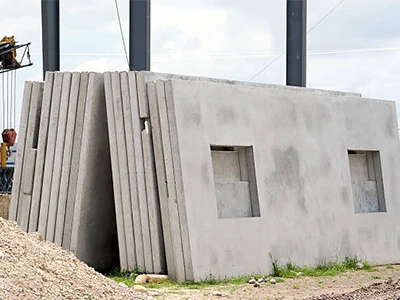



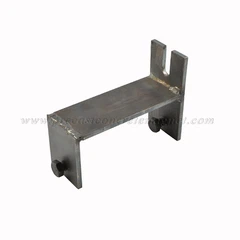
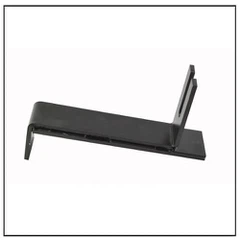


When you produce precast concrete panels, beams, pipes, or other elements, the edge profile you choose affects appearance, demolding, durability, and production efficiency. You may see "chamfered" and "beveled" used interchangeably, but their geometry, formwork requirements, and practical applications are not always the same. In this guide, you will compare chamfered edge concrete vs beveled edge, understand how each profile is formed, and identify which option suits your mold, concrete product, and production volume. You will also learn how concrete chamfer strips and magnetic chamfer systems can help you achieve consistent edges with less installation time and rework on site.
What Does Chamfered Edge Actually Mean?
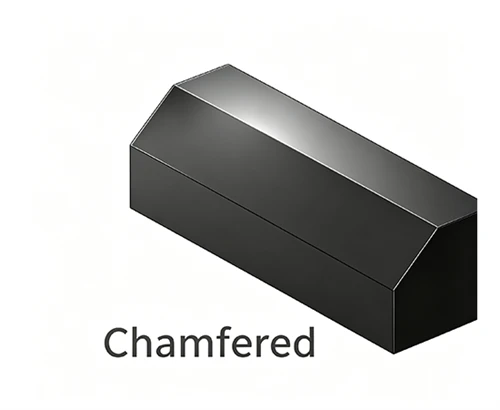
Before comparing it to a beveled edge, here's what a chamfered edge actually is, and why it's almost always 45 degrees.
What a Chamfered Edge Looks Like on Precast Concrete
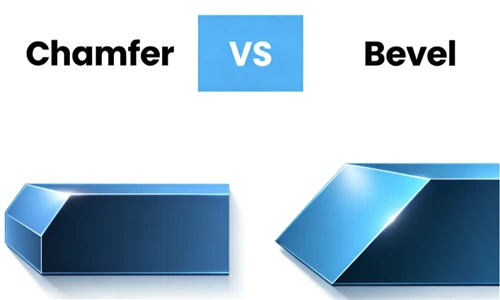
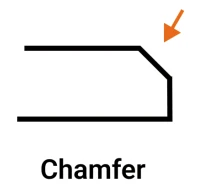
A chamfered edge replaces a sharp 90-degree corner with a flat, angled face, almost always cut at 45 degrees. That angle isn't arbitrary. It's symmetrical, so it holds up the same way no matter which direction the edge takes a hit, and it's simple to form on both sides of the corner without extra setup.
How a Chamfer Strip Forms the Edge During Casting
You get that shape with a chamfer strip fixed inside the formwork before you pour, not by cutting or grinding it in afterward. Once the concrete cures and you pull the mold, the edge is already finished. That saves real time on a production line, since there's no extra step after demolding.
Pros and Cons of Chamfered Edges
| Comparison Point | Pros | Cons |
| Corner Protection | Reduces chipping during demolding, lifting, and transportation. | Incorrect dimensions can make the edge too thin or weak. |
| Appearance | Creates a clean, consistent architectural shadow line. | A worn or deformed chamfer strip may produce an uneven finish. |
| Production Efficiency | Reduces grinding, patching, and post-casting finishing work. | You must position the strip accurately before pouring concrete. |
| Formwork Compatibility | Works well with steel molds and magnetic chamfer strips. | Different formwork materials may require different fixing methods. |
| Customization | Available in a range of standard widths and depths. | Custom profiles usually require higher costs and longer lead times. |
| Applications | Suitable for precast panels, beams, columns, stairs, and slabs. | Not ideal when your design requires sharp 90-degree corners. |
What Is a Beveled Edge in Concrete?
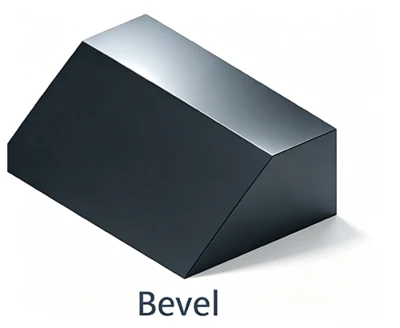
Before choosing formwork, learn how beveled-edge concrete affects your precast profile, finish, handling, and requirements.
Definition of a Beveled Concrete Edge
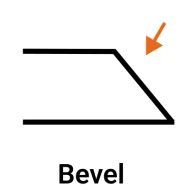
A beveled concrete edge is a flat, sloped surface that replaces a sharp 90-degree corner. You form it with a concrete chamfer strip, custom bevel strip, or mold insert. Set the angle, width, and depth to your drawings and project specifications. Because "bevel" and "chamfer" can mean the same profile in some markets, confirm the exact dimensions before ordering.
Where Beveled Edges Are Used
You use beveled edges on precast panels, beams, columns, stairs, slabs, drainage channels, and components. They protect corners during demolding and handling while creating a shadow line. For repeated forms, magnetic chamfer strip speeds up setup. Select the strip for your mold, release method, volume, and finish.
Pros and Cons of Beveled Edges
| Comparison Point | Pros | Cons |
| Corner Protection | Reduces chipping during demolding, lifting, and transportation. | A wide or shallow bevel may reduce the effective corner thickness. |
| Design Flexibility | Supports different angles, widths, and depths for custom precast designs. | Custom dimensions may require special bevel strips or formwork inserts. |
| Appearance | Creates a smooth transition and a distinctive architectural finish. | Inconsistent setup can make the bevel uneven or visually noticeable. |
| Demolding | Helps release precast components from the form with less corner damage. | Poor alignment may cause sticking, leakage, or dimensional errors. |
| Formwork Compatibility | Can be adapted to steel, timber, plastic, and composite forms. | You may need additional fixing methods or customized inserts. |
| Production Efficiency | Reduces post-casting grinding and edge repair. | Cutting or grinding the edge can take longer for complex profiles. |
| Applications | Suitable for precast panels, beams, columns, stairs, slabs, and drainage channels. | May not suit designs that require sharp corners or standard chamfer profiles. |
Chamfered Edge Concrete vs Beveled Edge: Key Differences
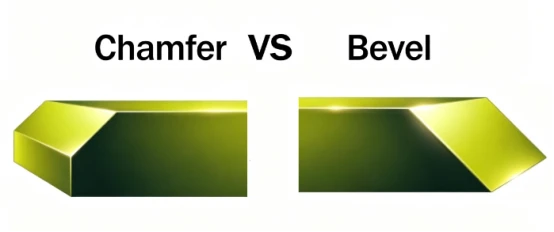
Once you know what each term means, here's how they actually stack up when you're choosing one for a real production run.
Geometry and Terminology
A chamfer keeps a fixed angle, almost always 45 degrees, and it's the standard term you'll see on precast drawings and formwork specs.
A bevel is looser on angle and gets used more loosely across industries, which is exactly why the two labels end up describing similar-looking edges without meaning the exact same thing.
Standard Profiles and Custom Profiles
Chamfer strips come as standard, off-the-shelf products in common sizes, so you can reorder the same profile every time without redesigning anything. A beveled edge cut or ground in after demolding can be sized to whatever a project calls for, but you're relying on custom work each time instead of pulling a known part off the shelf.
Formwork Compatibility
If you're running magnetic chamfer strips, you need steel formwork for them to hold in place, while PVC and rubber versions can be nailed into wood forms instead, so your mold setup decides which type actually works for you. A beveled edge made by cutting or grinding after demolding skips this question entirely, since it has nothing to do with the mold at all.
Edge Finish and Consistency
Because a chamfer strip has a fixed shape, every panel comes out with the same edge, pour after pour, with almost no variation. A ground or cut bevel depends more on the person doing the work, so you can end up with small differences from one panel to the next, even on the same job.
Installation and Replacement
Magnetic chamfer strips are reusable, so you pull them off, clean them, and use them again on the next pour, while PVC and rubber strips are more of a one-and-done deal once they wear out. A beveled edge doesn't need installing at all, but you're paying for the cutting or grinding step every single time, not just once up front.
| Factor |
Chamfered Edge |
Beveled Edge |
| Geometry & Terminology | Fixed angle, usually 45°; standard term in precast specs | Variable angle; more common term outside precast |
| Profile Type | Standard, off-the-shelf strip sizes | Custom-cut, sized per project |
| Formwork Compatibility | Magnetic types need steel forms; PVC/rubber work on wood | Independent of formwork, done after demolding |
| Edge Finish & Consistency | Highly consistent, panel to panel | Depends on operator; more variation |
| Installation & Replacement | Magnetic, reusable; PVC/rubber | No installation, but reworked every time |
Which Is Better for Precast Concrete?
Based on everything above, here's a simple way to decide which one actually makes sense for your panel.
Choose a Chamfered Edge When You Need
- Reliable corner protection on structural panels that get handled and transported a lot
- The same result on every single pour, especially if you're running reusable magnetic strips
- A standard, easy-to-reorder profile that doesn't need custom sizing for each job
Choose a Beveled Edge When You Need
- A specific look on exposed, architectural surfaces where appearance matters as much as function
- Flexibility to size or shape the edge after the panel has already been cast
- A profile your existing mold or formwork setup can't easily produce with a strip
How Edge Profiles Affect Precast Concrete Formwork
- The profile you choose changes more than how the edge looks. It changes what your formwork needs to do.
- A chamfer strip needs a corner void built into the mold, so your formwork has to hold that shape precisely at every joint.
- Magnetic strips cut formwork prep time between pours, since there's no nailing or removal step.
- A beveled edge cut in after demolding leaves your formwork design untouched entirely.
- Switching between profiles across different products means keeping more than one type of corner accessory on hand.
- Getting the corner detail right the first time matters more with chamfer, since fixing a misplaced strip mid-pour is harder than adjusting a bevel later.
Choosing the Right Concrete Chamfer Strip
Once you know whether you need a chamfer or a bevel, picking the actual strip comes down to four practical decisions.
Select the Correct Profile Size
Chamfer strips come in a handful of common sizes, and the right one depends on your panel thickness and how much corner protection you actually need. Going too small barely helps with chipping, while going too large can eat into your cover requirements or change how the panel looks. Check your project drawings first, since the size is often already specified there.
Select the Right Material
Steel, rubber, urethane, and PVC chamfer strips all do the same basic job, but they hold up differently. Steel and rubber magnetic strips are built for repeated use on steel formwork, urethane holds fine detail well, and PVC is the simple, low-cost option for wood forms. What you're pouring, and how often, should drive this choice more than price alone.
Match the Strip to Your Formwork
A magnetic strip only works if your formwork is steel. If you're pouring on wood or a mixed setup, PVC or rubber strips that nail or fix directly into the mold make more sense. Before you order in bulk, confirm which fixing method your specific tables and molds actually support.
Consider Production Volume
If you're running the same panel design over and over, reusable magnetic strips pay for themselves through faster setup and less waste. For one-off or low-volume jobs, a cheaper single-use PVC strip is usually the more sensible buy, since you won't be reusing it enough to justify the higher upfront cost.
Magnetic Concrete Chamfer for Precast Production
If magnetic chamfer sounds like the right fit for your production line, here's what you can actually order from us:
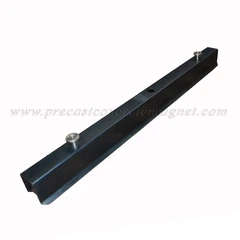
- Magnetic chamfer steel, the standard choice for most precast wall panels and structural elements.
- Magnetic urethane chamfer, which holds finer detail and suits more decorative profiles.
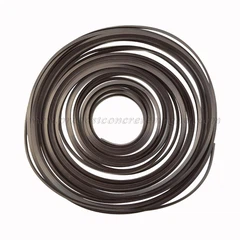
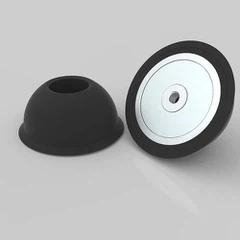
- Rubber magnetic chamfer, a flexible option available in smaller sizes for tighter corner work.
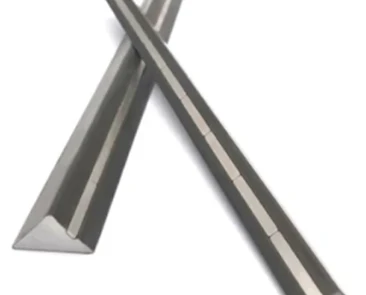
Magnetic Chamfer Steel
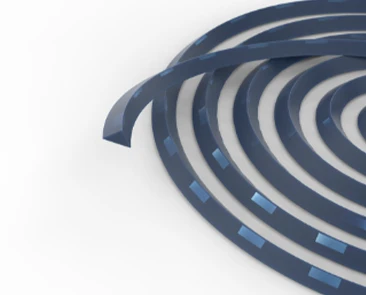
Magnetic Urethane Chamfer
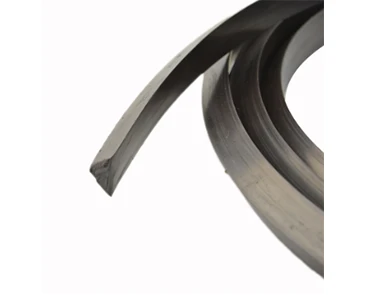
Rubber Magnetic Chamfer
Conclusion
By now, you've got a clear way to answer the question yourself: chamfer for structural protection and consistent results, bevel for custom shapes and exposed finishes, or both when a panel needs to handle load and look good at the same time. Neither one is universally better; they're just built for different jobs. If you're still weighing size, material, or which profile fits your formwork, send us your panel specs and formwork type, and we'll help you pick the right chamfer strip instead of guessing.
FAQ
Q: Is a chamfer the same as a bevel in concrete?
A: Not exactly, though people use the words interchangeably. A chamfer is a fixed angle, usually 45 degrees, formed during casting. A bevel can vary in angle and can be added either during casting or after.
Q: What is the difference between chamfered edge concrete and beveled edge concrete?
A: It comes down to consistency and process. Chamfer gives you the same result every pour since it's formed by a strip in the mold, while bevel is more flexible on angle and can be cut in after demolding.
Q: Is a 45-degree edge always a chamfer?
A: Not necessarily. 45 degrees is just the common convention for chamfer, not a strict rule. What actually makes it a chamfer is that it's a fixed, standard profile formed during casting, not the exact angle itself.
Q: Which edge profile is better for precast concrete?
A: Neither is better across the board. Chamfer is the stronger choice for structural protection and consistency, while bevel makes more sense for exposed, architectural surfaces where the finish matters more.
Q: Can a magnetic chamfer strip be used on steel formwork?
A: Yes, that's exactly what it's designed for. Magnetic chamfer strips only hold in place on steel tables, so they won't work on wood or non-magnetic formwork.
Q: What material is best for a concrete chamfer strip?
A: It depends on your setup. Steel and rubber magnetic strips suit repeated use on steel formwork, urethane holds finer detail, and PVC is the simple option for wood forms.
Q: Can chamfer strips be used for curved precast forms?
A: It depends on the material and how tight the curve is. Flexible options like rubber can follow gentler curves better than rigid steel, but very tight radii usually need a different solution than a standard strip.