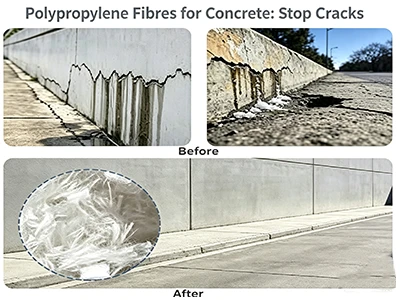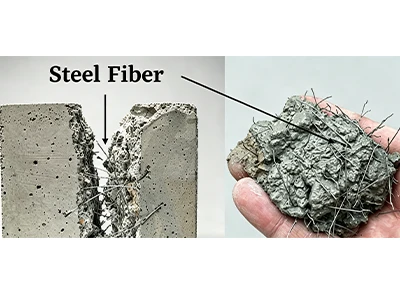





Polypropylene fiber (PP fiber)is a high-strength, bundled monofilament fiber made primarily from polypropylene using a specialized production process. When added to concrete or mortar, it effectively controls microcracks caused by factors such as plastic shrinkage, drying shrinkage, and temperature fluctuations, preventing and inhibiting crack formation and growth. This significantly improves the concrete's crack resistance, impermeability, impact resistance, and seismic resistance. Unlike rebar, polypropylene does not corrode, making it an ideal choice for environments exposed to moisture, salt, or corrosive chemicals. From residential floor slabs to large-scale infrastructure projects, PP fiber has become a vital component of modern concrete construction.
Key Benefits of Polypropylene Fibre in Concrete
Crack Prevention: Adding a certain amount of crack-resistant fibers to mortar/concrete can more than double its crack resistance. It effectively improves the mortar/concrete's resistance to cracks caused by temperature stress, plastic shrinkage, and drying shrinkage. With a reasonable mix ratio and proper construction, cracks can be completely prevented.
Waterproofing: It effectively enhances and improves the mortar/concrete's ability to resist seepage and moisture. Generally, adding crack-resistant fibers improves concrete's water resistance. It is an effective waterproofing material.
Impact Resistance: The incorporation of crack-resistant fibers significantly increases the concrete's impact resistance.
Types of Polypropylene Fibre in Concrete
Commonly used polypropylene engineering fibers come in two forms: monofilament and mesh.
Mesh-type monofilament polypropylene fibers are high-strength, bundled monofilament fibers. Special surface treatment ensures uniform fiber dispersion in concrete and excellent bonding strength with the cement matrix. They are generally suitable for fine aggregate concrete.
Mesh-type polypropylene fibers appear as a mesh structure of multiple interconnected monofilaments. When mixed into concrete, the lateral connections between the monofilaments are broken down by the concrete's own kneading and friction during mixing, allowing the monofilaments or mesh structure to fully expand, thus achieving uniform incorporation of numerous polypropylene fibers into the concrete.

Applications in Modern Construction
Polypropylene fiber has become a vital additive in modern concrete construction due to its versatility and performance advantages. In residential projects, it is widely used in floors, driveways, and foundations, effectively preventing premature cracking and ensuring long-term durability. In commercial buildings such as industrial floors, warehouses, and parking decks, fiber-reinforced concrete can improve structural integrity and reduce maintenance costs. Infrastructure projects such as bridges, tunnels, dams, and pavements can use polypropylene fiber to control cracks and improve durability, especially in high-stress or exposed environments. Fiber-reinforced precast components such as pipes, panels, blocks, and decorative elements are easier to construct, with less cracking and a better surface finish.

Polypropylene Fibre vs. Glass and Natural Fibres in Concrete
|
Feature |
Polypropylene Fibre |
Glass Fibre |
Natural Fibre |
|
Crack Control |
Excellent |
Good |
Moderate |
|
Durability |
High |
Medium |
Low |
|
Weight |
Very Light |
Moderate |
Light |
|
Cost |
Low |
High |
Low |
|
Workability |
Easy |
Moderate |
Moderate |
|
Suitable Applications |
Residential, commercial, precast, infrastructure |
Structural elements, high-strength concrete |
Low-rise buildings, eco-friendly projects |
|
Environmental Impact |
Low/Moderate |
Medium |
High |
How Should Polypropylene Fibers Be Used In Concrete?

When using polypropylene fibers in concrete, careful attention must be paid to dosage, mixing, and placement methods to ensure their full performance. Generally, the recommended dosage is 0.9 to 1.2 kg per cubic meter of concrete, though this can be adjusted based on the intended use and desired crack control. The fibers should be added gradually during mixing to ensure even distribution and avoid clumping or entanglement.
Best practice is to thoroughly mix using standard mixing procedures so that each fiber is firmly embedded in the cement matrix. Avoid adding large amounts of fiber too late or all at once during construction, as this can result in uneven distribution, reduced crack control, or surface defects.
Conclusion
The use of polypropylene fiber in foundation concrete construction has significantly improved concrete's crack resistance, compression resistance, and impermeability, demonstrating exceptional results in combating hydration heat and temperature cracks. In future engineering practices, rationally controlling polypropylene fiber dosage and construction techniques will help improve the durability and safety of large-scale concrete structures and promote the wider application of this technology.