




Have you ever wondered how engineers ensure concrete structures are strong, safe, and durable? A small yet crucial component plays a big role: plastic concrete spacers. These simple accessories ensure proper coverage, maintain durability, and prevent corrosion of rebar. In this guide, we'll explore their properties, applications, and why they're the preferred choice over traditional alternatives.
What Are Plastic Concrete Spacers?
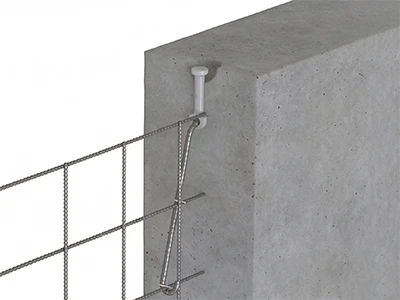
Plastic concrete spacers are designed to maintain the correct distance between rebar and the concrete surface. Their primary function is to ensure the required concrete cover, thereby protecting the rebar from moisture, corrosion, and external damage.
By maintaining the correct position of rebar, they help structures meet building code requirements and achieve long-term durability. Without the correct cover, concrete components can experience premature cracking, rebar corrosion, and even structural failure.

Key Benefits of Plastic Concrete Spacers
Durability: Plastic spacers are extremely resistant to corrosion, chemicals, and moisture, making them ideal for indoor and outdoor use. They maintain their integrity even in harsh environments, such as coastal or industrial areas.
Precision: One of their key advantages is their ability to maintain consistent cover thickness. This ensures compliance with structural design requirements and building codes, ultimately extending the lifespan of reinforced concrete.
Lightweight and Cost-Effective: Plastic spacers are easy to handle, store, and transport on site. Compared to concrete or metal spacers, their affordability makes them an affordable and high-performance solution.
Compatibility: Plastic spacers offer a variety of designs and applications-whether for slabs, beams, columns, foundations, or precast concrete elements-providing a reliable solution for a variety of construction needs.
Types of Plastic Spacers for Concrete
There are many different types of plastic spacers, each designed to meet specific rebar and construction needs. Selecting the right type ensures structural accuracy, durability, and efficiency during the concrete pouring process.

Wheel Spacers: Suitable for vertical rebar in walls, columns, and pillars. Their rounded design keeps the rebar centered and prevents movement during the concrete pour.
Chair Spacers: Commonly used for horizontal rebar in slabs and beams. They provide stable support for the rebar, keeping it at the correct height above the formwork.
Rebar Spacers: Used as linear supports in rebar cages. These spacers maintain uniform spacing between parallel rebar and help prevent sagging or shifting during the pour.
Custom/Heavy-Duty Spacers: Designed for precast panels, industrial floors, or high-load applications, these spacers are capable of withstanding greater weight and structural demands.
Construction Project Applications
Residential Construction: Plastic spacers are used in floor slabs, beams, and foundations to ensure uniform concrete cover, preventing steel corrosion and structural wear. This ensures that homes and apartments will be safe and durable for decades.
Commercial Projects: High-rise buildings, office buildings, and parking garages rely on plastic spacers to support dense rebar grids. Properly spaced rebar enhances load-bearing capacity and reduces the risk of cracks or structural failure.
Infrastructure Projects: Bridges, tunnels, highways, and other large infrastructure projects benefit from heavy-duty and high-load spacers that ensure precise rebar positioning even in demanding environments.
Precast Concrete Plants: Spacers are crucial in factory-made panels, pipes, and blocks, maintaining precise cover and alignment, ensuring consistent quality, and facilitating easier on-site assembly.

How to Choose the Right Plastic Spacer
Cover Thickness: Determine the required concrete cover thickness based on building codes, environmental conditions, and structural design. Selecting the appropriate spacer height ensures that the rebar is protected from corrosion and mechanical damage.
Load Capacity: Consider the weight of the rebar and wet concrete. For heavier slabs or high-load applications, use heavy-duty or custom spacers to prevent deformation or displacement during pouring.
Environmental (Indoor/Outdoor): Plastic spacers are available in different materials and grades. For outdoor or high-humidity environments, choose corrosion- and UV-resistant spacers to ensure long-term performance.
Match the spacer type to the structural member:
Wheel spacers for vertical rebar
Chair spacers for horizontal slabs and beams
Rebar spacers for cages and linear alignment
Contractor Checklist:
Verify the required spacer height
Check material compatibility (ABS, PP, PE)
Ensure the quantity meets project requirements
Confirm compliance with standards and certifications
Installation Tips for Plastic Spacers
Proper installation of plastic spacers is crucial for ensuring accurate rebar positioning and a durable concrete structure.
For walls and columns, wheel spacers should be carefully placed beneath vertical rebar to maintain proper alignment; chair spacers are ideal for supporting horizontal rebar in slabs and beams, keeping it at a consistent height above the formwork.
In precast slabs or high-load applications, heavy-duty spacers must be placed at strategic locations to prevent any shifting during the concrete pour.
For slabs, spacers are typically placed every 500-600 mm, while beams typically require 300-400 mm spacing. However, the exact distance should be based on project specifications, based on rebar density, concrete load, and member thickness.
Plastic Spacers vs. Concrete/Steel Alternatives
| Feature | Plastic Spacer | Concrete Spacer | Steel Spacer |
| Corrosion Resistance | Excellent | Poor | Poor |
| Precision in Cover | High | Moderate | Moderate |
| Weight | Lightweight | Heavy | Moderate |
| Durability | Long-lasting | Moderate | Prone to rust |
| Ease of Installation | Easy | Difficult | Moderate |
Conclusion
Despite their small size, plastic concrete spacers play a significant role in construction safety, durability, and cost-effectiveness. Choosing the right type and installing it correctly ensures the proper steel cover, complies with building codes, and reduces the need for future repairs. Whether for residential or commercial construction or large-scale infrastructure projects, plastic spacers help builders save time, reduce material waste, and extend the life of the structure. Their versatility, precision, and durability make them a wise choice for modern concrete construction.