




Fiber-reinforced concrete (FRC) refers to a cement-based composite material composed of cement paste, mortar, or concrete as a matrix and fibers as reinforcement. Fiber-reinforced concrete, also known as fiber concrete, typically refers to a cement-based composite material composed of cement paste, mortar, or concrete as a matrix and discontinuous short fibers or continuous long fibers as reinforcement. Fibers can control the further development of cracks in the matrix concrete, thereby improving crack resistance. The high tensile strength and elongation of fibers enhance the tensile, flexural, and impact strengths, elongation, and toughness of the concrete. Major types of fiber concrete include asbestos cement, steel fiber concrete, glass fiber concrete, polypropylene fiber concrete, carbon fiber concrete, plant fiber concrete, and high elastic modulus synthetic fiber concrete. It is a general term for composite materials composed of fibers and cement-based materials (cement paste, mortar, or concrete). The main disadvantages of cement paste, mortar, and concrete are low tensile strength, low ultimate elongation, and brittleness. These disadvantages can be overcome by adding fibers with high tensile strength, high ultimate elongation, and good alkali resistance.
The Role Of Fiber In Concrete
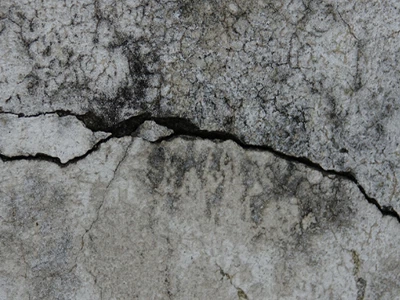
Ordinary concrete is a brittle material, already harboring numerous microcracks before loading. Under increasing external forces, these microcracks gradually expand and eventually form macrocracks, leading to material failure. The addition of an appropriate amount of fiber prevents and inhibits the growth of microcracks, significantly improving the tensile and flexural strengths, as well as the fracture energy, of the composite material compared to the unreinforced cement matrix. Various types of fiber improve concrete's impermeability, freeze-thaw resistance, chloride ion penetration resistance, and carbonation resistance to varying degrees. Fiber-reinforced concrete primarily uses short fibers with a specific aspect ratio (the ratio of fiber length to diameter). However, long fibers (such as glass fiber roving and polypropylene fiberized film) or fiber products (such as glass fiber mesh and glass fiber mat) are sometimes used. The ultimate tensile strength can be increased by 30-50%. The primary function of fiber in fiber-reinforced concrete is to limit the growth of cracks in the cement matrix under external forces. In the initial stage of loading (tension and bending), when the ingredients are appropriate and a suitable high-efficiency water-reducing agent is added, the cement base and the fibers bear the external force together, with the former being the main bearer of the external force; when the base cracks, the fibers across the cracks become the main bearers of the external force. Suppose the volume content of the fiber exceeds a certain critical value. In that case, the entire composite material can continue to withstand higher loads and produce larger deformations until the fibers are broken or pulled out of the base material, destroying the composite material. Compared with ordinary concrete, fiber-reinforced concrete has higher ultimate tensile and flexural strength, especially the improvement in toughness.
Types of Concrete Fiber Reinforcement

Polypropylene Fiber(PP Fibers)

Polyacrylonitrile Fiber (PAN Fiber)

Polyvinyl Alcohol Fiber(PVA Fiber)

Polyester Fiber (PET Fiber)

Cellulose Fibers

Basalt Fiber

Steel Fibers For Concrete

Imitation Steel Fiber

Polypropylene Twisted Fiber
Fibers can be classified based on their material properties:
① Metal fibers, such as steel fibers (steel fiber reinforced concrete) and stainless steel fibers (suitable for heat-resistant concrete).
② Inorganic fibers, primarily natural mineral fibers (chrysotile, crocidolite, amosite, etc.) and man-made mineral fibers (alkali-resistant glass fibers, carbon fibers such as alkali-resistant mineral wool).
③ Organic fibers, primarily synthetic fibers (polyethylene, polyvinyl alcohol, nylon, aromatic polyimide, etc.) and plant fibers (sisal, agave, etc.). Synthetic fiber reinforced concrete should not be used in environments with temperatures exceeding 60°C.
Based on their elastic modulus, fibers can be divided into two major categories:
Fibers with an elastic modulus smaller than that of the cement matrix are referred to as flexible fibers, including polypropylene fibers, nylon fibers, and cellulose fibers.
Fibers with an elastic modulus larger than that of the matrix are called rigid fibers, such as steel fibers, glass fibers, and carbon fibers.
Common Concrete Fibers And Their Characteristics
Steel Fiber

Concrete formulated by incorporating an appropriate amount of steel fiber into ordinary concrete is called steel fiber concrete or steel fiber reinforced concrete. Compared to ordinary concrete, its tensile strength, flexural strength, wear resistance, impact resistance, fatigue resistance, toughness, crack resistance, and explosion resistance are significantly improved. High-strength steel wire cut-end hook-type fibers, ingot milled-end hook-type fibers, sheared special-shaped fibers, and low-alloy steel melt-drawn fibers are gaining widespread application in engineering projects due to their enhanced bonding with the concrete matrix, significantly preventing cracks, strengthening, and toughening concrete.
Advantages and Disadvantages
Steel fiber's technical advantage is its ability to increase concrete's toughness and tensile strength. However, the steel fibers tend to clump during mixing, resulting in poor workability, difficult pumping, difficult construction, and susceptibility to rust. Furthermore, steel fiber concrete is heavy and requires significant steel production, increasing steel consumption and costs. The main form of steel fiber failure during use is being pulled out rather than being broken, which indicates that the adhesion of steel fibers to concrete is insufficient, which will affect the improvement of the tensile strength of concrete. The principle of toughening and strengthening is that when cracks occur, the high modulus of steel and the high tensile strength of a single fiber prevent the cracks from further developing; however, due to the limited number, the effect of restraining microcracks is not significant, and the improvement of anti-seepage, freeze-thaw, and other properties is not obvious. In addition, the density of steel fibers is too high during construction, and they often sink to the bottom of the concrete during vibration and pouring, making it impossible to distribute them evenly. This is the main reason why the theoretical research conclusions are good, but the actual application effects vary greatly.
Carbon Fiber

Carbon fiber is a composite material in which carbon fibers are uniformly dispersed within a cement matrix to enhance the concrete's physical and mechanical properties. Key features of carbon fiber concrete include excellent mechanical properties, waterproofing, and resistance to natural temperature fluctuations, which are not found in conventional reinforced concrete. It also exhibits stable chemical properties, long-lasting mechanical strength, and dimensional stability in highly alkaline environments.
Replacing steel with carbon fiber eliminates the degradation and deterioration of reinforced concrete caused by saltwater, reducing the weight of building components, facilitating installation and construction, and shortening construction schedules. Carbon fiber also has vibration-damping properties, absorbing shock waves and increasing seismic resistance and flexural strength by more than ten times. Carbon fiber concrete exhibits high tensile strength, flexural strength, fracture resistance, and corrosion resistance. Due to its low coefficient of expansion, carbon fiber concrete exhibits excellent heat resistance and minimal thermal deformation.
The primary function of carbon fiber in carbon fiber concrete is to prevent the propagation of microcracks within the concrete and to prevent the occurrence and development of macrocracks. Therefore, its tensile strength and shear, bending, and torsional strengths, which are mainly controlled by the principal tensile stress, are significantly improved; at the same time, it has a high matrix deformation resistance, thereby improving its tensile, bending, and impact toughness. When the carbon fiber volume fraction is 1.18%, the splitting tensile strength of the specimen increases by 1.2%. According to the composite rule, the reinforcing effect of carbon fiber should increase with the increase in fiber content in cement. When the weight percentage of carbon fiber is less than 5%, this relationship is almost linear. When the content increases further, the carbon fiber is difficult to disperse evenly in the matrix, and the reinforcing effect cannot be achieved, and even the tensile strength of carbon fiber concrete is reduced. In addition, carbon fiber concrete also has good corrosion resistance, permeability resistance, wear resistance, shrinkage resistance, and durability.
Fiberglass

Glass fiber reinforced concrete (GFRC) is a composite material made by uniformly distributing alkali-resistant glass fibers with a high elastic modulus throughout cement mortar or conventional concrete. Because the diameter of glass fibers is only 5 to 20 μm, nearly identical to cement particles, the binder used in GFRC is cement paste or fine sand, with virtually no coarse aggregate. Therefore, composite materials made with this material are also known as reinforced cement. GFRC is a future development trend in construction engineering. It not only overcomes the shortcomings of conventional concrete products, such as heavy weight, low tensile strength, and poor impact resistance, but also possesses properties not found in conventional concrete. GFRC products are thinner and lighter. Because they use extremely high tensile strength glass fibers as reinforcement, they possess high tensile strength. The uniform distribution of glass fibers in the concrete prevents surface cracking. Because they absorb significant energy during damage, they exhibit excellent impact resistance and high flexural strength. GFRC products also offer excellent demolding properties and are easy to process, making them easily adaptable to various shapes.
Polypropylene Fiber Concrete

Polypropylene fiber concrete is a composite material made by evenly distributing polypropylene fibers cut to a specific length within a cement mortar or conventional concrete matrix to enhance the matrix's physical and mechanical properties. This fiber-reinforced concrete offers advantages such as lightweight, high tensile strength, and resistance to impact and cracking. Polypropylene fibers can also partially replace steel reinforcement to reduce the concrete's weight, thereby increasing the structure's seismic resistance.
Polypropylene fiber concrete is the most widely researched and applied concrete. Depending on the fiber shape and structure, polypropylene fibers can be categorized as monofilaments, parallel fibrillated fiber bundles, and film fibers. Monofilaments have a high aspect ratio, while parallel fibrillated fiber bundles can be easily dispersed within the cement matrix. While chemical bonding is limited, mechanical bonding is strong, preventing the fibers from being pulled out under stress.
While polypropylene fibers have a higher tensile strength than conventional concrete, their elastic modulus is relatively low, making them prone to extreme deformation under high stress conditions. However, when an appropriate amount of polypropylene fiber is added, the impact resistance of this composite material is much greater than that of ordinary concrete. This has found a very promising way to produce components with low loads but high impact resistance and toughness. In addition, polypropylene fiber is rust-resistant and has good acid and alkali resistance.
Basalt Fiber

Continuous basalt fiber (CBF) is an inorganic fiber material made from pure natural volcanic extrusive rock. It is quickly drawn after being melted at a high temperature of 1450-1500℃. It has a golden brown appearance, excellent comprehensive performance, and a low price.
Characteristics of basalt fiber:
(1) Naturalness of raw materials. Since the raw materials for the production of CBF depend on natural volcanic extrusive rock, in addition to its inherent high chemical and thermal stability, it does not contain any components that are harmful to human health.
(2) Comprehensive performance. Basalt fiber is a truly "multi-functional" fiber. For example, it is acid-resistant, alkali-resistant, low-temperature-resistant, high-temperature-resistant, heat-insulating, electrically insulating, and sound-insulating. Its tensile strength exceeds that of large-tow carbon fibers, and its elongation at break is better than that of small-tow carbon fibers. CBF has a polar surface and excellent interfacial wettability when compounded with resin. CBF also has three-dimensional molecular dimensions, which, compared with linear polymer fibers with one-dimensional molecular dimensions, have higher compressive strength, shear strength, and adaptability to harsh environments and aging resistance, among other excellent comprehensive properties.
(3) Low cost. The price of basalt fiber used in cement concrete is not high, significantly lower than that of steel fiber, carbon fiber, etc., and comparable to synthetic fibers.
(4) Natural compatibility. Basalt fiber is a typical silicate fiber. It is easy to disperse when mixed with cement, concrete, and mortar. Freshly mixed basalt fiber concrete has stable volume, good workability, and good durability. It has excellent high-temperature resistance, anti-seepage and crack resistance, and impact resistance. In addition, basalt fiber is more alkali-resistant than alkali-resistant glass.
FRC vs Traditional Reinforcement
| Comparison Item | FRC | Traditional Reinforcement |
| Reinforcement Form | Uses dispersed fibers mixed throughout the concrete matrix | Uses steel rebar or welded mesh placed at specific positions |
| Crack Control | Excellent for controlling plastic shrinkage and micro-cracks | More effective for controlling major structural cracks |
| Load-Bearing Capacity | Improves toughness and post-crack behavior, but may not replace the main structural reinforcement in all applications | Provides primary structural tensile strength and load-bearing support |
| Installation Efficiency | Faster because fibers are added directly into the mix, reducing placement time | Slower due to cutting, bending, placing, and tying rebar on site |
| Labor Requirement | Lower labor demand in many applications | Higher labor requirements, especially for complex reinforcement layouts |
| Suitability for Complex Shapes | Well-suited for thin sections and complex shapes where traditional bar placement is difficult | Rebar placement may be more difficult in narrow or highly detailed sections |
| Durability | Can improve impact resistance, abrasion resistance, and crack distribution | Highly durable when properly designed and protected against corrosion |
| Corrosion Risk | Synthetic fibers are corrosion-resistant; steel fibers may still corrode in some environments | Steel rebar is vulnerable to corrosion if the concrete cover or protection is insufficient |
| Cost Structure | May reduce labor and installation costs, but fiber material cost varies by type | Material cost may be lower in some cases, but installation labor is usually higher |
| Typical Applications | Industrial floors, shotcrete, tunnel linings, precast products, slabs, pavements | Beams, columns, foundations, walls, slabs, and load-bearing structural elements |
| Best Use Scenario | Ideal for crack control, toughness improvement, and faster construction in selected applications | Best for primary structural reinforcement and high-load applications |
Applications of Fiber-Reinforced Concrete
Fiber-reinforced concrete is used in a variety of applications, depending on the constructor's and builder's ability to exploit the material's static and dynamic properties. Some applications include runways, parking garages, pavements, tunnel linings, slope stability, shells, walls, pipes, manhole covers, dams, hydraulic structures, viaducts, roads, bridges, and warehouse floors.

How to Choose the Right Fiber
Define Structural Requirements
The first step is to determine the primary purpose of using fibers: whether it is for crack control, structural load-bearing support, or durability enhancement.
For structural reinforcement and applications requiring high load capacity, steel fibers are typically the preferred choice.
For controlling shrinkage cracks or improving surface performance, polypropylene fibers are widely used.
Consider the Application Environment
The service environment plays a decisive role in fiber selection.
In corrosive or wet environments, synthetic or polypropylene fibers are more suitable due to their excellent resistance to moisture and chemical attack.
For applications involving high-impact loads or industrial use, steel fibers provide superior toughness and energy absorption.
Evaluate Workability and Mixing Performance
Certain types of fibers may influence the workability of concrete.
Fine synthetic fibers are easy to disperse and have minimal impact on the mixing process.
Steel fibers may require more careful batching and mixing procedures to ensure uniform distribution and to prevent clumping.
Balance Cost and Performance
There are significant cost differences among various fiber types.
For large-scale applications, synthetic fibers are generally more cost-effective. High-performance fibers, such as steel or specialty fibers, may increase material costs but offer superior long-term performance.
Match Fiber Type with Construction Method
In precast concrete production, it is important to select fibers that support consistency and ease of placement.Fibers that integrate well with controlled factory processes can help improve production efficiency and reduce defects.
Summarize
Fiber plays a vital role in enhancing the performance and durability of concrete. Whether it's steel fiber, glass fiber, polypropylene fiber, or natural fiber, each type has unique advantages and is suitable for different construction needs. By properly selecting the type and dosage of fiber, engineers can not only effectively improve concrete's crack resistance, toughness, and long-term strength, but also significantly reduce subsequent maintenance costs. As construction technology continues to advance, fiber-reinforced concrete is becoming a key solution for creating stronger, safer, and more sustainable structures.
FAQ
Q: What fibers are used in concrete?
A: Commonly used fibers in concrete include steel fibers, polypropylene fibers, glass fibers, synthetic fibers, carbon fibers, and natural fibers. Different types of fibers serve different functions, such as enhancing crack resistance, durability, or structural performance.
Q: Which fiber is best for concrete?
A: No single fiber is suitable for every project; the best choice depends on specific requirements.
Steel fibers are suitable for increasing structural strength and load-bearing capacity.
Polypropylene fibers are suitable for crack control and improving surface properties.
Synthetic fibers offer advantages in terms of durability and cost-effectiveness.
Q: Can fiber replace rebar?
A: In certain applications, fibers can partially replace traditional steel reinforcement-particularly regarding crack control and enhancing toughness. However, in most structural engineering projects, fibers are typically used in conjunction with steel reinforcement rather than as a complete substitute, especially in situations involving high load-bearing requirements.
Q: What is polypropylene fiber used for?
A: Polypropylene fibers are primarily used to reduce plastic shrinkage cracking, enhance surface durability, and improve resistance to moisture and chemical corrosion. They are widely utilized in floor slabs, pavements, and precast concrete products.
Q: Are steel fibers stronger than synthetic fibers?
A: Yes, steel fibers typically possess higher tensile strength and load-bearing capacity, making them frequently used in high-strength applications such as industrial flooring and structural components. However, synthetic fibers offer advantages in terms of corrosion resistance and ease of installation.