





Prefabricated buildings have been widely used due to their advantages such as short cycle time and energy saving. However, there are still many problems in the management of prefabricated buildings, which bring safety hazards to prefabricated construction. Every detail determines the quality of the building. Since most components of prefabricated buildings need to be hoisted, hoisting safety must not be relaxed.

Equipment Accounting:
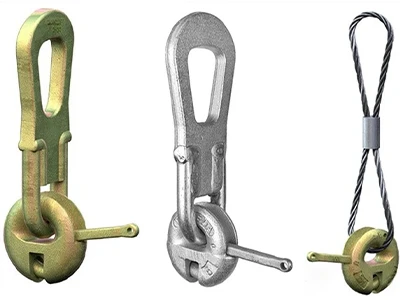
The lifting equipment should be calculated first. The stiffness and strength of the lifting points must meet the design requirements. The spreaders should meet the lifting strength requirements. The layout of their positions and the safety of the spreaders must be strictly designed and checked.
Device Management:
(1) Lifting equipment should meet the influence of objective factors such as the external dimensions, weight, installation location and crane placement location of the components.
(2) The annual inspection status of lifting equipment should be checked before entering the site, and the equipment must be ensured to be in good condition before use.
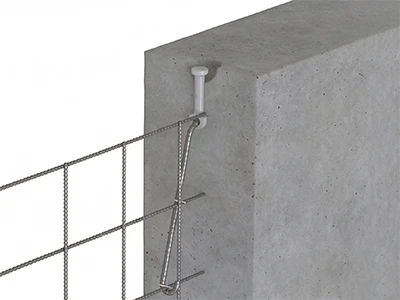
(3) Before use, the specifications and technical performance of the lifting, transportation, and hoisting equipment as well as the rigging, snap rings, clamps, clamps, anchors, etc. should be carefully inspected or tested. If any damage or looseness is found, it should be replaced or replaced immediately. Fixed.
(4) If the lifting equipment is inflexible or worn during trial operation, it should be repaired in time; important components should be trial-lifted before hoisting, and formal hoisting can only be carried out after each part is checked to be normal.
Safe operation training management:
(1) All operators should hold professional operation certificates and have complete annual review procedures.
(2) On-site commanders, professional operators, and auxiliary operators should be regularly trained to explain the technical knowledge of lifting operations and precautions for safe construction operations.
(3) Lifting command should be provided by full-time personnel with qualified technical training. Operators of lifting equipment must be certified to work. Hoisting is prohibited without command or the signal is unclear.
Safety Assurance Measures:
(1) Obvious signs should be set up in the hoisting work area and designated personnel should be on guard. Personnel unrelated to the hoisting are strictly prohibited from entering the site.
(2) Personnel involved in hoisting must wear safety helmets; personnel working at heights should wear safety belts, non-slip shoes, and tool bags.
(3) When the crane is working, no one is allowed to pass within the rotation radius of the boom.
(4) When transporting and hoisting components, it is strictly prohibited for personnel to stand on the components being transported or hoisted to give instructions.
(5) During hoisting, no scattered objects may be stacked or hung on the components. The lifting and transfer of sporadic materials and objects must be carried out through hanging cages or steel wire ropes and safety ropes after being tied firmly. Materials, objects, and tools must not be thrown randomly.
(6) When lifting components, the speed should not be too fast, and should not stay at high altitude for too long. It is strictly forbidden to rise and fall suddenly to prevent components from falling off.
(7) In case of strong winds, snowy weather, etc., hoisting operations should be stopped as much as possible. If hoisting operations are necessary, necessary anti-slip measures should be taken, and sufficient lighting should be provided for night operations. Hoisting is prohibited in severe weather such as strong winds and fog above Level 6.