





In recent years, with the rapid development of science and technology, precast concrete products have been increasingly widely used in construction. These high-strength, high-quality Precast concrete components have brought many advantages to modern buildings, from precast beams and precast concrete boards to precast concrete shear walls and columns. This article will explain in detail the benefits of Precast concrete products.
About Precast Concrete
1. Advantages of Precast Concrete Products
High Strength and Durability
Precast concrete products adopt advanced production processes and technologies. Their concrete has high strength and good durability, which can effectively improve the overall structural safety and service life of the building.
Energy Saving and Environmental Protection
The production process of Precast concrete products is more energy-saving and environmentally friendly than traditional construction methods, reducing noise, dust, and other pollution at the construction site, which is in line with the development trend of green buildings.
Convenient Construction
Precast concrete products are prefabricated in the factory, which can achieve standardized and modular production, fast on-site construction speed, effectively shorten the construction period, and improve construction efficiency.
Reduce Costs
The large-scale production of Precast concrete products reduces material costs, while reducing labor costs and material waste at the construction site, bringing economic benefits to construction companies.
2. Application Areas Of Precast Concrete Products
Residential buildings
In residential buildings, Precast concrete products are widely used in structural components such as precast beams, Precast concrete panels, and Precast concrete shear walls. The high strength and durability of these products provide good safety protection for residential buildings while reducing construction costs and cycles.
Commercial buildings
Commercial buildings have higher requirements for building stability and safety, and PC products play an important role in this regard. For example, large commercial centers often use high-strength components such as PC columns and PC beams to ensure the stability and seismic performance of buildings.
Public facilities
Public facilities such as schools and hospitals have extremely high requirements for the quality and safety of buildings. The widespread use of PC products provides these facilities with solid and reliable structural support and ensures public safety.
With the continuous development of science and technology, the types and performance of precast concrete products will be further improved. In the future, precast concrete products will be used in more fields, such as large infrastructure projects such as bridges and highways. At the same time, as the concept of green buildings becomes more popular, the environmental advantages of precast concrete products will become more prominent.

Several Common Precast Concrete Components
Precast beams: Precast beams are an important part of building structures, mainly used to bear and transfer loads. Compared with traditional cast-in-place beams, precast beams have higher strength and longer service life. They undergo strict quality control during the production process to ensure excellent durability and stability. The installation of precast beams is quick and easy, which greatly shortens the construction period and reduces labor costs.
Precast Concrete Boards: PC boards are mainly used for floor slab laying and roof covering. They have excellent compressive and tensile properties and can withstand large loads. The production process of PC boards gives them good thermal insulation and sound insulation effects, which improves the comfort of living and working spaces. In addition, PC boards are easy to install, which can greatly reduce the time and cost of on-site operations.
Precast Concrete Shear Walls: In high-rise buildings, PC shear walls play a key role. It can withstand shear and twisting moments in the horizontal direction, significantly improving the seismic performance of the building. The precast production method of PC shear walls ensures the accuracy of their quality and size, thereby simplifying the on-site construction process.
Precast Concrete Columns: PC columns are mainly used to support building structures and transfer loads. Compared with traditional wooden or steel columns, PC columns have higher load-bearing capacity and longer service life. They are produced in factories and undergo strict quality inspections to ensure the high quality of each column. In addition, the installation of PC columns is simple and quick, reducing labor costs and construction time.
Precast Concrete stairs: Precast stairs not only simplify the on-site construction process but also improve the stability and safety of the stairs. Compared with traditional wooden or steel stairs, precast stairs have better fire resistance and longer service life. Their production process is subject to strict quality control to ensure the precision and safety of each step of the stairs.
Precast Concrete Siding: Precast siding provides a beautiful and durable external covering for buildings. They have good thermal insulation and sound insulation properties, which improve the energy efficiency of buildings. Precast siding is fast to install, which can greatly shorten the construction period. In addition, the production process of precast siding is environmentally friendly, reducing waste and noise pollution on the construction site.
Precast Concrete Interior Wall Panels: Precast interior wall panels are mainly used for the partition and decoration of indoor spaces. They have the characteristics of high flatness and no joints, providing an excellent indoor environment. The installation of precast interior wall panels is quick and easy, which can greatly shorten the decoration time. In addition, the production process of precast interior wall panels is environmentally friendly, reducing waste and noise pollution on the construction site.
Calculation Method Of Prefabrication Rate And Assembly Rate
1. Calculation of prefabrication rate
The prefabrication rate refers to the ratio of the volume of prefabricated concrete to the total concrete volume. The calculation formula is (volume of prefabricated concrete/total concrete volume) × 100%. The higher the prefabrication rate, the higher the degree of prefabrication of the building and the higher the production efficiency.
2. Calculation of assembly rate
The assembly rate refers to the ratio of the building area of the building that meets the prefabrication rate requirements to the total building area. The calculation formula is (building area of the building that meets the prefabrication rate requirements/total building area) × 100%. The higher the assembly rate, the higher the degree of assembly of the building and the more guaranteed the construction quality.
3. Ratio of prefabricated building area
The ratio of prefabricated building area refers to the ratio of the building area of the building that meets the prefabrication rate requirements to the total building area. This indicator reflects the application degree of prefabricated buildings in actual construction and is of great significance for measuring the development level of prefabricated buildings in a region or country.
Precast Concrete Design And Traditional Design:
Precast concrete design and traditional design:
First, in terms of the design process, Precast concrete design pays more attention to the determination of details and the improvement of plans. From the clarification of design indicators, and the planning of expansion points, to the determination of structural systems and economic and technical analysis, each step has been carefully considered and considered. In contrast, traditional design pays more attention to formulating plans based on planning conditions and product proposals, and the grasp of details may not be accurate enough.
Second, in terms of detail processing, Precast concrete design has obvious advantages. Through the extreme pursuit of details, it can better meet the special requirements of customers and the needs of complex structures. At the same time, precast concrete design can also ensure the feasibility and accuracy of the design through node samples, split components, etc. Traditional design may have certain limitations in detail processing, and it is difficult to meet some high-precision and high-standard requirements.
Finally, Precast concrete design also shows its high efficiency in terms of work efficiency. By using advanced computer technology and design software, precast concrete design can greatly shorten the design cycle and improve work efficiency. At the same time, precast concrete design can also better achieve the connection between design and construction, reducing intermediate links and communication costs. Traditional design requires more time and manpower to complete the same task.
Precast Concrete Production Process:
1. Drawing deepening
Drawing deepening is a crucial link in the production process of precast concrete components. It requires technicians to carefully study the architectural drawings and clarify the detailed information such as the shape, size, and steel bar layout of each prefabricated component. At the same time, factors such as the feasibility of the production process and the rational use of materials need to be considered.
2. Mold design and processing
The mold is a key tool for the molding of precast concrete components, and its design must be accurate and reasonable. Designers need to design molds that meet the requirements based on the results of the drawing deepening. At the same time, the processing plant needs to manufacture high-quality molds based on the design drawings to ensure that its structure is stable and the size is accurate.
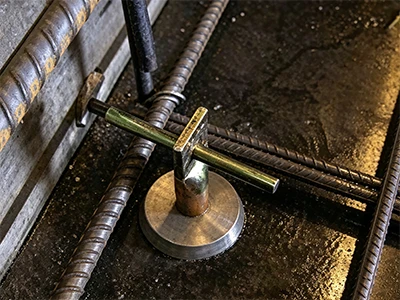
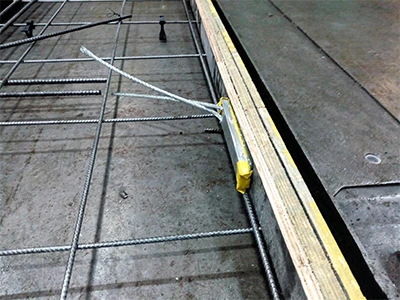
3. Tie the steel bars into the mold
In the production of precast concrete components, the tying of steel bars is a technically demanding job. Technicians need to tie the steel bars to the mold accurately according to the requirements of the deepening drawings. This step requires not only strong technology but also strict quality control to ensure that the steel bar layout of each component meets the specification requirements.
4. Processing and installation
After the steel bar tying is completed, the concrete pouring and vibration work can be carried out. This step requires strict control of the concrete mix ratio, pouring speed, and vibration method to ensure that the concrete is dense and free of bubbles. After the initial setting of the concrete, demoulding operations are required to separate the finished components from the mold. At this time, the finished components need to be cured to ensure their strength and quality.
5. Steam (natural) curing
In the production process of precast concrete components, steam curing is a common curing method. Steam curing can accelerate the hardening process of concrete and improve the strength and durability of components. However, since this method requires a large amount of steam, many manufacturers choose to use a natural environment for curing. Natural curing can use natural conditions, such as temperature and humidity, to achieve the purpose of curing, which is both environmentally friendly and energy-saving. Through reasonable curing measures, the quality and performance of PC components can be guaranteed, so that they can perform better in construction.
6. Demolding and handling
The last step is demoulding and handling. After the curing is completed, the finished components need to be removed from the mold and quality checked. Qualified components can be packaged and transported, and unqualified ones need to be repaired or scrapped. This step also requires strict quality control to ensure that each component meets the quality requirements.
The production process of precast concrete components is highly technical and complex. From the deepening of the drawings to the final product, each step requires strict quality control and technical support.
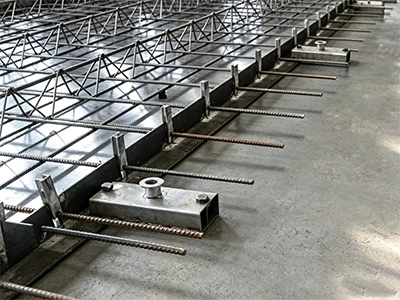
1. Formwork installation
The formwork is the starting point of PC component production. First, according to the design drawings, workers will select a suitable formwork for installation. The formwork is usually made of high-strength materials with sufficient rigidity and stability to ensure the dimensional accuracy of the component. During the installation process, the flatness and verticality of the formwork must be ensured to ensure the molding quality of the component.
2. Rebar binding and pre-embedding
After the formwork is installed, the next stage is the rebar binding and pre-embedding stage. According to the design requirements of the component, workers will select suitable rebars for binding to ensure that their positions are accurate and firm. At the same time, embedded parts such as electrical pipelines and water pipes need to be installed to prepare for subsequent construction.
3. Concrete pouring and maintenance
After the rebar binding and pre-embedding are completed, concrete will be poured. Concrete is one of the main materials of PC components, and its quality directly affects the performance of the components. During the pouring process, it is necessary to ensure the uniformity and density of the concrete to avoid defects such as voids and honeycombs. After the pouring is completed, proper maintenance is required to ensure the normal hardening and strength growth of the concrete.
4. Factory transportation
After a period of maintenance, when the components reach the design strength requirements, they can be shipped out of the factory. Before leaving the factory, the components should be inspected for quality to ensure that they meet the design requirements. During transportation, appropriate measures should be taken to prevent damage or displacement of the components. After arriving at the construction site, a re-inspection before installation is required to ensure the quality and safety of the components.
Precast Concrete Construction Process Detailed Explanation:
1. Pre-embedded first floor
Pre-embedded first floor refers to the pre-embedded various pipelines, embedded parts, etc. before pouring the first-floor concrete. This step is the basis of precast concrete construction and provides the necessary conditions for subsequent construction. When pre-embedded on the first floor, accurate measurement and positioning are required to ensure that the position of the embedded parts is accurate. At the same time, suitable embedded parts materials should be selected to ensure their durability and stability.
2. Component stacking
After the production is completed, the prefabricated components need to be stacked. When stacking, relevant regulations should be followed to ensure that the components are not damaged. At the same time, the stacking location should be convenient for transportation and hoisting. During the stacking process, the components should be classified and managed to avoid confusion and damage. In addition, the preservation of the components should be checked regularly, and damaged and deformed components should be handled in time.
3. Control line
Before installing prefabricated components, control lines need to be popped out at the construction site. The control line is the key to ensuring the accurate installation position of the components and should be completed by professional surveyors. The setting of the control line should be based on the design drawings and construction requirements to ensure that the installation position of the components is consistent with the design. At the same time, the accuracy of the control line should meet the construction requirements to ensure the quality of construction.
4. Component installation
Component installation is an important part of precast concrete construction. The control line should be followed during installation to ensure the accurate position of the components. At the same time, attention should be paid to the installation sequence to avoid construction difficulties caused by improper sequence. During the installation process, appropriate lifting equipment and tools should be used to ensure the smooth transportation and accurate placement of the components. In addition, the components should be quality-checked to ensure that they meet the design requirements and construction specifications.
5. Water spray test
The water spray test is a test conducted after the component is installed to check whether there is leakage at the connection of the component. If there is leakage, it should be handled in time. The water spray test should be carried out by relevant standards and specifications to ensure the accuracy and reliability of the test results. At the same time, the test results should be recorded and analyzed to provide a reference for subsequent construction.
6. Grouting construction
Grouting construction is a construction method carried out at the junction of precast components and cast-in-place concrete. Grouting can ensure that the components are closely combined with cast-in-place concrete and improve the integrity of the structure. Before grouting, the bonding surface should be treated to remove impurities and oil stains to ensure that the bonding surface is clean and flat. At the same time, appropriate grouting materials should be selected to ensure that their bonding strength and durability meet the design requirements. Grouting construction should be carried out by the prescribed process flow to ensure that the construction quality meets the standards.
7. Cast-in-place construction
Cast-in-place construction refers to the construction method of pouring the remaining parts after the installation of prefabricated components is completed. Relevant specifications should be followed during cast-in-place construction to ensure construction quality. In cast-in-place construction, attention should be paid to the mix ratio and pouring method of concrete to ensure that the quality and density of concrete meet the requirements. At the same time, concrete should be maintained and moisturized to prevent cracking and damage. Quality inspection and acceptance work should be carried out in time after the cast-in-place construction is completed.
8. Maintenance
Maintenance is an important part of precast concrete construction that cannot be ignored. Maintenance can ensure the quality of concrete and improve the durability of the structure. Maintenance should be carried out according to the specific situation, generally including measures such as sprinkling moisture, covering, and protection. At the same time, the structure should be inspected and maintained regularly, and quality problems found should be dealt with promptly to ensure the safety and stability of the structure.
Cost Control Tips: Five Steps To Reduce Construction Costs
Step 1: Understand the policy
Policies are a guide for corporate behavior. For the construction industry, understanding and mastering policy changes, especially those related to PC sandwich insulation, can bring additional capacity area to the company, thereby increasing the economic benefits of the project. Therefore, companies need to conduct in-depth research on policies to ensure that they can fully utilize the advantages of policies during project implementation.
Step 2: Control incremental costs
Incremental costs refer to additional costs incurred due to various reasons during project implementation. To control incremental costs, companies need to standardize components. Through standardized production, companies can ensure the quality and production efficiency of components, thereby reducing additional costs caused by non-standard components.
Step 3: Achieve cost reduction
Cost reduction refers to reducing costs during project implementation by optimizing design and construction methods. The application of plaster-free technology is a good example. By adopting plaster-free technology, companies can reduce labor costs and material costs while improving construction efficiency.
Step 4: About suppliers
The selection of suppliers has a vital impact on the implementation of the project. Companies need to investigate the production capacity and quality of suppliers in advance to ensure stable supply during project implementation. At the same time, enterprises also need to pay attention to the price changes of suppliers to ensure that they can get reasonable prices during the implementation of the project.
Step 5: Cost planning and good estimation
Cost planning is a key link in project implementation. Enterprises need to do a good job of estimation to ensure that the cost of the project is within a reasonable range. At the same time, enterprises also need to pay attention to price changes and adjust estimates in time to ensure the economic benefits of the project.
In the construction industry, how to effectively reduce costs has always been the focus of enterprises. Through meticulous policy research, reasonable control of incremental costs, realization of reduced costs, effective management of suppliers, and precise cost planning, enterprises can achieve cost reduction and improve the economic benefits of projects.